Why Tesla Increased Prices — and Why It Matters Now
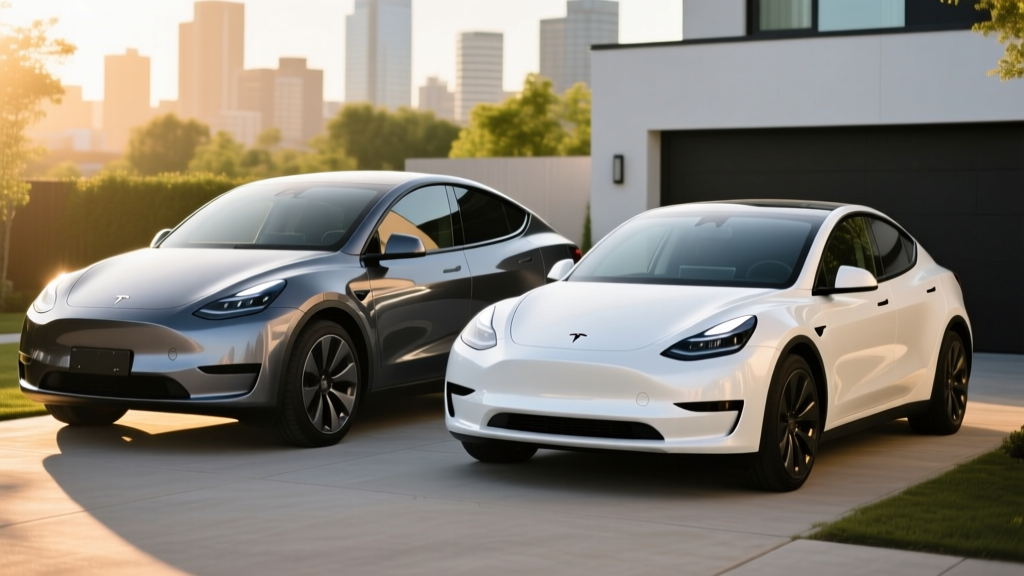
If you've been tracking Tesla's configurator, you've likely noticed the headline: Tesla increased prices across its core lineup heading into the 2026 model year. After a stretch of aggressive cuts through 2023 and 2024 that brought the Model 3 base price below $39,000, the pendulum has swung back. Rising battery-mineral costs, new hardware (the refreshed "Juniper" Model Y and "Highland" Model 3), and shifting global tariff dynamics have pushed MSRPs upward by roughly $1,500–$3,000 depending on trim.
For buyers, the question isn't just "why" — it's whether these cars still pencil out once you factor in real-world range, DC fast-charging speed, the IRS §30D federal tax credit, and total cost of ownership versus rivals like the Hyundai Ioniq 5, Ford Mustang Mach-E, and Chevrolet Equinox EV. Below, we profile the two volume models — the 2026 Model Y and Model 3 — with the exact numbers you need to decide.
2026 Tesla Model Y: The Family Crossover After the Price Hike
The Model Y remains Tesla's best-selling vehicle globally, and the Juniper refresh brought a quieter cabin, ventilated seats, an ambient-lighting interior, and a rear infotainment screen. It also brought a higher sticker. Here's where the 2026 lineup stands.
| Spec | Long Range RWD | Long Range AWD | Performance |
|---|---|---|---|
| Base MSRP | $46,630 | $49,630 | $53,630 |
| EPA Range | 320 mi | 300 mi | 277 mi |
| Battery (usable) | ~75 kWh, NMC | ~75 kWh, NMC | ~75 kWh, NMC |
| Drivetrain | RWD (single motor) | Dual-motor AWD | Dual-motor AWD |
| Horsepower | 346 hp | 384 hp | 510 hp |
| 0–60 mph | 5.8 sec | 4.8 sec | 3.5 sec |
| Efficiency | 123 MPGe / 27 kWh/100mi | 117 MPGe / 29 kWh/100mi | 111 MPGe / 30 kWh/100mi |
| Peak DC Charge | 250 kW | 250 kW | 250 kW |
| 10–80% DC Time | ~27 min | ~27 min | ~27 min |
| Level 2 Home Rate | 11.5 kW (~44 mi/hr) | 11.5 kW (~44 mi/hr) | 11.5 kW (~44 mi/hr) |
| Cargo (rear seats up) | 30.2 cu ft (76.2 cu ft folded) | ||
| Battery Warranty | 8 years / 120,000 miles | ||
Charging speed is a sore spot versus competitors. The Model Y still peaks at 250 kW on V3 Superchargers, while the Hyundai Ioniq 5 and Kia EV6 hit 350 kW on 800-volt architectures, shaving 5–8 minutes off a 10–80% session. On a road trip, that delta adds up.
2026 Tesla Model 3: Sedan Pricing After the Uptick
The Highland-refreshed Model 3 is quieter, more refined, and — yes — more expensive than the bargain-basement versions Tesla sold in late 2023. It remains one of the most efficient EVs on the market, though.
| Spec | RWD | Long Range AWD | Performance |
|---|---|---|---|
| Base MSRP | $40,630 | $49,130 | $55,130 |
| EPA Range | 272 mi | 341 mi | 315 mi |
| Battery (usable) | ~57.5 kWh, LFP | ~75 kWh, NMC | ~75 kWh, NMC |
| Drivetrain | RWD | Dual-motor AWD | Dual-motor AWD |
| Horsepower | 271 hp | 346 hp | 510 hp |
| 0–60 mph | 5.8 sec | 4.2 sec | 2.9 sec |
| Efficiency | 132 MPGe / 25 kWh/100mi | 124 MPGe / 27 kWh/100mi | 115 MPGe / 29 kWh/100mi |
| Peak DC Charge | 170 kW | 250 kW | 250 kW |
| 10–80% DC Time | ~32 min | ~27 min | ~27 min |
| Level 2 Home Rate | 11 kW (~30 mi/hr) | 11.5 kW (~44 mi/hr) | 11.5 kW (~44 mi/hr) |
| Trunk + Frunk | 23 cu ft trunk + 3.1 cu ft frunk | ||
| Battery Warranty | 8 yr / 100k mi | 8 yr / 120k mi | |
Tax Credit Math: What You Actually Pay After §30D
Tesla increased prices, but the federal tax credit softens the blow for eligible buyers. Under current IRS §30D rules, new clean vehicles can qualify for up to $7,500 — split into $3,750 for critical-minerals sourcing and $3,750 for battery-component sourcing. As of 2026, both Model Y and Model 3 Long Range/Performance trims assembled at Fremont generally qualify for the full $7,500 when taken as a point-of-sale transfer, but the base Model 3 RWD's LFP battery (CATL-sourced cells) has historically met only the critical-minerals half, yielding $3,750.
- MSRP cap: SUVs (Model Y) must be ≤$80,000; sedans (Model 3) ≤$55,000. All current trims clear this.
- Buyer income cap (MAGI): $150k single / $225k HOH / $300k joint.
- Final assembly: Must be in North America — Tesla Fremont qualifies.
- Transfer at POS: Buyers can apply the credit as a down-payment reduction at delivery.
- FEOC restriction: Vehicles with battery components from a "foreign entity of concern" lose eligibility — verify current-year status at purchase, as Tesla's supply chain evolves.
| Model | MSRP | Est. Credit | Effective Price |
|---|---|---|---|
| Model 3 RWD | $40,630 | $3,750 | ~$36,880 |
| Model 3 Long Range AWD | $49,130 | $7,500 | ~$41,630 |
| Model Y Long Range RWD | $46,630 | $7,500 | ~$39,130 |
| Model Y Long Range AWD | $49,630 | $7,500 | ~$42,130 |
| Model Y Performance | $53,630 | $7,500 | ~$46,130 |
Always confirm eligibility at purchase — IRS rules and Tesla's supply chain are both moving targets. State incentives (California, Colorado, etc.) stack on top but vary by jurisdiction.
Tech, Driver Assist, and What Still Frustrates
Tesla's infotainment remains the segment benchmark for responsiveness: a 15.4-inch center display handles navigation, media, and vehicle controls with no smartphone-projection dependency (no CarPlay/Android Auto — a dealbreaker for some). The Juniper Model Y added a second 8-inch screen for rear passengers and ventilated front seats, closing comfort gaps versus Hyundai and BMW.
- No Apple CarPlay / Android Auto — Tesla's ecosystem is closed.
- 250 kW peak DC charge trails Hyundai/Kia's 800V architecture by ~30%.
- Touchscreen-only controls for mirrors, glovebox, and wiper speed frustrate some drivers.
- Panel gaps and paint quality have improved but still draw complaints vs. legacy OEMs.
- Insurance premiums run 15–25% higher than segment average (check quotes before ordering).
Tesla Increased Prices — But How Does It Compare?
The price hikes put Tesla in a different competitive position than the 2023 price-war era. Here's how the two core models stack against their most direct rivals on the metrics buyers actually care about.
| Metric | Model Y LR AWD | Hyundai Ioniq 5 Limited AWD | Model 3 LR AWD | BMW i4 xDrive40 |
|---|---|---|---|---|
| MSRP | $49,630 | $56,250 | $49,130 | $59,095 |
| EPA Range | 300 mi | 290 mi | 341 mi | 282 mi |
| Peak DC Charge | 250 kW | 350 kW | 250 kW | 205 kW |
| 10–80% Time | ~27 min | ~18 min | ~27 min | ~31 min |
| Efficiency (MPGe) | 117 | 110 | 124 | 102 |
| Supercharger Access | Native NACS | NACS adapter | Native NACS | NACS adapter |
Where Tesla still wins: Efficiency (kWh/100mi), native Supercharger access with the most reliable public DC network in North America, over-the-air software updates, and best-in-class range for the Model 3 Long Range.
Where rivals pull ahead: The Ioniq 5's 800-volt charging is meaningfully faster on road trips. Hyundai and Ford offer CarPlay, physical climate buttons, and — crucially — more consistent build quality. The BMW i4 trades range for driving dynamics Tesla doesn't attempt to match.
Pros
- Class-leading efficiency and range (Model 3 LR especially)
- Native NACS / Supercharger network reliability
- Lowest running cost per mile in the segment
- Continuous OTA feature additions
- Spacious Model Y cargo area with flat floor
Cons
- DC charging speed trails 800V rivals
- No smartphone projection
- Higher insurance costs
- FSD remains expensive and Level 2 only
- Recent price increases erode value advantage
Who Should Buy — and Who Should Look Elsewhere
Buy the Model Y if: You need a family crossover with 300+ miles of range, best-in-class cargo space, and access to the most reliable DC fast-charging network for road trips. The Long Range AWD at ~$42k after credit is hard to beat on total cost of ownership.
Buy the Model 3 Long Range if: You're an efficiency-obsessed commuter who wants 341 EPA miles, doesn't need an SUV, and tolerates a touchscreen-centric cabin. The effective ~$41,630 price after credit undercuts every comparable sedan.
Look elsewhere if: You prioritize rapid DC charging (Ioniq 5/EV6), want CarPlay (nearly everyone else), value traditional luxury materials (BMW i4, Mercedes EQB), or tow heavily (Rivian R1S, Ford F-150 Lightning).
- Commuter under 50 miles/day → Model 3 RWD, LFP pack handles daily 100% charges.
- Family road-tripper → Model Y LR AWD, Supercharger network is the tiebreaker.
- Apartment dweller without home charging → Consider Ioniq 5 for faster public DC sessions.
- Performance enthusiast → Model 3 Performance, 2.9s 0–60, but expect ~$55k pre-credit.
Frequently Asked Questions
Why did Tesla increase prices in 2026?
A combination of higher battery-mineral input costs, added content from the Juniper and Highland refreshes (ventilated seats, rear screens, acoustic glass), and global tariff adjustments pushed MSRPs up $1,500–$3,000 versus late-2024 lows.
What is the real-world range of the Model Y?
EPA rates the Long Range AWD at 300 miles. Expect 260–275 on highway trips, and 220–240 in freezing weather. Plan conservatively around 200-mile legs on road trips.
How fast does the Model 3 charge at home and on DC?
DC fast-charging peaks at 250 kW on Long Range/Performance trims (10–80% in ~27 min); the RWD LFP peaks at 170 kW (~32 min). Level 2 home charging at 11.5 kW adds roughly 44 miles per hour of charging — a full overnight session easily refills any trim.
Does the Model Y qualify for the $7,500 federal tax credit?
As of 2026, Long Range and Performance Model Y trims generally qualify for the full $7,500 under IRS §30D, subject to buyer income caps ($150k single / $300k joint), the $80k SUV MSRP cap, and FEOC battery-sourcing rules. Confirm at point of sale.
Is Tesla still worth it after the price increases?
Yes, for buyers who value efficiency, Supercharger access, and OTA updates — and who fit the income/credit criteria. No, if you need CarPlay, faster DC charging than 250 kW, or prefer physical controls. The Ioniq 5 and Equinox EV are credible alternatives that undercut on specific metrics.
How does FSD work — is it self-driving?
No. Full Self-Driving (Supervised) is an SAE Level 2 driver-assist system. You must monitor the road and be ready to intervene at all times. It handles many highway and city scenarios but is not autonomous. See NHTSA's ADS guidance for context on automation levels.