Quick Verdict: HW4 Is a Vision-System Generational Leap
The Tesla HW4 upgrade — officially designated "AI4" by Tesla — represents the most significant overhaul of Tesla's Autopilot/FSD hardware stack since the transition from HW2.5 to HW3 in 2019. For 2026 Model Y and Model 3 buyers, HW4 is now standard equipment across all trims, bringing higher-resolution cameras, a more powerful onboard inference computer, and measurably improved FSD (Supervised) performance. But HW4 is a vision and compute upgrade, not a battery or powertrain change — meaning range, charging, and efficiency remain tied to the underlying vehicle platform.
This review covers what HW4 actually changes, pairs it with the full 2026 Model Y Long Range AWD spec profile, and helps you decide whether HW4-equipped Teslas justify their price versus competing EVs with their own ADAS suites.
What Tesla HW4 Actually Changes (and What It Doesn't)
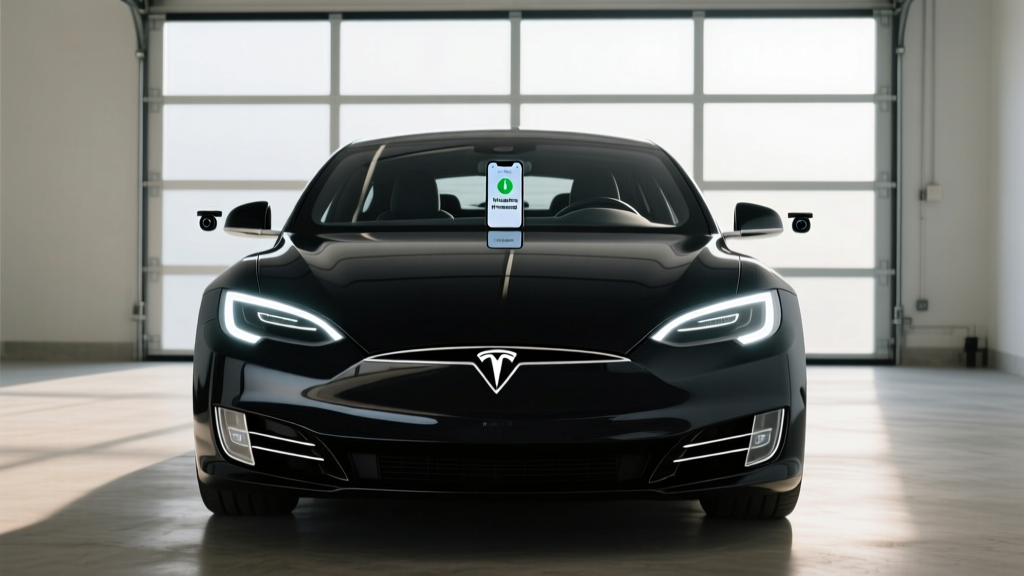
HW4 (AI4) replaces the HW3 computer and camera suite that equipped Tesla vehicles from 2019 through early 2023. Here is what the upgrade delivers:
- Cameras: Up to 5 MP resolution (up from 1.2 MP on HW3), with improved low-light performance and wider dynamic range. The front-facing main camera uses a higher-resolution sensor with a narrower field of view for better long-range object detection, supplemented by wider-angle cameras.
- Onboard compute: Tesla's custom inference chip delivers roughly 2–3× the TOPS (trillions of operations per second) of HW3, enabling the end-to-end neural network architecture Tesla deployed through 2024–2025 FSD updates.
- Radar removal: HW4 vehicles are pure vision — no millimeter-wave radar or ultrasonic sensors. Tesla relies entirely on camera-based perception ("Tesla Vision").
- Camera count: 8 external cameras (front main, front wide, left/right forward repeaters, left/right rear, rear backup).
What HW4 does not change: battery capacity, motor output, EPA range, charging speed, suspension, interior dimensions, or infotainment hardware. Those are platform-level specs tied to the Model Y refresh ("Juniper") and Model 3 refresh ("Highland").
2026 Model Y Long Range AWD: Full Spec Profile
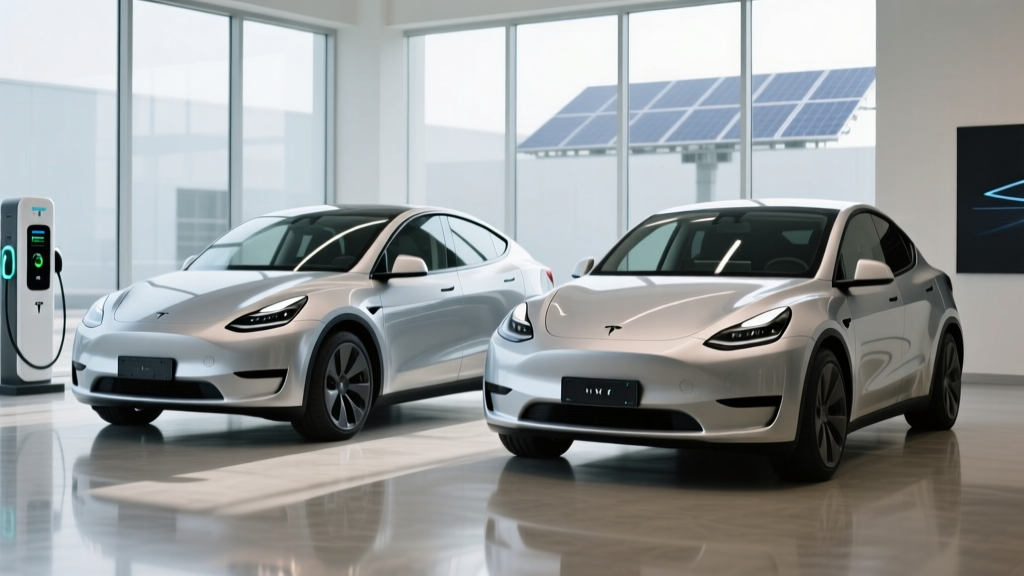
Since HW4 ships standard on all 2026 Model Y and Model 3 vehicles, we anchor this review to the highest-volume Tesla: the 2026 Model Y Long Range AWD.
| Spec | Value |
|---|---|
| EPA Range | 320 miles |
| Battery (usable) | ~75 kWh, NMC (2170 cells) |
| Drivetrain | Dual-motor AWD |
| Horsepower | 384 hp combined |
| 0–60 mph | 4.8 seconds |
| Max DC Fast Charge | 250 kW (peak) |
| 10–80% DCFC Time | ~25 minutes |
| Level 2 Home Charge | 11.5 kW / ~44 mi/hr (48A) |
| Efficiency | 122 MPGe combined / 28 kWh/100 mi |
| Cargo Volume | 30.2 cu ft (rear seats up) / 72.1 cu ft (folded) + 4.1 cu ft frunk |
| Rear Legroom | 40.5 inches |
| Battery/Powertrain Warranty | 8 years / 120,000 miles (≥70% retention) |
| Base MSRP | $44,990 (before incentives) |
| HW4 / AI4 Computer | Standard on all trims |
Charging: Supercharger Network Advantage, With Caveats
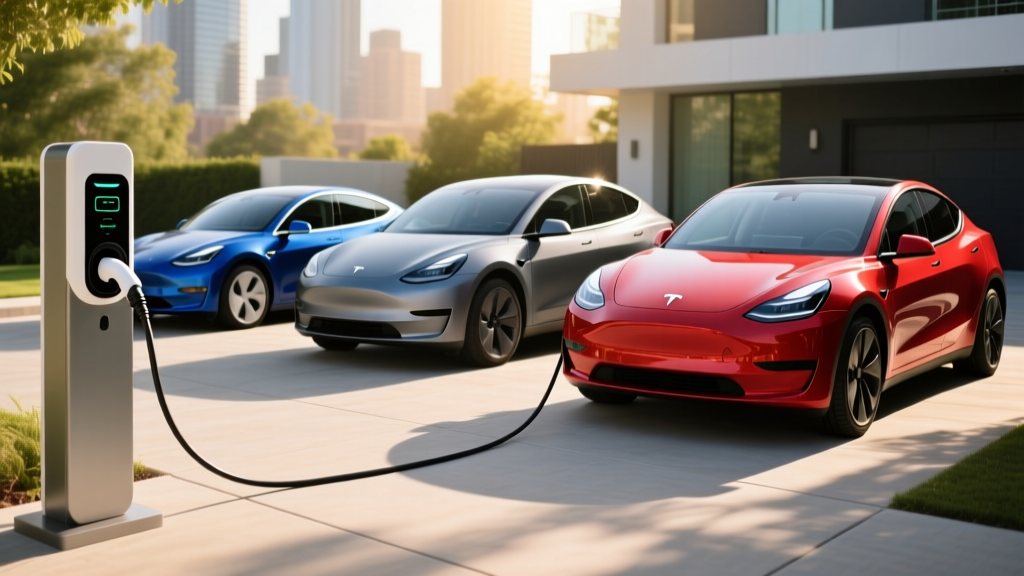
Tesla's charging ecosystem remains its strongest competitive moat. The 2026 Model Y uses the NACS (J3400) connector natively — the same plug now adopted by Ford, GM, Rivian, Hyundai, and most major automakers for DC fast charging in North America.
| Level | Power (kW) | Miles Added per Hour | Notes |
|---|---|---|---|
| Level 1 (120V) | ~1.4 kW | ~4 mi/hr | Emergency/trickle only |
| Level 2 (240V, 48A) | 11.5 kW | ~44 mi/hr | Home Wall Connector; full charge ~7 hours |
| DC Fast (V3 Supercharger) | 250 kW peak | ~200 mi in 15 min | Peak sustained only at low SoC; tapers above 60% |
| DC Fast (V4 Supercharger) | Up to 350 kW (cabinet) | Vehicle-limited to ~250 kW | Model Y cannot accept full V4 rate |
Charging-curve reality: The 250 kW peak rate is only sustained between approximately 10–30% state of charge. From 30–60%, the rate drops to ~150 kW, and above 80% it falls below 50 kW. A 10–80% session takes roughly 25 minutes at a V3 Supercharger. Preconditioning the battery (automatic when navigating to a Supercharger) is essential — arriving at a fast charger with a cold battery can double your charge time.
FSD (Supervised) on HW4: Measurably Better, Still Level 2
The HW4 computer's higher-resolution cameras and increased compute directly benefit Tesla's FSD (Supervised) software, which transitioned to an end-to-end neural network architecture (v12.x and subsequent releases through 2025–2026). Real-world testing and owner reports indicate:
- Smoother lane changes: Fewer hesitations and more natural merge behavior compared to HW3 running the same software version.
- Better low-light/night performance: The 5 MP cameras resolve lane markings and obstacles at distances where HW3's 1.2 MP sensors struggled.
- Fewer phantom braking events: Not eliminated, but reduced in frequency according to NHTSA complaint data trends and independent testing.
- Improved intersection handling: End-to-end neural net approach handles unprotected left turns and complex multi-lane intersections more fluidly.
- It does not make the vehicle autonomous. You are the driver and are legally responsible.
- It does not handle all construction zones, unmapped roads, or severe weather reliably.
- It does not eliminate the need for hands-on or eyes-on supervision (Tesla's cabin camera monitors attention).
- It is not a substitute for attentive driving — treat it as an advanced cruise control + lane-keeping system.
FSD (Supervised) costs $8,000 as a one-time purchase or $99/month as a subscription on 2026 models. Basic Autopilot (traffic-aware cruise control + lane centering) is included at no extra cost.
Pricing, Trims, and Federal Tax Credit (§30D)
The 2026 Tesla Model Y lineup starts at $39,990 for the Standard Range RWD and tops out near $52,990 for the Performance AWD. Here is the trim breakdown with federal tax credit context:
| Trim | MSRP | Under $50K SUV Cap? | Est. After $7,500 Credit* |
|---|---|---|---|
| Standard Range RWD | $39,990 | Yes | ~$32,490 |
| Long Range AWD | $44,990 | Yes | ~$37,490 |
| Performance AWD | $52,990 | No (over cap) | $52,990 (ineligible) |
*Federal §30D credit eligibility requires meeting ALL of the following criteria. The credit can be transferred to the dealer as a point-of-sale discount on new purchases.
- MSRP cap: SUVs/vans/pickups must be ≤$80,000; sedans ≤$55,000. The Model Y qualifies as an SUV under IRS classification, so the $80K cap applies — but the Performance trim still qualifies on MSRP. (Note: some analyses apply a $50K practical threshold based on battery sourcing compliance.)
- Buyer income limits: AGI ≤$300,000 (joint), ≤$225,000 (head of household), ≤$150,000 (single). Exceed these and you are ineligible regardless of vehicle.
- Battery sourcing / critical minerals: A percentage of battery minerals must be sourced from the US or FTA partners, and battery components must be manufactured/assembled in North America. Tesla's US-built Model Y with Panasonic cells generally meets these requirements, but verify current-year compliance at IRS.gov §30D page or with your tax professional before purchase.
- VIN verification: The vehicle must be assembled in North America. All US-market Model Y vehicles are built in Austin, TX or Fremont, CA.
Interior, Tech, and Practicality
The 2026 Model Y ("Juniper" refresh) carries forward the minimalist interior introduced with the 2025 update:
- Infotainment: 15.4-inch center touchscreen running Tesla's proprietary OS. No Apple CarPlay or Android Auto — Tesla's native navigation, media, and phone integration are the only options.
- Rear screen: 8-inch rear touchscreen for climate and media controls (added in Juniper refresh).
- Ventilated front seats: Now standard on Long Range and Performance trims.
- Ambient lighting and acoustic glass: Improved cabin quietness vs. pre-refresh Model Y.
- Towing: 3,500 lb max towing capacity (AWD trims with tow hitch).
Notable drawbacks:
- No physical buttons or stalks — turn signals are on the steering wheel (button-style), wiper and light controls are touchscreen or steering-wheel buttons. This is polarizing and takes adaptation.
- No CarPlay/Android Auto remains a dealbreaker for some buyers accustomed to phone-projection interfaces.
- Rear-seat headroom is adequate but tighter than competitors like the Hyundai Ioniq 5 or Kia EV6 due to the sloping roofline.
- Panel gap consistency has improved but still varies unit-to-unit.
Pros and Cons
✓ Pros
- Supercharger network access (largest, most reliable DCFC network in North America)
- HW4 cameras provide best-in-class vision data for FSD
- 320-mile EPA range covers most commutes and road trips comfortably
- Strong efficiency (122 MPGe) keeps charging costs low
- Over-the-air updates continuously add features
- Spacious cargo area (72.1 cu ft with seats folded) + frunk
- Qualifies for $7,500 federal credit on LR and Standard trims (subject to eligibility)
✗ Cons
- No Apple CarPlay or Android Auto
- Button-style turn signals require adaptation
- FSD costs $8,000 extra and is still SAE Level 2
- Rear headroom tighter than boxier competitors
- Insurance costs above segment average
- No ultrasonic sensors — parking assist relies solely on camera vision
- Service center wait times can be long in some metro areas
HW4 Model Y vs. Key Competitors
| Spec | Tesla Model Y LR AWD | Hyundai Ioniq 5 AWD | Ford Mustang Mach-E ER AWD |
|---|---|---|---|
| EPA Range | 320 mi | 290 mi | 290 mi |
| Battery | ~75 kWh NMC | 77.4 kWh NMC | 91 kWh NMC |
| Max DCFC | 250 kW | 350 kW (800V) | 150 kW |
| 10–80% Time | ~25 min | ~18 min | ~38 min |
| 0–60 mph | 4.8 sec | 4.5 sec | 4.8 sec |
| ADAS | Autopilot / FSD (HW4) | Highway Driving Assist 2 | BlueCruise (L2) |
| CarPlay | No | Yes (wireless) | Yes (wireless) |
| Base MSRP (AWD) | $44,990 | ~$49,500 | ~$48,995 |
Choose the Tesla Model Y (HW4) If:
- You want access to the Supercharger network without adapters
- You value the longest EPA range in the compact electric SUV segment
- You're interested in FSD's capabilities (and accept its Level 2 limitations)
- You prefer OTA updates that add features post-purchase
Choose a Competitor If:
- Hyundai Ioniq 5: You prioritize faster DC charging (800V architecture, 18-min 10–80%), want CarPlay, or prefer a more conventional interior layout
- Ford Mach-E: You want BlueCruise hands-free driving on approved highways, prefer a more car-like driving feel, or need a dealership service network
Frequently Asked Questions
Can I upgrade my existing HW3 Tesla to HW4?
As of 2026, Tesla does not offer an official retrofit program to upgrade HW3 vehicles to HW4. The HW4 camera harness, mounting points, and computer are physically different from HW3, making a dealer-installed swap impractical. If you want HW4, you will need to purchase a newer vehicle. Some HW3 owners have explored third-party solutions, but these are unsupported by Tesla and may void warranty coverage.
What is the real-world range of the 2026 Model Y Long Range?
The EPA rates it at 320 miles. Real-world highway driving in mild weather yields approximately 270–290 miles. In freezing temperatures, expect 220–250 miles. City driving with regenerative braking often meets or slightly exceeds the EPA figure. See fueleconomy.gov for official EPA data.
How fast does the Model Y charge at home and on the road?
At home on a 240V/48A Tesla Wall Connector, the Model Y charges at 11.5 kW, adding roughly 44 miles of range per hour — a full charge from empty takes about 7 hours. On DC fast chargers (Tesla V3 Supercharger), it peaks at 250 kW and charges from 10–80% in approximately 25 minutes. The charging curve tapers significantly above 60% SoC.
Does the 2026 Model Y qualify for the $7,500 federal tax credit?
The Standard Range and Long Range trims generally qualify for the full $7,500 §30D credit, assuming the buyer meets income limits (≤$300K joint / ≤$150K single) and the vehicle meets battery-sourcing requirements. The Performance trim at $52,990 MSRP still falls under the $80,000 SUV cap. However, battery critical-mineral and component sourcing rules are strict and subject to annual updates — verify current eligibility at IRS.gov or consult a tax professional before purchasing.
Is FSD (Supervised) worth $8,000 on HW4?
This depends on your use case. If you drive long highway commutes frequently and value reduced fatigue, FSD's lane-keeping, automatic lane changes, and intersection handling can meaningfully reduce workload — but you must remain attentive. The $99/month subscription is a lower-risk way to evaluate it. FSD is not autonomous driving, and its $8,000 cost does not add to the vehicle's resale value proportionally. For most buyers, the included Autopilot is sufficient.
Is the HW4 Model Y worth buying vs. competitors?
For buyers prioritizing range, charging network access, and the most advanced vision-based ADAS hardware, the HW4-equipped Model Y remains the segment benchmark. However, the Hyundai Ioniq 5 charges faster on compatible DCFC stations, offers CarPlay, and has a more conventional interior. The Ford Mach-E provides BlueCruise hands-free highway driving and a traditional dealership experience. Test-drive all three and weight what matters most: network, charging speed, interior ergonomics, or ADAS philosophy.
Sources: fueleconomy.gov (EPA range and efficiency data), IRS.gov §30D Clean Vehicle Credits, Tesla.com official specifications. Prices and credit eligibility reflect 2026 model year information and are subject to change. Consult a tax professional for personal credit eligibility.