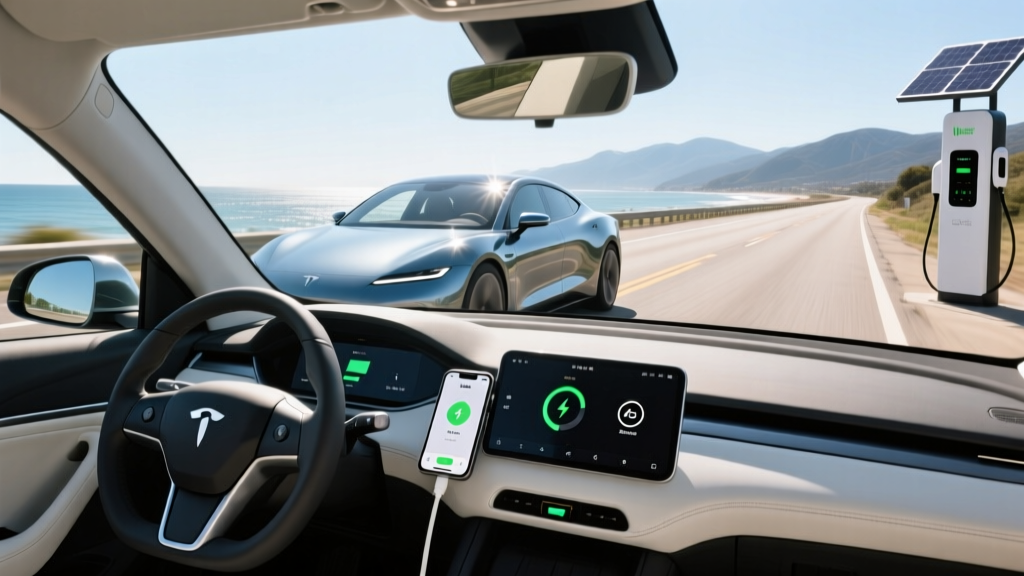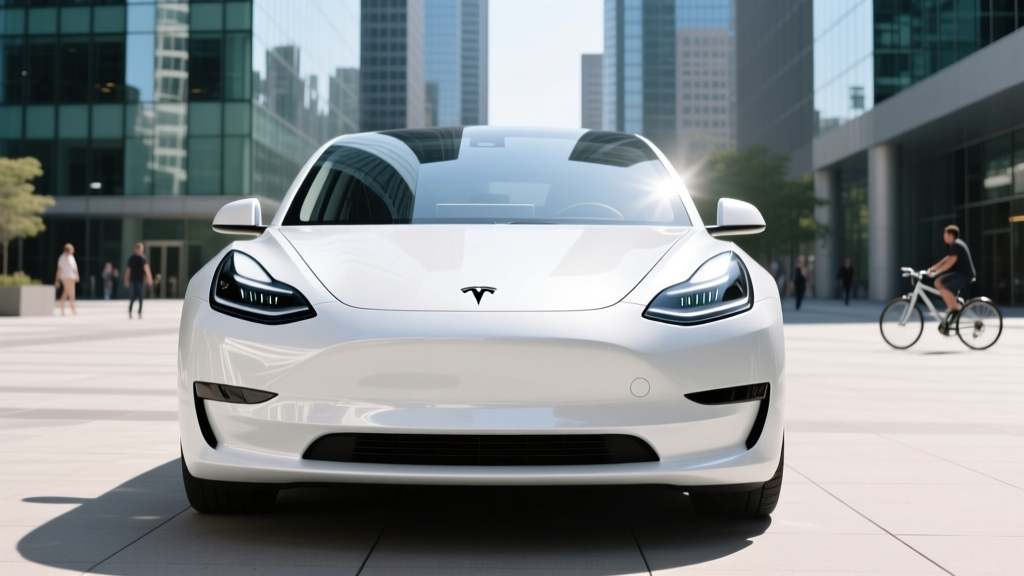
The arrival of Tesla's Hardware 4 (HW4) computer marked a significant generational leap in sensor fidelity and processing capability. But as Tesla rolls out software updates that lean harder on neural-net memory and end-to-end learning, buyers are searching for specifics on Tesla HW4 Plus memory configurations, what they mean for Full Self-Driving (Supervised), and whether the current Model 3 is worth the investment in 2026. This review dissects the latest Model 3 Long Range AWD — the sweet-spot trim — alongside a technical breakdown of the HW4 platform.
What Is Tesla HW4 and How Does Memory Factor In?
Tesla's HW4 (also referred to as AI4) replaced the aging HW3 computer starting in early 2023. The new platform features higher-resolution cameras (up to 5 megapixels versus HW3's 1.2 MP), a wider field of view on the forward-facing lenses, and a more powerful inference chip. While Tesla has not published exact silicon specifications for the latest HW4 iteration, teardowns and software analysis indicate a dual-chip redundant architecture with significantly expanded LPDDR5 memory bandwidth compared to HW3's older LPDDR4 modules.
The "memory" in Tesla HW4 Plus memory discussions typically refers to two things: (1) the onboard RAM available for running Tesla's increasingly complex neural networks (FSD v13+ uses end-to-end neural architectures that demand more working memory), and (2) the flash storage used for storing driving data clips, map caches, and dashcam footage. HW4 vehicles carry substantially more of both versus HW3 cars, enabling faster over-the-air updates and smoother inference at higher frame rates.
Tesla Autopilot and FSD (Supervised) are SAE Level 2 driver-assistance systems. The driver must remain fully attentive, keep hands on the wheel, and be prepared to take over at any moment. These are not autonomous or "self-driving" systems. Only Level 4 services like Waymo operate without a human driver in defined zones.
2026 Tesla Model 3 Long Range: Full Spec Sheet
| Spec | Value |
|---|---|
| EPA Range | 341 miles |
| Battery (usable) | ~79 kWh, NMC (nickel-manganese-cobalt) |
| Efficiency | 132 MPGe combined / 25 kWh/100 mi |
| Peak DC Fast Charge | 250 kW (CCS/NACS) |
| 10-80% DC Charge | ~25 minutes |
| Level 2 Home Charging | 11.5 kW (44 mi/hr) |
| 0-60 mph | 4.2 seconds |
| Horsepower | ~346 hp (dual motor) |
| Drivetrain | AWD (dual motor) |
| Cargo Volume | 23 cu ft (rear) + 3.1 cu ft (frunk) |
| Rear Legroom | 35.3 inches |
| Battery/Powertrain Warranty | 8 years / 120,000 miles |
| Base MSRP | $47,740 (before incentives) |
Real-World Range: Beyond the EPA Sticker
EPA Sticker: 341 miles
Real-World Highway (70-75 mph): ~270-290 miles
Cold Weather (below 32°F): ~230-260 miles (20-30% reduction typical for NMC chemistry)
Optimal City/Comute: ~320-340 miles (regen-friendly driving)
The Model 3 Long Range's 341-mile EPA rating places it among the most efficient sedans on the market. But EPA tests use moderate speeds and temperatures. On a 75-mph interstate run in summer heat, expect roughly 270-290 miles before needing to stop. In freezing weather, NMC batteries lose more capacity to cold than LFP cells — budget for 230-260 miles and use the car's battery preconditioning feature before arriving at any DC fast charger.
The onboard navigation system will automatically precondition the battery when a Supercharger is set as your destination, warming the pack to optimal charging temperature. Skipping this step can add 5-10 minutes to your charging session in cold weather.
Charging Speed: Home and on the Road
| Level | Power | Speed | Notes |
|---|---|---|---|
| Level 1 (120V) | ~1.4 kW | ~4 mi/hr | Emergency/trickle only |
| Level 2 (240V, 48A) | 11.5 kW | ~44 mi/hr | Full overnight charge in ~7 hrs |
| DC Fast (V3 Supercharger) | 250 kW peak | 10-80% in ~25 min | Tapers above 60% SoC |
| DC Fast (V4 Supercharger) | 250 kW peak | 10-80% in ~25 min | Same vehicle-side limit |
The Model 3 Long Range peaks at 250 kW on DC fast chargers, including Tesla's V3 and V4 Superchargers as well as third-party CCS stations (via the native NACS port or CCS adapter). The charge curve holds near peak power from roughly 10% to 45% State of Charge, then begins a gradual taper. From 60% to 80%, speeds drop to approximately 100-130 kW. This means the advertised 10-80% time of roughly 25 minutes is achievable under good conditions, but the last 20% takes nearly as long as the first 50%.
For home charging, the Model 3's onboard charger accepts up to 11.5 kW (48 amps) on a 240V Level 2 circuit. This requires a 60-amp dedicated breaker. According to Tesla's home charging guide, most installations run between $800 and $2,000 depending on panel proximity and local permitting. A full charge from empty takes about 7 hours — more than enough for overnight replenishment.
Performance and Driving Dynamics
The dual-motor AWD powertrain delivers approximately 346 horsepower and launches the Model 3 Long Range from 0-60 mph in 4.2 seconds. That's quick by any measure, but the real story is the instant torque delivery — there's no turbo lag or transmission shift to wait for. Highway passing is effortless, and the low center of gravity (battery pack under the floor) keeps body roll well-controlled through corners.
The refreshed "Highland" Model 3 introduced improved sound insulation, ventilated front seats, and a rear touchscreen for passengers. Ride quality is firmer than a Hyundai Ioniq 6 but more composed over broken pavement than the previous generation. Regenerative braking is strong enough for near-one-pedal driving, though Tesla removed the user-adjustable regen setting — it's fixed at a strong level.
Pricing, Trims, and Federal Tax Credit Eligibility
| Trim | MSRP | Est. After §30D Credit |
|---|---|---|
| Model 3 RWD | $38,990 | ~$31,490* |
| Model 3 Long Range AWD | $47,740 | ~$40,240* |
| Model 3 Performance | $54,990 | ~$47,490* |
*Assumes full $7,500 federal tax credit eligibility. Actual credit depends on battery sourcing, buyer income, and MSRP caps.
The IRS §30D clean vehicle credit provides up to $7,500, split into two halves: $3,750 for meeting critical-minerals sourcing requirements and $3,750 for battery-component manufacturing in North America. As of 2026, Tesla's battery supply chain qualifies for at least the critical-minerals half and likely the full amount, but this changes with supply-chain shifts. Always verify current eligibility on the IRS website before purchasing.
Key eligibility constraints:
- MSRP cap: Sedans must be under $55,000 (all Model 3 trims qualify)
- Income cap: Modified AGI ≤ $150,000 (single) / $300,000 (married filing jointly)
- Point-of-sale transfer: Since 2024, you can transfer the credit to the dealer for an immediate price reduction at purchase
- Battery sourcing: Must meet critical-minerals and component requirements, which tighten annually
HW4 Autopilot Tech: What It Actually Does
The HW4 computer powers Tesla's Autopilot suite and the optional FSD (Supervised) package. Hardware 4's higher-resolution cameras and wider fields of view provide the neural network with richer visual data, particularly in low-light conditions and at long distances. Tesla claims HW4 can process camera data at higher frame rates, improving reaction time to sudden obstacles.
Standard Autopilot (included) provides adaptive cruise control and lane-centering on highways. The $8,000 FSD (Supervised) upgrade adds automatic lane changes, navigation-guided on/off-ramp handling, traffic-light and stop-sign recognition, and the "Autosteer on City Streets" feature. As of 2026, FSD runs an end-to-end neural network (v13.x) that replaces much of the older rules-based code with learned driving behavior — this is where the expanded HW4 memory becomes practically relevant, as the model weights and intermediate activations require more working RAM.
FSD (Supervised) does NOT make the car autonomous. You must monitor the road, keep hands on the wheel, and intervene when the system makes errors. Common failure modes include: phantom braking on highways, misreading construction zones, hesitating at unprotected left turns, and struggling in heavy rain or snow. NHTSA continues to investigate Autopilot-related incidents. Treat this as a convenience feature, not a chauffeur.
Model 3 vs. Key Competitors
| Spec | Tesla Model 3 LR | Hyundai Ioniq 6 SE LR | BMW i4 eDrive40 |
|---|---|---|---|
| EPA Range | 341 mi | 361 mi | 301 mi |
| Peak DC Charge | 250 kW | 350 kW (800V) | 200 kW |
| 10-80% DC | ~25 min | ~18 min | ~31 min |
| 0-60 mph | 4.2s | 5.1s | 5.5s |
| Base MSRP | $47,740 | $46,700 | $57,900 |
| ADAS Computer | HW4 | HDA2 | Driving Asst Pro |
The Ioniq 6 charges faster thanks to its 800V architecture (18 minutes 10-80% vs. 25 for the Tesla), and it edges ahead on EPA range. The BMW i4 offers a more premium interior and traditional luxury branding but costs significantly more. The Model 3's advantage remains the Supercharger network (the most reliable and extensive in North America), the HW4/FSD tech stack, and Tesla's over-the-air update cadence.
Who Should Buy the Model 3 Long Range?
Choose the Model 3 Long Range if:
- You want access to the Supercharger network for hassle-free road trips
- You value cutting-edge driver-assist tech and frequent OTA improvements
- You commute 30-80 miles daily and can charge at home overnight
- You want AWD capability without stepping to an SUV
- You need maximum rear-seat space (the Ioniq 5 or Model Y offer more)
- You prioritize the fastest possible DC charging (Ioniq 6's 800V is quicker)
- You want a traditional instrument cluster or physical buttons
- You're uncomfortable with Tesla's all-touchscreen interface
Pros and Cons
- 341-mile EPA range — among the best in its class
- Supercharger network reliability
- HW4 computer enables industry-leading ADAS features
- Strong efficiency (132 MPGe combined)
- Quick 0-60 (4.2s) with dual-motor AWD
- Spacious frunk + trunk combo (26 cu ft total)
- Continuous OTA updates improve the car post-purchase
- 250 kW peak charge rate trails 800V competitors
- No physical buttons — everything runs through the touchscreen
- Rear legroom (35.3 in.) is tight for tall passengers
- FSD costs $8,000 extra and remains Level 2
- Fixed regen braking — no driver adjustment
- NMC battery loses more range in cold vs. LFP alternatives
Frequently Asked Questions
What is the real-world range of the Tesla Model 3 Long Range?
The EPA rates it at 341 miles, but expect 270-290 miles on the highway at 70-75 mph, and 230-260 miles in freezing weather. City driving with regenerative braking gets closest to the sticker number.
How fast does the Model 3 charge at home and on DC fast chargers?
On a Level 2 home charger (240V, 48A), it adds about 44 miles of range per hour, fully charging overnight in ~7 hours. On a DC fast charger, it peaks at 250 kW and reaches 10-80% in approximately 25 minutes, with charging speed tapering significantly above 60% State of Charge.
Does the Tesla Model 3 qualify for the $7,500 federal EV tax credit?
The Model 3 qualifies for at least a portion of the §30D credit (typically $3,750-$7,500 depending on current battery-sourcing rules). Eligibility also depends on your income (≤$150K single / ≤$300K joint) and the vehicle's MSRP (must be under $55,000 for sedans — all Model 3 trims qualify). The credit can be transferred to the dealer at point of sale for an instant discount. Always verify current eligibility at IRS.gov.
Is Tesla HW4 worth it over HW3?
Yes, if you're buying new. HW4 offers higher-resolution cameras, wider fields of view, and more processing headroom for future FSD improvements. HW3 vehicles will continue receiving updates, but HW4's expanded memory and sensor fidelity give it a longer useful life for Tesla's neural-net-based driving software.
How does the Model 3 compare to the Model Y?
The Model Y is a crossover version with more cargo space (up to 76 cu ft with seats folded) and slightly higher seating, but it sacrifices about 30 miles of range and costs roughly $3,000-$5,000 more. If you don't need the extra space, the Model 3 is the more efficient and better-handling choice.
What is the battery warranty on the Model 3 Long Range?
Tesla covers the battery and drive unit for 8 years or 120,000 miles, whichever comes first, with a minimum 70% capacity retention guarantee. This is competitive with the industry standard and provides meaningful long-term protection against degradation.