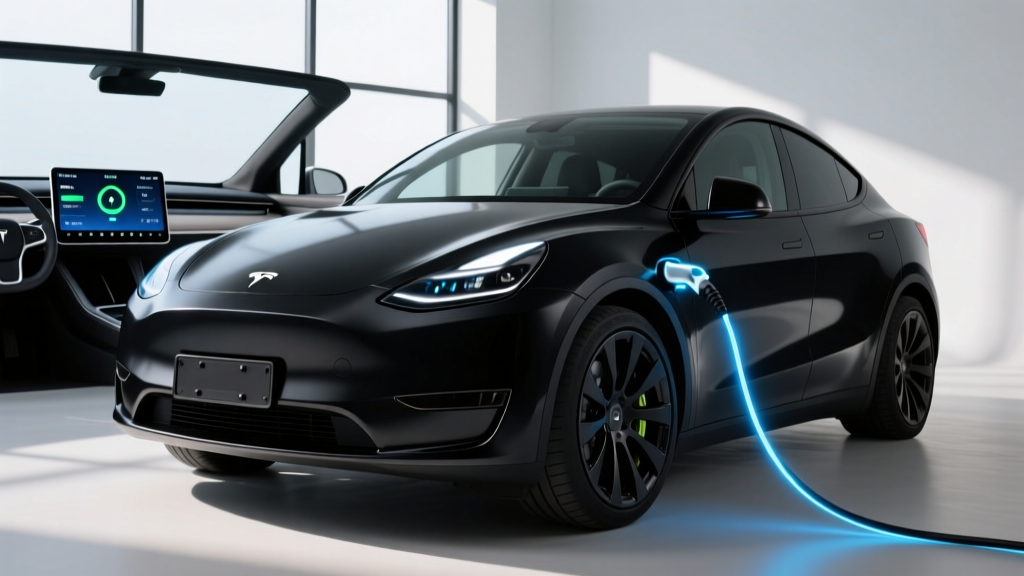
The Tesla Model Y has held the crown as the best-selling electric vehicle in the United States for good reason: strong range, access to the Supercharger network, and continuous over-the-air improvements. But the transition to Hardware 4 (HW4) — Tesla's latest Autopilot computer and sensor suite — marks one of the most significant mid-cycle updates the crossover has received. For buyers evaluating a Tesla HW4 Model Y, the question isn't just about range and price; it's about whether the upgraded vision system meaningfully improves daily driving and whether the Juniper refresh keeps this EV ahead of a rapidly closing field of competitors.
In this review, we break down every spec that matters — EPA range versus real-world expectations, DC fast-charging curves, battery chemistry, cabin space, tax-credit eligibility under current IRS §30D rules, and exactly what HW4 changes on the road. All figures reflect the current model year as sold in the U.S. market.
Tesla HW4 Model Y: Core Specifications at a Glance
| Spec | Long Range AWD | Performance AWD |
|---|---|---|
| EPA Range | 320 miles | 285 miles |
| Battery (usable) | ~75 kWh (NMC) | ~75 kWh (NMC) |
| Drivetrain | Dual-Motor AWD | Dual-Motor AWD |
| Horsepower | ~384 hp | ~456 hp |
| 0–60 mph | 4.8 sec | 3.5 sec |
| Peak DC Fast Charge | 250 kW | 250 kW |
| 10–80% DC Time | ~27 min | ~27 min |
| Level 2 Home Charge | 11.5 kW (~44 mi/hr) | 11.5 kW (~44 mi/hr) |
| MPGe (combined) | 111 MPGe | 102 MPGe |
| Efficiency | 30 kWh/100 mi | 33 kWh/100 mi |
| Base MSRP | $44,990 | $51,490 |
| Autopilot Hardware | HW4 | HW4 |
Note: Tesla adjusts pricing and trim availability frequently. Always confirm current figures on Tesla's configurator before purchasing.
Real-World Range: What the EPA Sticker Doesn't Tell You
EPA Estimated: 320 miles
Real-World Highway (70–75 mph, mild weather): ~265–285 miles
Real-World Highway (cold weather, below 32°F): ~210–240 miles
City / Mixed Commute: ~290–310 miles (regen braking recovers more energy at lower speeds)
The EPA combined rating of 320 miles for the Long Range AWD is achievable under ideal conditions — moderate temperatures, mixed city/highway driving, and speeds under 65 mph. In our experience and consistent with independent testing, sustained highway travel at 70–75 mph reduces effective range by roughly 12–18%. The Model Y's aerodynamic profile helps, but physics still applies: higher speeds mean exponentially more drag.
Cold weather compounds the loss. Lithium-ion batteries lose efficiency in low temperatures, and cabin heating draws significant power even with the Model Y's standard heat pump. Expect a 25–35% range reduction in sub-freezing conditions on longer trips. Preconditioning the battery while plugged in — a feature Tesla handles automatically when you navigate to a Supercharger — mitigates some of this, but it won't eliminate it.
For the Performance trim, the 285-mile EPA figure drops to roughly 230–245 miles on a real-world highway run. The larger 21-inch wheels and stickier tires increase rolling resistance, and the more aggressive powertrain tuning nudges consumption higher.
Charging Speed: DC Fast Charging and Home Level 2
The Model Y continues to use a ~75 kWh usable NMC (nickel manganese cobalt) battery pack with a peak DC fast-charge rate of 250 kW on V3 Superchargers and compatible third-party CCS stations (via Tesla's included NACS-to-CCS adapter, or natively at NACS-equipped chargers).
| Charging Level | Power / Rate | Miles Added per Hour |
|---|---|---|
| Level 1 (120V household) | ~1.4 kW | ~3–5 mi/hr |
| Level 2 (240V, 48A Wall Connector) | 11.5 kW | ~44 mi/hr |
| DC Fast Charge (V3 Supercharger) | Peak 250 kW | ~162 mi in 15 min (10–80% in ~27 min) |
Charging curve reality: The 250 kW peak only holds briefly at low state-of-charge (roughly 10–25% SoC). From 25% to 50%, the rate tapers to approximately 150–180 kW. Above 60%, it drops further to around 80–100 kW, and above 80% it slows dramatically to protect battery longevity — typical of all NMC chemistries. Plan your road-trip stops to charge between 10% and 80% for the fastest experience; charging from 80% to 100% at a DC fast charger can take nearly as long as the 10–80% session.
For home charging, Tesla's Gen 2 Wall Connector on a 60-amp circuit delivers 48 amps (11.5 kW), adding roughly 44 miles of range per hour — enough to fully replenish the battery overnight from near-empty. A standard 240V/40A dryer-style outlet (NEMA 14-50) delivers about 32 miles per hour. According to fueleconomy.gov, the Model Y Long Range achieves 111 MPGe combined, translating to roughly $0.04–$0.06 per mile on the national average electricity rate — a fraction of the $0.12–$0.16 per mile for a comparable gas crossover.
What HW4 Actually Changes for Autopilot and FSD
Tesla Autopilot and FSD (Supervised) are SAE Level 2 driver-assistance systems. The driver must remain fully engaged, hands on or near the wheel, and eyes on the road at all times. These systems do not make the Model Y a self-driving vehicle.
Hardware 4 replaces the previous HW3 computer and sensor suite with higher-resolution cameras (up from 1.2 megapixels to 5 megapixels), a more powerful onboard neural-network processor, and the removal of ultrasonic sensors in favor of Tesla's vision-only "Tesla Vision" approach. HW4 also introduces a new forward-facing radar on some builds for improved object detection in low-visibility conditions, though Tesla's deployment of radar varies by production batch.
What this means on the road: HW4's improved camera resolution provides better detection of lane markings, obstacles, and pedestrians at greater distances — particularly at highway speeds and in challenging lighting (dawn, dusk, rain). FSD (Supervised) benefits most, with smoother lane changes, more confident merges, and fewer phantom-braking events compared to HW3-era systems. However, FSD remains a supervised system: it will make errors, miss construction zones, and require intervention. Budget-conscious buyers should know that basic Autopilot (Traffic-Aware Cruise Control + Autosteer) is included at no extra cost, while FSD (Supervised) is an $8,000 add-on or $99/month subscription as of the current pricing.
For safety context, the Model Y continues to earn top marks from the NHTSA, maintaining its 5-Star Overall Safety Rating. The IIHS has similarly awarded the Model Y top ratings in crashworthiness categories.
Interior, Cargo Space, and Daily Livability
The Juniper-refreshed Model Y interior marks a notable quality improvement over pre-2025 builds. Ambient lighting, ventilated front seats, a rear-seat touchscreen, and improved sound insulation narrow the gap with premium competitors like the BMW iX and Genesis Electrified GV70.
- Cargo volume (behind 2nd row): ~30.2 cu ft
- Cargo volume (2nd row folded): ~72.1 cu ft
- Front trunk (frunk): ~4.1 cu ft
- Front headroom: 41.0 in
- Rear legroom: 41.6 in
- Seating: 5 standard (optional 7-seat config available with small 3rd row, reducing cargo significantly)
The 15.4-inch center touchscreen handles all vehicle controls — there are no physical buttons for climate, mirrors, or glovebox. This minimalism appeals to some and frustrates others. Turn signals are now on a stalk (Tesla reversed the steer-by-wire yoke-only approach for the Juniper refresh), which improves daily usability considerably.
The optional 7-seat configuration adds a small third row suitable only for children under about 5'4". With the third row up, cargo space shrinks to roughly 12 cu ft. For families regularly carrying more than five, a 3-row EV SUV like the Kia EV9 may be a better fit.
Pricing, Trim Levels, and Federal Tax Credit Eligibility
| Trim | Base MSRP | Est. Federal Credit (§30D) | Effective Price* |
|---|---|---|---|
| Long Range AWD | $44,990 | Up to $7,500 | ~$37,490 |
| Performance AWD | $51,490 | Up to $7,500 | ~$43,990 |
*Effective price assumes full $7,500 federal tax credit eligibility. Actual credit depends on individual tax liability, income caps, and battery-sourcing compliance.
IRS §30D eligibility requirements for new EVs (current-year rules):
- MSRP cap: SUVs/vans/pickups must be ≤ $80,000 (Model Y qualifies at all trims)
- Buyer income cap: AGI ≤ $150,000 (single), $225,000 (head of household), $300,000 (joint)
- Battery sourcing: Critical minerals and battery components must meet phased-in domestic/free-trade-partner sourcing thresholds — Tesla has worked to localize supply chains, but compliance percentages shift by model year. Verify at point of sale.
- Point-of-sale transfer: Buyers can transfer the credit to the dealer at purchase for an immediate price reduction, rather than waiting to claim it on their tax return.
Always confirm eligibility with your tax professional and review the latest rules at IRS.gov. Credit amounts and sourcing requirements are subject to legislative and regulatory changes.
How the Tesla HW4 Model Y Stacks Up Against Competitors
The electric compact/midsize crossover segment has matured considerably. Here's how the Model Y Long Range compares to key rivals:
| Spec | Tesla Model Y LR | Ford Mustang Mach-E ER AWD | Hyundai Ioniq 5 Long Range AWD | Kia EV6 GT-Line AWD |
|---|---|---|---|---|
| EPA Range | 320 mi | 290 mi | 290 mi | 282 mi |
| Peak DC Charge | 250 kW | 150 kW | 235 kW | 235 kW |
| 10–80% DC Time | ~27 min | ~39 min | ~18 min | ~18 min |
| Base MSRP (AWD) | $44,990 | $48,995 | $50,100 | $52,900 |
| Charging Network | NACS (Supercharger native) | NACS (adapter) | NACS (adapter) | NACS (adapter) |
The Model Y's advantages remain clear: class-leading EPA range, native Supercharger access (no adapter needed), strong cargo capacity, and the lowest starting price in this comparison. The Hyundai Ioniq 5 and Kia EV6, built on the E-GMP 800V architecture, charge faster from 10–80% thanks to their ability to sustain higher power longer on 350 kW chargers — a meaningful edge on road trips if you can find compatible infrastructure. The Mach-E offers a more traditional driving feel and physical controls but trails on range and charging speed.
Pros and Cons: The Honest Verdict
- 320-mile EPA range — best in class
- Supercharger network: most reliable DC fast-charging in the U.S.
- HW4 vision system improves FSD and Autopilot confidence
- Spacious cargo area (72+ cu ft folded)
- OTA updates add features post-purchase
- Low cost per mile on home electricity
- Strong resale value relative to most EVs
- No physical buttons — all controls via touchscreen
- 250 kW peak charge rate trails 800V competitors (Ioniq 5, EV6)
- FSD (Supervised) remains expensive and requires driver attention
- Ride quality firm on Performance trim's 21" wheels
- Panel gaps and paint quality still inconsistent on some builds
- Insurance premiums run 15–30% higher than comparable gas crossovers
Who Should Buy the Tesla HW4 Model Y?
Choose the Model Y Long Range if: You want maximum range and value, have home Level 2 charging, regularly take road trips where Supercharger reliability matters, and prefer a minimalist cabin.
Choose the Model Y Performance if: Acceleration thrills matter (3.5-sec 0–60), you rarely exceed 250 miles between charges, and you accept a firmer ride for sharper handling.
Look elsewhere if: You need physical climate controls (try the Ioniq 5), you want 800V-class ultra-fast charging (Ioniq 5/EV6), you need 3-row seating for adults (Kia EV9), or you want a luxury-brand badge and dealer service experience (BMW iX, Genesis Electrified GV70).
The Tesla HW4 Model Y remains the default recommendation for buyers entering the EV space who want a proven, well-rounded electric crossover with the lowest-friction road-trip experience available. Its range, efficiency, and Supercharger ecosystem are genuine ownership advantages — not marketing fluff. But the competition has narrowed the gap in charging speed, interior quality, and driving dynamics. Test-drive at least one rival before committing.
Frequently Asked Questions
What is the real-world range of the Tesla HW4 Model Y?
The Long Range AWD is EPA-rated at 320 miles, but expect roughly 265–285 miles on sustained highway trips in mild weather and 210–240 miles in freezing conditions. City driving with regenerative braking can approach the EPA figure.
How fast does the Tesla HW4 Model Y charge?
At a V3 Supercharger or compatible 250 kW DC fast charger, the Model Y charges from 10–80% in approximately 27 minutes. At home on a 48-amp Level 2 Wall Connector, it adds about 44 miles of range per hour (full charge in roughly 7–8 hours).
Does the Tesla Model Y qualify for the $7,500 federal EV tax credit?
The Model Y qualifies for up to $7,500 under IRS §30D, provided the buyer meets income caps (≤$150K single / ≤$300K joint) and the vehicle's battery components and critical minerals meet current-year domestic sourcing thresholds. The credit can be transferred at point of sale for an immediate price reduction. Verify eligibility at purchase, as sourcing rules evolve.
Is the Tesla HW4 Model Y worth buying over the Ford Mach-E or Hyundai Ioniq 5?
If Supercharger access, maximum range, and cargo space are your priorities, the Model Y wins. If ultra-fast 800V charging (10–80% in ~18 minutes) or physical interior controls matter more, the Ioniq 5 or EV6 may be a better fit. The Mach-E appeals to drivers who prefer a more traditional car-like driving feel.
What does HW4 improve over HW3?
HW4 uses 5-megapixel cameras (vs. 1.2MP on HW3), a faster neural-network processor, and improved object-detection algorithms. The result is better lane-keeping, fewer phantom-braking events, and more confident FSD (Supervised) performance — especially at highway speeds and in low light.
What is the battery warranty on the Tesla Model Y?
Tesla covers the battery and drive unit for 8 years or 120,000 miles (whichever comes first) on the Long Range and Performance trims, with a minimum 70% capacity retention threshold over that period.