If you own a 2019–2023 Tesla Model 3 or Model Y, you've likely seen the chatter about Hardware 4 (HW4/AI4) and wondered whether your existing Hardware 3 (HW3) computer is holding you back — or whether a Tesla HW3 upgrade to the newer computer is even possible. As of early 2026, the answer is nuanced: Tesla has not offered a universal paid retrofit from HW3 to HW4, but HW3 continues to receive FSD (Supervised) updates and remains a capable SAE Level 2 driver-assistance platform. Here's what you actually need to know about living with HW3 today, what it can and can't do, and whether trading up to a newer Tesla makes more financial sense than waiting for a retrofit program that may never come.
What Tesla Hardware 3 Actually Is (and Isn't)
Hardware 3 — also called the "Full Self-Driving Computer" or AP3 — launched in April 2019, replacing the NVIDIA Drive PX2-based HW2.5. It uses a Tesla-designed dual-chip FSD silicon configuration, each chip running a neural network inference pipeline for redundancy. Combined processing throughput is roughly 144 TOPS (trillions of operations per second) across both chips, though Tesla has never published a clean sustained-performance number the way NVIDIA does for its automotive SoCs.
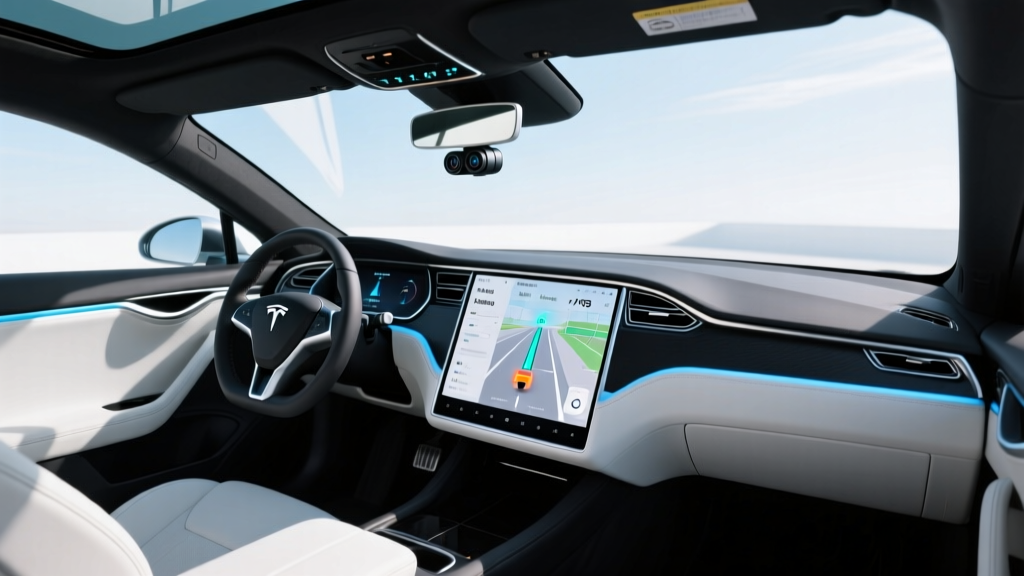
HW3 pairs with the eight-camera "Tesla Vision" suite (no radar or ultrasonic sensors on post-2022 vehicles) and runs the current FSD (Supervised) v12.x and v13.x end-to-end neural network stack. It supports:
- Autopilot (lane centering, adaptive cruise, auto lane change)
- Enhanced Autopilot (navigate on Autopilot, auto park, summon)
- FSD (Supervised) — city streets, stop signs, traffic lights, unprotected turns
- Dashcam, sentry mode, and the full infotainment stack (though MCU matters more here)
The key limitation versus HW4: HW3 cameras use older 1.2-megapixel sensors (ON Semiconductor AR0136), while HW4 vehicles use higher-resolution 5-megapixel sensors with wider fields of view and better low-light performance. HW4 also adds a higher-resolution front camera, a new radar interface (on some markets), and roughly 2–3x the compute headroom for future neural-net complexity.
HW3 vs HW4: Spec-by-Spec Breakdown
| Feature | Hardware 3 (AP3) | Hardware 4 (AI4) |
|---|---|---|
| Introduced | April 2019 | March 2023 (Model S/X), mid-2023 (Model 3/Y) |
| FSD Silicon | Dual Tesla FSD chips, ~144 TOPS | Next-gen Tesla FSD chip, ~2–3x throughput |
| Camera Resolution | 1.2 MP (8 cameras) | 5 MP (7 cameras, higher-res front) |
| Camera Count | 8 | 7 (removed passenger-side repeater) |
| Radar | Removed (Tesla Vision only, post-2022) | HD radar on some markets/vehicles |
| Ultrasonic Sensors | Removed (post-Oct 2022) | None (Tesla Vision) |
| FSD (Supervised) Support | Yes, current v12/v13 builds | Yes, with higher-fidelity inputs |
| Low-Light / Night Performance | Adequate, more noise | Noticeably improved |
| Future Neural-Net Headroom | Moderate — may plateau | High — designed for next-gen models |
| Paid Retrofit Available? | No (as of early 2026) | N/A |
Does Tesla Offer a HW3 to HW4 Retrofit in 2026?
The short answer: no general paid retrofit program exists as of early 2026. Tesla previously offered free HW2.5 → HW3 upgrades for customers who had purchased the original $7,000 FSD package before April 2019, but that program closed years ago. There has been no equivalent HW3 → HW4 program announced, and Tesla's recent earnings calls have not signaled one is coming.
Why not? The HW4 camera harness, mounting points, windshield cutouts, and ECU architecture differ enough from HW3 that a retrofit would require significant service-center labor — new camera modules, a new ECU, new wiring, and potentially a new windshield for the front camera pod. Estimates from independent Tesla service trackers put the hypothetical cost at $2,500–$4,000 if Tesla ever offered it, which would cut deeply into the margin of a $8,000 FSD subscription or one-time purchase.
What has happened: Tesla continues to ship FSD (Supervised) updates to HW3 vehicles. The v12 and v13 end-to-end neural network branches run on HW3, though with occasional reports of slightly more conservative behavior in low-light and complex unprotected-left scenarios compared to HW4 — consistent with the lower-resolution camera inputs.
FSD (Supervised) on HW3: Real-World Performance in 2026
Based on aggregated owner reports and independent testing (including IIHS evaluations of driver-monitoring systems), FSD Supervised on HW3 in early 2026 handles the following scenarios competently:
- Highway driving: Excellent. Lane changes, on-ramp merges, and speed management are smooth and predictable.
- Suburban streets: Good. Stop signs, traffic lights, and right turns are handled reliably; unprotected left turns occasionally require driver takeover on complex intersections.
- Urban cores: Variable. Construction zones, double-parked vehicles, and jaywalking pedestrians still trigger frequent disengagements — true of HW4 as well, but HW3's lower camera resolution can mean slightly earlier or more conservative disengagements.
- Night / rain: Adequate but noticeably weaker than HW4. The 1.2 MP sensors produce more image noise, and the neural net has less data to work with in low-contrast scenes.
- It does not drive without supervision. You must remain attentive and ready to intervene.
- It does not handle all weather. Heavy rain, fog, snow, and direct sun glare can cause disengagements.
- It does not replace the driver at school zones, railroad crossings, or emergency vehicle scenes.
- It is not "Level 3" or "Level 4" autonomy. You are legally and operationally the driver at all times.
Tesla Model 3 and Model Y (HW3 Era): Key Specs at a Glance
If you're evaluating a used 2019–2023 Model 3 or Model Y with HW3 — or considering whether to trade up to a 2024+ Highland/Juniper refresh with HW4 — here are the numbers that matter. Specs below reflect the most common HW3-era configurations.
| Spec | Model 3 LR AWD (2023) | Model Y LR AWD (2023) |
|---|---|---|
| EPA Range | 333 mi | 304 mi |
| Battery (usable) | ~75 kWh, NMC (LG/Panasonic) | ~75 kWh, NMC (LG/Panasonic) |
| Efficiency | 132 MPGe / 25 kWh/100mi | 122 MPGe / 28 kWh/100mi |
| Peak DC Charge Rate | 250 kW (V3 Supercharger) | 250 kW (V3 Supercharger) |
| 10–80% DC Charge Time | ~27 min | ~28 min |
| Level 2 Home Charging | 11.5 kW / ~44 mi/hr | 11.5 kW / ~40 mi/hr |
| 0–60 mph | 4.2 sec | 4.8 sec |
| Horsepower | ~346 hp | ~384 hp |
| Drivetrain | Dual-motor AWD | Dual-motor AWD |
| Cargo Volume | 23 cu ft (trunk) + frunk | 30 cu ft (rear) + 41 cu ft max + frunk |
| Battery Warranty | 8 yr / 120,000 mi | 8 yr / 120,000 mi |
The EPA 333-mile sticker on a 2023 Model 3 LR AWD assumes mixed city/highway driving at moderate temperatures. In real-world use, expect:
• Highway (70–75 mph, fair weather): ~270–290 miles
• Cold weather (below 32°F, mixed driving): ~220–260 miles (NMC batteries lose 15–25% range in deep cold without preconditioning)
• City / suburban with regen: ~300–330 miles (can match or beat EPA)
Always precondition before DC fast charging — it's essential for hitting peak 250 kW rates.
Charging Speed: What HW3-Era Teslas Can Do
HW3 vehicles use the same battery packs and charge controllers as their HW4 counterparts for a given model year, so charging speed is unaffected by the Autopilot computer. The bottleneck is the battery's charge curve, not the FSD ECU.
| Charging Level | Power (kW) | Miles Added per Hour | Notes |
|---|---|---|---|
| Level 1 (120V outlet) | ~1.4 kW | ~5 mi/hr | Emergency/trickle only |
| Level 2 (240V, 48A Wall Connector) | 11.5 kW | ~40–44 mi/hr | Ideal home setup; full charge in ~7 hr |
| Level 2 (240V, 32A Mobile Connector) | 7.7 kW | ~28–30 mi/hr | Common NEMA 14-50 outlet |
| DC Fast (V3 Supercharger) | 250 kW peak | ~1,000 mi/hr (peak) | 10–80% in ~27 min; tapers hard above 80% |
| DC Fast (CCS adapter, EA/others) | 150–250 kW | Varies | Requires Tesla CCS adapter (included post-2022) |
Charge curve reality: The 250 kW peak rate on a V3 Supercharger only holds between roughly 10–30% State of Charge (SoC). By 50% SoC, you're seeing ~150 kW; by 80%, it's dropped to ~50 kW. This is normal lithium-ion NMC behavior — not a HW3 limitation. Plan road-trip stops around 10–80% charges for the best time efficiency.
Pricing, Tax Credits, and the Used-EV Equation
If you already own a HW3 Tesla, there's no retrofit cost to weigh — but if you're deciding between buying a used HW3 vehicle versus a new HW4 model, the economics matter.
| Scenario | Approx. Price | Federal Credit | Net Cost |
|---|---|---|---|
| Used 2022 Model 3 LR (HW3, ~30k mi) | $27,000–$32,000 | Up to $4,000 (§25E used EV credit, 30% of sale price, max $4,000) | $23,000–$28,000 |
| New 2026 Model 3 LR (HW4) | $42,880 MSRP | Up to $7,500 (§30D, if eligible) | $35,380 |
| New 2026 Model Y LR (HW4) | $44,990 MSRP | Up to $7,500 (§30D, if eligible) | $37,490 |
Federal tax credit rules (2026, per IRS §30D):
- Income caps: AGI must not exceed $150,000 (single), $225,000 (head of household), or $300,000 (joint).
- MSRP caps: $55,000 for sedans (Model 3), $80,000 for SUVs/trucks (Model Y, Model X).
- Battery sourcing: The $7,500 credit is split into $3,750 for critical-mineral sourcing and $3,750 for battery-component manufacturing — both must be met for the full amount, and the sourcing requirements tighten annually. Check the current eligible-vehicle list on fueleconomy.gov before purchasing.
- Point-of-sale transfer: You can transfer the credit to the dealer at purchase to reduce the upfront price, rather than waiting for a tax refund.
- Used EV credit (§25E): 30% of the sale price, max $4,000, for vehicles priced at $25,000 or less. Income caps are half the new-vehicle limits.
Consult a tax professional to confirm your personal eligibility — rules shift annually and depend on your specific filing situation.
Pros and Cons: Living with HW3 in 2026
- FSD (Supervised) still receives regular OTA updates and runs the same v12/v13 end-to-end stack as HW4
- No additional cost — you already own the hardware
- Model 3/Y HW3-era vehicles offer strong range, Supercharger access, and proven reliability
- Superior efficiency vs most competitors (25–28 kWh/100mi real-world)
- Full Tesla Supercharger network access (now NACS standard across the industry)
- 8-year/120,000-mile battery warranty still in effect for most HW3-era vehicles
- 1.2 MP cameras produce lower-fidelity images than HW4's 5 MP sensors, especially at night
- No paid retrofit path to HW4 exists — trading in is the only upgrade option
- Future FSD versions may require HW4 compute, potentially leaving HW3 behind (unconfirmed but plausible by 2027–2028)
- Older HW3 vehicles lack the refreshed Highland/Juniper interior, quieter cabin, and ventilated seats
- Sentry mode and dashcam quality are visibly lower-resolution on HW3 cameras
- Resale value may diverge further from HW4 vehicles as FSD capabilities grow
Should You Upgrade, Trade In, or Stay Put?
- You primarily drive in daylight and fair weather, where HW3's camera limitations are minimal
- You use Autopilot (not FSD) for highway commuting — HW3 handles this flawlessly
- Your vehicle is paid off, under 80,000 miles, and you want to avoid a new car payment
- You don't need the latest interior refinement or cabin quietness of the Highland/Juniper refresh
- You rely heavily on FSD (Supervised) in urban environments, at night, or in rain
- You want the best possible camera feed for dashcam/sentry evidence
- You plan to keep the next vehicle 5+ years and want maximum FSD future-proofing
- You qualify for the §30D credit and the net cost of a new Model 3/Y fits your budget
- Tesla announces a formal HW3→HW4 retrofit program (unlikely but not impossible)
- You're within 12–18 months of your current vehicle's battery warranty expiration and want to time your next purchase strategically
Frequently Asked Questions
Can I pay Tesla to upgrade my HW3 to HW4?
As of early 2026, no. Tesla has not announced or offered any paid retrofit program from Hardware 3 to Hardware 4. The only way to get HW4 is to purchase a vehicle that shipped with it from the factory (roughly March 2023 onward for Model S/X, mid-2023 onward for Model 3/Y).
Does FSD (Supervised) still work on HW3?
Yes. Tesla continues to ship FSD (Supervised) updates to HW3 vehicles. The v12 and v13 end-to-end neural network builds run on HW3 silicon. Performance is strong in most conditions, though HW4's higher-resolution cameras provide an edge in low-light and complex urban scenes.
Will HW3 stop receiving FSD updates?
Tesla has not announced an end-of-life date for HW3 FSD support. However, as neural network models grow in complexity, it's plausible that HW3 could eventually lack the compute headroom for future FSD versions — potentially around 2027–2028 based on the trajectory of model sizes. This is speculation, not a confirmed timeline.
Is HW3 safe for highway Autopilot use?
Yes. HW3 handles highway Autopilot (lane centering, adaptive cruise, auto lane changes) reliably and has done so since 2019. The NHTSA has investigated Tesla Autopilot incidents, but no recalls have specifically targeted HW3 hardware. Always remain attentive — this is SAE Level 2 assistance, not autonomous driving.
How does HW3 affect my Tesla's resale value?
HW3 vehicles currently sell for less than equivalent HW4 vehicles on the used market, with a gap of roughly $2,000–$4,000 depending on model and mileage. If FSD capabilities continue to diverge between HW3 and HW4, this gap may widen. However, for buyers who don't plan to use FSD, HW3 vehicles represent strong value at current used prices.
What's the real-world range of a HW3-era Model 3 or Model Y?
The EPA sticker says 333 miles (2023 Model 3 LR AWD) or 304 miles (2023 Model Y LR AWD), but real-world results depend heavily on conditions. Highway driving at 75 mph yields ~270–290 miles for the Model 3 and ~250–270 for the Model Y. Cold weather (below 32°F) can reduce range by 15–25% if the battery isn't preconditioned. City driving with regenerative braking can match or exceed EPA estimates.
Does the HW3 computer affect charging speed?
No. Charging speed is determined by the battery pack, thermal management system, and onboard charger — not the Autopilot/FSD computer. A HW3 Model 3 LR charges at the same 250 kW peak DC rate and 11.5 kW Level 2 rate as a HW4 Model 3 LR from the same model year.
Sources: fueleconomy.gov (EPA range and efficiency data), IRS §30D clean vehicle credits, NHTSA safety data, Tesla manufacturer specifications.