The Heart of Tesla's Innovation: Inside the Palo Alto Headquarters
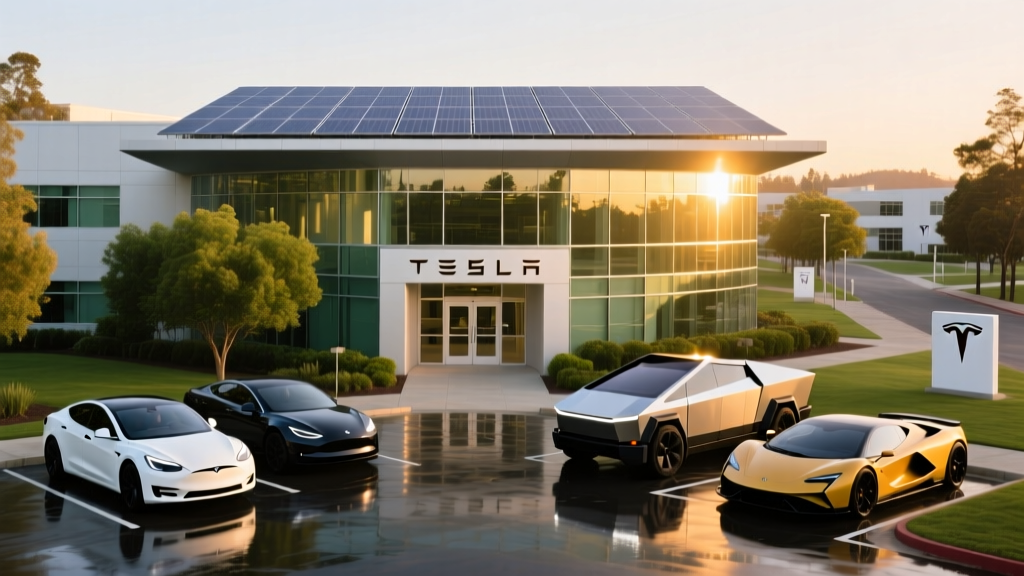
While Tesla's corporate address officially moved to Austin, Texas in 2021, the company's engineering soul remains deeply rooted in Palo Alto, California. The Palo Alto facilities—spanning multiple buildings along Page Mill Road and Hanover Street—continue to serve as the nerve center for Tesla's most critical EV development work. This isn't just an office; it's where the Model S, Model 3, Model Y, and Cybertruck were conceived, where Autopilot and Full Self-Driving (FSD) software evolved, and where battery cell chemistry decisions that affect millions of vehicles are still made.
For EV shoppers and enthusiasts, understanding what happens at Tesla HQ Palo Alto matters because it directly shapes the vehicles you can buy today. The engineering decisions made here determine your real-world range, charging speed, battery longevity, and the actual capabilities of driver-assistance features. Let's break down how Tesla's Palo Alto operations translate into the specifications and ownership experience of their 2026 vehicle lineup.
Current Tesla Lineup: What Palo Alto Engineering Delivers in 2026
| Model | EPA Range | Battery (kWh) | Chemistry | 0-60 mph | Peak DC Charge | Base MSRP |
|---|---|---|---|---|---|---|
| Model 3 RWD | 341 mi | 60 (usable) | LFP | 5.8s | 170 kW | $38,990 |
| Model 3 Long Range AWD | 363 mi | 79 (usable) | NMC | 4.2s | 250 kW | $45,240 |
| Model Y Long Range | 330 mi | 79 (usable) | NMC | 4.8s | 250 kW | $47,740 |
| Model S Long Range | 402 mi | 100 (usable) | NMC | 3.1s | 250 kW | $74,990 |
| Cybertruck AWD | 340 mi | 123 (usable) | NMC | 4.1s | 250 kW | $79,990 |
Source: fueleconomy.gov and Tesla official specifications, 2026 model year.
Real-World Range vs. EPA Stickers: What Tesla Owners Actually Experience
Range Reality Check
EPA estimates are measured under controlled conditions. Real-world range varies significantly based on driving style, temperature, terrain, and speed.
- Highway driving (75+ mph): Expect 15-20% less than EPA. A Model 3 Long Range rated at 363 miles typically delivers 290-310 miles at sustained highway speeds.
- Cold weather (below 40°F): Range drops 20-30% due to battery chemistry limitations and cabin heating demands. The same Model 3 might see 250-270 miles in freezing conditions.
- City driving with regen: Often matches or slightly exceeds EPA ratings thanks to regenerative braking recapturing energy.
- LFP vs NMC behavior: LFP batteries (Model 3 RWD) can be charged to 100% daily without degradation concerns, while NMC batteries benefit from 80% daily charge limits for longevity.
Tesla's Palo Alto battery engineers have made deliberate chemistry choices that affect your ownership experience. The lithium iron phosphate (LFP) cells in the base Model 3 offer lower energy density but superior cycle life and thermal stability. You can charge them to 100% regularly without accelerated degradation—a practical advantage for daily commuters who need maximum range every morning.
The nickel manganese cobalt (NMC) cells in Long Range variants prioritize energy density, giving you more miles per charge but requiring more careful state-of-charge management. Tesla's battery management system (BMS), developed in Palo Alto, automatically buffers the pack to prevent damage, but owners should still understand that "84 kWh usable" means the physical pack is larger—the BMS reserves capacity to protect longevity.
Charging Infrastructure: Supercharger Network and Home Setup
Tesla's Palo Alto teams designed not just vehicles but the entire charging ecosystem. The Supercharger network—now exceeding 55,000 stalls globally—remains the most reliable DC fast-charging infrastructure for EVs. But charging speed isn't just about peak kW; it's about the charge curve.
| Charging Method | Power (kW) | Miles Added per Hour | Notes |
|---|---|---|---|
| Level 1 (120V household) | 1.4 kW | 3-5 mi/hr | Emergency/trickle only |
| Level 2 (240V home) | 7.7-11.5 kW | 25-44 mi/hr | Overnight full charge |
| Supercharger V3 | Up to 250 kW | ~1,000 mi/hr peak | 10-80% in 15-25 min |
| Supercharger V4 | Up to 350 kW | ~1,200 mi/hr peak | Rolling out 2025-2026 |
The charge curve matters more than peak kW. A Model 3 Long Range peaks at 250 kW but only sustains that rate briefly between 10-30% state of charge. From 30-80%, the rate tapers progressively—averaging closer to 150-180 kW over the full session. That's why Tesla quotes "10-80% in 15-25 minutes" rather than a single speed. Above 80%, charging slows dramatically to protect battery health, adding perhaps 20-30 minutes to reach full capacity.
For home charging, Tesla's Wall Connector delivers up to 11.5 kW (48 amps) on a 60-amp circuit, adding roughly 44 miles of range per hour. Most owners charge overnight and start each day with a full battery—eliminating "range anxiety" for daily driving. Installation costs typically range from $800-$2,500 depending on electrical panel capacity and distance from the panel to your parking spot.
Autopilot and FSD: What Palo Alto's AI Teams Have Actually Delivered
SAE Automation Level: Level 2 (Driver Assistance)
Tesla's Autopilot and Full Self-Driving (FSD) Supervised are Level 2 driver-assistance systems, not autonomous vehicles. The driver must remain engaged, hands on the wheel, eyes on the road, and ready to take over at any moment. Only Level 4 systems like Waymo's robotaxi service operate without human supervision in defined areas.
Tesla's Palo Alto AI and vision teams have pursued a camera-only approach to autonomous driving, rejecting lidar sensors used by competitors like Waymo and Cruise. The result is FSD Supervised—a $8,000 one-time purchase or $99/month subscription that enables features like automatic lane changes, navigation on Autopilot (highway on-ramp to off-ramp), traffic light and stop sign recognition, and city street driving.
Real-world capability in 2026: FSD handles most highway scenarios competently and has improved significantly in urban environments. However, it still struggles with construction zones, unusual road geometries, adverse weather (heavy rain, snow), and edge cases that require human judgment. Tesla's safety data, reported quarterly, shows vehicles with Autopilot engaged experience fewer crashes per million miles than the national average—but this reflects highway use where Autopilot excels, not full autonomy.
What FSD Does NOT Do
- Drive you while you sleep, text, or watch videos
- Handle all weather conditions (snow, heavy rain, fog)
- Navigate unmapped roads or construction zones reliably
- Replace an attentive, sober, licensed driver
Violating these limitations risks crashes, legal liability, and potential feature restrictions from Tesla.
Pricing, Tax Credits, and Total Cost of Ownership
| Model | Base MSRP | Federal Credit (§30D) | Effective Price | Income Cap | MSRP Cap |
|---|---|---|---|---|---|
| Model 3 RWD | $38,990 | $7,500 | $31,490 | $150k single / $300k joint | $55,000 (sedans) |
| Model 3 Long Range | $45,240 | $7,500 | $37,740 | $150k single / $300k joint | $55,000 (sedans) |
| Model Y Long Range | $47,740 | $7,500 | $40,240 | $150k single / $300k joint | $80,000 (SUVs/trucks) |
| Model S | $74,990 | $0 | $74,990 | Exceeds MSRP cap | $55,000 (sedans) |
| Cybertruck | $79,990 | $0 | $79,990 | Exceeds MSRP cap | $80,000 (SUVs/trucks) |
IRS §30D tax credit eligibility is complex and subject to change. The $7,500 credit requires meeting battery component sourcing (North America) and critical minerals (U.S. or free-trade partners) thresholds. Tesla's Fremont and Austin-built vehicles currently qualify, but supply chain shifts can affect eligibility mid-year. The credit is now available as a point-of-sale transfer, reducing your purchase price directly rather than waiting for tax filing. Always verify current eligibility at IRS.gov before purchasing.
Total cost of ownership advantages: Beyond the tax credit, EVs eliminate oil changes, reduce brake wear (thanks to regenerative braking), and cost significantly less to "fuel." At $0.15/kWh (national average home electricity), a Model 3 costs roughly $0.045 per mile to charge versus $0.12-0.15 per mile for a comparable gas sedan at $3.50/gallon. Over 5 years and 75,000 miles, that's $5,600-$7,900 in fuel savings alone.
Who Should Buy a Tesla (and Who Shouldn't)
Choose Tesla If:
- You have home charging access (garage, driveway, or workplace Level 2)
- You value over-the-air updates that add features post-purchase
- You want access to the Supercharger network for road trips
- You prioritize acceleration, tech integration, and minimal maintenance
- You live in an area with moderate winters (LFP range loss in extreme cold is significant)
Consider Alternatives If:
- You lack reliable home or workplace charging
- You need a third row (Model Y's optional third row is cramped; consider Rivian R1S or Kia EV9)
- You prefer physical buttons and traditional dealership service
- You tow heavy loads regularly (Cybertruck tows 11,000 lbs but range drops 40-50% when towing)
- You want a luxury interior with premium materials (Tesla prioritizes minimalism over traditional luxury)
Warranty, Reliability, and Long-Term Ownership
Tesla's warranty coverage reflects confidence in their Palo Alto-engineered battery and powertrain systems:
- Basic Vehicle: 4 years / 50,000 miles
- Battery & Drive Unit: 8 years / 100,000-150,000 miles (varies by model), with minimum 70% capacity retention
- LFP batteries: Can be charged to 100% daily; NMC batteries benefit from 80% daily limits
Real-world battery degradation data from Tesla's fleet shows most packs retain 90%+ capacity after 100,000 miles. Replacement costs remain high—$12,000-$20,000 depending on the model—but are rarely needed within the warranty period. Tesla's mobile service and service center network has expanded, though wait times in high-demand areas can still stretch to weeks for non-critical repairs.
Frequently Asked Questions
What is the real-world range of a Tesla Model 3?
The EPA rates the Model 3 Long Range at 363 miles, but expect 290-310 miles at highway speeds (75+ mph) and 250-270 miles in freezing weather. City driving with regenerative braking often matches or slightly exceeds the EPA rating.
How fast does a Tesla charge at home and on the road?
Home Level 2 charging (Tesla Wall Connector) adds ~44 miles per hour, fully charging overnight. Supercharger V3 stations deliver 10-80% in 15-25 minutes, though the charge curve tapers significantly above 80% to protect battery health.
How much does a Tesla cost after tax credits?
The Model 3 RWD starts at $38,990 and qualifies for the $7,500 federal credit (if you meet income caps and battery sourcing requirements), bringing the effective price to ~$31,490. Model Y Long Range drops from $47,740 to ~$40,240. Model S and Cybertruck exceed MSRP caps and don't qualify.
Is Tesla's Autopilot actually self-driving?
No. Autopilot and FSD Supervised are Level 2 driver-assistance systems requiring constant driver attention. They handle highway cruising and some city driving but cannot navigate all scenarios safely without human oversight. Only Level 4 robotaxis like Waymo operate autonomously.
Should I buy a Tesla or a competitor like Hyundai Ioniq 5 or Ford Mustang Mach-E?
Choose Tesla for Supercharger access, software updates, and proven efficiency. Consider Ioniq 5 for faster 800V charging (10-80% in 18 minutes) and a more spacious interior, or Mach-E for a more traditional driving feel and Ford dealership service. Test drive all three—range and charging specs matter, but driving experience is personal.
What's the biggest drawback of owning a Tesla?
Lack of physical controls (everything is touchscreen-based), minimal interior luxury compared to legacy brands, and service center wait times in some regions. Panel gaps and build quality have improved but still lag behind German automakers. The camera-only FSD approach also means reduced capability in adverse weather versus lidar-equipped competitors.