Honda's first mass-market electric SUV arrived with a familiar badge and a borrowed skeleton. The 2024 Honda Prologue rides on General Motors' Ultium platform — the same architecture underpinning the Chevrolet Blazer EV and Cadillac Lyriq — but wears Honda styling, tuning, and infotainment logic. For loyal Honda shoppers ready to go electric, it represents the brand's opening bid in the midsize EV SUV segment. But does the Prologue deliver enough range, charging speed, and value to compete with purpose-built rivals? This review breaks down every spec that matters.
Quick Verdict: A Comfortable Cruiser With Platform Trade-Offs
The 2024 Prologue is a spacious, composed electric SUV that prioritizes ride comfort and interior room over performance and charging speed. With up to 296 miles of EPA-estimated range, a well-designed cabin, and competitive pricing before incentives, it makes a strong case for Honda loyalists transitioning from a CR-V or Passport. However, its peak DC charging rate of 155 kW and lack of a front trunk (frunk) reveal the compromises of adapting a shared platform. It's a solid first effort — just not a segment leader.
Range, Efficiency, and the Real-World Reality Check
The Prologue offers three trim-range configurations that buyers need to understand before choosing:
| Trim / Drivetrain | EPA Range | MPGe (City/Hwy/Combined) | kWh/100 mi |
|---|---|---|---|
| EX (FWD) | 296 miles | 107 / 91 / 99 MPGe | 34 |
| Touring (FWD) | 296 miles | 107 / 91 / 99 MPGe | 34 |
| Elite (AWD) | 273 miles | 99 / 84 / 92 MPGe | 37 |
The 85 kWh usable battery capacity (NMC lithium-ion chemistry from LG Energy Solution) is competitive for this class. However, the absence of a heat pump means cold-weather efficiency trails rivals like the Hyundai Ioniq 5 and Tesla Model Y, both of which use heat pump systems to preserve range in winter conditions.
Charging Speed: Adequate but Not Class-Leading
Charging performance is where the Prologue's Ultium-platform tuning shows its age relative to 800-volt competitors.
| Charging Level | Power / Rate | Speed / Time | Connector |
|---|---|---|---|
| Level 1 (120V household) | ~1.4 kW | ~3-4 miles per hour | J1772 (NACS adapter available) |
| Level 2 (240V home) | 11.5 kW (48A) | ~29 miles per hour; full charge ~9 hrs | J1772 |
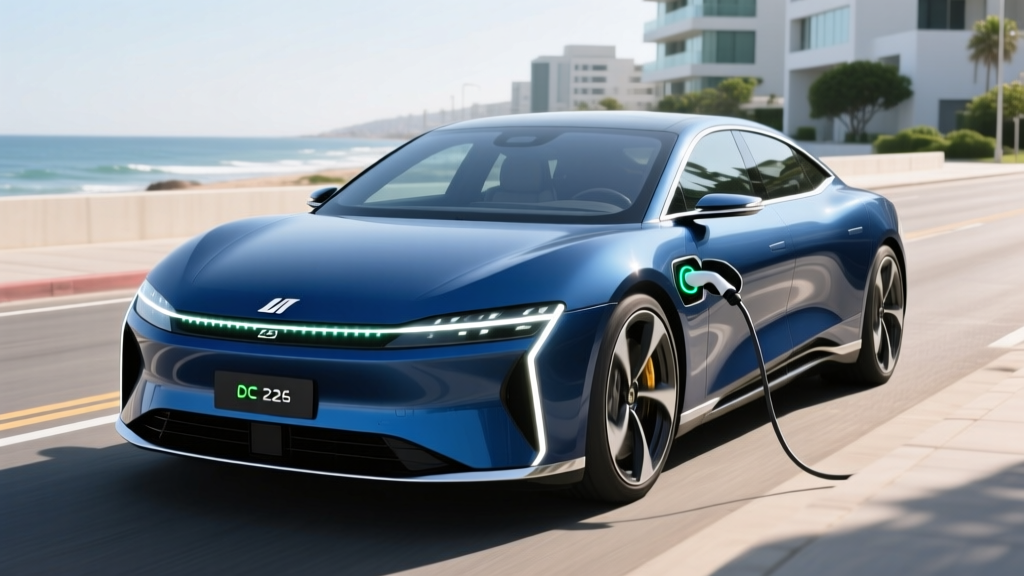
| DC Fast Charging | 155 kW peak | 10-80% in ~34 minutes | CCS1 (NACS adapter for Superchargers) |
The 155 kW peak DC fast-charging rate is the Prologue's most debated spec. At a 350 kW Electrify America or EVgo station, the Prologue will pull close to its peak rate from roughly 10-50% State of Charge (SoC), then taper progressively. The 10-80% time of approximately 34 minutes is acceptable for road trips but trails the Hyundai Ioniq 5 (18 minutes on 800V architecture) and the Tesla Model Y (roughly 25 minutes at a V3 Supercharger).
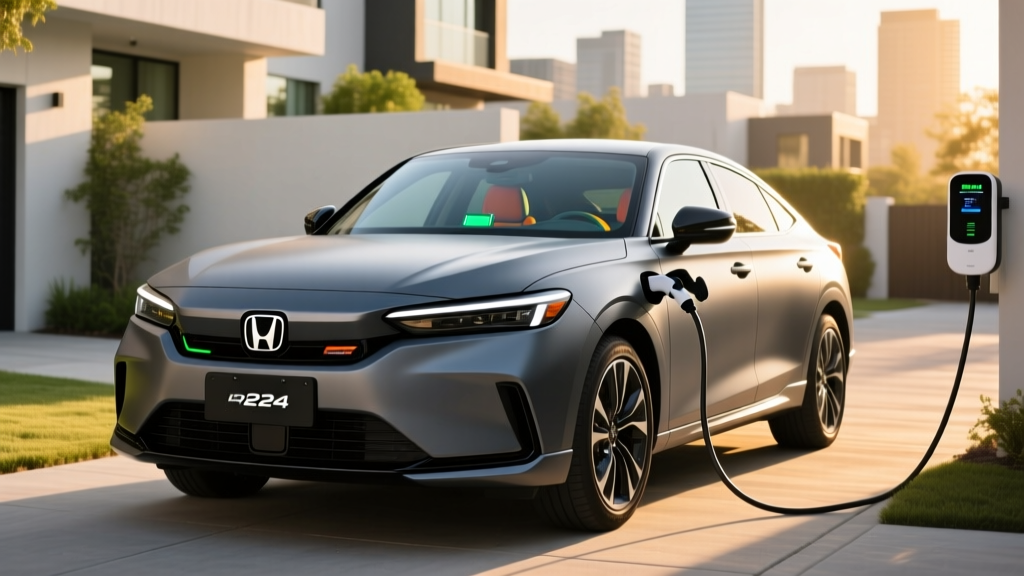
Honda includes a dual-voltage charging cord with every Prologue, supporting both 120V and 240V outlets. The Level 2 onboard charger at 11.5 kW is a strong point — it's faster than some competitors (the Model Y's onboard charger maxes at 11.5 kW as well, while the Ioniq 5 offers 10.9 kW). Overnight home charging is practical and straightforward.
For Tesla Supercharger access, Honda provides a NACS adapter, allowing Prologue owners to use Tesla's network via the J1772-to-NACS adapter — a significant infrastructure advantage in areas where CCS networks remain sparse.
Performance, Drivetrain, and Driving Dynamics
| Specification | FWD (EX / Touring) | AWD (Elite) |
|---|---|---|
| Horsepower | 212 hp | 288 hp |
| Torque | 236 lb-ft | 333 lb-ft |
| 0-60 mph | ~7.8 seconds | ~6.0 seconds |
| Drivetrain | Single front motor | Dual motor AWD |
| Towing Capacity | Not rated | 1,500 lbs |
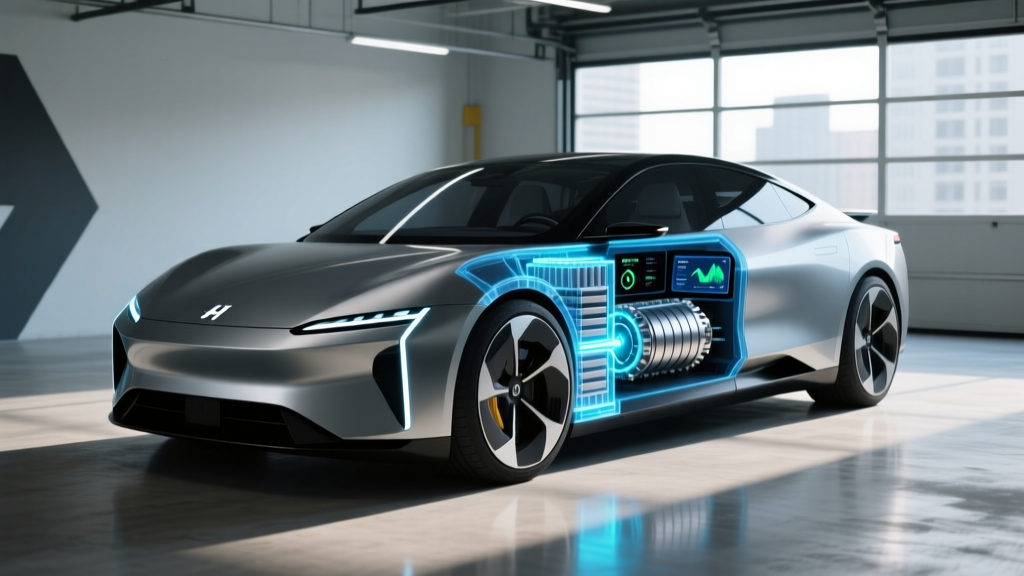
The FWD Prologue delivers adequate acceleration for daily commuting but won't thrill anyone coming from a sporty EV. The dual-motor AWD Elite's 288 hp and 6.0-second 0-60 time is more respectable and gives the Prologue confident highway merging capability. The Ultium platform's low center of gravity and Honda's suspension tuning produce a composed, quiet ride — arguably the Prologue's strongest dynamic attribute. Road noise is well-suppressed, and the ride quality over rough pavement is noticeably more refined than the Chevrolet Blazer EV it shares bones with.
Regenerative braking is adjustable via steering-wheel paddles, though the Prologue does not offer true one-pedal driving with a complete stop-and-hold function like a Nissan Leaf or Chevrolet Bolt. You'll still use the brake pedal in most scenarios.
Interior Space, Cargo, and Technology
The Prologue's midsize SUV dimensions translate to generous interior volume that will feel immediately familiar to CR-V and Passport upgraders:
- Front legroom: 41.4 inches
- Rear legroom: 37.6 inches
- Cargo volume (rear seats up): 25.2 cu ft
- Cargo volume (rear seats folded): 57.7 cu ft
- Frunk: None — the Ultium platform packaging does not allow a front trunk
The cabin uses an 11.3-inch touchscreen running Honda's latest infotainment system with wireless Apple CarPlay and Android Auto (standard on all trims), an 11-inch digital instrument cluster, and a Google Built-in interface on Touring and Elite trims. Physical knobs for volume and climate are retained — a welcome ergonomic choice.
The Honda Sensing ADAS suite is standard across all trims, including adaptive cruise control with low-speed follow, lane-keeping assist, collision mitigation braking, and traffic sign recognition. This is an SAE Level 2 driver-assistance system, meaning the driver must remain fully engaged and hands-on at all times. It is not a self-driving system.
Pricing, Trims, and Federal Tax Credit Eligibility
| Trim | Drivetrain | Base MSRP | Key Features |
|---|---|---|---|
| EX | FWD | $47,400 | 19" wheels, heated front seats, power liftgate, Honda Sensing |
| Touring | FWD | $51,400 | Leather seats, Bose 12-speaker audio, wireless charging, panoramic roof |
| Elite | AWD | $57,400 | Dual motor, 21" wheels, ventilated front seats, head-up display |
The 2024 Prologue does qualify for the up-to-$7,500 federal EV tax credit under IRS §30D, subject to the following requirements:
- MSRP cap: SUVs must be under $80,000 — all Prologue trims qualify.
- Buyer income cap: Modified AGI must not exceed $150,000 (single), $225,000 (head of household), or $300,000 (joint).
- Battery sourcing: The Prologue's Ultium battery uses LG cells manufactured in the U.S., meeting critical mineral and battery component requirements for the full $7,500.
- Point-of-sale transfer: Buyers can transfer the credit to the dealer at purchase, reducing the out-of-pocket price immediately — no need to wait for a tax refund.
Always verify current eligibility with your tax professional and the IRS Clean Vehicle credit page, as sourcing rules and eligible model lists are updated periodically.
With the full $7,500 credit applied at point of sale, the effective starting price of the Prologue EX drops to approximately $39,900 — competitive with the Hyundai Ioniq 5 and significantly undercutting the Tesla Model Y Long Range. The Elite AWD at roughly $49,900 after credit is a premium proposition but includes substantial standard equipment.
Ownership Costs, Warranty, and Long-Term Value
Honda backs the Prologue with a warranty package that matches industry norms:
- Battery & powertrain warranty: 8 years / 100,000 miles (covers battery capacity below 70% State of Health)
- New vehicle limited warranty: 3 years / 36,000 miles
- Corrosion warranty: 5 years / unlimited miles
- Roadside assistance: 3 years / 36,000 miles
Insurance costs for the Prologue tend to run 10-15% higher than a comparably priced gas SUV, consistent with EV industry averages. According to IIHS, the Prologue earned strong crash-test ratings, though buyers should verify the latest test results for their model year.
Depreciation is a wildcard. Honda's brand loyalty and the Prologue's Ultium underpinnings could support strong resale values, but early EV depreciation trends have been volatile. Buyers planning to keep the vehicle 5+ years will benefit most from the warranty coverage and lower per-mile energy costs.
How the Prologue Compares to Key Rivals
| Spec | Honda Prologue (FWD) | Hyundai Ioniq 5 (RWD) | Tesla Model Y (LR) | Ford Mustang Mach-E (RWD) |
|---|---|---|---|---|
| EPA Range | 296 mi | 303 mi | 310 mi | 250 mi |
| Battery (usable) | 85 kWh (NMC) | 77.4 kWh (NMC) | ~75 kWh (NMC) | 70 kWh (NMC) |
| DC Fast Charge (peak) | 155 kW | 240 kW (800V) | 250 kW | 150 kW |
| 10-80% Time | ~34 min | ~18 min | ~25 min | ~36 min |
| 0-60 mph | 7.8 sec | 7.0 sec | 5.0 sec | 6.1 sec |
| Base MSRP | $47,400 | $42,600 | $44,990 | $42,995 |
| Heat Pump | No | Yes | Yes | No (2024+ standard) |
| Frunk | No | Yes (0.85 cu ft) | Yes (4.1 cu ft) | Yes (4.7 cu ft) |
Choose the Prologue If:
- You're a Honda loyalist who values familiar ergonomics and dealer relationships
- Ride comfort and cabin quietness are top priorities
- You want a spacious midsize SUV without Tesla's minimalist interior approach
- You value standard physical climate controls and a traditional SUV layout
Look Elsewhere If:
- Fast DC charging speed is critical for frequent road trips
- You want a frunk for extra cargo flexibility
- Cold-weather range preservation is a top concern (no heat pump)
- You want the lowest base price in the segment (Ioniq 5 starts ~$5K lower)
The Bottom Line: Who Should Buy the 2024 Prologue?
The 2024 Honda Prologue is best suited for suburban families and commuters who primarily charge at home, drive fewer than 200 miles per day, and want a comfortable, well-built electric SUV from a brand they trust. It's not the fastest-charging, longest-range, or most affordable EV in its class — but it doesn't need to be for its target buyer. The Prologue trades bleeding-edge EV tech for Honda's traditional strengths: refinement, interior quality, and dealer support.
For road-trip-heavy buyers or those in cold climates, the Hyundai Ioniq 5 (with its 800V fast charging and heat pump) or Tesla Model Y (Supercharger network and efficiency) may be better fits. But for the Honda household ready to plug in, the Prologue is a credible, comfortable entry point — especially with the $7,500 federal credit bringing the EX trim under $40,000.
Frequently Asked Questions
What is the real-world range of the 2024 Honda Prologue?
The EPA rates the FWD Prologue at 296 miles and the AWD Elite at 273 miles. In real-world highway driving at 70+ mph, expect approximately 245-265 miles (FWD) and 225-245 miles (AWD). Cold weather reduces these figures by an additional 15-25% due to the lack of a heat pump.
How fast does the Prologue charge at home and on the road?
At home on a 240V Level 2 charger, the Prologue charges at 11.5 kW, adding roughly 29 miles per hour — a full charge takes about 9 hours. On DC fast chargers, it peaks at 155 kW, reaching 10-80% in approximately 34 minutes. This is adequate but slower than 800V competitors.
Does the 2024 Honda Prologue qualify for the $7,500 federal tax credit?
Yes. All Prologue trims fall under the $80,000 SUV MSRP cap, and the U.S.-built Ultium battery meets current critical mineral and component sourcing requirements. Buyers must also meet IRS income caps ($150K single / $300K joint). The credit can be transferred at point of sale to reduce the purchase price immediately.
Is the Prologue worth buying over the Ioniq 5 or Model Y?
It depends on priorities. The Prologue wins on ride comfort, interior space, and Honda dealer familiarity. The Ioniq 5 wins on charging speed and cold-weather efficiency. The Model Y wins on range, performance, and Supercharger access. All three are strong choices; the right one depends on your driving patterns and brand preference.
Does the Prologue have a frunk?
No. The Ultium platform's packaging leaves no room for a front trunk. All cargo must go in the rear hatch area (25.2 cu ft behind the second row, 57.7 cu ft with seats folded).
What is the Prologue's towing capacity?
The AWD Elite is rated for up to 1,500 pounds. FWD trims are not rated for towing. This is light-duty only — suitable for a small utility trailer or a pair of dirt bikes, not a boat or camper.