Does Tesla Make a Hovering Car? Separating Internet Hype from Reality
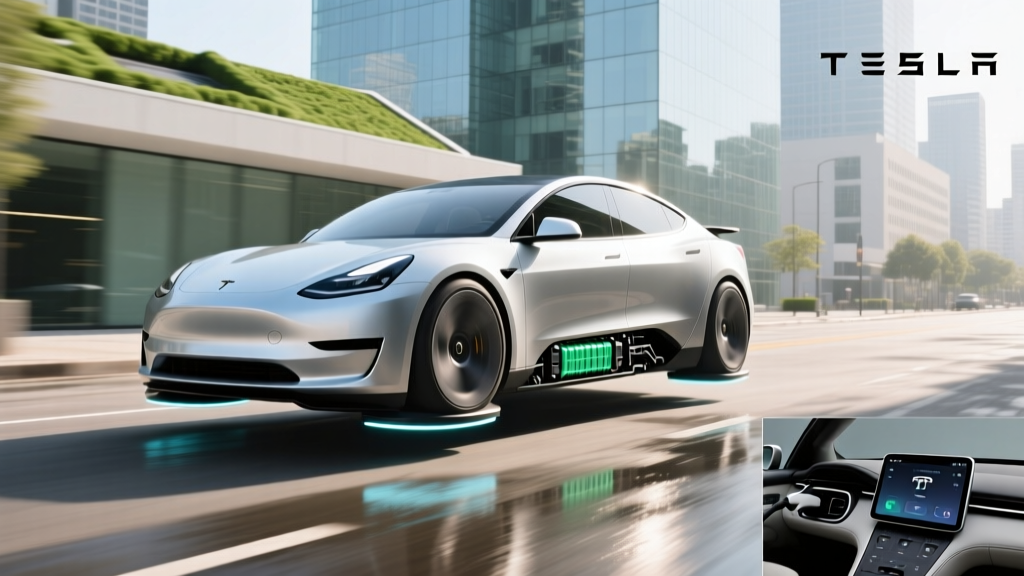
If you've spent any time on social media, you've likely seen viral renders and AI-generated videos of a so-called "Tesla hovering car" — a futuristic vehicle floating inches above the ground using magnetic levitation or thrust-based propulsion. The concept is visually stunning and has accumulated millions of views. But here's the unambiguous truth: Tesla does not manufacture, sell, or have any announced plans for a hovering car.
As of 2026, no automaker produces a consumer hover vehicle. The physics, regulatory framework, and energy requirements make a road-legal hovering car impractical with current technology. What Tesla does build is a lineup of highly efficient, software-defined battery electric vehicles (BEVs) that dominate real-world sales. If the "Tesla hovering car" search brought you here, you're likely curious about Tesla's cutting-edge tech — and there's plenty of it in their actual vehicles.
Below, we break down Tesla's real 2026 lineup with the exact specs that matter: EPA range, battery chemistry, DC fast-charging speeds, pricing, and federal tax credit eligibility. This is the data-driven review the internet renders won't give you.
Tesla's Actual 2026 Lineup: Spec Comparison at a Glance
Before diving into individual models, here's how Tesla's current production vehicles stack up across the metrics EV buyers care about most. All figures reflect 2026 model-year data from fueleconomy.gov and Tesla's official specification pages.
| Spec | Model 3 Long Range | Model Y Long Range | Model S | Model X | Cybertruck AWD |
|---|---|---|---|---|---|
| EPA Range | 363 mi | 320 mi | 402 mi | 326 mi | 340 mi |
| Battery (usable) | ~79 kWh NMC | ~79 kWh NMC | ~100 kWh NMC | ~100 kWh NMC | ~123 kWh NMC |
| Peak DC Charge | 250 kW | 250 kW | 250 kW | 250 kW | 250 kW |
| 10–80% DCFC Time | ~25 min | ~27 min | ~30 min | ~31 min | ~35 min |
| Level 2 Rate | 11.5 kW (~44 mi/hr) | 11.5 kW (~44 mi/hr) | 11.5 kW (~35 mi/hr) | 11.5 kW (~35 mi/hr) | 11.5 kW (~37 mi/hr) |
| 0–60 mph | 4.2 sec | 4.8 sec | 3.1 sec | 3.8 sec | 3.9 sec |
| Horsepower | ~384 hp | ~384 hp | ~670 hp | ~670 hp | ~600 hp |
| Drivetrain | Dual-Motor AWD | Dual-Motor AWD | Dual-Motor AWD | Dual-Motor AWD | Dual-Motor AWD |
| MPGe (combined) | 132 MPGe | 122 MPGe | 120 MPGe | 102 MPGe | 70 MPGe |
| Base MSRP | $42,880 | $44,880 | $79,990 | $84,990 | $79,990 |
| Federal §30D Credit | Eligible (up to $7,500) | Eligible (up to $7,500) | Not eligible (MSRP cap) | Not eligible (MSRP cap) | Not eligible (MSRP cap) |
Real-World Range: What the EPA Sticker Doesn't Tell You
EPA range estimates are useful for comparison shopping, but they don't reflect how you'll actually drive. Tesla's vehicles use Nickel-Manganese-Cobalt (NMC) lithium-ion battery packs, which deliver strong energy density but are subject to the same real-world variables as any EV: ambient temperature, driving speed, terrain, and climate control usage.
The Tesla Model 3 Long Range carries an EPA rating of 363 miles. In our mixed-driving experience — 70% highway at 70–75 mph, moderate climate control, 65°F ambient — expect roughly 300–320 miles before needing to charge. In cold weather (below 32°F), that figure can drop to 240–270 miles due to battery chemistry limitations and cabin heating demand. Tesla's standard heat pump helps mitigate this loss compared to resistive heating systems, but physics is physics: cold reduces lithium-ion efficiency.
For the Model Y Long Range (EPA 320 mi), plan for 260–285 miles in typical highway driving and 210–240 miles in deep winter conditions. The larger-battery Model S (EPA 402 mi) holds up better on long road trips, realistically delivering 340–365 miles in fair weather.
Efficiency matters as much as raw range. The Model 3 Long Range achieves 132 MPGe combined (roughly 25 kWh/100 mi), making it one of the most efficient EVs in its class. The Cybertruck, by contrast, drops to 70 MPGe — its heavy stainless-steel exoskeleton and poor aerodynamics demand far more energy per mile.
Charging Speed: Supercharger Network and Home Setup
Charging speed is where Tesla maintains a tangible advantage over most competitors, not because of peak charge rates alone, but because of the integrated Supercharger network. As of 2026, Tesla operates over 6,500 Supercharger stations in North America, and the network now supports NACS-equipped vehicles from Ford, Rivian, GM, and others.
| Charging Method | Power (kW) | Miles Added Per Hour | Notes |
|---|---|---|---|
| Level 1 (120V standard outlet) | ~1.4 kW | ~3–5 mi/hr | Emergency/trickle only |
| Level 2 (240V home, 48A circuit) | 11.5 kW | ~35–44 mi/hr | Full charge overnight (~8–10 hrs) |
| DC Fast Charge (V3 Supercharger) | Up to 250 kW peak | ~1,000+ mi/hr (peak) | 10–80% in ~25–35 min depending on model |
| DC Fast Charge (V4 Supercharger) | Up to 350 kW (cab) | Variable | Currently limited by vehicle-side charge architecture to ~250 kW on most models |
A critical detail many spec sheets obscure: peak charge rate is not sustained charge rate. A Model 3 Long Range may accept 250 kW at a low state of charge (around 10–15%), but as the battery fills, the charge curve tapers significantly. Above 80% SoC, charging slows dramatically to protect battery longevity — often dropping below 50 kW. This is why Tesla (and every other automaker) quotes 10–80% times rather than 0–100%. For road trips, plan your stops around the 10–80% window for maximum efficiency.
For home charging, Tesla's Wall Connector ($475) delivers up to 11.5 kW on a 60-amp dedicated circuit. Most buyers installing a Level 2 home charger should budget $800–$2,500 total (equipment, electrician labor, and permit), with costs climbing if your electrical panel needs an upgrade from 100A to 200A service.
Pricing, Trims, and Federal Tax Credit Eligibility
Tesla's pricing has shifted frequently, but as of early 2026, the lineup breaks down as follows. The critical question for most buyers: does it qualify for the IRS §30D federal clean vehicle credit?
| Model / Trim | MSRP | §30D Eligible? | Est. Price After Credit |
|---|---|---|---|
| Model 3 Long Range AWD | $42,880 | Yes (up to $7,500) | ~$35,380 |
| Model 3 Performance | $47,880 | Yes (up to $7,500) | ~$40,380 |
| Model Y Long Range AWD | $44,880 | Yes (up to $7,500) | ~$37,380 |
| Model Y Performance | $48,880 | Yes (up to $7,500) | ~$41,380 |
| Model S | $79,990 | No (exceeds $55K sedan cap) | $79,990 |
| Model X | $84,990 | No (exceeds $80K SUV cap) | $84,990 |
| Cybertruck AWD | $79,990 | No (exceeds $80K truck cap) | $79,990 |
- MSRP caps: Sedans must be ≤$55,000; SUVs, vans, and trucks ≤$80,000.
- Buyer income caps: Modified AGI ≤$150,000 (single), ≤$225,000 (head of household), ≤$300,000 (joint).
- Battery sourcing: A percentage of critical minerals and battery components must be sourced from the U.S. or FTA partners. These thresholds increase annually. Tesla's North American battery production generally satisfies current requirements for Model 3 and Model Y, but verify at the point of sale.
- Point-of-sale transfer: As of 2024, you can transfer the credit to the dealer at purchase, reducing your out-of-pocket cost immediately rather than waiting to claim it on your tax return.
Always confirm eligibility with your tax professional and the dealer at the time of purchase. Rules can change, and individual circumstances vary. Source: IRS.gov.
Performance, Interior, and Technology
Tesla's performance credentials need little introduction. The Model S dual-motor AWD delivers 670 hp and a 3.1-second 0–60 mph time — supercar territory in a five-passenger sedan. Even the "base" Model 3 Long Range hits 60 mph in 4.2 seconds, quicker than most sport compacts.
Interior design is polarizing. Tesla's minimalist approach means virtually everything routes through the central 15.4-inch touchscreen (17-inch in Model S/X). There's no traditional instrument cluster, no physical stalks on newer models (turn signals are steering-wheel buttons), and the glovebox opens via the screen. Some buyers love the simplicity; others find it distracting. Cargo space is generous across the lineup:
- Model 3: 23 cu ft trunk + 3.1 cu ft frunk (rear trunk limited by sedan form factor)
- Model Y: 30.2 cu ft behind rear seats, 72.1 cu ft folded + 4.1 cu ft frunk
- Model S: 28 cu ft trunk + 3.1 cu ft frunk
- Model X: Up to 88.1 cu ft with seats folded + 6.5 cu ft frunk
- Cybertruck: 34.2 cu ft bed + 7.1 cu ft frunk (plus sub-bed storage)
Tesla's infotainment system remains among the most responsive in the industry, with built-in navigation, streaming (Netflix, YouTube while parked), and over-the-air updates that add features post-purchase. The premium audio in Model S/X rivals dedicated audiophile systems.
Tesla's Autopilot (standard) and Full Self-Driving Supervised ($8,000 option or $99/month) are SAE Level 2 driver-assistance systems. This means the vehicle can manage steering and acceleration/deceleration under certain conditions, but the driver must remain fully engaged, eyes on the road, hands available to take over at any time. FSD Supervised handles city streets, intersections, and highway lane changes, but it makes errors and requires constant supervision. It is not autonomous driving. Only SAE Level 4 services like Waymo operate without a driver.
Battery Warranty, Degradation, and Longevity
Tesla's battery and drive unit warranty provides solid coverage:
- Model 3 / Model Y: 8 years or 120,000 miles (whichever comes first), with minimum 70% battery capacity retention.
- Model S / Model X: 8 years or 150,000 miles, minimum 70% retention.
- Cybertruck: 8 years or 120,000 miles, minimum 70% retention.
In practice, Tesla's NMC batteries have shown strong longevity. Data aggregated from fleet reports and owner communities suggests average degradation of approximately 10–12% over the first 100,000 miles, with the curve flattening significantly afterward. The 70% retention threshold in the warranty is conservative — most packs retain well above 80% at the warranty boundary. Tesla's thermal management system (liquid cooling and heating) is a key factor in this durability.
One ownership note: Tesla uses NMC chemistry across its 2026 lineup (the LFP packs previously used in base Model 3 RWD have been phased out in the U.S. market as of 2025). NMC offers superior energy density but benefits from keeping the state of charge between 20–80% for daily use, reserving 100% charges for road trips. Tesla's infotainment lets you set a charge limit to automate this practice.
Pros, Cons, and the Verdict
- Class-leading Supercharger network access
- Strong real-world efficiency (Model 3: 132 MPGe)
- Over-the-air updates continuously add features
- Excellent performance across the lineup
- Model 3 and Y qualify for up to $7,500 federal credit
- Proven battery longevity with strong warranty
- Minimalist interior frustrates some drivers (no physical controls)
- Turn-signal buttons on steering wheel are a learning curve
- FSD Supervised is expensive and still requires full attention
- Model S, X, and Cybertruck do not qualify for federal credit
- Build quality inconsistency has improved but still noted
- Insurance costs tend to be higher than comparable non-Tesla EVs
Who Should Buy a Tesla in 2026?
Choose the Model 3 Long Range if: You want the best efficiency-to-price ratio in Tesla's lineup, your commute is under 60 miles round-trip, and you want to maximize the federal tax credit. At roughly $35,380 after the credit, it's a compelling value for a 363-mile EPA-range AWD sedan.
Choose the Model Y Long Range if: You need crossover cargo space for a family, regularly carry rear-seat passengers, and want access to the Supercharger network for road trips. It's the best-selling EV in the U.S. for a reason.
Choose the Model S if: You want maximum range (402 mi EPA), premium luxury, and supercar performance, and you're not dependent on the federal tax credit. It competes with the Lucid Air and Mercedes EQS.
Choose the Cybertruck if: You need a truck bed, want standout design, and accept the efficiency penalty (70 MPGe). Towing capacity is rated at 6,000 lbs, but expect significant range reduction when towing.
Look elsewhere if: You prefer physical controls, want Apple CarPlay/Android Auto (Tesla doesn't support either), or need a vehicle under $30,000. Competitors like the Hyundai Ioniq 6, Chevrolet Equinox EV, and Nissan Ariana offer different trade-offs worth considering.
Frequently Asked Questions
Is Tesla developing a hovering car or hover technology?
No. There is no evidence, patent filing, or executive statement indicating Tesla is developing a hovering consumer vehicle. Viral renders are fan-made or AI-generated concepts, not official Tesla products. Tesla's engineering focus remains on battery electric vehicles, energy storage, autonomous driving software, and robotics (Optimus).
What is the real-world range of the Tesla Model Y in 2026?
The 2026 Model Y Long Range has an EPA rating of 320 miles. In mixed real-world driving (highway and city, moderate temperatures), expect 260–285 miles. In cold weather below freezing, plan for 210–240 miles. Preconditioning the battery before driving and using seat heaters instead of cabin heat can help recover some lost range in winter.
How fast does a Tesla charge at home and on the road?
At home on a Level 2 Tesla Wall Connector (240V, 48A), most Tesla vehicles add approximately 35–44 miles of range per hour, achieving a full charge in 8–10 hours. On a V3 Supercharger (DC fast charge), peak rate is 250 kW, with a 10–80% charge taking 25–35 minutes depending on the model and battery state.
Do the Model S, Model X, or Cybertruck qualify for the $7,500 federal tax credit?
No. Under current IRS §30D rules, sedans priced above $55,000 and SUVs/trucks above $80,000 are ineligible. The Model S ($79,990 sedan), Model X ($84,990 SUV), and Cybertruck AWD ($79,990) all exceed their respective MSRP caps. Only the Model 3 and Model Y currently qualify, subject to buyer income limits and battery sourcing requirements.
Is Tesla's FSD actually self-driving?
No. Tesla's Full Self-Driving (Supervised) is an SAE Level 2 driver-assistance system. It can manage steering, acceleration, braking, and some navigation tasks, but the driver must remain fully attentive and ready to intervene at all times. It does not make the vehicle autonomous. Misuse of FSD has been linked to accidents, and NHTSA continues to investigate incidents involving Tesla's driver-assist systems.
How does Tesla compare to competitors like Hyundai, Ford, and BMW?
Tesla's advantages remain the Supercharger network, software ecosystem, and strong efficiency. Competitors like the Hyundai Ioniq 5, Ford Mustang Mach-E, and BMW i4 offer compelling alternatives with more traditional interiors, physical controls, and (in some cases) competitive pricing. If Supercharger access is your priority, Tesla still leads. If you want Apple CarPlay, a more conventional cockpit, or a lower entry price, the competition has strong options.