Understanding the Tesla House Buy Concept
The term "Tesla house buy" has gained traction among EV enthusiasts and homeowners looking to integrate their electric vehicles with home energy systems. This concept revolves around using Tesla vehicles and Powerwall battery systems to create a cohesive energy ecosystem — essentially turning your EV into a mobile power source that can supplement or even partially replace traditional grid electricity during peak hours or outages.
However, it's crucial to understand what's actually possible versus what remains aspirational. As of 2026, Tesla vehicles do not offer native vehicle-to-home (V2H) or vehicle-to-grid (V2G) capability in the way that some competitors like the Ford F-150 Lightning or Hyundai Ioniq 5 do. Tesla's ecosystem approach instead centers on the Powerwall 3 home battery system working alongside solar panels and EV charging, rather than the vehicle itself feeding power back to the house.
Current Tesla Vehicle Lineup: Range, Battery, and Charging Specs
Before evaluating any home integration scenario, let's establish the baseline specifications for Tesla's 2026 consumer vehicle lineup:
| Model | EPA Range | Battery (kWh) | Chemistry | Max DC Charge (kW) | 10-80% Time | 0-60 mph | Base MSRP |
|---|---|---|---|---|---|---|---|
| Model 3 RWD | 272 mi | 60 kWh | LFP | 170 kW | ~25 min | 5.8 sec | $38,990 |
| Model 3 Long Range AWD | 341 mi | 82 kWh | NMC | 250 kW | ~18 min | 4.2 sec | $47,740 |
| Model Y Long Range AWD | 320 mi | 82 kWh | NMC | 250 kW | ~18 min | 4.8 sec | $48,990 |
| Model S Long Range | 402 mi | 100 kWh | NMC | 250 kW | ~20 min | 3.1 sec | $74,990 |
| Cybertruck AWD | 340 mi | 123 kWh | NMC | 250 kW | ~22 min | 4.1 sec | $79,990 |
Charging Infrastructure: Home and DC Fast Charging
Tesla's charging ecosystem remains one of its strongest advantages, particularly for home charging integration:
| Charging Method | Power (kW) | Miles Added Per Hour | Equipment Required |
|---|---|---|---|
| Level 1 (120V outlet) | 1.4-1.9 kW | 3-5 mi/hr | Mobile Connector (included) |
| Level 2 (240V, 32A) | 7.7 kW | 25-30 mi/hr | Wall Connector or Mobile Connector |
| Level 2 (240V, 48A) | 11.5 kW | 35-44 mi/hr | Wall Connector (hardwired) |
| DC Fast (Supercharger V3) | Up to 250 kW | ~1,000 mi/hr peak | Supercharger station |
Home charging reality: Most Tesla owners install a Wall Connector on a 60-amp circuit, delivering 48 amps continuous (11.5 kW). This setup adds roughly 35-44 miles of range per hour of charging, easily replenishing a full night's driving for most commuters. Installation costs typically run $500-$2,000 depending on electrical panel proximity and local permit requirements.
Tesla Powerwall 3: The Actual Home Energy Integration
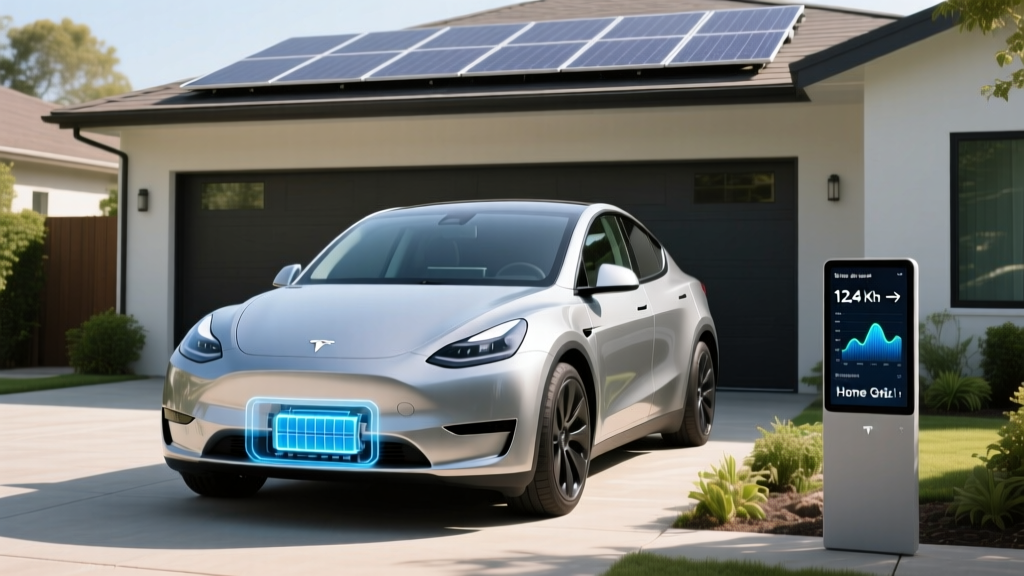
The Powerwall 3 is where Tesla's home energy strategy actually lives. Released in 2024 and refined through 2026, the Powerwall 3 offers:
- Capacity: 13.5 kWh usable energy storage
- Continuous power output: 11.5 kW (enough to run most home circuits simultaneously)
- Integrated inverter: No separate inverter hardware required
- Stackability: Up to 10 units for expanded capacity
- Backup capability: Automatic switchover during grid outages (with Gateway)
- Time-of-use optimization: Charge during off-peak hours, discharge during expensive peak periods
Important distinction: The Powerwall charges from solar panels or the grid — not from your Tesla vehicle. There is currently no bidirectional charging capability that allows a Tesla car to feed power back into the Powerwall or directly to home circuits.
Federal Tax Credit Eligibility for Tesla Vehicles and Powerwall
2026 Federal Incentives (IRS §30D and §25D)
| Product | Maximum Credit | Key Eligibility Rules |
|---|---|---|
| Tesla Model 3 RWD | $3,750 (partial) | MSRP under $55k ✓ | Income cap: $150k single/$300k joint | Battery sourcing requirements limit full $7,500 |
| Tesla Model 3 Long Range | $3,750 (partial) | Same income caps | MSRP under $55k ✓ | Critical minerals sourcing partially compliant |
| Tesla Model Y Long Range | $3,750 (partial) | MSRP under $80k (SUV cap) ✓ | Income caps apply | Sourcing rules limit credit |
| Tesla Model S/Cybertruck | $0 | Exceeds MSRP caps for most trims; high-income buyers ineligible |
| Powerwall 3 (Residential) | 30% of cost (no cap) | §25D Residential Energy Credit | No income cap | Must be installed in primary residence |
Tax credit reality check: Tesla vehicles face significant limitations under current §30D rules due to battery component and critical mineral sourcing requirements. Many Tesla models qualify for only $3,750 rather than the full $7,500, and buyers exceeding income thresholds ($150,000 single / $225,000 head of household / $300,000 joint) are ineligible regardless of vehicle eligibility. Always verify current-year rules at IRS.gov and consult a tax professional before purchasing.
The Powerwall 3, however, qualifies for the §25D Residential Clean Energy Credit with no income cap and no dollar limit — you receive 30% of the total installed cost (equipment + labor) as a credit. A $12,000 Powerwall installation yields a $3,600 credit.
Vehicle-to-Home (V2H): What Tesla Doesn't Offer (Yet)
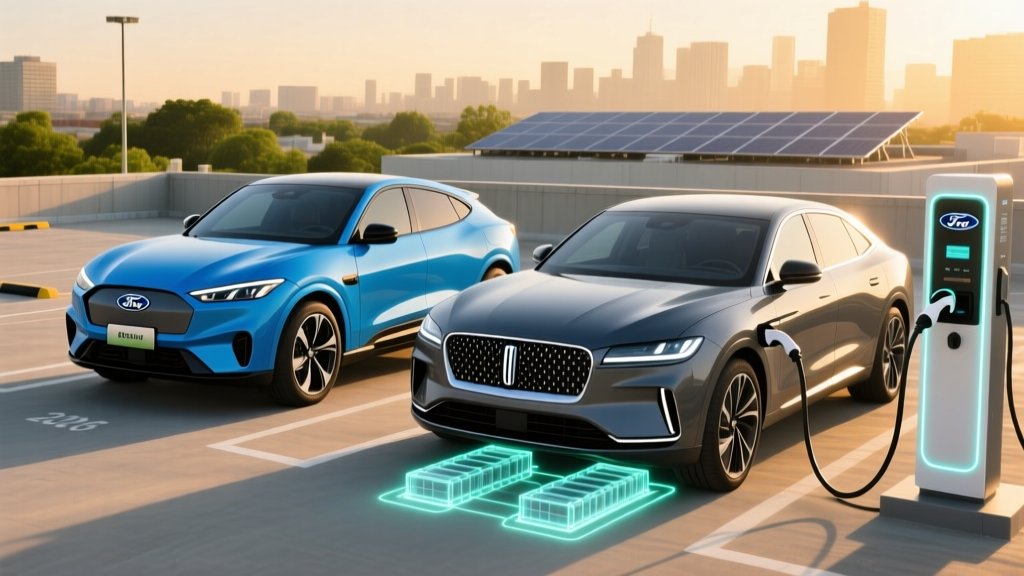
Competitors like Ford (F-150 Lightning with Ford Charge Station Pro), Hyundai/Kia (Ioniq 5/EV6 with V2L adapters), and GM (Silverado EV) offer some form of vehicle-to-load or vehicle-to-home capability. Tesla has not announced any V2H or V2G features for its consumer vehicles as of early 2026.
Why this matters: If your goal is to use your EV battery as emergency home backup power, a Tesla vehicle alone cannot accomplish this. You would need to purchase a separate Powerwall system or consider a competitor vehicle with V2H capability.
The Cybertruck exception (limited): The Cybertruck does offer a "Powershare" feature with 9.6 kW of vehicle-to-load (V2L) capability through its bed outlets, allowing you to power tools, appliances, or temporary lighting. However, this is not a full V2H system that integrates with your home's electrical panel for whole-house backup.
Who Should Consider a Tesla + Powerwall Home Setup?
✓ This Setup Makes Sense If:
- You have rooftop solar and want to maximize self-consumption
- You live in an area with frequent power outages or unreliable grid service
- Your utility offers time-of-use rates that make battery arbitrage profitable
- You want seamless integration between EV charging, solar, and home battery (all managed via Tesla app)
- You plan to stay in your home 10+ years to recoup the investment
✗ Look Elsewhere If:
- You want your EV to serve as home backup power (V2H) — Tesla doesn't offer this
- You rent or plan to move within 5 years
- Your home lacks solar or adequate roof space for panels
- You need the lowest-cost solution (standalone generators are cheaper for occasional backup)
- You want to participate in utility demand-response programs that require V2G capability
Frequently Asked Questions
Can I use my Tesla vehicle to power my house during an outage?
No. As of 2026, Tesla vehicles do not offer vehicle-to-home (V2H) capability. You would need a separate Powerwall battery system for home backup power. The Cybertruck's Powershare feature can power individual appliances through bed outlets but cannot integrate with your home's electrical panel.
How much does a Tesla Powerwall 3 installation cost?
Expect $10,000-$15,000 for a single Powerwall 3 including the Gateway and professional installation. Costs vary based on electrical panel upgrades, permitting, and local labor rates. The 30% federal §25D tax credit reduces this to roughly $7,000-$10,500 after incentives.
Does Tesla offer a complete solar + Powerwall + EV package?
Yes, Tesla sells integrated systems combining Solar Roof or solar panels, Powerwall batteries, and EV charging equipment. However, these are separate products that communicate via the Tesla app rather than a single unified "house package." Pricing is modular — you configure and price each component separately.
What's the real-world range of a Tesla Model 3 Long Range?
The EPA rates it at 341 miles, but real-world highway driving typically yields 280-310 miles in moderate temperatures. In cold weather (below freezing), expect 240-260 miles due to battery efficiency loss and cabin heating demands. Preconditioning the battery while plugged in can mitigate some cold-weather range loss.
Is the Tesla ecosystem worth it compared to mixing brands?
The integration advantage is real — one app manages solar production, battery state, EV charging, and home energy use. However, you're locked into Tesla's pricing and product roadmap. Competing systems (Enphase batteries, third-party solar inverters) may offer better pricing or features like true V2H capability. The decision depends on whether seamless integration outweighs potential cost savings from a mixed system.
The Bottom Line: Tesla House Buy Viability
The "Tesla house buy" concept as popularly imagined — using your Tesla vehicle to power your home — is not currently possible. Tesla's actual home energy strategy centers on the Powerwall 3 working alongside solar panels, with your EV as a separate energy consumer rather than a power source.
If your primary goal is whole-home backup power or grid independence, a Tesla + Powerwall + solar combination can deliver that, but it requires a significant investment ($20,000-$40,000+ depending on solar system size and number of Powerwalls). If you specifically need V2H capability to leverage your EV battery for home power, you'll need to look at Ford, Hyundai, or GM's offerings instead.
For more details on current federal incentives, consult the IRS clean vehicle credits page and the EPA's fueleconomy.gov tax incentive guide. Always verify eligibility with a tax professional before making purchase decisions based on incentive assumptions.