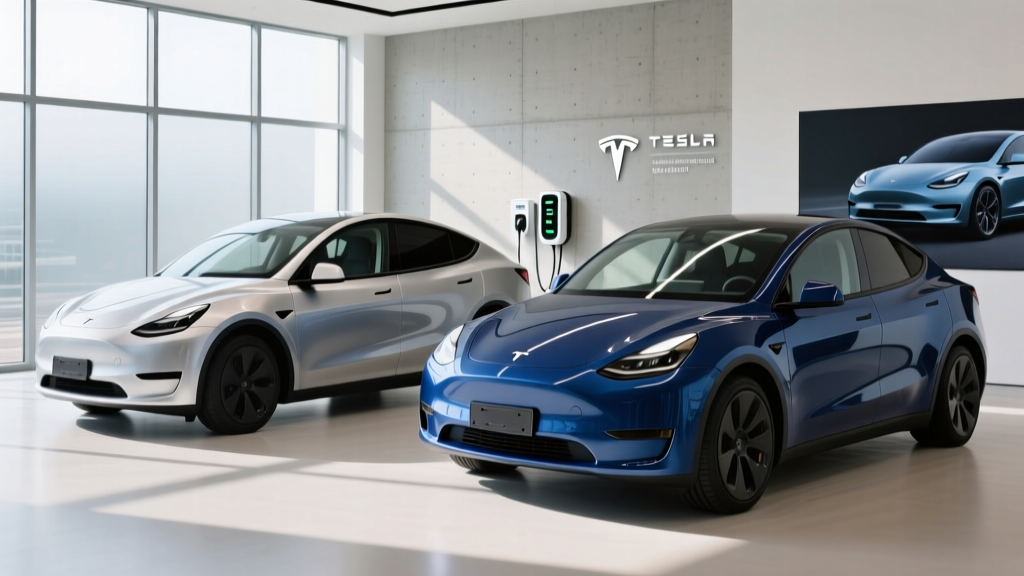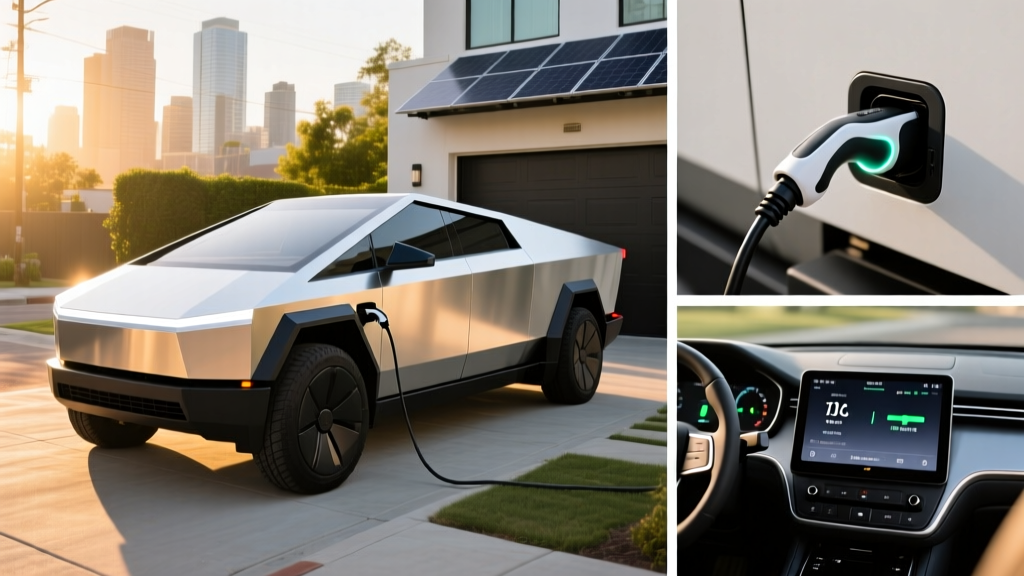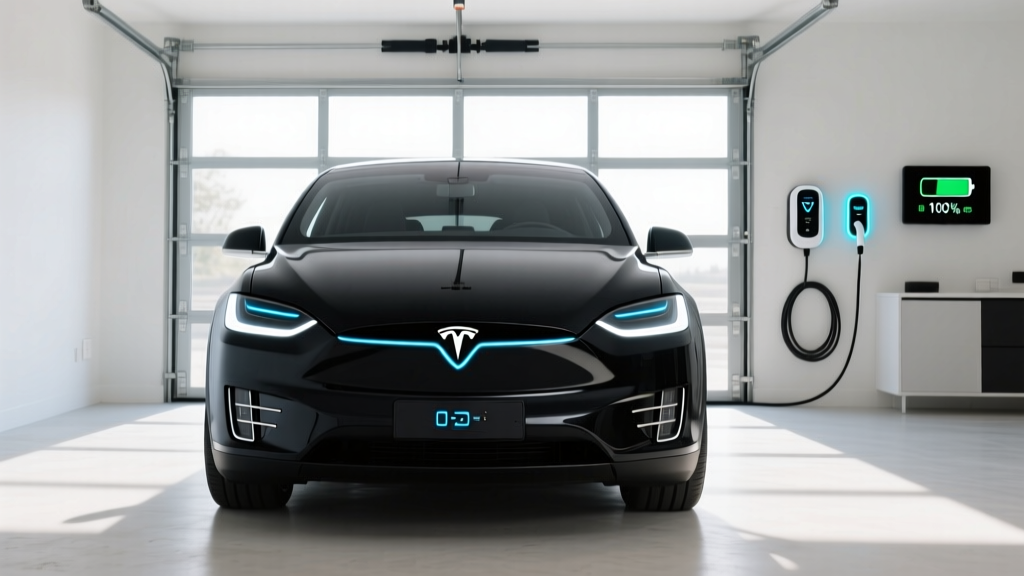
If you're pulling a Tesla into your garage for the first time—or upgrading from a legacy vehicle with a clipped-on universal remote—the Tesla HomeLink garage door opener is the feature that makes daily entry seamless. Unlike aftermarket clickers, Tesla's HomeLink module is integrated into the vehicle's software, programmed through the touchscreen, and capable of storing up to three different transmitters (garage door, gate, community barrier). But not every 2026 Tesla ships with HomeLink hardware, and setup nuances vary by model year. This guide walks through compatibility, programming steps, and the full ownership picture—range, charging, pricing, and tax credits—for the models most buyers are considering.
Which 2026 Teslas Include HomeLink?
Tesla has historically treated HomeLink as an accessory rather than a standard feature. As of the 2026 model year, the landscape looks like this:
- Model 3 (Highland refresh, 2024–2026): HomeLink is not included in base trim. It's available as a $300 accessory (part number 1708230-00-B) that mounts near the rearview mirror and integrates with the 15.4-inch center touchscreen.
- Model Y (Juniper refresh, 2025–2026): Same accessory approach—HomeLink is a dealer- or self-install add-on at approximately $300.
- Model S and Model X (2026): HomeLink comes standard, integrated into the overhead console. No additional hardware purchase required.
- Cybertruck (2026): HomeLink is standard on all trims.
If your Tesla's touchscreen shows Controls > Software > HomeLink but prompts you to purchase the module, you don't have the hardware installed yet. If the menu allows you to begin programming immediately, you're good to go.
How to Program the Tesla HomeLink Garage Door Opener
Programming takes roughly two minutes. Here's the sequence:
- Park your Tesla within 10–15 feet of the garage door or gate you want to program.
- On the touchscreen, tap Controls > Software > HomeLink.
- Tap "Create New HomeLink" and name the device (e.g., "Main Garage," "Side Gate").
- Select the frequency mode. Most US garage door openers manufactured after 1996 use a rolling-code protocol—choose "Rolling Code" unless your opener is very old.
- The screen will prompt you to press and hold the "Learn" or "Smart" button on your garage door motor unit (usually located on the back or side of the ceiling-mounted opener).
- Return to the Tesla screen and tap "Start Training." The car will transmit; the garage door should activate within seconds.
- Optionally, enable "Auto-Open on Arrival" and "Auto-Close on Departure" using the car's GPS geofencing (typically a 50-foot radius).
Troubleshooting tip: If training fails, the most common culprit is a frequency mismatch. Chamberlain/LiftMaster openers from 2011–2015 sometimes operate on 315 MHz while the Tesla HomeLink module defaults to 390 MHz. Tesla's accessory module is dual-frequency, but you may need to power-cycle the opener's learn sequence. Consult your opener's manual for the exact reset procedure.
2026 Tesla Model 3 Long Range AWD: Full Spec Profile
Since the Model 3 remains Tesla's highest-volume sedan and the most common vehicle buyers are pairing with a home garage setup, here's a comprehensive look at the 2026 Long Range AWD variant—the trim most owners choose for daily commuting and road trips.
| Spec | Value |
|---|---|
| EPA Estimated Range | 363 miles |
| Battery (usable) | 79 kWh, NMC (nickel manganese cobalt) |
| Drivetrain | Dual-motor AWD |
| Horsepower | ~440 hp combined |
| 0–60 mph | 4.2 seconds |
| Peak DC Fast Charge | 250 kW (V3 Supercharger) |
| 10–80% DC Charge Time | ~27 minutes |
| Level 2 Home Charging (11.5 kW) | ~44 miles per hour |
| EPA Efficiency | 131 MPGe combined / 25 kWh/100 mi |
| Cargo Volume | 23 cu ft (rear trunk) + 3.1 cu ft (frunk) |
| Rear Legroom | 34.9 inches |
| Battery Warranty | 8 years / 120,000 miles (70% capacity retention) |
| Base MSRP | $47,740 (before destination) |
Charging the 2026 Model 3: Home and DC Fast Charging
Charging speed is where Tesla's ecosystem still holds a practical edge. The 2026 Model 3 Long Range supports:
- Level 1 (120V household outlet): ~3–4 miles per hour. Useful only for overnight trickle charging or emergencies.
- Level 2 (240V, 48A / 11.5 kW): Using a Tesla Wall Connector on a 60A circuit, you'll add approximately 44 miles of range per hour. A full 10–100% charge takes roughly 8.5 hours—ideal for overnight replenishment.
- DC Fast Charging (Tesla Supercharger V3): Peaks at 250 kW, adding up to 175 miles in 15 minutes. The 10–80% session takes about 27 minutes. Note that charge speed tapers significantly above 80%—the final 20% can add another 25+ minutes, which is why Tesla's navigation system typically recommends charging to 80% for road-trip efficiency.
- CCS/NACS adapter access: The 2026 Model 3 uses the native NACS (North American Charging Standard) port, granting direct access to all Tesla Superchargers. For non-Tesla DC networks (Electrify America, EVgo), Tesla provides a CCS-to-NACS adapter (included with new vehicles since late 2024).
Home charging installation reality check: Installing a Tesla Wall Connector on a dedicated 60A/240V circuit typically costs $800–$2,000 depending on your electrical panel's proximity to the garage. If your home has a 100A main panel and you're already running heavy loads (electric range, dryer, HVAC), you may need a panel upgrade to 200A, which adds $1,500–$3,000. Always get a quote from a licensed electrician before committing.
Pricing, Trims, and Federal Tax Credit Eligibility
The 2026 Model 3 lineup breaks down as follows:
| Trim | MSRP | Federal §30D Credit Eligible? | Effective Price (if eligible) |
|---|---|---|---|
| RWD (Standard Range) | $38,990 | Yes — up to $3,750* | ~$35,240 |
| Long Range AWD | $47,740 | Yes — up to $3,750* | ~$43,990 |
| Performance | $54,990 | Yes — up to $3,750* | ~$51,240 |
*As of 2026, the IRS §30D credit for the Model 3 is $3,750 (half-credit), reflecting battery sourcing and critical mineral requirements under the Inflation Reduction Act. The full $7,500 requires meeting both the critical-mineral and battery-component thresholds; Tesla's supply chain has shifted, and current eligibility is $3,750 for most trims. Additionally:
- Buyer income caps: Modified AGI must not exceed $150,000 (single), $225,000 (head of household), or $300,000 (joint).
- MSRP cap: Sedans must be under $55,000 MSRP. The Model 3 Performance at $54,990 barely qualifies; any dealer-installed options that push the transaction price above the cap could jeopardize eligibility.
- Point-of-sale transfer: Since 2024, you can transfer the credit to the dealer at purchase, reducing your out-of-pocket cost immediately rather than waiting for a tax refund.
For the latest eligibility details, always cross-check the IRS clean vehicle credits page and fueleconomy.gov before purchasing.
Tech, Driver Assistance, and the HomeLink Integration Advantage
The 2026 Model 3 Highland interior centers on a 15.4-inch touchscreen running Tesla's proprietary infotainment OS. Key tech highlights:
- Autopilot (standard): SAE Level 2 driver assistance—adaptive cruise control, lane-keeping, and traffic-aware steering. The driver must remain engaged at all times. This is not autonomous driving.
- Full Self-Driving (Supervised): Available as a $8,000 option or $99/month subscription. Adds automatic lane changes, traffic light/stop sign recognition, and Navigate on Autopilot. Still SAE Level 2—hands on wheel, eyes on road.
- HomeLink geofencing: When programmed, the car can auto-trigger your garage door within a GPS-defined radius (typically 50 feet). This works reliably for home garages but can occasionally trigger early on tight suburban streets. You can disable auto-open/close and trigger manually from the touchscreen.
- Sentry Mode + Dashcam: Uses the vehicle's external cameras to record incidents. Clips are stored on a USB drive in the glovebox.
- Over-the-air updates: Tesla regularly pushes firmware that adds features—recent updates have improved regen braking customization and added garage-door status notifications via the Tesla mobile app.
Notable drawbacks: The Model 3 Highland removed the turn signal stalk (signals are now steering-wheel buttons), which divides owners. There is no traditional instrument cluster—all information routes through the center screen. Rear-seat headroom is tight for passengers over 6'2". And the absence of Apple CarPlay/Android Auto remains a dealbreaker for some buyers accustomed to phone-mirrored interfaces.
Who Should Buy the 2026 Model 3 (and Who Shouldn't)?
- You want the most energy-efficient sedan in its class (25 kWh/100 mi is exceptional).
- You have home charging access and want to wake up to a full "tank" daily.
- You value Tesla's Supercharger network for road trips (20,000+ V3 stations globally).
- You want integrated HomeLink with geofenced auto-open for your garage.
- You prioritize over-the-air updates that add features post-purchase.
- You need more than 23 cu ft of cargo space (consider the Model Y at 76 cu ft with seats folded).
- You refuse to adapt to stalkless turn signals and a single-screen interface.
- You want Apple CarPlay/Android Auto (the Hyundai Ioniq 6 and BMW i4 both offer it).
- You live in an apartment without charging access and have no reliable public DC fast-charging nearby.
Pros and Cons at a Glance
- Best-in-class efficiency (131 MPGe combined)
- Supercharger network reliability
- 250 kW peak DC charging; 10–80% in ~27 min
- Integrated HomeLink with geofence auto-open
- Over-the-air feature updates
- Strong resale value relative to EV peers
- HomeLink is a $300 add-on (not standard on Model 3/Y)
- No Apple CarPlay or Android Auto
- Stalkless turn signals require adaptation
- Rear headroom tight for tall passengers
- Insurance premiums 15–25% higher than gas equivalents
- Cold-weather range loss of 15–25%
Frequently Asked Questions
What is the real-world range of the 2026 Tesla Model 3 Long Range?
The EPA rates it at 363 miles. In real-world highway driving at 75 mph, expect 290–315 miles. In sub-freezing temperatures, that drops to roughly 240–260 miles. Preconditioning the battery while plugged in (a feature in the Tesla app) recovers some of this loss by warming the pack before departure.
How fast does the Model 3 charge at home and on the road?
At home on a Level 2 Tesla Wall Connector (11.5 kW / 48A), you'll add about 44 miles per hour—enough for a full overnight charge. On a Tesla V3 Supercharger, the car peaks at 250 kW and charges from 10–80% in approximately 27 minutes. Above 80%, the charge curve tapers sharply to protect battery health.
How much does the 2026 Model 3 cost after tax credits?
The Long Range AWD starts at $47,740. With the current $3,750 federal §30D credit (assuming you meet income requirements and the vehicle's battery sourcing qualifies), the effective price is approximately $43,990. State incentives may reduce this further—check your local energy office or IRS guidance for specifics.
Is the Model 3 worth buying vs. competitors like the Hyundai Ioniq 6 or BMW i4?
The Model 3 wins on efficiency, Supercharger network access, and software integration (including HomeLink geofencing). The Ioniq 6 offers 800V architecture for faster peak charging (up to 350 kW) and Apple CarPlay. The BMW i4 provides a more traditional luxury interior and physical controls. If the Supercharger network and OTA updates matter most, the Model 3 is still the benchmark. If you want CarPlay and a conventional cockpit, cross-shop the Ioniq 6.
Does the Tesla HomeLink garage door opener work with all garage doors?
HomeLink is compatible with most rolling-code and fixed-code garage door openers manufactured after 1996. It works with Chamberlain, LiftMaster, Genie, Craftsman, and most other major brands operating on 315 MHz or 390 MHz. For very old openers (pre-1996, fixed-code DIP switches), you may need a compatibility bridge. Check the HomeLink compatibility database at the manufacturer's site for your specific opener model.
Does the 2026 Model 3 qualify for the full $7,500 federal EV tax credit?
As of early 2026, the Model 3 qualifies for $3,750 (half-credit) under IRS §30D. The full $7,500 requires the vehicle's battery to meet both critical-mineral sourcing and battery-component manufacturing thresholds. Tesla's evolving supply chain currently meets one of the two requirements for most Model 3 variants. Always verify current eligibility on fueleconomy.gov before purchasing, as sourcing rules are subject to change.