Understanding the Viral 'Tesla Hit by Train' Incidents
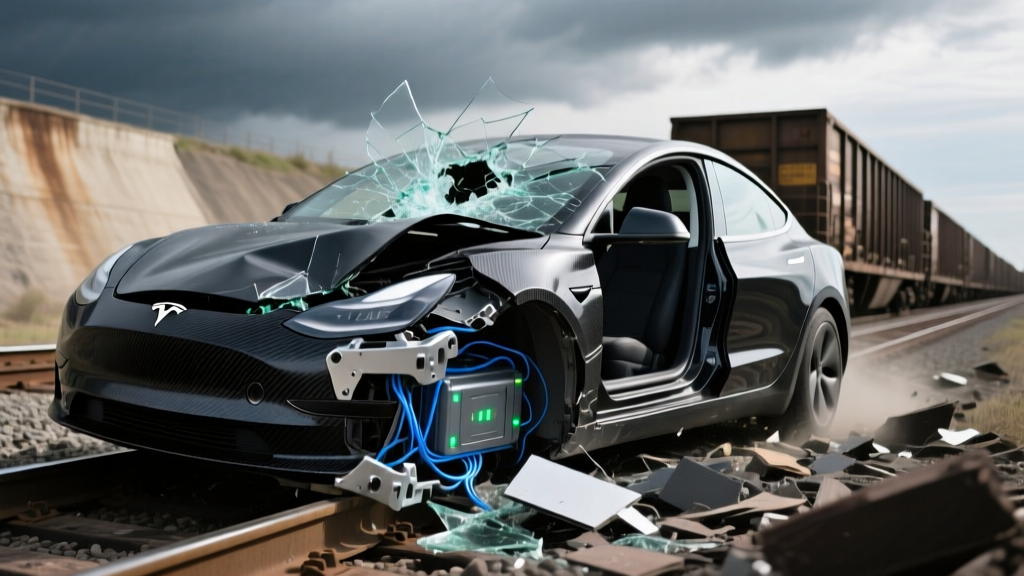
Searches for 'Tesla hit by train' spike every time a grade-crossing collision involving a Tesla makes headlines. These incidents — while rare — raise legitimate questions for EV shoppers: How does a battery-electric vehicle's structure hold up in an extreme-impact scenario? What happens to the high-voltage battery pack? And how do Tesla's safety ratings compare to the broader EV market?
This analysis examines Tesla's structural engineering, crash-test performance, battery safety protocols, and the real-world physics of EV collisions with heavy rail vehicles — giving buyers the data they need to evaluate risk, not just react to viral footage.
Tesla's Structural Design: Skateboard Architecture and Crash Energy Management
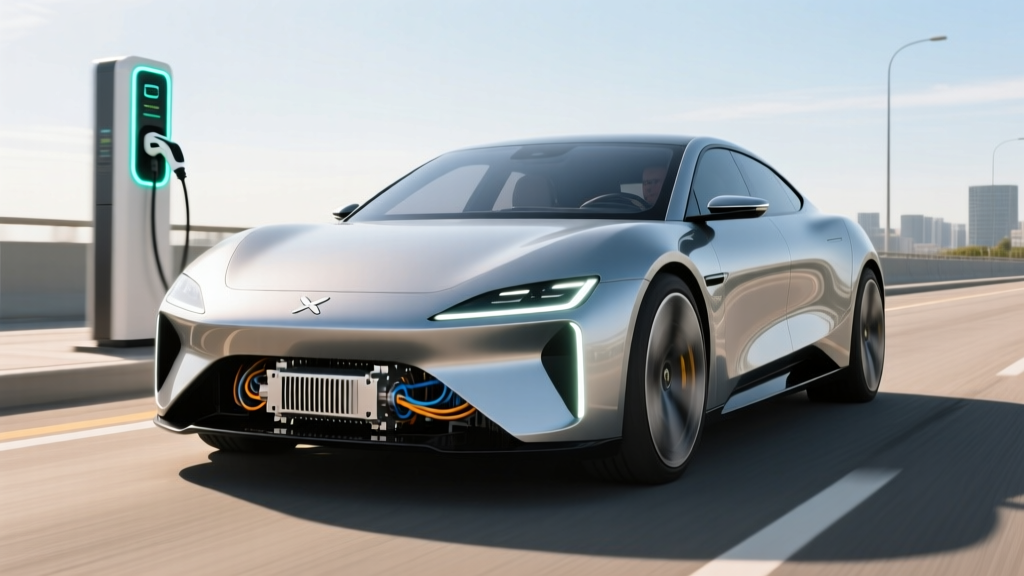
Tesla vehicles use a 'skateboard' platform: a rigid battery pack mounted low in the chassis between the axles, surrounded by a high-strength steel and aluminum safety cage. This design creates several crash-energy advantages:
- Low center of gravity: The battery pack's mass (typically 900-1,100 lbs) sits below the floor, reducing rollover risk. The NHTSA has awarded Tesla models 5-star rollover ratings consistently.
- Front crumple zone: Without a large engine block, Tesla's frunk area acts as an extended crush zone, absorbing kinetic energy before it reaches the passenger cell.
- Side-impact protection: The battery enclosure's lateral rails add structural rigidity, contributing to strong side-pole crash scores.
However, a collision with a train — which can weigh 100-400 tons and travel 50-79 mph — represents energy far beyond any crash-test barrier. No production passenger vehicle, EV or ICE, is engineered to protect occupants in a direct high-speed train impact. The physics are unforgiving: a 4,500-lb car struck at 60 mph by a locomotive experiences forces orders of magnitude beyond IIHS or Euro NCAP test parameters.
Crash-Test Ratings: Where Teslas Actually Excel
In standardized testing, Tesla models consistently rank among the safest vehicles sold:
| Model | NHTSA Overall | IIHS Top Safety Pick | Rollover Risk |
|---|---|---|---|
| Model 3 (2024-2026) | 5 Stars | Top Safety Pick+ | 6.6% |
| Model Y (2024-2026) | 5 Stars | Top Safety Pick+ | 7.9% |
| Model S (2024-2026) | 5 Stars | Not recently tested | 5.7% |
| Cybertruck (2024-2026) | Not fully rated | Pending | Estimated ~8% |
Source: NHTSA Ratings, IIHS
These ratings reflect controlled collisions at 35-40 mph into deformable barriers — realistic for highway and intersection crashes, but not analogous to train impacts.
Battery Safety in Extreme Collisions
The lithium-ion battery pack is the component EV buyers worry about most in severe crashes. Tesla addresses thermal runaway risk through:
- Cell-level fusing: Individual cells are isolated to prevent cascade failures.
- Titanium/steel underbody shield: Protects against road-debris penetration — and provides some structural defense in undercarriage impacts.
- Automatic high-voltage disconnect: Crash sensors sever the battery's connection to the drivetrain within milliseconds of airbag deployment.
- Venting architecture: Gases from thermal events are directed away from the cabin.
In a train-impact scenario, the battery pack's location (low and central) may actually reduce direct intrusion risk compared to a fuel tank in a conventional vehicle — though structural deformation at these energy levels can compromise any enclosure. First responders are trained on EV-specific extrication protocols, including high-voltage cable identification and battery fire suppression (which requires sustained water application, not foam).
Active Safety: Can Autopilot or FSD Prevent Grade-Crossing Collisions?
This is where the 'Tesla hit by train' discussion intersects with driver-assist technology. Tesla's Autopilot and Full Self-Driving (Supervised) systems are SAE Level 2 — meaning the driver must remain fully engaged and responsible for the vehicle at all times.
Tesla's automatic emergency braking (AEB) can detect some obstacles and apply brakes, but:
- AEB is calibrated for passenger vehicles, pedestrians, and cyclists — not 200-ton locomotives crossing at oblique angles.
- Camera-based systems (Tesla abandoned radar in 2021 for its 'Tesla Vision' approach) may struggle with the visual profile of a train against complex backgrounds.
- At highway speeds, stopping distance exceeds 300 feet — often longer than a grade-crossing sightline.
Bottom line: No current production vehicle's ADAS will reliably prevent a grade-crossing collision with an approaching train. This is a driver-responsibility scenario — obey crossing signals, never drive around lowered gates.
Real-World Data: EV Fire Risk vs. ICE Vehicles
One concern underlying 'Tesla hit by train' searches is post-crash fire. The data shows:
- ICE vehicles: ~1,500 fires per 100,000 vehicles sold (NHTSA/NFPA historical data)
- EVs (all brands): ~25 fires per 100,000 vehicles sold
EV battery fires are rarer but more resource-intensive to extinguish (requiring 3,000-30,000 gallons of water vs. 500-1,000 for a gasoline fire). Tesla publishes quarterly safety reports showing approximately one fire per 100+ million miles driven — though these include all fire causes, not just crashes.
What EV Buyers Should Actually Optimize For
While train collisions capture attention, they represent a statistically negligible risk (roughly 200-250 fatalities annually at US grade crossings, across all vehicle types). Far more relevant to your purchase decision:
- IIHS moderate overlap and side-impact scores — these reflect real-world collision frequencies.
- AEB performance at 30-50 mph — where most injury crashes occur.
- Rollover resistance — EVs' low CG is a genuine safety advantage here.
- First-responder awareness — ensure your local fire department has EV extrication training (most do, via NFPA resources).
2026 Tesla Model Lineup: Safety-Relevant Specs at a Glance
| Spec | Model 3 LR AWD | Model Y LR AWD | Model S LR |
|---|---|---|---|
| EPA Range | 341 mi | 320 mi | 402 mi |
| Battery (usable) | ~79 kWh (NMC) | ~79 kWh (NMC) | ~100 kWh (NMC) |
| 0-60 mph | 4.2 sec | 4.8 sec | 3.1 sec |
| Curb Weight | 4,034 lbs | 4,363 lbs | 4,766 lbs |
| NHTSA Overall | 5 Stars | 5 Stars | 5 Stars |
| Base MSRP (2026) | $47,740 | $49,990 | $79,990 |
| Federal Credit Eligible? | Partial — verify sourcing | Partial — verify sourcing | No (MSRP cap exceeded for sedans at $55k) |
Note: IRS §30D credit eligibility depends on MSRP caps ($55k sedans, $80k SUVs/trucks), buyer income limits ($150k single / $300k joint), and battery component/critical mineral sourcing. Always verify current rules at IRS.gov before purchase.
FAQ: Tesla Safety and Extreme Collisions
Has a Tesla ever been hit by a train?
Yes — there have been documented grade-crossing collisions involving Tesla vehicles, as there have been with every major automaker. These are extremely rare and typically involve driver error (ignoring crossing signals or gates).
Is a Tesla safer than a gas car in a severe crash?
In standardized crash tests (NHTSA, IIHS), Tesla models score at or near the top of their classes. The low center of gravity reduces rollover risk. However, no vehicle is 'safe' in a collision with a train or heavy commercial vehicle at speed.
Will the battery catch fire if my Tesla is in a serious crash?
Battery thermal events post-collision are rare (far rarer than gasoline fires in ICE vehicles). Tesla's high-voltage disconnect and cell isolation systems mitigate risk, but extreme structural deformation can compromise any battery enclosure.
Can Tesla's Autopilot stop the car before hitting a train?
Not reliably. AEB systems are not designed to detect locomotives, and stopping distances at highway speeds exceed typical grade-crossing sightlines. The driver is always responsible for obeying crossing signals.
What should first responders know about a crashed Tesla?
High-voltage cables (orange-sheathed) must not be cut. The battery may require extended water cooling if thermal runaway begins. Tesla publishes emergency response guides for each model, and NFPA training covers EV extrication protocols.