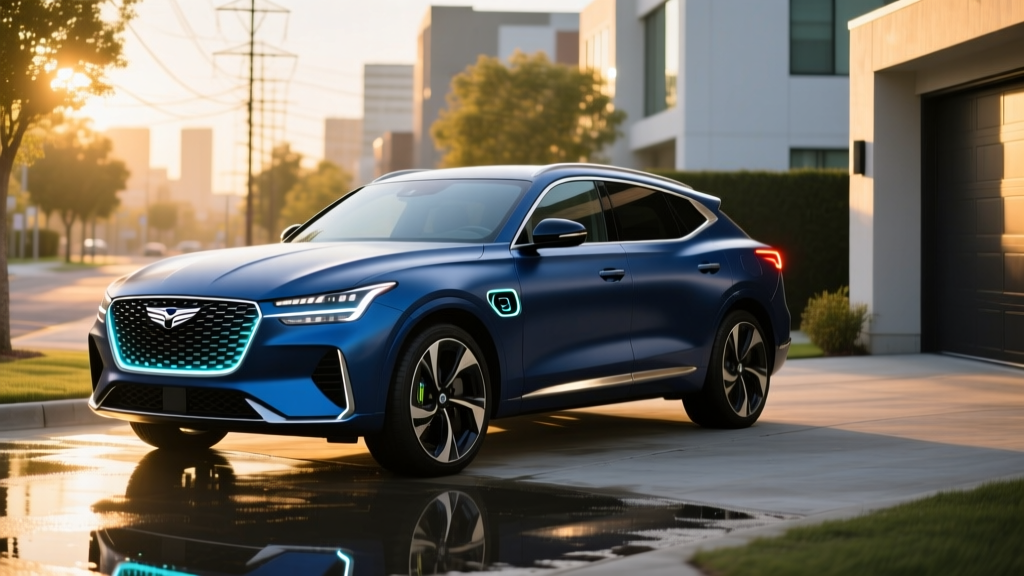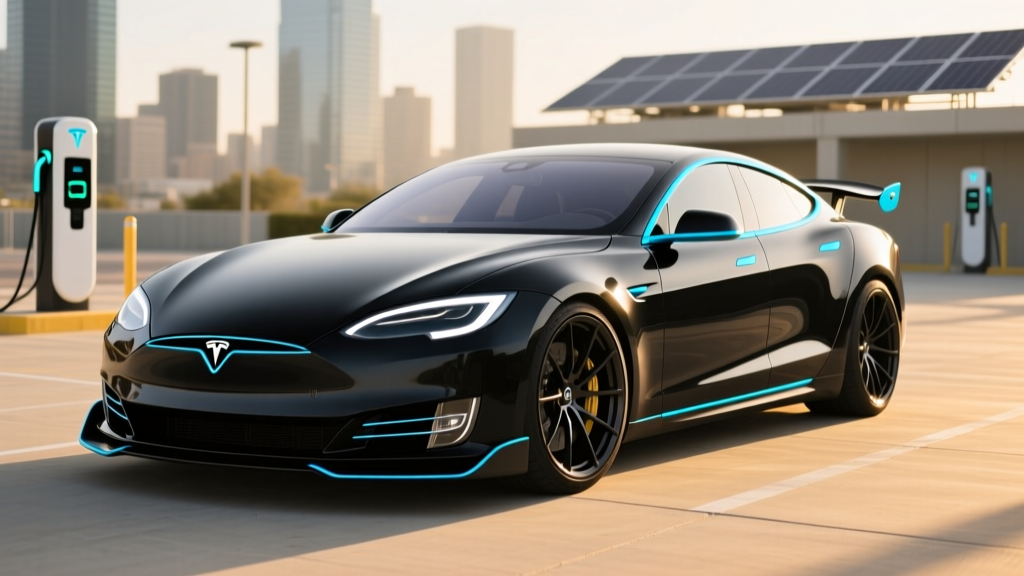
Saleen Automotive — best known for high-performance builds like the S7 supercar and Mustang modifications — has turned its attention to Tesla. The Saleen Tesla (officially the Saleen Foursixteen and subsequent Tesla-based builds) takes the already potent Tesla Model S platform and cranks up the power, sharpens the handling, and adds aggressive aerodynamic bodywork. But at a price that can push past $150,000, does a Saleen-modified Tesla make sense in 2026, when Tesla's own Plaid models already deliver supercar-level acceleration?
This review covers everything we know about Saleen's Tesla offerings: performance specs, range impact, charging behavior, pricing, and whether the modifications justify the cost over a stock Model S Plaid.
What Exactly Is the Saleen Tesla?
Saleen Automotive, founded by Steve Saleen in 1983, is an American specialty manufacturer that has historically modified Ford, Chevrolet, and Dodge vehicles for enhanced performance. Their Tesla program — launched with the Foursixteen (based on the original Model S) and continued through subsequent generations — applies Saleen's signature approach: powertrain tuning, suspension overhauls, aerodynamic body kits, and bespoke interiors.
The current Saleen Tesla lineup focuses on the Model S platform, with packages that range from suspension and aero upgrades to full powertrain recalibration. The flagship build targets the Model S Plaid, adding Saleen's proprietary motor controller tuning, carbon-ceramic brake upgrades, and a Track-tuned adaptive suspension.
| Specification | Saleen Tesla (Modified Plaid) | Stock Model S Plaid (Baseline) |
|---|---|---|
| Powertrain | Tri-Motor AWD (Saleen-tuned) | Tri-Motor AWD |
| Horsepower | ~1,100 hp (Saleen tune) | 1,020 hp |
| 0-60 mph | ~2.1 seconds (est.) | 1.99 seconds (w/ rollout) |
| Top Speed | ~210 mph (governor lifted) | 200 mph |
| Battery Capacity | ~95 kWh usable (NMC) | ~95 kWh usable (NMC) |
| EPA Range | ~320 miles (est.)* | 396 miles (19" wheels) |
| Max DC Fast Charge | 250 kW (V3 Supercharger) | 250 kW |
| 10-80% DCFC Time | ~27 minutes | ~27 minutes |
| Level 2 Charge Rate | 11.5 kW (~44 mi/hr) | 11.5 kW (~44 mi/hr) |
| Efficiency | ~120 MPGe / 28 kWh/100mi (est.) | 116 MPGe / 30 kWh/100mi |
| Cargo Volume | 28 cu ft (rear) + 3.1 cu ft (frunk) | 28 cu ft (rear) + 3.1 cu ft (frunk) |
| Starting Price (Build) | ~$55,000-$80,000 (on top of donor car) | $89,990 MSRP |
*EPA range for the Saleen-modified vehicle is estimated based on added weight, aero drag from the body kit, and higher rolling resistance from wider performance tires. Saleen does not submit modified vehicles for independent EPA testing; figures are derived from Saleen's internal data and comparable aftermarket builds. See EPA Model S Plaid data for baseline.
Range & Efficiency: The Performance Tax
Estimated Saleen-Modified Range: ~300-320 miles
Real-World Highway Expectation (Saleen): ~240-270 miles at 70-75 mph
Cold-Weather Impact: Expect 25-35% range reduction in sub-freezing temperatures, bringing usable range to ~170-200 miles on the highway in winter conditions.
The single biggest trade-off of the Saleen conversion is range. Tesla's Model S Plaid already sacrifices range for performance compared to the Long Range trim (396 vs. 402 miles EPA), and the Saleen modifications compound this loss through three mechanisms:
- Aerodynamic drag: The Saleen body kit adds a front splitter, rear diffuser, and fixed rear wing. While these generate downforce for high-speed stability, they increase the coefficient of drag (Cd) from Tesla's slippery 0.208 to an estimated 0.23-0.25.
- Wider tires: Saleen fits 275- or 285-section performance rubber (vs. Tesla's 255-section), increasing rolling resistance.
- Added weight: The carbon-ceramic brake package, reinforced suspension components, and body panels add an estimated 100-150 lbs.
For daily commuting under 80 miles round-trip, the range reduction is largely academic. For road trips, you'll be stopping at Superchargers every 200-240 miles rather than every 280-320 miles in a stock Plaid. According to fueleconomy.gov, the stock Model S Plaid achieves 116 MPGe combined; expect the Saleen build to land around 108-120 MPGe depending on driving style.
Charging Speed & Infrastructure
Saleen does not modify the Tesla battery pack or charging hardware, so charging performance mirrors the stock Model S Plaid. That's not a bad thing — Tesla's charging ecosystem remains the best in the industry.
| Charging Level | Power (kW) | Speed (Miles/Hour) | Notes |
|---|---|---|---|
| Level 1 (120V household) | ~1.4 kW | ~3-4 mi/hr | Emergency/trickle only; ~90 hrs for full charge |
| Level 2 (240V home, 48A) | 11.5 kW | ~44 mi/hr | Full charge in ~8.5 hours; recommended home setup |
| DC Fast (V3 Supercharger) | 250 kW peak | ~750+ mi/hr (peak) | 10-80% in ~27 min; tapers significantly above 80% |
| DC Fast (V4 Supercharger) | Up to 325 kW* | Variable | *Model S currently limited to 250 kW by onboard architecture |
Charging curve reality check: The Model S Plaid's 250 kW peak rate is not sustained. The battery management system holds peak rate from roughly 10-35% State of Charge (SoC), then tapers to ~150 kW by 55%, ~100 kW by 70%, and ~50 kW by 85%. This is why the 10-80% time is 27 minutes rather than the ~14 minutes a flat 250 kW rate would imply. In cold weather, precondition the battery via the Tesla app or in-car navigation to a Supercharger — without preconditioning, initial charge rates can be 50% slower.
Home charging with a Tesla Wall Connector on a 60-amp circuit (48 amps continuous) delivers 11.5 kW, adding roughly 44 miles of range per hour. A typical overnight charge from 20% to 80% takes about 5.5 hours. Installation costs for a Level 2 home charger range from $500-$2,000 depending on panel capacity and conduit run length.
Performance: Where the Saleen Badge Earns Its Keep
This is the reason you buy a Saleen. The powertrain modifications — primarily a reprogrammed motor inverter map and optimized torque distribution — push output from the Plaid's 1,020 hp to an estimated 1,100 hp. The 0-60 mph time drops from 1.99 seconds (with a 1-foot rollout, as Tesla measures it) to an estimated 2.1 seconds in real-world rolling-start conditions. On a prepared surface with a rollout, Saleen claims sub-2.0-second runs.
But straight-line speed is only part of the story. The Saleen package's real value is in the chassis and braking upgrades:
- Carbon-ceramic brakes: Massive 16-inch front rotors with 6-piston calipers provide fade-free performance on track and dramatically reduce stopping distances from high speed.
- Adaptive suspension: Saleen's Track-Tuned damper calibration tightens body control, reducing roll in aggressive cornering while maintaining acceptable ride quality on public roads.
- Aero balance: The front splitter and rear wing are matched to provide neutral aero balance at high speed, addressing the stock Plaid's slight rear-biased lift above 150 mph.
The result is a car that's arguably more capable on a road course than the stock Plaid, which is already one of the quickest production sedans ever made. Whether you need this capability depends entirely on your use case.
Pricing, Tax Credits & Total Cost
The Saleen Tesla is not a standalone vehicle — it's a modification package applied to a customer-supplied Tesla Model S (or purchased through Saleen's dealer network as a turnkey build). This creates a two-layer pricing structure:
| Component | Cost |
|---|---|
| 2026 Tesla Model S Plaid (donor vehicle) | $89,990 |
| Saleen Aero & Suspension Package | $25,000 - $35,000 |
| Saleen Powertrain Calibration | $12,000 - $18,000 |
| Carbon-Ceramic Brake Upgrade | $15,000 - $22,000 |
| Interior Trim & Bespoke Options | $5,000 - $15,000 |
| Total Estimated Build Cost | $147,000 - $180,000 |
Federal tax credit (§30D) eligibility: The IRS §30D Clean Vehicle Credit applies to the original new Tesla purchase, not to aftermarket modifications. Key rules for 2026:
- MSRP cap: Sedars are capped at $55,000. The Model S Plaid at $89,990 does not qualify for the federal credit.
- Income cap: $150,000 single / $300,000 joint MAGI.
- Battery sourcing: Critical minerals and battery component requirements must be met (Tesla's supply chain has largely complied, but the MSRP cap moots this for the Model S).
- Point-of-sale transfer: Eligible buyers can transfer the credit to the dealer at purchase, but again, the Model S exceeds the sedan MSRP cap.
Net result: No federal tax credit applies to a Saleen Tesla build based on the Model S Plaid. Some states (California, Colorado, New York) offer additional EV rebates that may not carry the same MSRP caps, but these vary by jurisdiction and change frequently. Consult your state's energy office and a tax professional for current eligibility.
Tech, Interior & Daily Livability
Because the Saleen conversion retains the stock Tesla interior architecture, you get the same 17-inch touchscreen infotainment system, 12.3-inch digital instrument cluster, yoke or round steering wheel (your choice), and Tesla's software ecosystem including over-the-air updates, Sentry Mode, and the Tesla app.
Driver assistance: The Saleen Tesla retains Tesla's Autopilot hardware and software. Note that Autopilot and Full Self-Driving (Supervised) are SAE Level 2 driver-assist systems — they require continuous driver supervision and are not autonomous. Tesla's camera-only "Tesla Vision" system handles adaptive cruise, lane centering, automatic lane changes, and parking assist. The system works well on highways but requires hands-on-wheel attention at all times.
Interior modifications: Saleen offers retrimmed seats in Alcantara or premium leather with contrast stitching, a Saleen-branded steering wheel, carbon fiber trim panels, and optional racing-style bucket seats (which sacrifice the power-adjust and ventilation features of the stock seats).
Cargo and passenger space is unchanged from the stock Model S: 28 cubic feet behind the rear seats, 3.1 cubic feet in the front trunk (frunk), and seating for five adults. Rear legroom is 35.4 inches — adequate for adults on shorter trips, tight for anyone over 6 feet on long drives.
Warranty, Service & Ownership Considerations
This is where aftermarket modifications carry real risk. Tesla's new vehicle warranty covers 4 years / 50,000 miles (basic) and 8 years / 150,000 miles (battery and drive unit). However:
- Powertrain modifications void the drive unit warranty. If a motor or inverter fails after Saleen's recalibration, Tesla will likely deny the warranty claim, citing the modification as the cause.
- Suspension and brake modifications void related component warranties. Tesla will not cover suspension or brake failures on a vehicle with non-OEM components.
- Battery warranty may survive if the battery pack itself is untouched, but Tesla could argue that altered power delivery accelerated degradation.
Saleen offers its own limited warranty on modified components — typically 3 years / 36,000 miles on the Saleen-installed parts. This is significantly less coverage than Tesla's factory warranty, and Saleen's service network is far smaller than Tesla's 1,200+ service centers and mobile ranger fleet.
Insurance: Expect premiums 30-50% higher than a stock Model S Plaid, which already carries elevated insurance costs. Modified performance vehicles are rated as higher risk by most carriers. Obtain quotes before committing to the build.
Pros and Cons
Pros
- Exclusivity — very few Saleen Teslas on the road; stand-out styling and presence
- Track-capable chassis upgrades (brakes, suspension, aero) that address the stock Plaid's high-speed limitations
- Additional ~80 hp and sharper throttle response from Saleen's motor controller calibration
- Retains access to Tesla's Supercharger network, OTA updates, and software ecosystem
- Carbon-ceramic brakes provide extraordinary stopping power and fade resistance
Cons
- Total build cost of $147K-$180K with no federal tax credit eligibility
- Significant range penalty (~300-320 mi vs. 396 mi stock) from aero, tire, and weight changes
- Voided or reduced Tesla factory warranty on modified systems
- Limited Saleen service network; warranty claims require shipping to Saleen or authorized partners
- Insurance premiums 30-50% above an already-expensive-to-insure vehicle
- Diminishing performance returns — the stock Plaid already does 0-60 in under 2 seconds
Who Should Buy the Saleen Tesla?
The Saleen Tesla makes sense for a narrow buyer profile: someone who already owns (or plans to own) a Model S Plaid, wants to differentiate their car from the thousands of stock examples, and intends to use the car at track events or high-speed driving schools where the brake and suspension upgrades provide tangible benefit.
It does not make sense for:
- Commuters prioritizing range: The range penalty makes a stock Long Range or even a Lucid Air Grand Touring (516 mi EPA) a better daily driver.
- Value-conscious performance seekers: The stock Plaid already delivers world-beating acceleration. The Saleen premium buys you ~80 hp and chassis improvements you may never fully exploit on public roads.
- Buyers who need warranty peace of mind: The warranty implications alone should give pause to anyone who doesn't have a relationship with an independent EV specialist shop.
Frequently Asked Questions
What is the real-world range of the Saleen Tesla?
Based on the modifications (wider tires, aero body kit, added weight), expect approximately 300-320 miles in mixed driving, 240-270 miles at sustained highway speeds of 70-75 mph, and as low as 170-200 miles in cold winter conditions below freezing. These are estimates; Saleen does not publish EPA-certified range figures for modified vehicles.
How fast does the Saleen Tesla charge?
Charging hardware is unchanged from the stock Tesla Model S Plaid: 250 kW peak on V3 Superchargers (10-80% in ~27 minutes), and 11.5 kW on Level 2 home charging (~44 miles of range per hour). The Saleen tune does not affect charge rates.
Does the Saleen Tesla qualify for the federal EV tax credit?
No. The underlying Tesla Model S Plaid has an MSRP of $89,990, which exceeds the IRS §30D sedan cap of $55,000. Aftermarket modifications do not change the vehicle's original MSRP classification. No federal purchase credit is available. Check your state's incentive programs for possible additional rebates.
How much does a Saleen Tesla cost in total?
Expect $147,000 to $180,000 depending on the donor vehicle configuration and Saleen package selection. This includes the Model S Plaid base price of $89,990 plus $57,000-$90,000 in Saleen modifications, installation, and calibration.
Is the Saleen Tesla worth it vs. the stock Model S Plaid?
For track use and exclusivity, the chassis and brake upgrades offer genuine performance gains. For straight-line acceleration, the stock Plaid is already at the limit of traction physics, and the Saleen's additional horsepower yields minimal real-world improvement. If your goal is a daily-drivable luxury EV with supercar acceleration, the stock Plaid is the rational choice. If you want a one-of-few showpiece that can also hold its own at a track day, the Saleen build has merit.
Does the Saleen modification void my Tesla warranty?
Yes, partially. Tesla's drive unit and powertrain warranty will likely be voided by the motor controller recalibration. Suspension and brake warranties are voided by the replacement components. The battery pack warranty may survive if the pack is untouched, but disputes would need to be resolved between Saleen and Tesla. Saleen provides its own 3-year/36,000-mile warranty on installed parts.
Can I order a Saleen Tesla directly?
Saleen operates through a limited dealer network and direct commissioning. Contact Saleen Automotive for current build slots, package availability, and pricing. Lead times for a full build are typically 8-16 weeks after the donor vehicle is received.