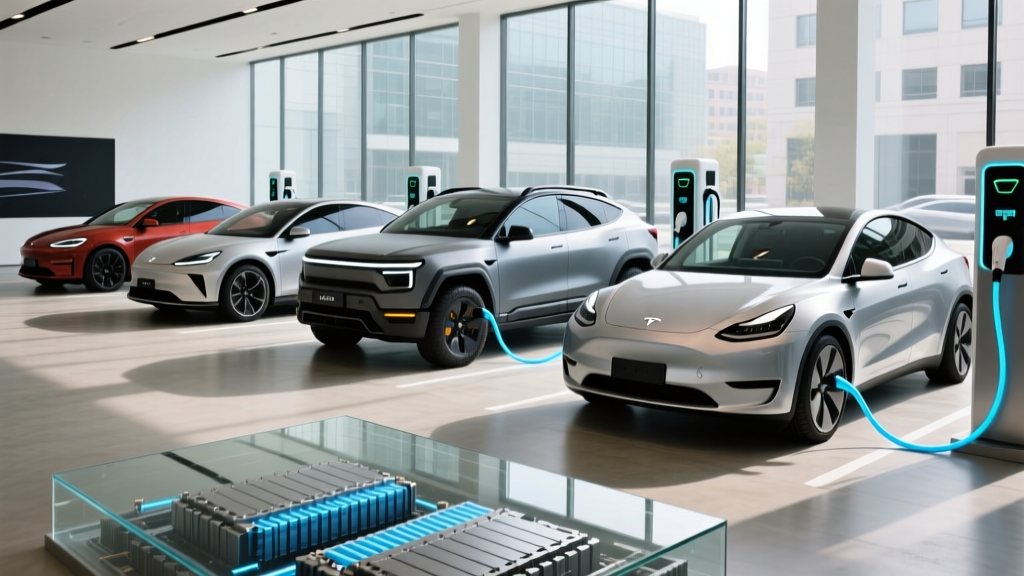
The Question Buyers Are Actually Asking in 2026
Search forums, Reddit threads, and EV Facebook groups long enough and you will eventually encounter the question: Will Tesla go out of business, and should that stop me from buying one? It is a fair concern for anyone about to spend $45,000+ on a vehicle whose long-term software support, Supercharger reliability, and warranty honoring depend on the manufacturer staying solvent.
The short answer: Tesla is not going out of business in 2026. The company remains the world's most valuable automaker by market capitalization, operates six gigafactories globally, and continues to generate positive free cash flow. But the longer answer — the one that matters for your purchase decision — requires looking at what you are actually buying, how it compares to an increasingly competitive field, and what protections exist if the unthinkable happened.
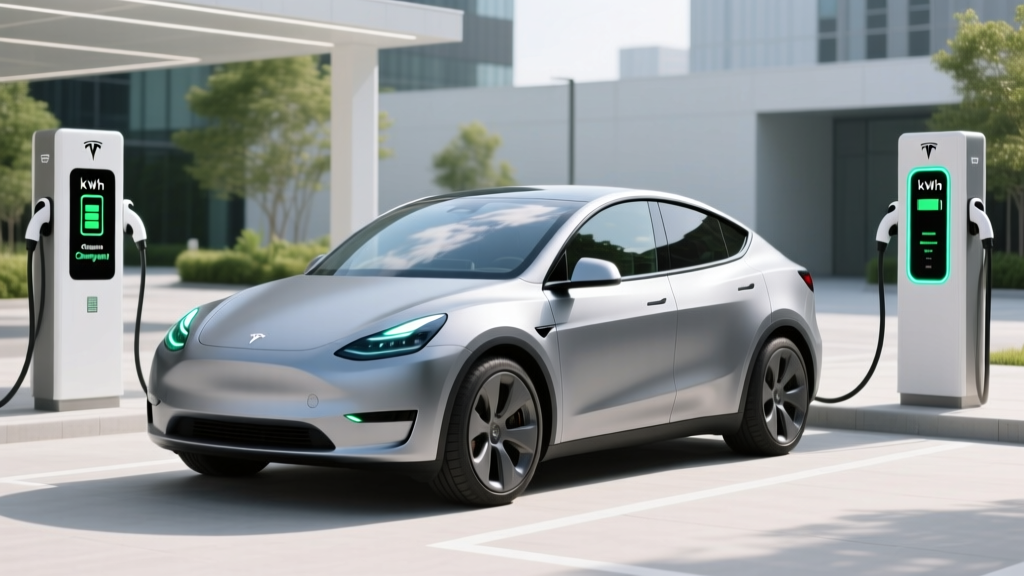
This review uses the 2026 Tesla Model Y Long Range AWD as our reference point, since it is Tesla's highest-volume seller and the vehicle most buyers are cross-shopping against the Hyundai Ioniq 5, Ford Mustang Mach-E, and Kia EV6.
2026 Model Y: The Spec Sheet That Matters
| Attribute | Value |
|---|---|
| EPA Estimated Range | 320 miles |
| Battery Capacity (usable) | ~75 kWh, NMC (2170 cells) |
| Drivetrain | Dual-motor AWD |
| Horsepower | 384 hp (combined) |
| 0–60 mph | 4.8 seconds |
| Peak DC Fast-Charge Rate | 250 kW |
| 10–80% DC Fast Charge | ~27 minutes |
| Level 2 Home Charging | 11.5 kW (~44 mi/hr) |
| Efficiency | 122 MPGe combined / 28 kWh/100 mi |
| Cargo Volume (rear seats up / folded) | 30.2 / 72.0 cu ft |
| Rear Legroom | 41.6 in |
| Battery & Drive Unit Warranty | 8 years / 120,000 miles |
| Base MSRP (Long Range AWD) | $47,990 |
| As-Tested (w/ FSD, paint, wheels) | ~$59,490 |
Real-World Range: What the EPA Sticker Doesn't Tell You
Real-World Highway (70–80 mph, mild weather): ~265–285 miles
Real-World City / Suburban Mixed: ~290–310 miles
Cold Weather (below 30°F, highway): ~210–240 miles
With Heat Pump Engaged in Cold: Recovers ~15–20 miles vs. resistive heating
Tesla's efficiency engineering remains industry-leading. The Model Y's ~28 kWh/100 mi combined figure beats most crossover competitors by 2–4 kWh/100 mi, which translates directly into more miles from a smaller, lighter battery pack. That efficiency advantage is the product of Tesla's heat pump (standard since 2021), low drag coefficient (0.23 Cd), and SiC inverter technology.
However, the EPA test cycle is weighted toward city and suburban driving where regenerative braking recovers significant energy. On sustained highway runs at 75+ mph, expect to lose 10–17% from the sticker figure. In sub-freezing temperatures, battery chemistry limitations and cabin heating demands can cut range by 25–35%, even with Tesla's heat pump. Preconditioning the battery while still plugged in at home mitigates some of this loss, but physics is physics — cold lithium-ion cells have higher internal resistance.
For context, a 300-mile winter road trip from Chicago to Indianapolis is doable without a charge stop, but you will arrive with roughly 15–20% SoC remaining. Plan conservatively.
Charging Speed: Supercharger Dominance, With Caveats
| Charging Level | Power (kW) | Miles Added per Hour | Notes |
|---|---|---|---|
| Level 1 (120V household) | ~1.4 kW | ~5 mi/hr | Emergency/trickle only |
| Level 2 (240V, 48A Wall Connector) | 11.5 kW | ~44 mi/hr | Full charge in ~7 hours |
| DC Fast (V3 Supercharger) | Peak 250 kW | ~180 mi in 15 min | 10–80% in ~27 min |
| DC Fast (V4 Supercharger) | Peak 250 kW (capped by vehicle) | Similar to V3 | Model Y cannot exceed 250 kW |
| CCS Adapter (Electrify America, etc.) | Up to 250 kW | Variable | Requires Tesla CCS adapter (included) |
The Model Y's charging architecture peaks at 250 kW on DC fast chargers. That is competitive but no longer class-leading — the Hyundai Ioniq 5 and Kia EV6 can sustain higher rates thanks to their 800V architectures, achieving 10–80% in approximately 18 minutes versus the Model Y's ~27 minutes.
The critical detail that spec sheets omit is the charge curve. The Model Y hits its 250 kW peak only between roughly 10–25% SoC under ideal thermal conditions. By 50% SoC, the rate has tapered to ~150 kW, and above 80% it drops below 50 kW. This is normal lithium-ion behavior — the battery management system slows current to protect cell longevity — but it means the last 20% takes nearly as long as the first 60%.
What Tesla still does better than anyone is the charging network experience. The Supercharger network has expanded to over 6,500 stations and 65,000+ connectors in North America as of early 2026, and the plug-and-charge experience (no app, no RFID card, no payment fumbling) remains unmatched. With Tesla opening Superchargers to NACS-equipped competitors, the network advantage is becoming an industry-wide benefit, but Tesla owners still get the most seamless integration — navigation automatically routes through Superchargers and preconditions the battery en route.
For home charging, Tesla's Wall Connector at 48 amps delivers 11.5 kW, adding roughly 44 miles of range per hour. A full 10–100% charge takes approximately 7 hours, meaning an overnight session easily covers any daily commute. Installation costs for a 240V/60A circuit typically range from $500–$2,000 depending on panel proximity and local permitting, on top of the $475 Wall Connector hardware cost.
Performance, Interior, and Technology
The dual-motor AWD Model Y delivers 384 combined horsepower and a 4.8-second 0–60 mph time — brisk by any measure and meaningfully quicker than most competing electric crossovers in this price range. The instant torque delivery and low center of gravity make it feel even quicker in real-world merging and passing situations.
Interior space is a genuine strength. With 30.2 cubic feet behind the second row and 72.0 cubic feet with seats folded, the Model Y offers cargo volume rivaling midsize SUVs. The optional third row (suitable only for small children) is available but compromises cargo space significantly. Rear legroom at 41.6 inches is generous for adults on longer trips.
The minimalist interior remains polarizing. Nearly all vehicle controls — climate, mirrors, glovebox, wiper speed — are buried in the 15.4-inch central touchscreen. There are no physical buttons for common functions, and the turn signal stalks have been replaced by steering-wheel-mounted buttons (a change introduced with the refreshed "Juniper" model). Some drivers adapt within a week; others never do.
Standout tech features:
- Autopilot (standard): Adaptive cruise control + lane centering. This is SAE Level 2 — the driver must remain fully engaged and supervising at all times.
- Full Self-Driving Supervised ($8,000 option): Adds automatic lane changes, traffic light/stop sign recognition, and Navigate on Autopilot. Still SAE Level 2. Despite the name, this is not autonomous driving — you are the driver.
- Sentry Mode / Dashcam: Continuous multi-camera recording when parked, with motion-triggered alerts to your phone.
- Over-the-air updates: Tesla's OTA pipeline continues to deliver meaningful feature additions (theater mode, new games, UI refinements) years after purchase.
- Dog Mode / Camp Mode: Climate maintenance features for pets and overnight camping that competitors have been slow to replicate.
Notable drawbacks:
- No Apple CarPlay or Android Auto — Tesla's proprietary infotainment only
- Panel gaps and paint quality, while improved, still trail legacy automaker fit-and-finish
- No physical controls for HVAC, volume, or mirrors
- Ride quality is firm; road noise is noticeable on coarse surfaces
- Service center wait times in high-population areas can stretch to 2–4 weeks for non-urgent repairs
Pricing, Tax Credits, and Total Cost
| Trim | Base MSRP | Federal §30D Credit | Effective Price (if eligible) |
|---|---|---|---|
| Long Range RWD | $44,990 | Up to $7,500 | ~$37,490 |
| Long Range AWD | $47,990 | Up to $7,500 | ~$40,490 |
| Performance AWD | $52,490 | Up to $7,500 | ~$44,990 |
Federal tax credit eligibility under IRS §30D is not automatic. The 2026 Model Y qualifies for up to $7,500, but only if you meet all current requirements:
- MSRP cap: The vehicle's base MSRP must be below $80,000 for SUVs (the Model Y qualifies at all trim levels).
- Buyer income cap: Modified adjusted gross income must not exceed $150,000 (single), $225,000 (head of household), or $300,000 (joint).
- Battery sourcing: A percentage of critical minerals and battery components must be sourced from the U.S. or free-trade-agreement countries. Tesla has worked to localize its supply chain, and the Model Y built at Giga Texas currently meets these thresholds — but the IRS updates qualifying vehicle lists periodically, and eligibility can shift mid-year.
- Point-of-sale transfer: As of 2024, you can transfer the credit to the dealer at purchase, reducing your out-of-pocket cost immediately rather than waiting for a tax refund.
Always verify current eligibility on the IRS Clean Vehicle Credit page and fueleconomy.gov before purchasing, as battery-sourcing compliance can change with supply chain adjustments.
On a total-cost-of-ownership basis, the Model Y Long Range AWD at ~$40,490 after the federal credit (plus any applicable state incentives) remains one of the most compelling electric crossovers available. Electricity costs average $0.16/kWh nationally, meaning a full 75 kWh charge costs roughly $12 — versus $50–$65 for equivalent gasoline in a 25 MPG competitor. Over five years and 75,000 miles, fuel savings alone can offset $5,000–$8,000 depending on local utility rates and gas prices.
The "Will Tesla Go Out of Business?" Risk Assessment
Let's address the keyword directly. Here is a data-grounded look at Tesla's business health and what it means for buyers:
Reasons the risk is low:
- Tesla delivered approximately 1.8 million vehicles globally in 2025 and maintains ~17% global BEV market share.
- The company holds over $25 billion in cash and equivalents as of its most recent quarterly filing.
- Revenue streams extend beyond vehicles: energy storage (Megapack/Powerwall), Supercharger network fees, software subscriptions (FSD), and regulatory credit sales to other automakers.
- Six operational vehicle factories across three continents provide geographic diversification no startup has achieved.
- The Supercharger network is now a revenue-generating asset serving non-Tesla EVs, creating a structural business line independent of vehicle sales.
Legitimate concerns:
- Increasing competition from Hyundai/Kia, BMW, and Chinese manufacturers (BYD, NIO) is compressing margins.
- Brand perception has suffered in some demographics due to CEO Elon Musk's public political activities, potentially affecting demand in key markets.
- Service infrastructure has not scaled proportionally with the vehicle fleet — a growing pain point for owners in metro areas.
- The company's valuation assumes growth trajectories (robotaxi, Optimus robot) that remain unproven at scale.
What happens if the worst occurred? Under federal law, manufacturers are required to honor warranties for their stated terms, and in a bankruptcy scenario, successor entities or parts suppliers typically continue supporting existing vehicles. The open NACS charging standard means Superchargers will continue operating regardless of Tesla's corporate status. Over-the-air updates would likely cease, but the vehicle's core functionality — driving, charging, climate control — is not cloud-dependent in the way that would render the car inoperable.
For pragmatic buyers: the risk of Tesla ceasing operations within the typical ownership period (5–10 years) is very low. The more realistic concern is whether Tesla's service quality and software support will match your expectations relative to legacy brands with established dealer networks.
Model Y vs. Key Competitors: Is It Still Worth Buying?
- Best-in-class Supercharger network integration
- Industry-leading efficiency (28 kWh/100 mi)
- Strong OTA update track record — the car improves over time
- Spacious cargo area (72.0 cu ft) with practical frunk
- Strong resale value relative to most EVs
- Federal tax credit eligibility at all trims
- Slower DC charging (27 min 10–80%) vs. 800V competitors (~18 min)
- No Apple CarPlay / Android Auto
- Minimalist interior lacks physical controls
- Service center availability inconsistent by region
- Firm ride quality; noticeable road noise
- Brand perception concerns for some buyers
Choose the Model Y if: You value the Supercharger ecosystem, prioritize efficiency and range, want a spacious electric family crossover, and are comfortable with a touchscreen-dominant interface.
Choose the Hyundai Ioniq 5 or Kia EV6 if: Faster DC charging matters for your road-trip habits, you want Apple CarPlay, and you prefer a more traditional interior with physical controls.
Choose the Ford Mustang Mach-E if: You want a sportier driving feel, prefer a dealer-supported service network, and value CarPlay integration.
Frequently Asked Questions
Is Tesla going out of business in 2026?
No. Tesla remains profitable, holds substantial cash reserves, operates six global factories, and continues to grow its energy storage and Supercharger revenue streams. While competition is intensifying and margins are compressing, the company's financial position does not indicate insolvency risk in the near term.
What is the real-world range of the 2026 Model Y?
The EPA rates the Long Range AWD at 320 miles. In real-world highway driving at 70–80 mph, expect 265–285 miles. In cold weather below 30°F, plan for 210–240 miles. City and suburban driving with regenerative braking recovers more energy, yielding closer to the EPA figure.
How fast does the Model Y charge at home and on the road?
On DC fast chargers, the Model Y peaks at 250 kW and charges from 10–80% in approximately 27 minutes. At home on a Level 2 Wall Connector (11.5 kW / 48A), it adds about 44 miles of range per hour, reaching a full charge overnight in roughly 7 hours.
Does the 2026 Model Y qualify for the federal EV tax credit?
The Model Y currently qualifies for up to $7,500 under IRS §30D, provided the buyer meets income limits ($150K single / $300K joint), the vehicle MSRP is below the $80,000 SUV cap (it is), and battery-sourcing requirements are met. Eligibility can change — verify on IRS.gov before purchasing.
Is Autopilot or FSD actually self-driving?
No. Both Autopilot and Full Self-Driving (Supervised) are classified as SAE Level 2 driver-assistance systems. The driver must remain fully attentive, with hands on the wheel and eyes on the road, at all times. True self-driving (Level 4) is currently only available through robotaxi services like Waymo in limited geographic areas.
What is the battery warranty on the Model Y?
Tesla covers the battery and drive unit for 8 years or 120,000 miles (whichever comes first), with a guarantee of at least 70% capacity retention over that period. Real-world degradation data from Tesla's fleet suggests most packs retain 85–90% capacity at 100,000 miles under normal use patterns.
Should I buy a Tesla or wait for more competition?
The Model Y in 2026 remains a strong overall package, particularly for buyers who road-trip frequently and value Supercharger access. However, if you primarily drive locally and faster DC charging or CarPlay integration are priorities, the Hyundai Ioniq 5, Kia EV6, and upcoming models from legacy automakers offer compelling alternatives. Test-drive at least two competitors before committing.