Tesla's all-glass panoramic roof is one of the most visually striking features in the EV market — and one of the most debated. It floods the cabin with natural light, creates an airy, spacious feel, and has become a signature design element across the lineup. But buyers searching for a Tesla with glass roof often have the same practical questions: Does it make the cabin too hot? Does it compromise headroom or safety? And which Tesla model offers the best overall package if the glass roof is a priority?
This review breaks down every current Tesla model equipped with a glass roof — the 2026 Model 3, Model Y (including the redesigned Juniper generation), Model S, and Model X — with hard data on range, charging speed, pricing, and real-world ownership considerations. We'll address the thermal performance of Tesla's glass roof technology head-on, because it matters more than most spec sheets let on.
Which Tesla Models Come With a Glass Roof?
As of the 2026 model year, every Tesla passenger vehicle ships standard with a full glass panoramic roof. There is no metal-roof option, no delete package, and no trim-level exclusion. The glass roof is integral to Tesla's design language and structural approach.
| Model | Roof Type | UV/IR Protection | Tint Option | Starting MSRP |
|---|---|---|---|---|
| Model 3 (Highland) | Single-piece panoramic | 99% UV, significant IR block | Aftermarket only | $38,990 |
| Model Y (Juniper) | Single-piece panoramic | 99% UV, improved IR coating | Aftermarket only | $44,990 |
| Model S | Single-piece panoramic | 99% UV, IR-blocking glass | Aftermarket only | $79,990 |
| Model X | Single-piece panoramic | 99% UV, IR-blocking glass | Aftermarket only | $84,990 |
Tesla uses laminated, UV-blocking glass that filters approximately 99% of ultraviolet radiation. The Juniper-generation Model Y introduced an improved infrared-reflective coating that reduces heat transfer compared to earlier Model Y builds, but the fundamental physics of a large glass surface exposed to direct sunlight remain a factor — especially in southern US climates.
Model 3: The Most Accessible Tesla With a Glass Roof
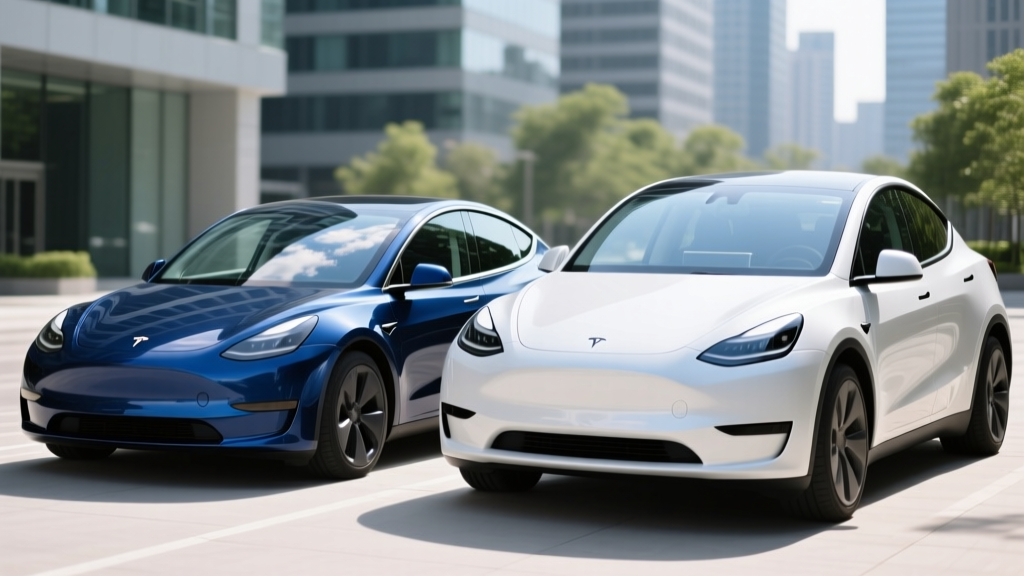
The refreshed Model 3 (internally called "Highland") remains the entry point into Tesla ownership and the most affordable way to get a Tesla with a glass roof. The redesign brought a quieter cabin, improved suspension tuning, ventilated front seats, and a more refined interior — all while retaining the full panoramic glass roof.
| Spec | RWD (Base) | Long Range AWD | Performance |
|---|---|---|---|
| EPA Range | 272 mi | 341 mi | 315 mi |
| Battery (usable) | ~60 kWh (LFP) | ~75 kWh (NMC) | ~75 kWh (NMC) |
| MPGe (combined) | 132 MPGe | 132 MPGe | 121 MPGe |
| kWh/100 mi | 25 | 25 | 28 |
| 0–60 mph | 5.8 sec | 4.2 sec | 2.9 sec |
| Horsepower | 271 hp | 346 hp | 510 hp |
| Drivetrain | RWD | Dual-motor AWD | Dual-motor AWD |
| Peak DC Charge | 170 kW | 250 kW | 250 kW |
| 10–80% DCFC | ~25 min | ~18 min | ~18 min |
| Level 2 Rate | 11.5 kW (~44 mi/hr) | 11.5 kW (~44 mi/hr) | 11.5 kW (~44 mi/hr) |
| Cargo (rear) | 23 cu ft | 23 cu ft | 23 cu ft |
| Frunk | 3.1 cu ft | 3.1 cu ft | 3.1 cu ft |
| Rear Legroom | 35.2 in | 35.2 in | 35.2 in |
| Base MSRP | $38,990 | $45,990 | $52,990 |
Real-World Range Note: The EPA 341-mile figure on the Long Range AWD is achievable in mixed city/suburban driving at moderate temperatures. Expect 275–300 miles on sustained highway trips at 70–75 mph, and 220–260 miles in freezing temperatures (below 32°F) due to battery chemistry limitations and cabin heating load. The LFP-equipped RWD model holds up slightly better in cold weather percentage-wise, but starts from a lower baseline.
The RWD trim uses a lithium iron phosphate (LFP) battery, which offers slower degradation and a recommended 100% daily charge — a meaningful advantage for commuters who want maximum available range every morning. The Long Range and Performance trims use NMC (nickel manganese cobalt) chemistry, which offers higher energy density but benefits from daily charging limited to 80–90%.
Model Y (Juniper): The Family-Friendly Glass-Roof SUV
The redesigned Model Y (Juniper platform) launched with a significantly updated interior, a quieter ride, a rear-seat entertainment screen, and an improved glass roof with better infrared rejection. It remains the best-selling Tesla and the most popular Tesla with a glass roof among families.
| Spec | Long Range AWD | Performance |
|---|---|---|
| EPA Range | 320 mi | 290 mi |
| Battery (usable) | ~75 kWh (NMC) | ~75 kWh (NMC) |
| MPGe (combined) | 122 MPGe | 115 MPGe |
| kWh/100 mi | 28 | 29 |
| 0–60 mph | 4.8 sec | 3.5 sec |
| Horsepower | 384 hp | 510 hp |
| Drivetrain | Dual-motor AWD | Dual-motor AWD |
| Peak DC Charge | 250 kW | 250 kW |
| 10–80% DCFC | ~20 min | ~20 min |
| Level 2 Rate | 11.5 kW (~37 mi/hr) | 11.5 kW (~37 mi/hr) |
| Cargo (rear seats up) | 30 cu ft | 30 cu ft |
| Cargo (rear seats folded) | 72 cu ft | 72 cu ft |
| Frunk | 4.1 cu ft | 4.1 cu ft |
| Rear Legroom | 38.4 in | 38.4 in |
| Base MSRP | $44,990 | $51,990 |
With 30 cubic feet behind the second row and 72 with seats folded, the Model Y offers crossover cargo utility that the Model 3 simply can't match. The Juniper refresh also improved rear-seat comfort significantly — the seat cushion is longer, the backrest angle is more relaxed, and the added rear touchscreen gives passengers control over climate and entertainment.
Real-World Range Note: EPA rates the Long Range at 320 miles, but real-world highway driving at 75 mph yields approximately 260–285 miles in warm weather and 210–240 miles in sub-freezing conditions. The Model Y's taller, less aerodynamic profile means highway efficiency drops more sharply than the Model 3 at speed. If most of your driving is highway commuting above 70 mph, plan around 260 usable miles.
Model S and Model X: Premium Glass-Roof Flagships
The Model S sedan and Model X SUV continue into 2026 with glass roofs, premium interiors, and the highest performance figures in the Tesla lineup. These models target buyers who want maximum range, luxury features, and the fastest acceleration Tesla offers.
| Spec | Model S LR | Model S Plaid | Model X LR | Model X Plaid |
|---|---|---|---|---|
| EPA Range | 402 mi | 359 mi | 335 mi | 311 mi |
| Battery (usable) | ~95 kWh (NMC) | ~95 kWh (NMC) | ~95 kWh (NMC) | ~95 kWh (NMC) |
| 0–60 mph | 3.1 sec | 1.99 sec | 3.8 sec | 2.5 sec |
| Horsepower | 670 hp | 1,020 hp | 670 hp | 1,020 hp |
| Peak DC Charge | 250 kW | 250 kW | 250 kW | 250 kW |
| 10–80% DCFC | ~27 min | ~27 min | ~27 min | ~27 min |
| Cargo (rear) | 28 cu ft | 28 cu ft | 46 cu ft | 46 cu ft |
| Base MSRP | $79,990 | $94,990 | $84,990 | $99,990 |
The Model S Long Range delivers an EPA-rated 402 miles — the highest of any current Tesla. Its larger ~95 kWh battery pack and efficient dual-motor drivetrain make it the strongest road-trip choice in the lineup. The Model X adds falcon-wing rear doors, optional six- or seven-seat configurations, and a massive 46 cu ft of cargo volume, but its weight and aerodynamics reduce range compared to the sedan.
Glass Roof Thermal Performance: What Owners Actually Experience
This is the single most common concern among buyers researching a Tesla with glass roof, and it deserves a direct, data-informed answer.
Summer heat: Tesla's laminated glass blocks roughly 99% of UV rays, which prevents sunburn and interior fading. However, infrared (IR) radiation — the wavelength you feel as heat — is only partially blocked. On a 95°F day parked in direct sun, interior surface temperatures on the headliner and rear shelf can exceed 140°F. The cabin air will heat-soak significantly if parked without climate preconditioning.
What Tesla does well: The standard heat pump (all current models) and robust HVAC system cool the cabin rapidly when activated. Tesla's app-based preconditioning means you can drop the cabin to 72°F before you enter. The glass roof's thermal impact is most noticeable when the car has been sitting parked in direct sun for extended periods — not during normal driving.
What owners actually do: A significant portion of Tesla owners in southern states (Arizona, Texas, Florida, Southern California) install aftermarket ceramic tint film or a removable fabric sunshade on the glass roof. Tesla sells an official fabric sunshade accessory for Model 3 and Model Y (typically $65–$100). These are widely considered near-essential accessories in hot climates.
Winter advantage: The glass roof provides a genuine benefit in winter — the solar gain warms the cabin slightly, reducing the heating load on the heat pump. Owners in northern climates often report the glass roof as a net positive during cold months, with the open, bright feel combating the enclosed sensation of winter driving.
Safety: Tesla's glass roof panels are laminated (not tempered), meaning they crack in a spider-web pattern rather than shattering into shards. The roof structure contributes to the vehicle's overall torsional rigidity. Both the Model 3 and Model Y have earned IIHS Top Safety Pick+ ratings, with "Good" ratings in roof-strength testing.
Charging Speed, Network Access, and Home Setup
All current Tesla models use the NACS (North American Charging Standard) connector natively — the same connector now being adopted by Ford, GM, Rivian, Hyundai, and most other automakers. This means Tesla owners have access to the Supercharger network (the most reliable and extensive DC fast-charging network in the US) without adapters, plus growing access to third-party networks via the NACS standard.
| Charging Level | Power | Typical Speed | Notes |
|---|---|---|---|
| Level 1 (120V outlet) | ~1.4 kW | 3–5 mi/hr | Emergency/trickle only |
| Level 2 (240V, 48A) | 11.5 kW | 37–44 mi/hr | Home overnight standard |
| DC Fast (Supercharger V3) | Up to 250 kW | 10–80% in ~18–27 min | Peak rate tapers above 60% |
| DC Fast (Supercharger V4) | Up to 250 kW (current) | Similar to V3 | Newer stalls, cable design differs |
Charging curve reality: Tesla's 250 kW peak rate is achieved only at a low state of charge (typically 10–25% SoC) and with battery preconditioning active (the car navigates to a Supercharger and warms the pack automatically). The rate tapers significantly above 60% SoC, and charging from 80–100% is extremely slow — often adding only 1–2 kW. This is why Tesla and most EV guides recommend charging to 80% on road trips and only charging to 100% when needed for the final leg.
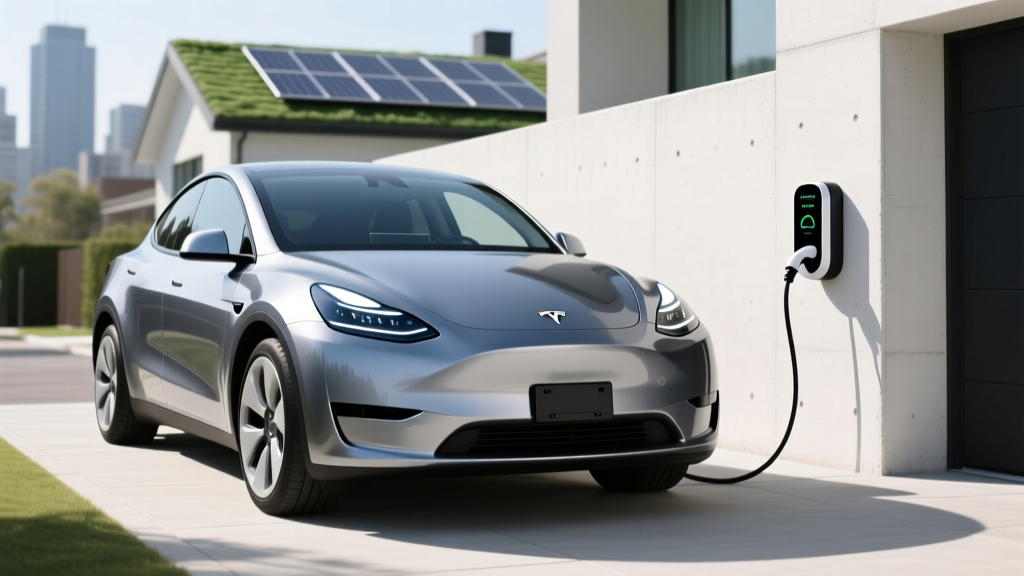
Home charging setup: A Tesla Wall Connector on a 60-amp circuit delivers the full 48 amps (11.5 kW) the car can accept. Most owners install this on a NEMA 14-50 outlet or hardwired. A full overnight charge from 20% to 100% takes roughly 7–9 hours depending on the model. Professional installation typically runs $500–$2,000 depending on panel capacity and conduit length, with a potential panel upgrade adding $1,500–$3,000 if your home's electrical service is maxed out.
Pricing, Trims, and Federal Tax Credit Eligibility
Tesla's pricing has shifted frequently, but as of early 2026, here are the base MSRPs and how the federal tax credit applies.
| Model / Trim | Base MSRP | §30D Credit | Effective Price | Credit Eligible? |
|---|---|---|---|---|
| Model 3 RWD | $38,990 | Up to $7,500 | From ~$31,490* | Yes (if sourcing & income met) |
| Model 3 Long Range | $45,990 | Up to $7,500 | From ~$38,490* | Yes (if sourcing & income met) |
| Model 3 Performance | $52,990 | Up to $7,500 | From ~$45,490* | Yes (MSRP under $55K cap) |
| Model Y Long Range | $44,990 | Up to $7,500 | From ~$37,490* | Yes (SUV cap: $80K) |
| Model Y Performance | $51,990 | Up to $7,500 | From ~$44,490* | Yes (SUV cap: $80K) |
| Model S Long Range | $79,990 | $0 | $79,990 | No (exceeds $55K sedan cap) |
| Model X Long Range | $84,990 | Up to $7,500 | From ~$77,490* | Possible (SUV cap: $80K) |
Critical caveats on the §30D credit (per IRS guidelines):
- Income caps: Modified AGI must not exceed $150,000 (single), $225,000 (head of household), or $300,000 (married filing jointly).
- MSRP caps: Sedans must be under $55,000; SUVs, trucks, and vans under $80,000. This eliminates the Model S from credit eligibility entirely.
- Battery sourcing: The credit is split into two halves ($3,750 each) — one for critical-minerals sourcing and one for battery-component manufacturing. Qualification depends on current-year supply-chain rules that can shift. Verify on the IRS clean vehicle credit page before purchase.
- Point-of-sale transfer: Since 2024, eligible buyers can transfer the credit to the dealer at purchase, reducing the purchase price directly rather than waiting for a tax refund.
*Effective prices assume full $7,500 credit eligibility. Consult a tax professional to confirm your personal eligibility — rules change and individual circumstances vary.
Battery Warranty, Degradation, and Long-Term Ownership
Tesla's battery and drive-unit warranty provides a strong baseline for long-term ownership confidence:
- Model 3 RWD (LFP): 8 years / 100,000 miles, whichever comes first, with retention of at least 70% of original capacity.
- Model 3 Long Range / Performance & Model Y: 8 years / 120,000 miles, 70% minimum retention.
- Model S & Model X: 8 years / 150,000 miles, 70% minimum retention.
The 70% retention threshold is the industry-standard warranty floor. In practice, Tesla battery packs have shown strong longevity — Tesla's own impact report has cited average degradation of approximately 12% at 200,000 miles for Model S/X packs. Model 3/Y data is younger but trending similarly. LFP packs (Model 3 RWD) tend to degrade more slowly and can be charged to 100% daily without the same longevity concerns as NMC.
Out-of-warranty battery replacement for a Model 3 or Model Y currently runs approximately $12,000–$16,000 at Tesla service centers. Model S/X replacements are higher, typically $15,000–$22,000. These costs have been trending downward as battery manufacturing scales, but remain a real consideration for high-mileage owners or second-hand buyers.
Autopilot, FSD, and Technology Features
Every Tesla includes the Autopilot suite as standard — adaptive cruise control, lane-centering assist, automatic emergency braking, and blind-spot monitoring. This is an SAE Level 2 driver-assistance system, meaning the driver must remain fully attentive and keep hands on the steering wheel at all times.
Important: Tesla's Full Self-Driving (FSD) Supervised — available as an $8,000 option or $99/month subscription — is also an SAE Level 2 system. Despite the name, it does not make the vehicle self-driving. The driver is legally and practically responsible for all vehicle operation. True self-driving (Level 4) is currently offered only by Waymo and Zoox in limited, geo-fenced areas.
Beyond driver-assist features, Tesla's technology suite includes:
- 15.4-inch center touchscreen (Model 3/Y) or 17-inch (Model S/X) with full vehicle controls
- Over-the-air software updates adding features post-purchase
- Sentry Mode (360° camera-based security recording)
- Dog Mode, Camp Mode, and theater/streaming capabilities while parked
- Phone-as-key with Bluetooth proximity unlock
- Rear-seat 8-inch touchscreen (Model Y Juniper, Model S/X)
The most notable drawback of Tesla's interior tech is the complete absence of physical controls. Climate, mirrors, glovebox, and even windshield-wiper intensity are controlled through the touchscreen. Many owners adapt within a week, but it remains a friction point for buyers transitioning from traditional vehicles.
Who Should Buy a Tesla With a Glass Roof?
Choose the Model 3 RWD if: You want the most affordable entry into a Tesla with a glass roof, your daily commute is under 50 miles round-trip, and you can charge at home. The LFP battery lets you charge to 100% daily without degradation worry.
Choose the Model 3 Long Range if: You take regular road trips of 200+ miles, want AWD for snow/rain, and value the longest real-world range in a sedan form factor.
Choose the Model Y Long Range if: You need cargo space for a family, prefer a higher seating position, and want the most versatile Tesla with a glass roof. The Juniper refresh significantly improved rear-seat comfort and cabin quietness.
Choose the Model S Long Range if: Budget is secondary to maximum range (402 EPA miles) and you want a premium sedan experience. Note that it does not qualify for the federal tax credit due to the $55K sedan MSRP cap.
Choose the Model X if: You need three rows of seating, want falcon-wing doors for tight parking access, and can accept the higher price and reduced range compared to the sedan.
Pros and Cons of Tesla's Glass Roof
Pros
- Expansive, airy cabin feel with excellent outward visibility
- 99% UV protection standard — no sunburn or interior fading
- Passive solar warmth in winter reduces heat-pump load
- Structural contribution to roof rigidity and crash safety
- No mechanical sunroof parts to fail (motors, seals, drains)
- Standard on every trim — no upgrade cost
Cons
- Significant IR heat transfer in hot, sunny climates
- Aftermarket tint or sunshade nearly required in southern US states
- No option to block light entirely (no retractable shade built in)
- Replacement cost if damaged: $1,500–$3,000+ depending on model
- Can feel exposed in heavy rain or hail (noise, visual intensity)
- Not ideal for buyers who prefer a traditional, enclosed cabin feel
Frequently Asked Questions
Does the Tesla glass roof get too hot in summer?
The glass blocks 99% of UV rays but only partially blocks infrared heat. In direct sun at high temperatures, the cabin will heat-soak noticeably. Most owners in hot climates install an aftermarket ceramic tint ($200–$400) or use Tesla's official fabric sunshade accessory ($65–$100). With preconditioning via the app, the cabin cools to a comfortable temperature within minutes before you enter.
Can you get a Tesla without a glass roof?
No. As of 2026, every Tesla model — Model 3, Model Y, Model S, and Model X — comes standard with a full panoramic glass roof. There is no metal-roof option or delete package available from the factory.
How much does it cost to replace a Tesla glass roof?
Glass roof replacement typically ranges from $1,500 to $3,000+ depending on the model and whether the vehicle is under warranty. Comprehensive auto insurance generally covers glass damage from road debris, hail, or falling objects, often with a separate glass deductible ($0–$250 in many states).
Does the glass roof affect range or efficiency?
The glass roof adds minimal weight compared to a steel roof with a panoramic sunroof mechanism (which includes motors, rails, and a retractable shade). The net effect on range is negligible. The primary efficiency impact is thermal — in hot weather, the HVAC works slightly harder to compensate for IR heat gain, which can reduce range by a small percentage in extreme heat.
Which Tesla with a glass roof has the best range?
The 2026 Model S Long Range leads with an EPA-rated 402 miles. Among more affordable options, the Model 3 Long Range AWD offers 341 EPA miles, and the Model Y Long Range delivers 320 EPA miles. Real-world highway range will be 10–20% lower depending on speed, temperature, and terrain.
Is Tesla's glass roof safe in a rollover?
Yes. Tesla's laminated glass roof contributes to the vehicle's structural rigidity. Both the Model 3 and Model Y have earned top ratings in roof-strength tests from the IIHS and 5-star overall ratings from NHTSA. The laminated construction means the glass cracks in a contained spider-web pattern rather than shattering.
Does the Tesla Model 3 or Model Y qualify for the $7,500 federal tax credit?
Both the Model 3 and Model Y can qualify for up to $7,500 under IRS §30D, but eligibility depends on your income (capped at $150K single / $300K joint), the vehicle's MSRP (under $55K for sedans, $80K for SUVs), and current battery-sourcing requirements. The credit can be transferred at point of sale to reduce your purchase price directly. Always verify current eligibility on IRS.gov before purchasing.