Why Tesla Owners Are Searching for Extended Warranty Answers
Tesla's factory warranty covers the battery and drive units for 8 years, but the basic vehicle warranty ends at 4 years or 50,000 miles. Once that limited warranty expires, owners face a stark reality: Tesla's proprietary parts, specialized labor, and closed repair ecosystem can turn a minor failure into a four-figure bill. That's where the Tesla extended warranty—officially called the Extended Service Agreement (ESA)—enters the conversation.
But is it actually worth the premium? After reviewing real owner repair invoices, Tesla's current ESA pricing tiers, and third-party alternatives available in 2026, the answer depends heavily on which model you drive, how long you plan to keep it, and what components you're most worried about. This guide breaks down the math so you can decide with data, not guesswork.
Tesla's Factory Warranty: What You Already Have
Before evaluating an extended plan, understand what Tesla already covers from the factory:
- Basic Vehicle Limited Warranty: 4 years or 50,000 miles (whichever comes first). Covers most vehicle components except wear items.
- Battery & Drive Unit Warranty (Model 3/Y RWD): 8 years or 100,000 miles, with a minimum 70% battery capacity retention guarantee.
- Battery & Drive Unit Warranty (Model 3/Y Long Range & Performance, Model S/X): 8 years or 120,000 miles, same 70% retention threshold.
This is a critical distinction: the battery and drive unit are already covered for 8 years. The Tesla extended warranty does not extend battery or drive unit coverage beyond what the factory already provides. Instead, it extends the basic vehicle coverage past the 4-year/50,000-mile mark.
| Component | Model 3/Y (RWD) | Model 3/Y (LR/Perf) | Model S/X |
|---|---|---|---|
| Basic Vehicle | 4 yr / 50,000 mi | 4 yr / 50,000 mi | 4 yr / 50,000 mi |
| Battery & Drive Unit | 8 yr / 100,000 mi | 8 yr / 120,000 mi | 8 yr / 120,000 mi |
| Battery Retention Guarantee | ≥70% | ≥70% | ≥70% |
What the Tesla Extended Service Agreement Actually Covers
Tesla's Extended Service Agreement picks up where the Basic Vehicle Limited Warranty ends. You can purchase it for either 2 additional years / 25,000 miles or 4 additional years / 50,000 miles beyond the original 4-year/50,000-mile term. This means maximum ESA coverage runs through year 8 or 100,000 miles—aligning roughly with the battery warranty period.
Components covered under the ESA include:
- Touchscreen and infotainment hardware (MCU)
- Window regulators and power-folding mirrors
- HVAC compressor and heat pump assembly
- Suspension components (control arms, bushings, adaptive dampers on Model S/X)
- Power seat motors and steering column mechanisms
- Door handles (particularly relevant for Model S powered handles)
- 12V lithium-ion auxiliary battery (if equipped in newer builds)
- Charge port door actuator and latch mechanism
What the ESA does not cover:
- Battery pack or drive unit (already under separate 8-year warranty)
- Tires, wiper blades, brake pads/rotors, cabin air filters, and 12V battery on older vehicles
- Cosmetic damage, paint defects, or glass breakage
- Damage from accidents, misuse, or unauthorized modifications
- Software issues that don't involve hardware failure
Tesla Extended Warranty Pricing in 2026: Model-by-Model
Tesla prices the ESA based on model and coverage tier. Pricing can be checked in your Tesla account under "Manage" → "Extended Service Agreement" and is only available for purchase before the original 4-year/50,000-mile warranty expires. Once it expires, the option disappears permanently.
| Model | 2yr/25k Extension | 4yr/50k Extension | Deductible Per Visit |
|---|---|---|---|
| Model 3 | ~$2,500–$3,000 | ~$4,000–$5,000 | $0–$100 |
| Model Y | ~$2,800–$3,500 | ~$4,500–$5,500 | $0–$100 |
| Model S | ~$3,500–$4,500 | ~$5,500–$7,000 | $0–$100 |
| Model X | ~$4,000–$5,000 | ~$6,000–$7,500 | $0–$100 |
Note: Pricing varies by vehicle configuration, mileage at purchase, and Tesla's periodic adjustments. Check your Tesla app for exact quotes.
Real Repair Costs: What Tesla Owners Actually Pay Out of Warranty
The strongest argument for the ESA is the cost of common failures. Based on aggregated owner reports and service invoices from Tesla forums and independent EV repair shops, here's what post-warranty repairs look like in 2026:
| Component | Typical Cost | Common Failure Window |
|---|---|---|
| Touchscreen (MCU) replacement | $1,800–$2,800 | Years 5–8 |
| Heat pump / HVAC compressor | $1,500–$2,500 | Years 4–7 |
| Window regulator (per door) | $400–$700 | Years 4–6 |
| Power-folding mirror assembly | $600–$1,100 | Years 5–8 |
| Front suspension control arm set | $1,200–$2,000 | Years 5–9 |
| Charge port actuator | $500–$900 | Years 4–7 |
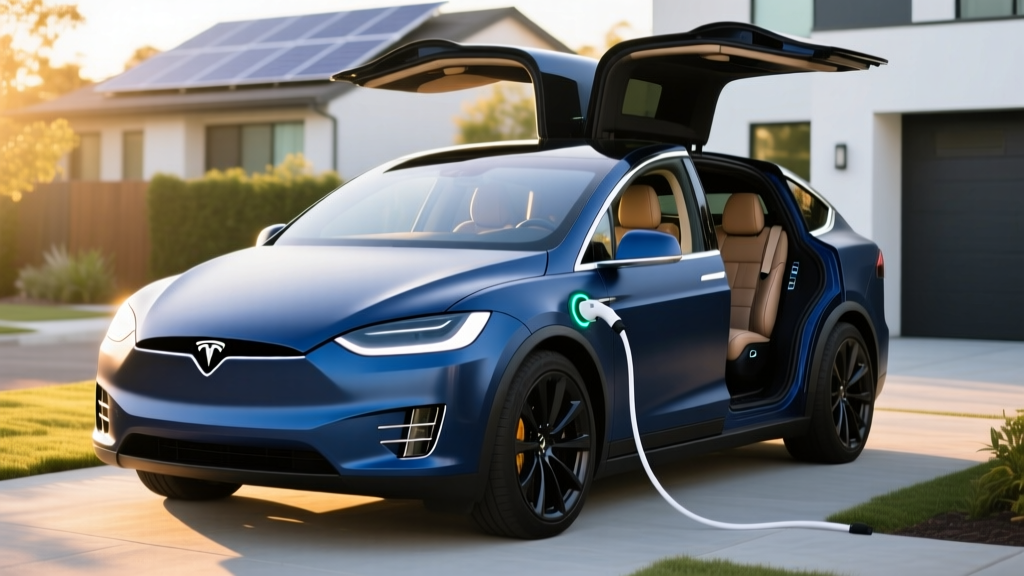
| Model X falcon-wing door motor | $2,000–$4,000 | Years 5–8 |
| Adaptive air suspension (Model S/X) | $2,500–$5,000+ per corner | Years 6–10 |
A single major failure—a touchscreen or air suspension replacement—can equal or exceed the cost of the ESA. But here's the catch: most Tesla owners in years 5–8 experience zero or one of these failures. The probability of needing $6,000+ in covered repairs during the ESA period is relatively low for Model 3 and Model Y owners, but significantly higher for Model S and Model X owners due to their more complex mechanical systems.
The Verdict: Is the Tesla Extended Warranty Worth It?
✅ Buy the ESA If...
- You own a Model S or Model X with air suspension, powered doors, or complex HVAC systems—repair costs on these models regularly exceed the ESA price
- You plan to keep the vehicle past 6 years or 75,000 miles and want predictable costs
- You have low risk tolerance for unexpected $2,000+ repair bills and prefer the peace of mind of fixed-cost coverage
- You lack access to a trusted independent EV mechanic (Tesla's closed parts ecosystem limits third-party repair options)
- You drive high annual miles (15,000+ per year) and will hit 50,000 miles in under 4 years, entering the post-warranty window sooner
❌ Skip the ESA If...
- You own a Model 3 or Model Y—these have fewer complex mechanical components, and the repair-cost-to-ESA-price ratio is less favorable
- You plan to sell or trade the vehicle before year 6—the ESA is transferable to a new owner, but resale-value uplift rarely covers the full ESA cost
- You're comfortable self-insuring by setting aside $200–$300/month in a "repair fund" that you keep if nothing breaks
- You have access to a qualified independent EV shop that can handle suspension, HVAC, and electrical repairs at lower labor rates than Tesla Service Centers
- You're considering a third-party extended warranty that covers similar components at lower cost (though read the fine print—many exclude EV-specific items)
Third-Party Extended Warranties vs. Tesla's ESA
Several third-party providers now offer EV extended warranties that include Tesla models. Companies like Endurance, CARCHEX, and Olive have plans that cover powertrain-adjacent electronics, suspension, and HVAC. Pricing typically runs $2,000–$4,000 for 3–5 years of coverage, sometimes with lower deductibles.
However, the critical limitation is parts sourcing. Tesla does not sell OEM parts to independent shops or third-party warranty administrators. If your third-party warranty approves a claim but the repair facility can't source the part, you're stuck waiting—sometimes weeks—for gray-market or salvaged components. Tesla's own ESA guarantees OEM parts at Tesla Service Centers, which is a meaningful advantage in their closed ecosystem.
Before purchasing any third-party plan, confirm in writing: (1) that Tesla-specific components like the MCU, charge port, and heat pump are explicitly listed as covered, (2) that the administrator will pay Tesla Service Center labor rates if no independent shop can perform the repair, and (3) what the exclusions list looks like for EV-specific hardware.
Battery Degradation: The Coverage You Already Have
Many owners considering an extended warranty are actually worried about battery replacement—which currently runs $12,000–$20,000 depending on the model and pack size. The good news: Tesla's battery warranty already covers this for 8 years with a 70% capacity retention floor.
Real-world battery degradation data from aggregated Tesla fleet telemetry shows:
- Model 3/Y with LFP chemistry (RWD): ~5–8% degradation at 100,000 miles. LFP packs tolerate regular 100% charging and show excellent cycle life.
- Model 3/Y with NMC chemistry (Long Range/Performance): ~8–12% degradation at 100,000 miles. NMC packs prefer 20–80% daily charging for longevity.
- Model S/X (NMC): ~10–15% degradation at 100,000 miles, though newer 2023+ Plaid architectures show improved retention.
At current degradation rates, most Tesla batteries will retain 75–85% capacity at 150,000 miles—well above the 70% warranty threshold. Catastrophic battery failure (requiring full replacement under warranty) is statistically rare, affecting well under 2% of Tesla's fleet according to their Impact Report.
Tesla Vehicle Specs: Quick Reference for Warranty Context
For reference, here are the key specs across the current 2026 Tesla lineup that affect ownership cost and warranty considerations:
| Spec | Model 3 RWD | Model Y LR AWD | Model S LR | Model X LR |
|---|---|---|---|---|
| EPA Range | 272 mi | 320 mi | 402 mi | 348 mi |
| Battery (usable) | ~57.5 kWh (LFP) | ~75 kWh (NMC) | ~95 kWh (NMC) | ~95 kWh (NMC) |
| Max DC Fast Charge | 170 kW | 250 kW | 250 kW | 250 kW |
| 10–80% DC Time | ~30 min | ~25 min | ~28 min | ~28 min |
| Level 2 Home Rate | ~11.5 kW (44 mi/hr) | ~11.5 kW (44 mi/hr) | ~16.5 kW (52 mi/hr) | ~16.5 kW (52 mi/hr) |
| 0–60 mph | 5.8 sec | 4.8 sec | 3.1 sec | 3.8 sec |
| Horsepower | 271 hp | 384 hp | 670 hp | 670 hp |
| Drivetrain | RWD | Dual-Motor AWD | Dual-Motor AWD | Dual-Motor AWD |
| Base MSRP | $38,990 | $48,990 | $79,990 | $84,990 |
| Efficiency (MPGe) | 132 MPGe | 122 MPGe | 124 MPGe | 109 MPGe |
| Cargo Volume | 23 cu ft (trunk+frunk) | 76 cu ft (max) | 28 cu ft (trunk+frunk) | 88 cu ft (max) |
Real-World Range Note: EPA estimates assume a mix of city and highway driving at moderate temperatures. In real-world highway driving at 75+ mph, expect 10–15% less range than EPA. In freezing temperatures (below 32°F), range can drop 20–30% due to cabin heating demands and reduced battery efficiency, even with Tesla's heat pump. For a Model Y LR rated at 320 miles EPA, plan for ~250–270 miles on a road-trip highway leg in mild weather and ~200–230 miles in sub-freezing conditions.
Federal Tax Credit: Does It Affect the Warranty Decision?
The IRS §30D Clean Vehicle Credit can reduce the effective purchase price of a new Tesla by up to $7,500, but eligibility depends on several factors that change periodically:
- MSRP Caps: Vans, SUVs (including Model Y and Model X), and pickups must be under $80,000. Sedans (including Model 3 and Model S) must be under $55,000. Model S and Model X currently exceed the sedan/SUV cap at most trims.
- Income Limits: Modified adjusted gross income must not exceed $300,000 (joint), $225,000 (head of household), or $150,000 (individual).
- Battery Sourcing Requirements: Critical minerals and battery component sourcing from FTA-partner countries must meet escalating annual thresholds. As of 2026, the sourcing requirements are stringent—verify current eligibility on the IRS website or via Tesla's point-of-sale transfer tool at purchase.
The tax credit reduces your effective vehicle cost, which indirectly affects the warranty cost-benefit calculation. If you received the full $7,500 credit on a Model 3, the effective vehicle cost is lower, and the ESA represents a larger percentage of what you actually paid. Conversely, if you paid full MSRP on a Model X, the $6,000–$7,500 ESA is a smaller relative expense against a $85,000+ vehicle.
Frequently Asked Questions
Can I buy the Tesla extended warranty after my basic warranty expires?
No. Tesla requires the ESA to be purchased before the original 4-year/50,000-mile Basic Vehicle Limited Warranty expires. Once that window closes, you cannot add the ESA retroactively. This is a hard cutoff with no exceptions—set a calendar reminder at the 3.5-year mark to evaluate.
Is the Tesla extended warranty transferable if I sell the car?
Yes. The ESA transfers automatically to the next owner at no cost, which can add modest resale value. However, private-party buyers and trade-in appraisals rarely credit the full ESA cost back to you. Expect to recoup roughly 30–50% of the ESA price in resale uplift, based on current market data.
Does the extended warranty cover Autopilot or FSD hardware?
The ESA covers the Autopilot/FSD computer hardware (the ECU) if it fails mechanically. It does not cover FSD software subscription costs, nor does it cover sensor damage from accidents (that's an insurance claim). Cameras and radar modules are covered under the ESA if they fail due to manufacturing defects, not external damage.
What happens if Tesla denies an ESA claim?
Tesla's ESA terms include an arbitration clause. If a claim is denied, you can escalate through Tesla's internal review process, then pursue binding arbitration. Common denial reasons include: pre-existing conditions (a problem that was present but undiagnosed before ESA purchase), aftermarket modifications, or damage classified as "wear" rather than "defect." Document every service visit during your basic warranty period to establish a baseline.
Should I get the 2-year or 4-year extended warranty?
If you're buying the ESA at all, the 4-year extension generally offers better value per year of coverage. The 2-year plan covers years 5–6, when most components are still relatively reliable. The 4-year plan covers years 5–8, capturing the window where heat pumps, suspension components, and touchscreen hardware are most likely to fail. The marginal cost of the 4-year plan over the 2-year is usually less than the cost of a single major repair.
Are there better alternatives to Tesla's extended warranty?
For Model 3 and Model Y owners, self-insuring—setting aside $150–$250/month in a dedicated savings account—often yields better financial outcomes. If nothing breaks over 4 years, you've saved $7,200–$12,000. For Model S and Model X owners, the higher complexity and cost of repairs (especially air suspension and falcon-wing doors) make the Tesla ESA or a comprehensive third-party plan more defensible. Always compare specific third-party policy language against Tesla's ESA terms before committing.