The Tesla Fremont Lineup: What's Actually Built in California in 2026
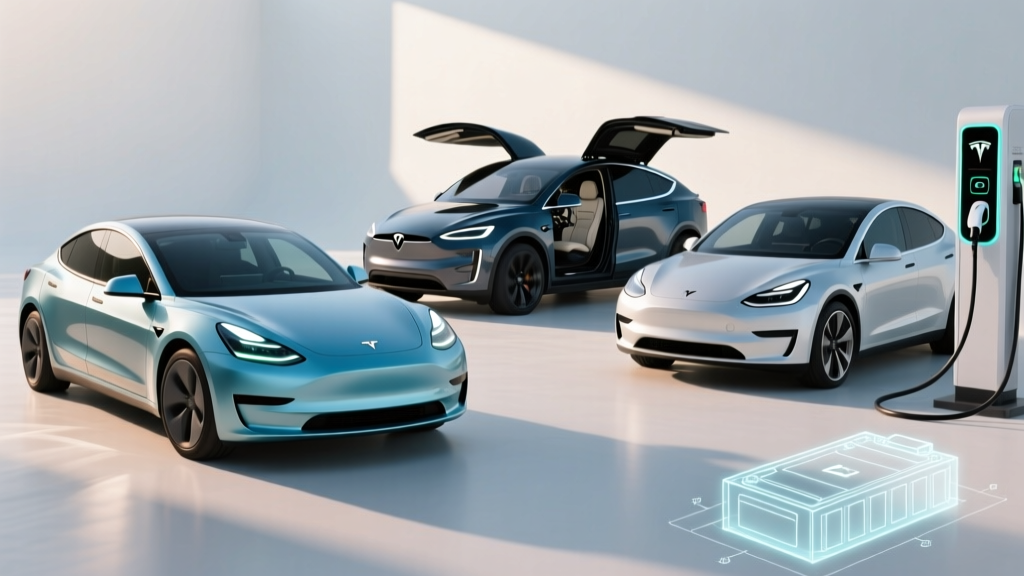
Tesla's Fremont, California factory remains the company's original production hub and, as of the 2026 model year, continues to manufacture four core vehicles: the Model S sedan, Model 3 sedan, Model X SUV, and Model Y crossover. While Tesla has expanded production to Austin (Model Y, Cybertruck) and Shanghai, the Fremont plant still produces the vehicles most American buyers encounter on dealer-free lots. If you've searched "Tesla Fremont" to understand what rolls off that assembly line and whether these cars still stack up against a growing field of rivals, this guide breaks down every current model with the exact numbers that matter — EPA range, real-world charging curves, battery chemistry, and post-credit pricing.
Unlike Tesla's Austin Gigafactory, which focuses on newer architectures, Fremont vehicles carry years of iterative refinement. The Model S and X received significant powertrain and interior refreshes, while the Model 3 "Highland" update and Model Y "Juniper" refresh brought meaningful efficiency and cabin improvements. Here's what each model delivers today.
2026 Tesla Model S: Range, Efficiency, and Real-World Performance
| Spec | Model S Long Range | Model S Plaid |
|---|---|---|
| EPA Range | 402 miles | 359 miles |
| Battery (usable) | ~95 kWh (NMC) | ~95 kWh (NMC) |
| Drivetrain | Dual-Motor AWD | Tri-Motor AWD |
| Horsepower | 670 hp | 1,020 hp |
| 0–60 mph | 3.1 seconds | 1.99 seconds |
| MPGe (combined) | 120 MPGe | 116 MPGe |
| Efficiency | 28 kWh/100mi | 29 kWh/100mi |
| Base MSRP | $74,990 | $89,990 |
Real-World Range Note: The EPA's 402-mile sticker on the Long Range is among the highest of any production EV. In mixed highway driving at 70–75 mph, expect roughly 340–360 miles. In cold weather (below 32°F), range can drop 15–25%, bringing real-world winter highway range closer to 280–310 miles. The Model S heat pump mitigates some cabin-heating loss, but battery chemistry still suffers in deep cold.
The Model S Long Range remains Tesla's efficiency flagship. Its 402-mile EPA figure translates to genuine 300+ mile road-trip legs between Supercharger stops — something few competitors match. The Plaid sacrifices range for a tri-motor setup that delivers supercar-level acceleration, though its 10–80% DC fast-charge time stretches slightly longer due to thermal management demands at those power levels.
2026 Tesla Model 3: The Volume Seller Gets Sharper
| Spec | Model 3 RWD | Model 3 Long Range AWD | Model 3 Performance |
|---|---|---|---|
| EPA Range | 272 miles | 363 miles | 315 miles |
| Battery (usable) | ~57.5 kWh (LFP) | ~75 kWh (NMC) | ~75 kWh (NMC) |
| Drivetrain | Rear-Wheel Drive | Dual-Motor AWD | Dual-Motor AWD |
| Horsepower | 271 hp | 346 hp | 510 hp |
| 0–60 mph | 5.8 seconds | 4.2 seconds | 2.9 seconds |
| MPGe (combined) | 132 MPGe | 125 MPGe | 118 MPGe |
| Base MSRP | $38,990 | $45,990 | $52,990 |
The Model 3 RWD uses a lithium iron phosphate (LFP) battery — a critical distinction. LFP chemistry tolerates daily 100% charging without the degradation concerns of NMC, making it ideal for commuters who charge at home every night. The trade-off: LFP is heavier per kWh, reducing energy density, and it performs worse in extreme cold. If you live in Minnesota or Maine, the Long Range AWD with NMC chemistry and a heat pump is the smarter buy despite the higher price.
The post-Highland Model 3 cabin is noticeably quieter, with revised suspension tuning that addresses the harsh ride critics flagged in earlier model years. Build quality from Fremont has improved measurably since 2022 — panel gaps are tighter, and interior materials feel more premium, though Tesla's minimalist approach still divides buyers.
2026 Tesla Model X: The Family Hauler With Falcon Wings
| Spec | Model X Long Range | Model X Plaid |
|---|---|---|
| EPA Range | 335 miles | 311 miles |
| Battery (usable) | ~95 kWh (NMC) | ~95 kWh (NMC) |
| Drivetrain | Dual-Motor AWD | Tri-Motor AWD |
| Horsepower | 670 hp | 1,020 hp |
| 0–60 mph | 3.8 seconds | 2.5 seconds |
| MPGe (combined) | 109 MPGe | 100 MPGe |
| Cargo (behind 3rd row) | 15.8 cu ft | 15.8 cu ft |
| Cargo (max) | 85.1 cu ft | 85.1 cu ft |
| Base MSRP | $79,990 | $94,990 |
The Model X remains the only EV offering seating for up to seven adults with genuine third-row usability. The falcon-wing rear doors are polarizing — they require less lateral clearance to open than sliding minivan doors, but their complexity has historically been a maintenance concern. Tesla has improved the door actuators in recent years, though long-term ownership forums still surface occasional issues.
For families, the Model X delivers 15.8 cubic feet behind the third row (enough for groceries but tight for luggage on a road trip) and 85.1 cubic feet with both rear rows folded. Legroom in the second row is generous at 40.9 inches, but the third row best suits children or short trips — adults will find it cramped beyond 30-minute drives.
2026 Tesla Model Y: America's Best-Selling EV From Fremont
| Spec | Model Y Long Range AWD | Model Y Performance |
|---|---|---|
| EPA Range | 320 miles | 285 miles |
| Battery (usable) | ~75 kWh (NMC) | ~75 kWh (NMC) |
| Drivetrain | Dual-Motor AWD | Dual-Motor AWD |
| Horsepower | 384 hp | 455 hp |
| 0–60 mph | 4.8 seconds | 3.5 seconds |
| MPGe (combined) | 117 MPGe | 111 MPGe |
| Cargo (behind 2nd row) | 30.2 cu ft | 30.2 cu ft |
| Cargo (max) | 72.1 cu ft | 72.1 cu ft |
| Base MSRP | $44,990 | $50,990 |
Real-World Range Note: The Model Y Long Range's 320-mile EPA figure holds up well in temperate climates — expect 280–300 miles on the highway at 70 mph. In cold weather, real-world range drops to approximately 230–260 miles. The Juniper refresh improved thermal management, and Tesla's heat pump recovers waste heat from the drivetrain to warm the cabin, reducing the range penalty versus older models.
The Model Y occupies the sweet spot of Tesla's Fremont lineup: crossover utility, strong range, and a price point that — after tax credits — undercuts many gas-powered midsize SUVs on total cost of ownership. The Juniper update brought a redesigned front fascia, updated interior with ambient lighting and ventilated front seats, and a slightly stiffer chassis that improves cornering confidence without sacrificing ride comfort.
Charging Across the Tesla Fremont Fleet
| Model | Peak DC Fast Charge | 10–80% Time | Level 2 (240V/48A) | Miles per Hour (L2) |
|---|---|---|---|---|
| Model S Long Range | 250 kW | ~27 minutes | 11.5 kW | ~34 mi/hr |
| Model S Plaid | 250 kW | ~30 minutes | 11.5 kW | ~34 mi/hr |
| Model 3 RWD (LFP) | 170 kW | ~25 minutes | 11.5 kW | ~37 mi/hr |
| Model 3 Long Range | 250 kW | ~25 minutes | 11.5 kW | ~37 mi/hr |
| Model 3 Performance | 250 kW | ~25 minutes | 11.5 kW | ~37 mi/hr |
| Model X Long Range | 250 kW | ~31 minutes | 11.5 kW | ~30 mi/hr |
| Model X Plaid | 250 kW | ~35 minutes | 11.5 kW | ~30 mi/hr |
| Model Y Long Range | 250 kW | ~25 minutes | 11.5 kW | ~37 mi/hr |
| Model Y Performance | 250 kW | ~27 minutes | 11.5 kW | ~37 mi/hr |
All Tesla Fremont vehicles use the North American Charging Standard (NACS) connector — the plug Tesla designed and which most major automakers have now adopted. This gives Tesla owners native access to the Supercharger network, which remains the most reliable DC fast-charging infrastructure in North America with over 6,000 stations and 30,000+ stalls as of early 2026 (Tesla Supercharger).
A critical reality about DC fast charging: peak kW is not sustained kW. A Model 3 Long Range may peak at 250 kW between 10–20% state of charge, but the charge curve tapers significantly above 50% SoC. The 10–80% times above reflect this taper. Charging from 80–100% is painfully slow — often adding only 10–15 miles in 15 minutes — which is why Tesla's navigation system typically routes you to depart a Supercharger at 70–80% SoC on road trips.
For home Level 2 charging, Tesla's Wall Connector at 48 amps delivers up to 11.5 kW on a 240V/60A circuit. Expect a full charge overnight for any Fremont model. Installation costs typically range from $800–$2,500 depending on your electrical panel capacity and run length — a 200-amp panel upgrade can add $1,500–$3,000 if needed. Always consult a licensed electrician for final specifications.
Autopilot, FSD Supervised, and Driver-Assist Technology
SAE Automation Level: Tesla Autopilot and Full Self-Driving (Supervised) are Level 2 driver-assist systems. The driver must remain fully engaged — hands on or near the wheel, eyes on the road — at all times. These are NOT self-driving systems. Only Level 4 services like Waymo operate without a human driver in defined zones.
Every Tesla Fremont vehicle comes standard with Basic Autopilot, which includes Traffic-Aware Cruise Control and Autosteer (lane-centering). FSD (Supervised) is a $8,000 add-on or $99/month subscription that enables Navigate on Autopilot (automatic highway interchanges), Autopark, Summon, and traffic light/stop sign recognition. As of 2026, FSD remains a supervised system — it handles many scenarios competently but still requires driver intervention at construction zones, unmapped intersections, and adverse weather.
Tesla's infotainment system runs on a 15.4-inch center touchscreen (Model 3/Y) or 17-inch screen (Model S/X) with no physical instrument cluster. The interface is responsive and feature-rich, but the lack of physical buttons for climate, wipers, and turn signals (on refreshed Model 3) frustrates some drivers. Over-the-air updates continue to add features post-purchase — a genuine Tesla differentiator.
Federal Tax Credit Eligibility for Tesla Fremont Models
IRS §30D Federal EV Tax Credit Requirements (2026):
- MSRP Cap: Sedans (Model S, Model 3) must be under $55,000; SUVs/crossovers (Model X, Model Y) must be under $80,000
- Buyer Income Cap: Modified AGI ≤ $150,000 (single), ≤ $225,000 (head of household), ≤ $300,000 (married filing jointly)
- Battery Sourcing: Battery components must be manufactured or assembled in North America; critical minerals must be sourced from the U.S. or FTA partners — percentages increase annually through 2029
- Point-of-Sale Transfer: Eligible buyers can transfer the credit to the dealer at purchase, reducing the upfront price rather than waiting for a tax refund
Source: IRS Clean Vehicle Credits. Rules are subject to change; consult a tax professional for your specific situation.
| Model | Base MSRP | Est. After $7,500 Credit | Credit Eligible? |
|---|---|---|---|
| Model 3 RWD | $38,990 | ~$31,490 | Yes (meets all caps) |
| Model 3 Long Range AWD | $45,990 | ~$38,490 | Yes (under $55K sedan cap) |
| Model 3 Performance | $52,990 | ~$45,490 | Yes (under $55K sedan cap) |
| Model Y Long Range AWD | $44,990 | ~$37,490 | Yes (under $80K SUV cap) |
| Model Y Performance | $50,990 | ~$43,490 | Yes (under $80K SUV cap) |
| Model S Long Range | $74,990 | $74,990 | No (exceeds $55K sedan cap) |
| Model X Long Range | $79,990 | $79,990 | Borderline (under $80K but battery sourcing may disqualify) |
The Model 3 and Model Y are the clear tax-credit winners in the Fremont lineup. Both comfortably meet MSRP caps and, as of 2026, satisfy battery-component sourcing requirements for the full $7,500 credit (subject to buyer income limits). The Model S is categorically ineligible due to the $55,000 sedan MSRP cap. The Model X sits in a gray zone — its MSRP technically qualifies under the $80,000 SUV cap, but evolving critical-mineral sourcing rules may limit eligibility depending on the production batch. Always verify current eligibility on fueleconomy.gov before purchasing.
Warranty Coverage and Long-Term Battery Outlook
All Tesla Fremont vehicles include:
- Basic Vehicle Warranty: 4 years / 50,000 miles
- Battery & Drive Unit Warranty (Model 3 RWD): 8 years / 100,000 miles (70% minimum capacity retention)
- Battery & Drive Unit Warranty (Model 3 LR/Performance, Model Y, Model S, Model X): 8 years / 120,000 miles (Long Range) or 8 years / 150,000 miles (Model S/X) with 70% minimum retention
The 70% capacity-retention threshold is standard industry practice but worth noting: Tesla will replace or refurbish a battery only if it degrades below 70% of original capacity within the warranty period. Real-world data from fleet operators and owner surveys suggest Tesla NMC batteries typically retain 85–90% capacity at 100,000 miles. LFP batteries in the Model 3 RWD show even slower degradation in many cases, though cold-climate performance loss may feel like degradation to owners unfamiliar with the chemistry's characteristics.
Out-of-warranty battery replacement costs remain a concern: approximately $12,000–$16,000 for Model 3/Y packs and $18,000–$22,000 for Model S/X, based on current service pricing. These costs have been trending downward as Tesla's refurbishment program matures.
Who Should Buy a Tesla Fremont Model?
Choose the Model 3 RWD if: You're a commuter with home charging access in a moderate climate, want the lowest entry price, and don't mind LFP cold-weather trade-offs.
Choose the Model 3 Long Range AWD if: You need all-weather capability, road-trip range above 300 miles real-world, and want NMC chemistry for better cold performance.
Choose the Model Y Long Range AWD if: You need crossover cargo space, optional third-row seating for small children, and the best balance of range, price, and tax-credit eligibility in Tesla's lineup.
Choose the Model S Long Range if: Budget is secondary to maximum range and executive-sedan comfort, and you accept no federal tax credit.
Choose the Model X if: You need genuine seven-seat EV capability, falcon-wing door access in tight parking, and can absorb the premium price without a tax credit.
Pros Across Tesla Fremont Models
- Access to the Supercharger network — still the most reliable fast-charging ecosystem
- Industry-leading efficiency (kWh/100mi) across the lineup
- Over-the-air updates that add features post-purchase
- Strong resale value relative to most EV competitors
- Class-leading acceleration, especially in Performance/Plaid trims
Cons Across Tesla Fremont Models
- No physical controls for core functions — everything routes through the touchscreen
- Service center wait times remain long in many metro areas
- FSD (Supervised) is expensive and still requires full driver attention
- Model S/X ineligible for federal tax credit due to MSRP caps
- Build quality improved but still inconsistent versus legacy luxury brands
Frequently Asked Questions
What is the real-world range of Tesla Fremont models?
Real-world range varies by model and conditions. The Model 3 Long Range AWD delivers approximately 310–330 miles on the highway in temperate weather versus its 363-mile EPA sticker. The Model Y Long Range achieves roughly 280–300 miles highway. Cold weather (below freezing) reduces these figures by 15–25% across all models. The Model S Long Range remains the range king at roughly 340–360 real-world highway miles.
How fast do Tesla Fremont models charge at home and on the road?
At home on a 240V Level 2 Tesla Wall Connector (48A), all models add approximately 30–37 miles of range per hour, fully charging overnight. On DC fast chargers, most models peak at 250 kW and reach 10–80% in 25–31 minutes. The Model 3 RWD with LFP peaks at 170 kW but still achieves 10–80% in roughly 25 minutes due to its smaller battery.
How much do Tesla Fremont models cost after tax credits?
The Model 3 RWD drops to approximately $31,490 after the $7,500 federal credit. The Model Y Long Range falls to about $37,490. The Model S and most Model X configurations do not qualify for the federal credit due to MSRP caps (sedans: $55K; SUVs: $80K) or battery-sourcing requirements.
Is a Tesla Fremont model worth buying versus competitors?
For buyers prioritizing charging infrastructure, software, and efficiency, Tesla Fremont models remain compelling. The Model 3 competes with the Hyundai Ioniq 6 and BMW i4, offering better range and Supercharger access. The Model Y faces the Ford Mustang Mach-E, Hyundai Ioniq 5, and Kia EV6 — all strong competitors with faster peak charging speeds but less robust charging networks. The Model S and X face stiffer competition from the Lucid Air and Rivian R1S respectively, particularly on luxury and build quality.
Does every Tesla Fremont model qualify for the federal EV tax credit?
No. Only the Model 3 (all trims) and Model Y (all trims) consistently qualify for the full $7,500 credit under current IRS §30D rules, subject to buyer income limits. The Model S exceeds the $55,000 sedan MSRP cap. The Model X may qualify depending on battery-sourcing compliance in a given production batch. Always verify on fueleconomy.gov and consult a tax professional.
What are the biggest pros and cons of Tesla Fremont vehicles?
The biggest advantages are Supercharger network access, industry-leading efficiency, strong performance, and continuous OTA improvements. The biggest drawbacks are touchscreen-only controls, service-center capacity constraints, FSD cost without true autonomy, and tax-credit ineligibility on premium models.