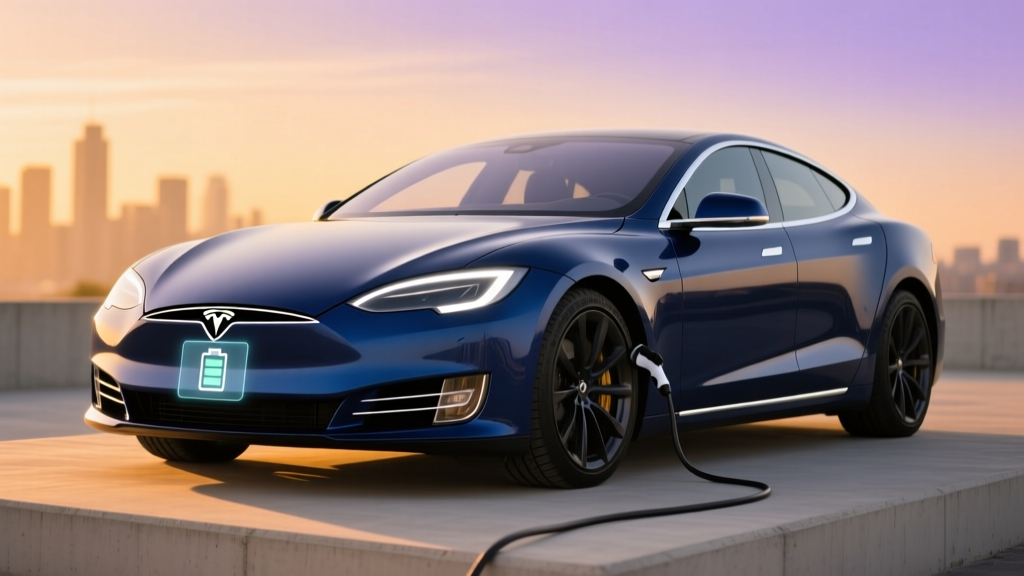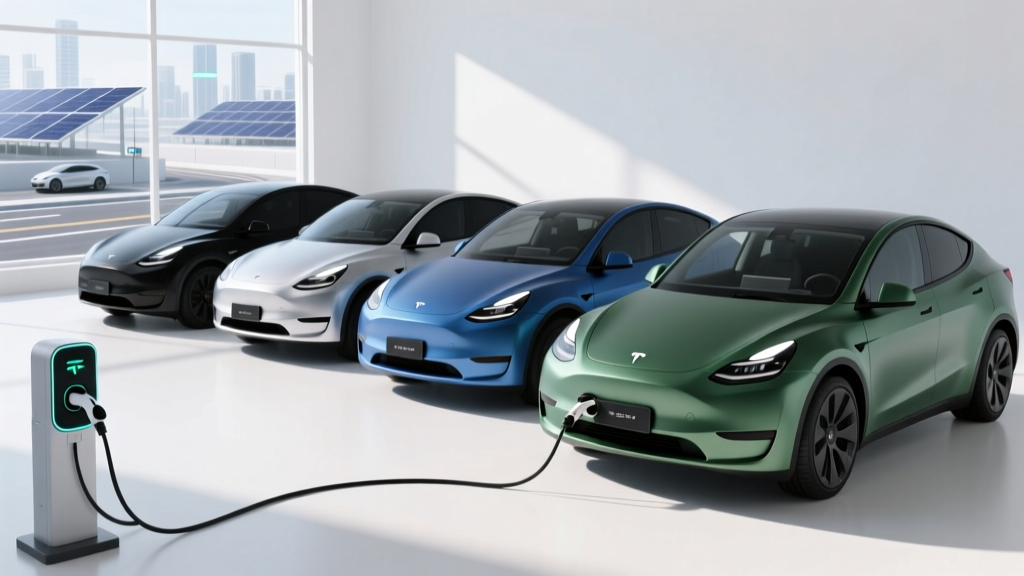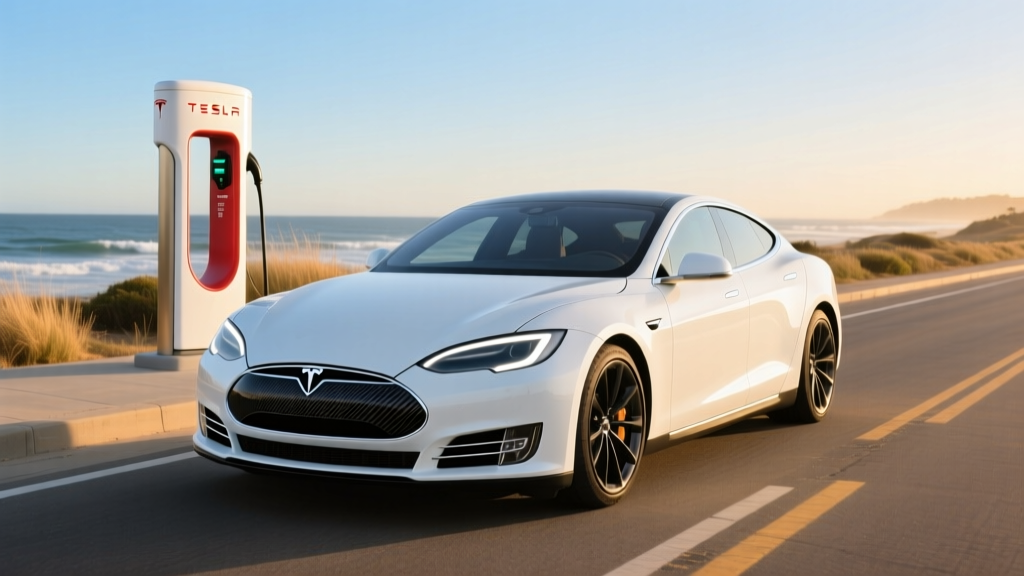
If you've been browsing used Tesla listings, you've likely seen the phrase "Tesla with free supercharging" and wondered if it's a genuine money-saver or just marketing fluff. In 2026, the landscape of EV charging has shifted dramatically. Tesla's Supercharger network is now open to Ford, Rivian, GM, and other NACS-equipped EVs, and the economics of "free" charging look very different when you factor in home charging costs, electricity rates, and the premium you'll pay for a legacy vehicle.
This guide cuts through the hype. We'll explain exactly what free Supercharging means today, how home and public charging costs compare, what electrical work you'll need for a Level 2 home charger, and whether that used Model S with unlimited free Supercharging is actually the smart buy it seems.
What "Free Supercharging" Actually Means in 2026
Tesla offered free unlimited Supercharging as a promotional incentive on Model S and Model X vehicles sold between 2012 and 2017, and again in limited promotions through 2019. Crucially, there are two flavors:
- Free Supercharging tied to the car (VIN-locked): This transfers with the vehicle when sold. If you buy a 2016 Model S with this perk, you keep it.
- Free Supercharging tied to the original owner: This does not transfer. If the original owner sells, the new owner pays standard Supercharger rates.
You can verify which type a used Tesla has by checking the vehicle's charging screen or contacting Tesla with the VIN. As of 2026, standard Supercharger rates average $0.28–$0.36 per kWh depending on location and time of day, with some urban stations charging up to $0.45/kWh during peak hours.
Charging Levels Explained: Speeds, Costs, and Range Added
Whether you own a Tesla with free Supercharging or any other EV, understanding the three charging levels is essential. Here's how they break down in practical terms:
| Level | Power Source | Max Power (kW) | Miles of Range Added per Hour | Typical Use Case |
|---|---|---|---|---|
| Level 1 | 120V household outlet | 1.4–1.9 kW | 3–5 mi/hr | Overnight top-up, PHEVs, low-mileage drivers |
| Level 2 | 240V (dryer/outlet or hardwired) | 7.2–19.2 kW | 20–60 mi/hr | Home charging, workplace, shopping centers |
| DC Fast Charging | 480V+ commercial station | 50–350 kW | 150–1,000+ mi/hr (peak) | Road trips, highway corridors, rapid top-ups |
A critical distinction: kW (kilowatts) measures the rate of power delivery — think of it as how fast water flows through a hose. kWh (kilowatt-hours) measures total energy stored — the size of the bucket. A 250 kW Supercharger fills your battery faster than a 7.2 kW home charger, but both deliver the same kWh of energy.
Real Charging Times for Common Battery Sizes
Charging times vary based on battery size, state of charge, temperature, and the vehicle's charge curve (charging slows significantly above 80% to protect battery health). Here are realistic 10–80% estimates:
| Battery Size (usable kWh) | Example Vehicles | Level 2 at 11.5 kW | DC Fast (peak rate) | Real-World 10–80% Time |
|---|---|---|---|---|
| 60 kWh | Chevy Bolt EV, base Model 3 RWD | ~4 hrs | 150 kW peak | ~25–30 min |
| 82 kWh | Model 3 Long Range, VW ID.4 Pro | ~5.5 hrs | 250 kW peak | ~22–28 min |
| 100 kWh | Model S/X, Rivian R1T Max | ~7 hrs | 250 kW peak | ~30–38 min |
For Tesla models specifically, V3 Superchargers (250 kW peak) deliver the fastest speeds, but sustained rates average 150–180 kW across the 10–80% session. V4 Supercharger cabinets, now rolling out at new stations, support up to 350 kW for compatible vehicles, though most current Teslas cap at 250 kW.
Home Charger Installation: Costs, Electrical Requirements, and Gotchas
Even if your Tesla has free Supercharging, you'll want a Level 2 home charger. Over 80% of EV charging happens at home, and relying solely on Superchargers means extra driving time, potential battery degradation from frequent DC fast charging, and inconvenience in bad weather.
Electrical Requirements
A Level 2 home charger requires a 240-volt dedicated circuit, similar to what an electric dryer or oven uses. The most common setups:
- NEMA 14-50 outlet (50A circuit, 40A continuous): Delivers up to 9.6 kW. This is the most popular and flexible option — you can unplug the charger and take it with you, or use the outlet for other equipment.
- Hardwired 60A circuit (48A continuous): Delivers up to 11.5 kW. Slightly faster, no outlet to worry about, but the charger is permanently installed.
- Hardwired 100A circuit (80A continuous): Delivers up to 19.2 kW. Only useful if your EV can accept this rate (Tesla Model S/X can at 11.5 kW max on AC; the Ford F-150 Lightning Extended Range accepts up to 19.2 kW).
Do You Need a Panel Upgrade?
This is the biggest variable in installation cost. Most homes built after 1990 have a 200-amp main electrical panel, which can usually support a 50A or 60A EV circuit without upgrades. However:
- Homes with 100A service (common in pre-1980 construction) will almost certainly need a panel upgrade ($2,000–$4,500).
- If your panel is already near capacity (running electric heat, A/C, a hot tub, and an electric range), adding 40–50A for EV charging may require a service upgrade to 200A or 400A.
- A licensed electrician will perform a load calculation (per NEC Article 220) to determine if your panel can handle the additional circuit. Some utilities and smart panels (like the Span smart panel) can manage loads dynamically to avoid upgrades.
| Component | Typical Cost Range | Notes |
|---|---|---|
| Level 2 charger (hardware) | $300–$750 | Varies by power output and smart features |
| Electrician labor (outlet install) | $400–$1,200 | Depends on run length from panel, wall type, conduit |
| Permit and inspection | $50–$300 | Required in most jurisdictions; varies by city/county |
| Electrical panel upgrade (if needed) | $2,000–$4,500 | 100A→200A service upgrade; not always required |
| Total (no panel upgrade) | $750–$2,250 | Most common scenario for homes with 200A panels |
| Total (with panel upgrade) | $2,750–$6,750 | Older homes or high-load situations |
The federal Residential Clean Energy Credit does not cover EV charger hardware for most taxpayers after 2022. However, the Alternative Fuel Vehicle Refueling Property Credit (§30C) offers up to 30% of hardware and installation costs, capped at $1,000 for residential installations — but only if you live in a qualifying census tract (generally non-urban or low-income areas). Check the IRS for current eligibility maps.
Connector Compatibility: NACS, CCS, and What You Need to Know
The connector landscape has consolidated significantly since 2023, when Ford, GM, Rivian, and others adopted Tesla's North American Charging Standard (NACS). Here's where things stand in 2026:
| Connector | Used By | Max DC Fast Rate | Adapter Needed? |
|---|---|---|---|
| NACS (Tesla) | All Tesla models, Ford (2025+), GM (2025+), Rivian (2025+), Hyundai/Kia (2026+) | Up to 350 kW (V4 stations) | Non-Tesla EVs may need CCS→NACS adapter for older CCS stations |
| CCS1 | Legacy VW, BMW, older Ford/GM EVs (pre-2025), Stellantis | Up to 350 kW | NACS→CCS adapter needed at Tesla Superchargers (Tesla sells one for ~$250) |
| CHAdeMO | Nissan Leaf (legacy only — discontinued), Mitsubishi Outlander PHEV | Up to 100 kW | CHAdeMO→NACS adapters are limited and expensive |
If you're buying a Tesla, you'll use NACS natively at all Superchargers and most new public stations. If you're comparing a Tesla with free Supercharging against a newer non-Tesla EV with NACS (like the 2026 Ford Mustang Mach-E or Hyundai Ioniq 5), keep in mind that those newer EVs can access Superchargers too — they just pay per kWh.
Cost Per Mile: Charging vs. Gas — The Real Numbers
Free Supercharging sounds unbeatable, but how does home charging compare? And how do both stack up against gasoline? Let's run the numbers using real 2026 energy and fuel prices.
| Scenario | Rate / Price | Vehicle Efficiency | Cost Per Mile |
|---|---|---|---|
| Home charging (national avg electricity) | $0.16/kWh | 3.0 mi/kWh (Tesla Model 3 LR) | $0.053 |
| Home charging (off-peak utility rate) | $0.09/kWh | 3.0 mi/kWh | $0.030 |
| Tesla Supercharger (paid, avg) | $0.32/kWh | 3.0 mi/kWh | $0.107 |
| Free Supercharging | $0.00/kWh | 3.0 mi/kWh | $0.000 |
| Electrify America / EVgo DC fast | $0.42/kWh | 3.0 mi/kWh | $0.140 |
| Gas car (28 MPG combined, avg) | $3.40/gallon | 28 mi/gal | $0.121 |
| Gas truck/SUV (20 MPG combined) | $3.40/gallon | 20 mi/gal | $0.170 |
The takeaway: even paid Supercharging is competitive with gasoline on a per-mile basis. Home charging at off-peak rates is dramatically cheaper — roughly one-sixth the cost of gasoline. Free Supercharging saves the most on road trips, where you'd otherwise pay $0.32/kWh or more at DC fast stations.
- Home charging (off-peak): ~$300/year
- Home charging (national avg): ~$530/year
- Paid Supercharging exclusively: ~$1,070/year
- Free Supercharging exclusively: $0/year
- Gas equivalent (28 MPG): ~$1,210/year
Best Home Chargers for Tesla Owners (2026 Equipment Guide)
Here are our tested picks for Level 2 home chargers that pair well with Tesla vehicles, with exact specs and pricing:
Tesla Wall Connector (Gen 4)
- Max Power: 11.5 kW (48A on 60A circuit)
- Connector: NACS native
- Cable Length: 24 ft
- Smart Features: Wi-Fi, OTA updates, load sharing with second unit, power-level adjustment via app
- Price: $475
- Best for: Tesla-only households wanting seamless integration
ChargePoint Home Flex
- Max Power: 12 kW (50A on 60A circuit; adjustable down to 16A)
- Connector: NACS (J1772 with included adapter for non-Tesla)
- Cable Length: 23 ft
- Smart Features: Wi-Fi, Alexa integration, scheduling, detailed energy tracking, flexible amperage dip-switch
- Price: $549
- Best for: Multi-EV households (NACS + J1772 adapter covers everything)
Emporia Vue EV Charger
- Max Power: 11.5 kW (48A on 60A circuit)
- Connector: J1772 (NACS adapter included in 2026 bundle)
- Cable Length: 24 ft
- Smart Features: Integrates with Emporia home energy monitor, solar-aware charging, time-of-use scheduling
- Price: $399
- Best for: Budget-conscious buyers with solar panels or energy monitoring
Grizzl-E Smart
- Max Power: 10 kW (40A on 50A circuit)
- Connector: J1772 or NACS (configurable at order)
- Cable Length: 24 ft
- Smart Features: Wi-Fi, OCPP support, adjustable amperage, rugged outdoor-rated enclosure
- Price: $449
- Best for: Outdoor installations in extreme climates (-40°F rated)
Safety, Permits, and Code Considerations
EV charger installation isn't a DIY project unless you're a licensed electrician. Here's what the National Electrical Code (NEC) and your local building department require:
- Dedicated circuit: Your EV charger must be on its own dedicated breaker — not shared with other appliances.
- GFCI protection: NEC 2020 and later require GFCI (Ground Fault Circuit Interrupter) protection for all EV charging outlets. Hardwired installations may be exempt in some jurisdictions, but many inspectors still require it.
- Outdoor rating: If installing outdoors, the charger must carry a NEMA 4 or IP65 weather rating. All chargers listed above meet this standard.
- Permit and inspection: Most cities and counties require an electrical permit for a new 240V circuit. The inspector will verify wire gauge, breaker size, grounding, and GFCI compliance. Skipping the permit risks insurance claim denial if a fire occurs.
- Wire gauge: A 50A circuit requires 6 AWG copper wire (THHN in conduit or NM-B/Romex for indoor runs). A 60A circuit requires 4 AWG. Your electrician will size this correctly.
Is a Tesla with Free Supercharging Worth the Premium?
Used Teslas with transferable free unlimited Supercharging typically command a $3,000–$7,000 premium over identical models without it. Whether that's worth it depends on your driving patterns:
- Worth it if: You drive 15,000+ miles/year, take frequent road trips, lack reliable home charging access (apartment/condo), or live in a region with high electricity rates (California, Hawaii, Northeast).
- Not worth it if: You charge at home 90%+ of the time (home charging at $0.09–$0.16/kWh is already cheap), you drive fewer than 10,000 miles/year, or you're buying a 2015–2017 Model S/X where battery degradation and out-of-warranty repair costs may eclipse charging savings.
Remember: a 2016 Model S with free Supercharging is now a 10-year-old vehicle. Tesla's battery and drive unit warranty (8 years/150,000 miles for Model S/X) has expired on most of these cars. A battery replacement runs $12,000–$20,000 out of warranty, according to Tesla service estimates. Factor this into your total cost of ownership before paying a premium for the Supercharging perk.
Frequently Asked Questions
How much does it cost to install a home EV charger?
For most homes with an existing 200A electrical panel, a Level 2 charger installation costs $750–$2,250 total (charger hardware + electrician labor + permit). If your home needs a panel upgrade from 100A to 200A service, add $2,000–$4,500, bringing the total to $2,750–$6,750. Get at least three quotes from licensed electricians, and ask about the §30C federal tax credit (up to $1,000, census-tract dependent).
How fast will each charging level add range?
Level 1 (120V) adds about 3–5 miles of range per hour — fine for PHEVs or low-mileage drivers. Level 2 (240V) at 11.5 kW adds roughly 35–45 miles per hour for a Tesla Model 3. DC fast charging at 250 kW can add up to 200 miles in 15 minutes at peak rate, but the charge curve tapers significantly above 80% state of charge.
Which connector and charger is compatible with my Tesla?
All Tesla vehicles use the NACS connector natively. At home, the Tesla Wall Connector (Gen 4) offers the best integration at 11.5 kW. Third-party chargers like the ChargePoint Home Flex also work with NACS-equipped Teslas. For non-Tesla EVs with CCS, you'll need a NACS-to-CCS adapter (sold by Tesla for ~$250) to use Superchargers.
How much does charging cost per mile vs. gas?
Home charging at the national average electricity rate ($0.16/kWh) costs about $0.053 per mile in a Tesla Model 3 Long Range. Off-peak rates drop that to $0.03/mile. Paid Supercharging averages $0.107/mile. A comparable gas car at 28 MPG and $3.40/gallon costs $0.121/mile. Free Supercharging is $0.00/mile — but only on road trips where Superchargers are available.
What electrical upgrades might I need for a home charger?
If your home has a 200A panel with available capacity, you likely need only a new dedicated 50A or 60A breaker and a 240V outlet or hardwired connection. Homes with 100A service, or panels already near capacity, may need a full service upgrade to 200A or 400A ($2,000–$4,500). A licensed electrician performs a NEC Article 220 load calculation to determine your exact requirements.
Does free Supercharging transfer when I sell my Tesla?
It depends. Free Supercharging tied to the vehicle's VIN (common on 2012–2016 Model S/X) transfers to subsequent owners. Free Supercharging tied to the original owner's account (some 2017–2019 promotions) does not transfer. Always verify with Tesla using the VIN before purchasing a used Tesla advertised with free Supercharging.