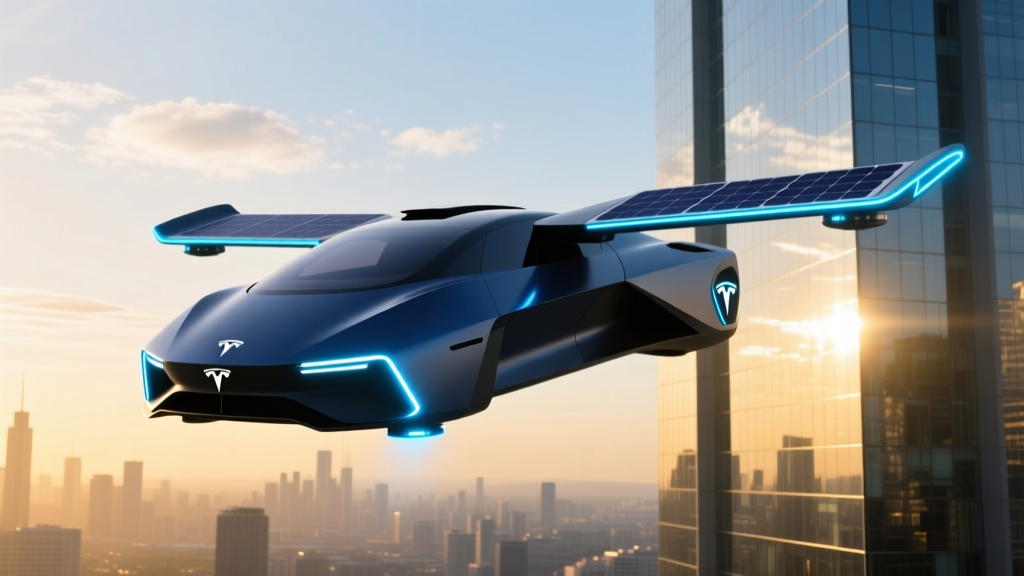
The search term "Tesla Fly" has been gaining traction online, sparking curiosity about whether Tesla is developing a flying vehicle. Let's cut through the speculation: as of 2026, Tesla has not announced, previewed, or patented a flying car or eVTOL aircraft. The "Tesla Fly" is an internet-born rumor with no official backing from Tesla or credible industry sources.
However, if you're interested in Tesla's actual lineup of electric vehicles — including their range, charging capabilities, and cutting-edge technology — you've come to the right place. Below, we'll break down what Tesla currently offers and address the flying-car rumors head-on.
The Truth About "Tesla Fly"
While companies like Joby Aviation, Archer, and Waymo are actively developing electric vertical takeoff and landing (eVTOL) vehicles, Tesla's focus remains firmly on ground-based transportation. CEO Elon Musk has occasionally mentioned flying cars in passing, but Tesla's official roadmap centers on:
- Expanding the EV lineup (sedans, SUVs, trucks)
- Advancing Full Self-Driving (FSD) capabilities
- Scaling battery production and energy storage
- Building out the Supercharger network globally
If Tesla ever does pursue a flying vehicle, it would likely be announced through official channels — not internet rumors. Until then, let's look at what you can actually buy from Tesla today.
Tesla's 2026 EV Lineup: Real Models, Real Specs
| Model | EPA Range | Battery (kWh) | 0-60 mph | Base MSRP |
|---|---|---|---|---|
| Model 3 | 341 miles (Long Range) | ~82 kWh (NMC) | 4.2 sec | $38,990 |
| Model Y | 320 miles (Long Range) | ~82 kWh (NMC) | 4.8 sec | $44,990 |
| Model S | 402 miles (Long Range) | ~100 kWh (NMC) | 3.1 sec | $74,990 |
| Model X | 348 miles (Long Range) | ~100 kWh (NMC) | 3.8 sec | $79,990 |
| Cybertruck | 340 miles (AWD) | ~123 kWh (NMC) | 4.1 sec | $79,990 |
Charging Speed: How Fast Do Teslas Actually Charge?
Tesla's Supercharger network remains one of the most reliable DC fast-charging networks in North America. Here's what you can expect:
| Charging Type | Power | Speed |
|---|---|---|
| V3 Supercharger (DC) | Up to 250 kW | 10-80% in ~18-25 minutes (varies by model) |
| Home Level 2 (Wall Connector) | 11.5 kW (48A) | ~44 miles per hour of charging |
| Level 1 (120V outlet) | ~1.4 kW | ~3-4 miles per hour |
Charging curve reality: Peak 250 kW rates only apply between roughly 10-30% state of charge. Above 80%, charging slows significantly to protect battery health. Plan for 25-35 minutes at a Supercharger for a typical 10-80% session.
Federal Tax Credit Eligibility (§30D)
Not all Tesla models qualify for the full $7,500 federal tax credit. Eligibility depends on:
- MSRP caps: Vans, SUVs, and trucks must be under $80,000; sedans under $55,000
- Buyer income limits: $150K single / $300K joint filers
- Battery sourcing: Critical minerals and components must meet North American sourcing thresholds
As of 2026, the Model 3 Long Range ($38,990) and Model Y Long Range ($44,990) typically qualify for the full credit when purchased by eligible buyers. Always verify current eligibility on IRS.gov before purchasing.
Tesla's Tech: Autopilot, FSD, and What They Actually Do
Tesla's driver-assistance systems are among the most advanced in the industry, but they are SAE Level 2 systems — meaning the driver must remain fully engaged and ready to take control at any moment. These are not self-driving vehicles.
Standout features:
- Over-the-air software updates that add new capabilities
- Minimalist interior with 15.4-inch center touchscreen
- Sentry Mode dashcam recording
- Access to 50,000+ Supercharger stalls globally
Notable drawbacks:
- No physical instrument cluster (everything on center screen)
- FSD (Supervised) costs $8,000 extra or $99/month — and still requires driver attention
- Limited service center availability in some regions
Who Should Buy a Tesla (And Who Shouldn't)
Pros
- Best-in-class Supercharger network reliability
- Strong resale value compared to many EV competitors
- Over-the-air updates keep the car current
- Extensive real-world range (300+ miles on most models)
- Fast DC charging (10-80% in under 30 minutes)
Cons
- Minimalist interior isn't for everyone
- Service center wait times can be long
- FSD is expensive and still Level 2 (not autonomous)
- Panel gaps and build quality inconsistencies reported
Best For:
- Tech-forward commuters who value software updates and minimal maintenance
- Road-trip enthusiasts who want reliable DC fast-charging infrastructure
- Home-charging owners with access to Level 2 installation
Consider Alternatives If:
- You prefer traditional controls and physical buttons
- You live in an area with limited Tesla service centers
- You need a vehicle for heavy towing (Cybertruck aside)
Frequently Asked Questions
Is Tesla actually making a flying car?
No. As of 2026, Tesla has not announced any plans for a flying vehicle or eVTOL aircraft. The "Tesla Fly" is an internet rumor with no official basis.
Which Tesla model has the longest range?
The Model S Long Range offers an EPA-estimated 402 miles, though real-world highway driving typically yields 340-360 miles.
Do Teslas qualify for the $7,500 tax credit?
The Model 3 and Model Y typically qualify when purchased by buyers under the income caps ($150K single / $300K joint). Verify current eligibility at IRS.gov.
How long does a Tesla battery last?
Tesla warranties batteries for 8 years or 100,000-150,000 miles (varies by model), with a guarantee of 70% capacity retention. Real-world data suggests batteries can last 300,000+ miles with gradual degradation.
Is Tesla's FSD actually self-driving?
No. FSD (Supervised) is an SAE Level 2 driver-assistance system. The driver must remain fully engaged and ready to take control at any moment. It is not autonomous.