The Truth About a Tesla First Responder Discount in 2026
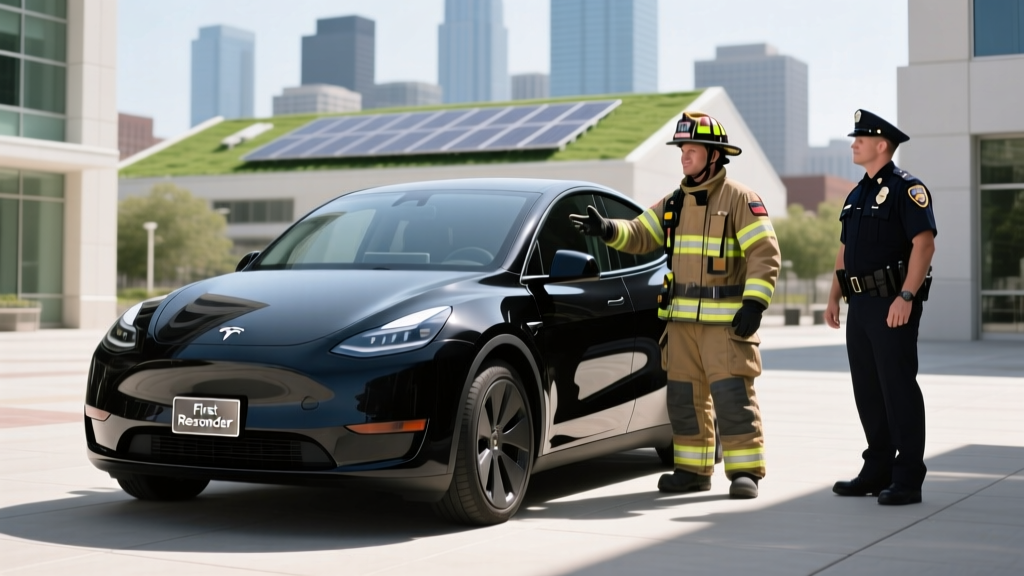
If you serve as a police officer, firefighter, EMT, or in another first-responder role, you have probably noticed discounts everywhere — from auto insurers to phone carriers to home-improvement stores. Naturally, you might wonder whether Tesla extends the same courtesy. The short answer: Tesla does not currently offer an official, standalone first responder discount on its consumer vehicles. There is no checkout code, no badge-verification portal, and no hidden "hero pricing" menu on Tesla.com.
That said, first responders can and do save thousands on a Tesla through a combination of federal tax credits, state and utility rebates, employer fleet-purchase programs, Tesla's referral program, and third-party affinity discounts. This guide maps every realistic savings path available to first responders shopping for a Tesla in 2026, using the current Model 3 and Model Y lineup as our baseline.
- Vehicle MSRP cap: ≤$55,000 for sedans (Model 3), ≤$80,000 for SUVs/pickups (Model Y)
- Buyer AGI cap: $150,000 single / $225,000 HOH / $300,000 married filing jointly
- Battery components & critical-mineral sourcing thresholds apply (phased annually)
- Credit is now transferable at point of sale — effectively a $7,500 price reduction at delivery
- Verify current rules at IRS.gov §30D
2026 Tesla Model 3 & Model Y: Core Specs First Responders Need
Before we get into savings mechanics, here are the exact numbers that matter when evaluating a Tesla for daily duty — whether that duty is a 40-mile commute to the station or a weekend road trip with the family.
| Spec | Model 3 LR AWD | Model Y LR AWD |
|---|---|---|
| EPA Range | 341 miles | 320 miles |
| Battery (usable) | ~79 kWh, NMC | ~79 kWh, NMC |
| MPGe (combined) | 134 MPGe | 122 MPGe |
| Efficiency | 25 kWh/100 mi | 28 kWh/100 mi |
| 0–60 mph | 4.2 sec | 4.8 sec |
| Horsepower | ~346 hp | ~384 hp |
| Drivetrain | Dual-Motor AWD | Dual-Motor AWD |
| Max DC Fast Charge | 250 kW (peak) | 250 kW (peak) |
| 10–80% DCFC Time | ~25 min | ~27 min |
| Level 2 Home Rate | 11.5 kW (~44 mi/hr) | 11.5 kW (~44 mi/hr) |
| Cargo (rear seats up) | 23 cu ft | 30 cu ft |
| Cargo (rear seats folded) | 65 cu ft | 72 cu ft |
| Rear Legroom | 35.2 in | 40.5 in |
| Battery Warranty | 8 yr / 120,000 mi | 8 yr / 120,000 mi |
| Base MSRP | $47,740 | $50,630 |
Sources: EPA / fueleconomy.gov, Tesla.com configurator (2026 model year). Prices exclude destination fees and are subject to change.
Real-World Range: What the EPA Sticker Doesn't Tell You
Model Y LR AWD: EPA 320 mi → Expect ~270–290 mi highway, ~220–250 mi in sub-freezing weather.
Tesla's NMC battery chemistry delivers strong energy density but is more sensitive to cold than LFP packs. In real-world highway driving at sustained 70–75 mph speeds, aerodynamic drag and accessory loads typically reduce range 10–15% below EPA. In winter conditions (below 32°F), expect a further 15–25% reduction due to battery-heating energy demands and cabin climate use. Tesla's standard heat pump helps mitigate this compared to resistive-heater EVs, but the physics of cold chemistry remain.
Pro tip for shift workers: Use the Tesla app's scheduled preconditioning to warm the battery while still plugged in at home. This preserves range and dramatically improves DC fast-charge speeds when you need to top up on the road.
Charging Speed: Home, Public, and the Supercharger Network
| Level | Power (kW) | Miles Added/Hr | Typical Use Case | Cost Estimate |
|---|---|---|---|---|
| Level 1 (120V) | ~1.4 kW | ~3–5 mi/hr | Emergency trickle | ~$0.14/kWh (residential avg) |
| Level 2 (240V home) | 11.5 kW | ~44 mi/hr | Daily overnight charging | ~$0.10–0.18/kWh |
| DC Fast (Supercharger V3) | 250 kW peak | ~1,000 mi/hr (peak) | Road trips, rapid top-ups | ~$0.25–0.40/kWh |
| DC Fast (Supercharger V4) | Up to 350 kW (cabinet) | Vehicle-limited to ~250 kW | Newer stations | ~$0.25–0.40/kWh |
The charge-curve reality: Tesla advertises a 250 kW peak, but that rate only holds roughly between 10–30% State of Charge. By 60% SoC, the rate tapers to ~100 kW; above 80%, it drops below 50 kW. This is why Tesla quotes a 10–80% time (~25–27 minutes) rather than a full 0–100% figure. Plan road-trip stops to charge to 80% and move on — the last 20% takes as long as the first 70%.
At home, a Wall Connector on a 60-amp circuit delivers the full 11.5 kW (48 amps continuous). Most first responders who drive 40–80 miles round-trip to the station can fully replenish overnight in 3–5 hours. Home installation typically costs $500–$1,500 for the electrician work (equipment is ~$475 for the Wall Connector), assuming your electrical panel has capacity. A panel upgrade to 200A can add $1,500–$3,000.
How First Responders Actually Save on a Tesla
Since there is no dedicated "tesla first responder discount" program, here are the verified savings paths available in 2026:
1. Federal §30D Tax Credit (Up to $7,500)
Both the Model 3 Long Range and Model Y Long Range fall under their respective MSRP caps ($55K sedan / $80K SUV). If your adjusted gross income is within IRS limits and the vehicle meets battery-sourcing requirements, you can transfer the credit at point of sale for an immediate $7,500 reduction. This effectively brings the Model 3 LR AWD to roughly $40,240 and the Model Y LR AWD to $43,130 before destination fees. Check current eligibility at IRS.gov, as critical-mineral sourcing rules tighten annually.
2. State & Utility Rebates
Many states and electric utilities offer additional incentives that stack with the federal credit. For example, some utilities offer $500–$1,500 rebates for EV purchases or home charger installations. These vary widely by jurisdiction — check your local utility's EV program page and your state energy office. First responders living in California, Colorado, Massachusetts, or New York often find the most generous stacking opportunities.
3. Employer Fleet & Salary-Advantage Programs
Some police departments, fire districts, and hospital systems participate in fleet-lease or salary-advantage programs that extend to personal vehicle purchases through partnered dealers or direct manufacturer agreements. While Tesla's direct-sales model limits traditional fleet-dealer discounts, some municipalities have negotiated bulk-purchase pricing for take-home vehicles. Ask your department's fleet manager or union representative whether any Tesla agreements exist.
4. Tesla Referral Program
Tesla's referral program periodically offers credits (typically $500–$1,000 in Tesla Credits) when you order using an existing owner's referral link. These credits can be applied to vehicle purchase, Supercharging, or accessories. The program terms change frequently — check Tesla's current referral page at the time of order.
5. Insurance & Affinity Discounts (Indirect Savings)
Organizations like the Fraternal Order of Police, International Association of Fire Fighters, and various credit unions (e.g., First responders credit unions, PenFed) sometimes offer auto-insurance discounts or favorable financing rates that apply to EV purchases. Tesla Insurance (available in select states) uses real-time driving data and can be competitive for safe drivers. These indirect savings can total $500–$2,000+ over the first few years of ownership.
6. Used Tesla & the §25E Credit
If a new Tesla stretches the budget, the federal §25E Used Clean Vehicle Credit offers up to $4,000 (or 30% of the sale price, whichever is less) on qualifying pre-owned EVs priced at $25,000 or below. Income caps apply ($75K single / $150K married). A 2–3 year old Model 3 may qualify, making it a compelling option for budget-conscious first responders.
Tesla Tech: Standout Features and Drawbacks
Tesla's software-centric architecture remains a key differentiator. Here is what first responders should know about the daily-use experience:
Standout features:
- Over-the-air updates: Continuous improvements to navigation, efficiency, and features without dealer visits.
- Sentry Mode & Dashcam: Always-on security cameras — valuable for vehicles parked at stations or in public lots during long shifts.
- Scheduled preconditioning: Battery and cabin warm up on your shift schedule, maximizing range and comfort.
- Supercharger network: Over 25,000 stalls in North America; the most reliable DC fast-charging network by a wide margin.
- NACS connector: Tesla's North American Charging Standard is now the industry standard, adopted by Ford, GM, Rivian, and others.
- 15.4" touchscreen: Central infotainment with navigation, media, and vehicle controls.
Notable drawbacks:
- Minimalist interior: No physical buttons, stalks (turn signals are on the steering wheel in refreshed models), or instrument cluster. This is polarizing and takes adjustment.
- Autopilot is Level 2 only: Despite the "Full Self-Driving" branding, FSD (Supervised) is an SAE Level 2 driver-assist system. The driver must remain fully engaged at all times. It is not autonomous.
- Panel gaps & build variability: Tesla's build quality has improved, but panel-gap inconsistency remains a known issue. Inspect carefully at delivery.
- Insurance costs: Tesla insurance premiums run 15–30% higher than comparable gas vehicles in many states due to repair costs and parts pricing.
- No Apple CarPlay / Android Auto: Tesla uses its proprietary infotainment. If you rely on phone-mirroring, this is a meaningful gap.
Who Should Buy a Tesla as a First Responder?
Choose a Tesla Model 3 LR AWD if:
- Your commute is under 80 miles round-trip and you can charge at home
- You prioritize driving dynamics, efficiency (134 MPGe), and lower purchase price
- Passenger and cargo needs are modest (1–2 people, occasional gear)
- You want the longest EPA range (341 mi) in Tesla's lineup at the lowest cost
Choose a Tesla Model Y LR AWD if:
- You need family-hauler space (30 cu ft cargo, 40.5" rear legroom)
- You carry turnout gear, medical bags, or equipment regularly
- Higher seating position and easy ingress/egress matter after long shifts
- You occasionally tow (up to 3,500 lbs rated capacity)
Look elsewhere if:
- You need a physical instrument cluster or traditional button layout
- Your department requires a specific fleet vehicle (Chevy Tahoe, Ford Explorer)
- You cannot install a Level 2 home charger and have no reliable workplace charging
Tesla vs. Key Competitors: Is It Worth It?
| Spec | Tesla Model Y LR AWD | Hyundai Ioniq 5 Limited AWD | Ford Mach-E ER AWD |
|---|---|---|---|
| EPA Range | 320 mi | 290 mi | 300 mi |
| Max DCFC | 250 kW | 350 kW (800V) | 150 kW |
| 10–80% DCFC | ~27 min | ~18 min | ~36 min |
| Base MSRP | $50,630 | $54,200 | $51,875 |
| Supercharger Access | Native | Via NACS adapter | Via NACS adapter |
| Cargo Volume | 30 cu ft | 27 cu ft | 29.7 cu ft |
| §30D Credit Eligible | Yes (subject to sourcing) | Partial / varies | Yes (subject to sourcing) |
The Tesla Model Y retains two major advantages for first responders: native Supercharger access (no adapter needed, most reliable network) and lowest cost per mile of range in the segment. The Ioniq 5 charges faster on compatible 350 kW stations, but those stations remain less common than Tesla's V3/V4 Superchargers. The Mach-E offers a more traditional interior but charges noticeably slower.
- Best-in-class Supercharger network reliability
- Competitive EPA range and efficiency
- Strong over-the-air update cadence
- Sentry Mode security for station-parked vehicles
- Point-of-sale tax credit transfer reduces upfront cost
- Low running costs (~$0.04–0.06/mi on home charging)
- No official first-responder discount program
- Minimalist controls require adjustment
- Insurance premiums above segment average
- Charge taper above 80% SoC slows road-trip top-offs
- Cold-weather range loss (15–25%) is significant in northern states
- No Apple CarPlay or Android Auto
Frequently Asked Questions
Does Tesla offer a first responder discount?
No. As of 2026, Tesla does not have an official first responder discount, military discount, or hero pricing program. Savings come from federal/state tax credits, utility rebates, referral credits, and employer fleet programs.
How much can a first responder save on a Tesla in 2026?
Combining the $7,500 federal §30D credit (if eligible), potential state/utility rebates ($500–$2,000), and a Tesla referral credit ($500–$1,000), total savings can reach $9,000–$10,500 off MSRP. This brings a Model 3 LR AWD to roughly $37,000–$39,000 in favorable scenarios.
Does the Tesla Model Y qualify for the $7,500 federal tax credit?
The Model Y falls under the $80,000 SUV MSRP cap and has historically qualified, but eligibility depends on battery-sourcing and critical-mineral requirements that tighten each year. Verify current status at fueleconomy.gov and the IRS before ordering.
Can I charge a Tesla at home on a standard outlet?
Yes, but Level 1 (120V) charging adds only 3–5 miles per hour — adequate only for very low daily mileage or emergencies. For first responders driving 40+ miles daily, a 240V Level 2 installation (11.5 kW, ~44 mi/hr) is strongly recommended.
Is Autopilot or FSD self-driving?
No. Both are SAE Level 2 driver-assist systems requiring constant driver supervision. The driver is legally responsible for the vehicle at all times. "Full Self-Driving (Supervised)" is a marketing name, not an indication of autonomous capability.
What is the battery warranty on a Tesla Model 3 or Model Y?
Tesla covers the battery and drive unit for 8 years or 120,000 miles (whichever comes first) with a minimum 70% capacity retention guarantee. Real-world degradation data from high-mileage Tesla owners suggests most NMC packs retain 85–90% capacity at 100,000 miles.
How do Tesla's maintenance costs compare to a gas car?
Tesla eliminates oil changes, spark plugs, transmission fluid, and exhaust system maintenance. Brake pads last significantly longer due to regenerative braking. Primary recurring costs are tire replacement (EVs are heavier and wear tires faster — expect new tires every 25,000–35,000 miles), cabin air filter ($30–$60 every 2 years), and washer fluid. Total maintenance savings versus a gas vehicle typically run $500–$1,000 per year.
Bottom Line: Smart Shopping for First Responders
While a dedicated "tesla first responder discount" does not exist, the combination of federal tax credits (up to $7,500 via point-of-sale transfer), state and utility incentives, referral credits, and low operating costs makes a Tesla financially compelling for first responders who can charge at home. The Model 3 LR AWD offers the best efficiency and range per dollar; the Model Y LR AWD provides the cargo space and versatility that gear-heavy professions demand.
Before ordering, confirm your §30D eligibility with a tax professional, check your utility's EV rebate programs, and ensure your home electrical panel can support a Level 2 charger. With preparation, a first responder can realistically drive home a Tesla for $8,000–$10,000 below sticker — no badge discount required.