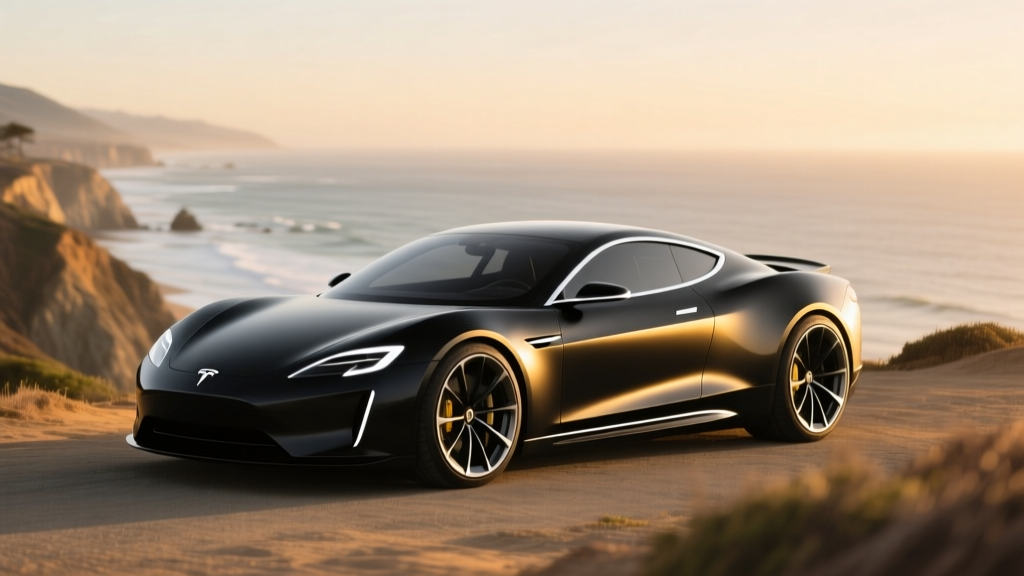
The Car That Changed Everything
Before the Model S redefined luxury sedans, before the Model 3 brought EVs to the masses, and before the Model Y became the world's best-selling vehicle, there was one car that proved electric propulsion could be thrilling. Tesla's first car — the original Tesla Roadster — debuted in 2008 and shattered every assumption about what an electric vehicle could be. It wasn't a compliance car. It wasn't a golf cart. It was a 245-horsepower, 244-mile-range sports car that went 0-60 mph in 3.7 seconds on electrons alone.
Today, Tesla's first car is a collector's item, a historical artifact, and a reminder of how far the EV industry has come. With the next-generation Roadster now announced for production, interest in Tesla's origin story has never been higher. This profile covers the original Roadster's specs, real-world ownership data, and what it means for EV buyers in 2026.
Original Roadster: Full Specifications
| Specification | Tesla Roadster (2008–2012) |
|---|---|
| EPA Estimated Range | 244 miles |
| Battery Capacity | 53 kWh (usable ~48 kWh), Lithium-Cobalt (NMC variant) |
| Motor | Single rear-mounted AC induction motor |
| Horsepower | 248 hp (Sport: 288 hp) |
| Torque | 273 lb-ft (Sport: 295 lb-ft) |
| 0–60 mph | 3.7 seconds (Sport: 3.7 seconds) |
| Top Speed | 125 mph (electronically limited) |
| Drivetrain | Rear-wheel drive (RWD) |
| Curb Weight | 2,690 lbs |
| Efficiency | ~135 MPGe (estimated) |
| Production Run | 2008–2012 (~2,450 units built) |
| Original MSRP | $109,000 (base), $129,000 (Sport/Signature) |
Range, Battery, and Real-World Efficiency
EPA Range: 244 miles
Real-World Expectation: 180–210 miles under mixed driving. Highway speeds above 70 mph and cold weather (below 40°F) can reduce range by 25–35%, yielding as low as 150–170 miles on a full charge in winter conditions.
The original Roadster used a 53 kWh battery pack composed of 6,831 individual lithium-cobalt cells — the same 18650 form factor found in laptops at the time. Tesla's innovation wasn't the cell chemistry itself but the battery management system (BMS), which monitored temperature and voltage across thousands of cells in real time. This was the foundation of Tesla's thermal management expertise.
In 2026, most original Roadster battery packs have degraded significantly. Lithium-cobalt chemistry degrades faster than modern NMC or LFP, and packs from 2008–2012 are now 14–18 years old. Owners report 30–50% capacity loss unless the pack has been replaced. Tesla offered an upgraded 70 kWh battery in 2016 (the "Roadster 3.0" retrofit) that restored range to approximately 250+ miles, but availability is now extremely limited.
Charging: Then vs. Now
Charging the original Roadster was a product of its era — and it shows.
| Charging Level | Power (kW) | Time (0–100%) | Miles Added/Hour |
|---|---|---|---|
| Level 1 (120V) | ~1.4 kW | ~36 hours | ~5 miles/hr |
| Level 2 (240V, Roadster HPC) | ~16.8 kW (70A) | ~3.5 hours | ~68 miles/hr |
| DC Fast Charging | Not natively supported | N/A | N/A |
The Roadster used a proprietary connector (predating CCS, CHAdeMO, and NACS) and did not support DC fast charging. The High Power Connector (HPC) was Tesla's custom Level 2 solution, delivering up to 16.8 kW — impressive for 2008 but modest by 2026 standards. Most Roadster owners today charge on standard 240V Level 2 equipment using an adapter, adding roughly 40–50 miles per hour.
For modern EV buyers accustomed to 250 kW DC fast charging and 10–80% top-ups in under 20 minutes, the Roadster's charging experience is a stark reminder of how far infrastructure has come. A modern Tesla Model 3 charges at up to 250 kW on V3 Superchargers, adding up to 175 miles in 15 minutes.
Performance and Driving Experience
The Roadster was built on a modified Lotus Elise chassis, and it drove like one — low, tight, and communicative. The single-speed transmission (later models used a two-speed, but the single-speed became standard) delivered instant torque with no shift interruptions. At 2,690 lbs, it was lighter than most EVs today, giving it agility that heavier battery-electric vehicles struggle to match.
The 248 hp figure sounds modest next to a 2026 Model S Plaid's 1,020 hp, but in 2008, no production electric car had come close. The Roadster proved that EVs could be performance vehicles, not just efficiency appliances.
Tech, Interior, and Practicality
The Roadster's interior reflected its Lotus roots: minimal, spartan, and driver-focused. There was no large central touchscreen — just a small monochrome display showing speed, range, and energy consumption. No over-the-air updates. No Autopilot. No regenerative braking modes to customize. It was an analog experience in a digital-package car.
Cargo space: Essentially zero. The Roadster had a small front trunk (frunk) holding roughly 2–3 cubic feet — enough for a soft bag, not a road trip. There was no rear seat, and the cabin was snug even for average-height drivers.
Notable drawbacks:
- No DC fast charging capability
- Proprietary connector (no adapter ecosystem in 2008)
- Minimal climate control (no heat pump; resistive heating reduced range significantly)
- No driver-assistance systems
- Extremely limited service network (even by Tesla standards)
Pricing, Tax Credits, and Collector Value
| Item | Amount |
|---|---|
| Original MSRP (2008 base) | $109,000 |
| Original MSRP (Sport/Signature) | $129,000 |
| 2026 Collector Market Value | $120,000–$200,000+ |
| Federal Tax Credit (§30D, new purchase in 2008–2012) | $7,500 (available at time of original sale) |
| 2026 Federal Tax Credit (used EV purchase, §25E) | Up to $4,000 (30% of sale price, capped) |
The original Roadster is no longer sold new. On the collector market, well-maintained examples with low mileage and original or replaced battery packs command $120,000 to over $200,000 at auction, according to Bring a Trailer and Hagerty valuation data. Some Signature-series and low-mileage examples have exceeded $250,000.
For buyers purchasing a used Roadster in 2026, the IRS §25E used EV tax credit may apply: up to $4,000 or 30% of the sale price (whichever is less), subject to income caps ($75,000 single / $150,000 joint) and a vehicle sale price cap of $25,000. However, since most Roadsters sell well above $25,000, the used credit is typically unavailable. The original §30D new-vehicle credit of $7,500 was available to original purchasers between 2008–2012.
Warranty and Long-Term Ownership
The original Roadster came with a 3-year/36,000-mile bumper-to-bumper warranty and a 5-year/100,000-mile battery warranty (with a capacity retention floor of 70%). Both have long since expired on all units.
Long-term ownership in 2026 requires accepting significant maintenance risk. Replacement battery packs, when available, cost $30,000–$40,000. Power electronics (the Power Electronics Module, or PEM) are known failure points, with replacement costing $5,000–$10,000. Independent EV specialists — not Tesla service centers — are often the only option for repairs, as Tesla no longer officially supports the model.
The Next-Generation Roadster: What We Know
Tesla announced a second-generation Roadster in 2017 with staggering claimed specs: 0–60 mph in 1.9 seconds, 620 miles of range, all-wheel drive with tri-motor configuration, and a 200+ mph top speed. As of early 2026, the vehicle remains in pre-production — not yet available for purchase. Elon Musk has stated production will begin after the Cybercab robotaxi and next-generation platform vehicles enter production.
Reservations were initially accepted with a $50,000 deposit (fully refundable), but Tesla's website no longer lists the Roadster as orderable. Specs remain preliminary and subject to change. For buyers interested in Tesla's current performance EV, the Model S Plaid (0–60 in 1.99 seconds, 396 miles EPA range, ~$89,990) is the available alternative.
Who Should Consider the Original Roadster?
Pros
- Historical significance — the car that launched the EV revolution
- Lightweight, engaging driving dynamics (2,690 lbs)
- Strong collector appreciation potential
- Instant torque and 3.7-second 0–60 remain impressive
- Extremely rare (~2,450 built)
Cons
- No DC fast charging
- Severe battery degradation on original packs
- No modern safety or driver-assist features
- Nearly zero cargo or practicality
- Limited service/parts support from Tesla
- Does not qualify for most current EV incentives
Best for: Collectors, automotive historians, and enthusiasts who want a piece of EV history and understand the ownership trade-offs. Not for: Daily drivers, commuters, road-trippers, or anyone needing modern safety, fast charging, or practicality.
Frequently Asked Questions
What was Tesla's first car?
Tesla's first production car was the Roadster, introduced in 2008 and produced through 2012. Approximately 2,450 units were built. It was based on the Lotus Elise chassis and powered by a 53 kWh lithium-cobalt battery pack with a 244-mile EPA range.
How much does a Tesla Roadster cost today?
On the 2026 collector market, original Roadsters sell for $120,000–$200,000+, depending on mileage, condition, and battery status. Low-mileage Signature examples have exceeded $250,000 at auction.
Does the original Roadster qualify for any EV tax credits?
The original §30D new-vehicle credit was available to 2008–2012 buyers. Today, the §25E used-EV credit (up to $4,000) requires a sale price below $25,000, which virtually no Roadster meets on the collector market. Check IRS guidelines for current eligibility.
Can you still charge a Tesla Roadster?
Yes, but only via Level 1 or Level 2 AC charging using adapters. The Roadster does not support DC fast charging. A full charge on a 240V Level 2 circuit takes approximately 3.5–5 hours depending on equipment.
Is the new Tesla Roadster available to buy?
No. The next-generation Roadster announced in 2017 remains in pre-production as of early 2026. It is not currently available for purchase or reservation. Claimed specs (1.9-second 0–60, 620-mile range) are preliminary.
What was the Roadster's real-world range?
Under mixed driving conditions, expect 180–210 miles from a Roadster with a healthy battery. Highway driving at 70+ mph and cold weather can reduce this to 150–170 miles. Original battery packs from 2008–2012 typically show 30–50% degradation unless replaced.