Why Tesla Firmware Updates Matter More Than You Think
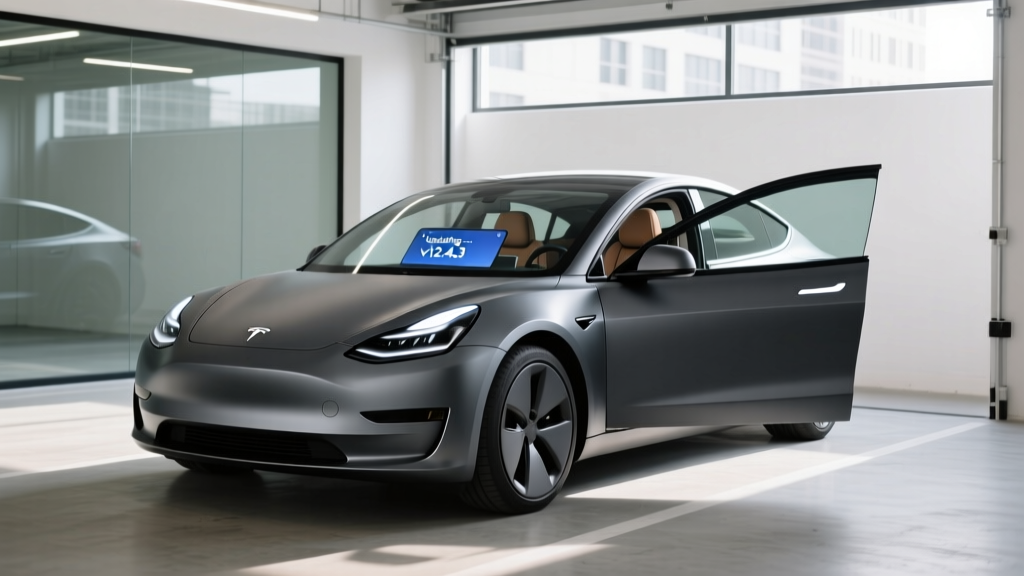
Most automakers push over-the-air (OTA) updates to patch bugs or refresh a navigation database. Tesla treats firmware like a living product roadmap — the car you buy today may not be the car you drive six months from now. In 2026, Tesla firmware updates continue to reshape performance, efficiency, and driver-assistance behavior long after the vehicle leaves the Fremont or Austin factory. For buyers evaluating the refreshed Model 3, understanding this software-driven ownership model is just as critical as checking the EPA range sticker.
This review covers the 2026 Tesla Model 3 lineup — Long Range RWD, Long Range AWD, and Performance — with a focus on how OTA firmware updates have tangibly altered range estimates, charging curves, Autopilot capability, and daily usability over the vehicle's lifecycle.
2026 Model 3 Spec Sheet at a Glance
| Spec | Long Range RWD | Long Range AWD | Performance |
|---|---|---|---|
| EPA Range | 363 mi | 341 mi | 315 mi |
| Battery (usable) | ~79 kWh (NMC) | ~79 kWh (NMC) | ~79 kWh (NMC) |
| MPGe (combined) | 132 MPGe | 125 MPGe | 118 MPGe |
| kWh/100 mi | 25 | 27 | 29 |
| 0–60 mph | 5.8 s | 4.2 s | 2.9 s |
| Horsepower | 271 hp | 346 hp | 510 hp |
| Drivetrain | RWD (single motor) | AWD (dual motor) | AWD (dual motor) |
| Peak DC Fast Charge | 250 kW | 250 kW | 250 kW |
| 10–80% DCFC Time | ~25 min | ~25 min | ~25 min |
| Level 2 Home Rate | 11.5 kW (~44 mi/hr) | 11.5 kW (~44 mi/hr) | 11.5 kW (~44 mi/hr) |
| Base MSRP | $44,130 | $47,130 | $55,630 |
Source: fueleconomy.gov, Tesla.com order pages (2026 model year). Specs subject to mid-year revision via firmware.
Real-World Range: What EPA Doesn't Tell You
Tesla's thermal management system, refined through successive firmware updates, now aggressively preconditions the battery when a Supercharger is set in navigation. This reduces cold-weather charging penalties but doesn't fully eliminate cold-induced range reduction. Owners in northern climates should budget realistically: a 363-mile EPA rating translates to roughly 250 miles of dependable winter highway range before you need to plan a charge stop.
The Performance trim's stickier tires, heavier dual-motor setup, and sportier tuning reduce efficiency to 29 kWh/100 mi — meaning its 315-mile EPA figure compresses further under aggressive driving or cold conditions.
Charging Speed and the Firmware Factor
| Charging Level | Power | Speed (approx.) | Notes |
|---|---|---|---|
| Level 1 (120V) | 1.4 kW | ~5 mi/hr | Emergency/top-up only |
| Level 2 (240V, 48A) | 11.5 kW | ~44 mi/hr | Full charge in ~8 hr |
| DC Fast (Supercharger V3/V4) | 250 kW peak | 10–80% in ~25 min | Tapers above 60% SoC |
| DC Fast (CCS adapter, third-party) | Up to 150–250 kW | Varies by station | Adapter required ($250) |
The Model 3's peak 250 kW DC fast-charge rate is not sustained across the full session. The charge curve peaks early (between 10–30% SoC) and tapers progressively — by 60% SoC, you'll see roughly 100–120 kW, and above 80%, charging slows to under 50 kW to protect the NMC cells. This is standard lithium-ion behavior, but Tesla firmware updates have incrementally optimized the curve over time, shaving 2–3 minutes off 10–80% sessions compared to the 2024 launch software.
At home on a Level 2 Wall Connector (48 amps, 240V), the Model 3 accepts up to 11.5 kW, adding roughly 44 miles of range per hour. A full overnight charge easily replenishes a depleted battery. Note: the onboard charger limits AC acceptance, so installing a 60A or 80A circuit won't speed things up beyond 11.5 kW.
How Tesla Firmware Updates Reshape the Car Over Time
Tesla's OTA update cadence — typically every 2–6 weeks — has delivered measurable changes to the Model 3 since its 2024 refresh. Key firmware-driven improvements through early 2026 include:
- Range optimization: Revised energy-management algorithms have squeezed 5–8 additional EPA-rated miles from the same 79 kWh battery pack through improved thermal preconditioning and accessory-load management.
- Autopilot and FSD (Supervised): Tesla's neural-network-based FSD stack receives regular model-weight updates. The 2025.x and 2026.x firmware branches improved intersection handling, lane-change decisiveness, and phantom-braking reduction. However, FSD remains an SAE Level 2 driver-assistance system — the driver must remain attentive with hands on the wheel at all times.
- Charging curve refinement: Firmware has adjusted the DC fast-charge taper schedule, improving 10–80% times by roughly 2 minutes on V3 Superchargers.
- UI and comfort: Ventilated-seat algorithms, cabin overheat protection thresholds, and Dashcam/USB recording behavior have all been tuned via OTA.
- Traction and stability: Torque-vectoring logic for dual-motor AWD models received updates improving wet-weather launch and cornering stability.
The double-edged nature of OTA updates is worth acknowledging: Tesla has also used firmware to reduce certain capabilities — for example, limiting regenerative braking strength in certain cold-battery scenarios, or adjusting acceleration profiles on base trims. Owners don't get to opt out of mandatory updates, which is a philosophical ownership difference versus legacy automakers.
Pricing, Tax Credits, and Total Cost
| Trim | Base MSRP | Est. After §30D Credit* | Federal Credit Eligible? |
|---|---|---|---|
| Long Range RWD | $44,130 | ~$36,630 | Up to $7,500 (verify sourcing) |
| Long Range AWD | $47,130 | ~$39,630 | Up to $7,500 (verify sourcing) |
| Performance | $55,630 | ~$48,130 | Up to $7,500 (verify sourcing) |
*Under IRS §30D rules for 2026, the full $7,500 credit requires meeting both critical-mineral and battery-component sourcing thresholds. The Model 3's eligibility has fluctuated as Tesla adjusts its supply chain. Always verify current status at fueleconomy.gov before purchasing. Credit can be transferred to the dealer at point of sale as a price reduction.
- MSRP cap: Sedans must be at or below $55,000 MSRP. The Performance trim at $55,630 exceeds this cap and is not eligible for the new-vehicle §30D credit (options and destination charges may push LR AWD close to the line — confirm with your dealer).
- Income cap: Adjusted gross income must not exceed $150,000 (single), $225,000 (head of household), or $300,000 (joint). See IRS §30D guidelines.
- Battery sourcing: Critical-mineral and component requirements tighten annually through 2029. Tesla's US-built LFP models have faced partial-credit scenarios; NMC Long Range models have generally qualified, but verify at purchase.
Interior, Cargo, and Daily Livability
The refreshed Model 3 interior trades physical controls for a minimalist, screen-centric layout. Everything — glovebox, mirrors, wipers, climate — routes through the 15.4-inch center touchscreen. The rear passengers get a dedicated 8-inch screen for climate and entertainment, a welcome addition from the pre-refresh model.
- Front legroom: 42.2 in
- Rear legroom: 35.3 in (tight for tall adults on long trips)
- Cargo (trunk + frunk): 23 cu ft combined (trunk: 21 cu ft, frunk: 2 cu ft)
- Towing: Not rated for towing in the US market
Ride quality improved substantially with the Highland refresh — acoustic glass, retuned dampers, and additional sound deadening make the 2026 Model 3 noticeably quieter at highway speeds than its predecessor. The ventilated front seats and ambient lighting are now standard across trims.
Pros, Cons, and Who Should Buy
Pros
- Class-leading efficiency (25 kWh/100 mi on LR RWD)
- Extensive Supercharger network access (17,000+ stalls in North America)
- Continuous OTA firmware improvements post-purchase
- Strong 0–60 performance across all trims
- Low cost of ownership when charging at home
Cons
- No physical controls — everything via touchscreen
- Rear seat space is tight for adults over 6 ft
- FSD (Supervised) remains Level 2 despite the name and $8,000 price
- Performance trim exceeds $55K MSRP cap — no federal credit
- Mandatory OTA updates can change car behavior without owner consent
Best for: Tech-forward commuters and road-trippers who value software-driven improvements, Supercharger convenience, and efficiency. The Long Range RWD is the value sweet spot — lowest price, best range, and full tax-credit eligibility.
Not ideal for: Families needing spacious rear seating, buyers who prefer physical buttons, or those uncomfortable with a screen-only interface and mandatory OTA changes.
Warranty and Long-Term Ownership
- Basic vehicle warranty: 4 years / 50,000 miles
- Battery & drive unit: 8 years / 120,000 miles (Long Range); 8 years / 120,000 miles (Performance)
- Capacity retention threshold: Tesla warrants the battery will retain at least 70% of original capacity during the warranty period
NMC chemistry in the Long Range and Performance models offers higher energy density than LFP but is more sensitive to prolonged 100% SoC storage. Tesla recommends daily charging to 80% for NMC packs and 100% only before trips. The battery management system (BMS), updated via firmware, actively manages cell balancing and thermal limits.
Model 3 vs. Key Competitors: Is It Still the Default?
The 2026 Model 3 faces credible competition from the Hyundai Ioniq 6 (361 mi EPA, 800V architecture, ~350 kW DCFC), the BMW i4 eDrive40 (307 mi, more traditional luxury interior), and the upcoming refreshed Polestar 2. Where the Model 3 retains an edge is the Supercharger network, OTA update cadence, and efficiency. Where it falls short is interior material quality versus BMW and DC charging speed versus Hyundai's 800V platform.
If your priority is the lowest cost-per-mile of any premium electric sedan and you're comfortable with a touchscreen-first interface, the Model 3 Long Range RWD at ~$36,630 after the federal credit remains difficult to beat.
Frequently Asked Questions
What is the real-world range of the 2026 Tesla Model 3?
The Long Range RWD achieves an EPA-estimated 363 miles, but real-world highway driving at 70–75 mph yields approximately 290–310 miles. In sub-freezing temperatures, expect 230–260 miles without preconditioning. City driving with regenerative braking approaches the EPA figure.
How fast does the Model 3 charge at home and on the road?
On a Level 2 home charger (240V, 48A), the Model 3 accepts 11.5 kW, adding ~44 miles of range per hour for a full overnight charge. At a V3 Supercharger (250 kW peak), a 10–80% session takes approximately 25 minutes, though the charge curve tapers significantly above 60% SoC.
Does the 2026 Model 3 qualify for the $7,500 federal EV tax credit?
The Long Range RWD ($44,130) and Long Range AWD ($47,130) fall under the $55,000 sedan MSRP cap and have generally qualified for up to $7,500 under IRS §30D, subject to battery-sourcing requirements and buyer income limits. The Performance trim ($55,630) exceeds the cap and is not eligible. Always confirm current eligibility at fueleconomy.gov before purchasing.
How often do Tesla firmware updates arrive, and what do they change?
Updates arrive every 2–6 weeks and can modify range estimates, charging curves, Autopilot/FSD behavior, UI features, and thermal management. Some updates deliver measurable efficiency gains; others adjust comfort or safety systems. Updates are mandatory and cannot be declined.
Is Tesla FSD (Supervised) actually self-driving?
No. FSD (Supervised) is an SAE Level 2 driver-assistance system. It handles highway lane-keeping, navigation-based lane changes, and some city-street scenarios, but the driver must remain fully attentive with hands on the wheel. It does not replace the driver in any scenario.
Is the Model 3 worth buying over the Hyundai Ioniq 6 or BMW i4?
Choose the Model 3 if Supercharger access, OTA updates, and class-leading efficiency are priorities. Choose the Ioniq 6 if faster DC charging (800V, ~350 kW) matters for road trips. Choose the BMW i4 if interior quality and physical controls are non-negotiable. On price after tax credits, the Model 3 Long Range RWD offers the strongest value proposition in the segment.