Why Everyone Is Talking About a Tesla Financial Downward Spiral
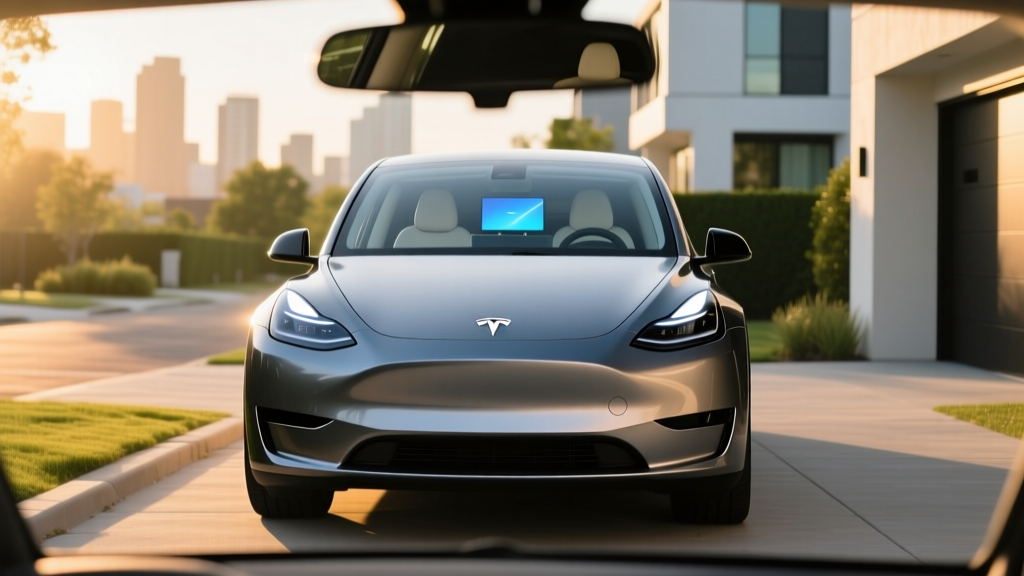
If you have browsed automotive or financial news in 2025–2026, you have likely seen the phrase Tesla financial downward spiral attached to headlines about slowing deliveries, shrinking margins, and increased competition from Hyundai, BYD, Ford, and Rivian. Tesla's stock volatility and brand-controversy cycles have genuinely rattled some shoppers. But for buyers who care more about electrons than equity, the question is simpler: Is the 2026 Tesla Model Y still one of the best electric SUVs you can actually buy?
The answer requires separating Wall Street narratives from driveway reality. Below, we break down the 2026 Model Y Long Range AWD and Performance trims with the exact numbers that matter — EPA range, battery chemistry, DC fast-charge curves, real-world efficiency, §30D tax credit eligibility, and how it stacks up against the Hyundai Ioniq 5, Ford Mustang Mach-E, and Kia EV6.
2026 Tesla Model Y: Quick Spec Table
| Spec | Long Range AWD | Performance |
|---|---|---|
| EPA Range | 320 miles | 295 miles |
| Battery (usable) | ~75 kWh, NMC (2170 cells) | ~75 kWh, NMC |
| Drivetrain | Dual-motor AWD | Dual-motor AWD |
| Horsepower | ~384 hp | ~456 hp |
| 0–60 mph | 4.8 sec | 3.5 sec |
| Peak DC Charge Rate | 250 kW (Supercharger V3) | 250 kW |
| 10–80% DC Time | ~27 min | ~27 min |
| Level 2 (11.5 kW AC) | ~44 mi/hr | ~44 mi/hr |
| MPGe (combined) | 122 MPGe | 111 MPGe |
| Efficiency | 28 kWh/100 mi | 30 kWh/100 mi |
| Cargo (rear up / folded) | 30.2 / 72.0 cu ft | 30.2 / 72.0 cu ft |
| Base MSRP | $48,590 | $53,590 |
| Battery Warranty | 8 yr / 120,000 mi | 8 yr / 120,000 mi |
Sources: fueleconomy.gov, Tesla US spec sheet. Prices reflect 2026 MSRP before destination; verify current figures at tesla.com.
Real-World Range vs. the EPA Sticker
EPA Estimated: 320 miles (Long Range AWD), 295 miles (Performance).
Real-World Expectation: Plan on 260–285 miles in mixed 70-mph highway driving in moderate weather. In freezing conditions (below 30°F), expect a 20–30% reduction, dropping effective range to roughly 210–240 miles unless you precondition the battery while plugged in.
The Model Y's NMC pack and Tesla's heat pump give it a cold-weather edge over some rivals, but physics still applies. Highway efficiency at 75–80 mph typically lands around 260 Wh/mile, which mathematically yields ~288 miles from the ~75 kWh usable buffer. City driving with regenerative braking recovers more energy and pushes closer to the EPA number. If your commute is stop-and-go, you may actually beat the sticker.
For road trips, Tesla's Supercharger network remains a genuine advantage — over 20,000 V3 and V4 stalls across North America with strong uptime. The trade-off is that peak 250 kW only holds between roughly 10–30% State of Charge; above 60%, the charge curve tapers sharply, making the 10–80% time closer to 27 minutes rather than the marketing-friendly "175 miles in 15 minutes" claim.
Charging Speeds: DC Fast, Level 2, and Home Setup
| Level | Power | Speed |
|---|---|---|
| Level 1 (120V, 12A) | ~1.4 kW | ~4–5 mi/hr |
| Level 2 (240V, 48A) | 11.5 kW | ~44 mi/hr |
| DC Fast (Supercharger V3) | Peak 250 kW | ~175 mi in 15 min (10–40% SoC); 10–80% ~27 min |
| DC Fast (CCS adapter, EA/others) | Up to 250 kW | Varies by station; typically 150–175 kW sustained |
Tesla's NACS connector is now the North American standard, and Ford, Rivian, and GM EVs have joined the Supercharger network via adapters. That means the Model Y's charging ecosystem advantage is narrowing — but the density and reliability of Superchargers still outpaces Electrify America and ChargePoint on rural corridors.
For home charging, a 48-amp Level 2 wall connector on a 60-amp circuit delivers a full overnight replenishment. Budget $500–$1,500 for professional installation if your electrical panel has capacity; older homes may need a $2,000–$4,000 panel upgrade to support continuous 48A loads safely.
Performance, Ride, and Daily Drivability
The Long Range AWD's 4.8-second 0–60 time is quicker than most buyers will ever need, with instant torque that makes highway merging effortless. The Performance trim's 3.5 seconds is sports-car territory, but the firmer suspension and 21-inch wheels trade ride comfort for cornering grip. On broken pavement, the Performance can feel jittery; the Long Range rides more composed.
Regenerative braking in Tesla's one-pedal mode remains among the most intuitive in the industry. The Model Y's low center of gravity (battery pack under the floor) keeps body roll minimal, though it is still a tall crossover, not a sedan. Towing capacity is 3,500 pounds — adequate for a small trailer or a pair of dirt bikes, but not a camper.
Pricing, Trim Levels, and the §30D Federal Tax Credit
| Trim | MSRP | §30D Credit Eligibility | Effective Price* |
|---|---|---|---|
| Long Range AWD | $48,590 | Likely $3,750–$7,500 (see caveats) | ~$41,090–$44,840 |
| Performance | $53,590 | Subject to MSRP cap ($80k SUV OK) + sourcing rules | ~$46,090–$49,840 |
*Effective price assumes full or partial §30D credit. Final eligibility depends on buyer income, battery sourcing, and point-of-sale transfer rules.
The IRS §30D credit remains the most important variable in Tesla pricing. Key 2026 rules:
- MSRP cap: SUVs/vans/pickups must be ≤ $80,000. Model Y clears this easily.
- Buyer income cap: AGI ≤ $150,000 single / $300,000 joint.
- Battery sourcing: Credits split into two halves ($3,750 each) — one for critical-mineral sourcing, one for battery-component manufacturing. Tesla's shifting supply chain means the full $7,500 is not guaranteed every quarter; verify current eligibility on fueleconomy.gov before purchase.
- Point-of-sale transfer: You can transfer the credit to the dealer at purchase to reduce the sale price, rather than waiting for a tax refund.
This is where the "Tesla financial downward spiral" narrative intersects with buyer reality: Tesla has aggressively cut prices and offered low-rate financing to defend market share, which compresses margins but benefits buyers. If you are shopping purely on value, a price-cut cycle is a tailwind, not a warning.
Interior, Tech, and the Big Screen Question
The refreshed Model Y interior is noticeably quieter and more finished than pre-2025 versions, with ventilated front seats, ambient lighting, and a rear touchscreen for passengers. The 15.4-inch front display handles everything — climate, navigation, media, vehicle settings — with no physical buttons. Some buyers love the minimalism; others find it distracting to adjust fan speed through a touchscreen while driving.
Tech highlights:
- Autopilot (standard): SAE Level 2 adaptive cruise + lane-keeping. Requires hands-on-wheel supervision.
- Full Self-Driving (Supervised): Still SAE Level 2. Impressive on highways but not autonomous — you must remain attentive at all times.
- Sentry Mode, Dog Mode, Camp Mode: Unique Tesla features that leverage the battery and thermal system.
- OTA updates: Regular software improvements, though major new features have slowed compared to 2020–2023.
Cargo space is generous at 30.2 cu ft behind the second row and 72.0 cu ft with seats folded — enough for a week of family luggage or a Costco haul. The front trunk (frunk) adds roughly 4 cu ft for charging cables and groceries.
Warranty and Long-Term Battery Outlook
Tesla covers the Model Y battery and drive units for 8 years or 120,000 miles, whichever comes first, with a minimum 70% capacity retention threshold. Basic vehicle warranty is 4 years / 50,000 miles.
NMC chemistry in the Model Y has shown strong long-term degradation data: most owners report 10–15% capacity loss over 100,000 miles, which is within warranty tolerance. If you plan to keep the vehicle past 150,000 miles, budget $12,000–$16,000 for an eventual out-of-warranty battery replacement — though many packs last 200,000+ miles before hitting 70% State of Health.
Pros, Cons, and Who Should Buy
Pros
- Supercharger network reliability still leads the industry
- Class-leading efficiency (28 kWh/100 mi) reduces charging cost per mile
- Strong real-world range for highway road trips
- OTA updates and software ecosystem
- Competitive pricing after recent cuts
Cons
- Touchscreen-only controls distract some drivers
- Brand controversy affects resale and insurance in some markets
- Performance trim ride quality is firm on rough roads
- FSD (Supervised) remains Level 2 despite the name
- Tax credit amount varies by quarter and sourcing rules
Best for: Tech-savvy commuters, road-trip-oriented families, and buyers who prioritize charging-network reliability over brand sentiment. If you drive 30+ miles daily and take multi-state trips a few times per year, the Model Y's efficiency and Supercharger access are hard to beat.
Look elsewhere if: You want physical buttons, prefer a non-Tesla brand, or need a third row (consider the Kia EV9). Buyers worried about the "Tesla financial downward spiral" narrative should note that Tesla's balance sheet remains cash-positive; the "spiral" is more about margin compression and competition than existential risk.
Model Y vs. Key Competitors (2026)
| Spec | Tesla Model Y LR | Hyundai Ioniq 5 | Ford Mach-E ER AWD | Kia EV6 GT-Line |
|---|---|---|---|---|
| EPA Range | 320 mi | 305 mi | 305 mi | 310 mi |
| Peak DC Charge | 250 kW | 240 kW | 150 kW | 240 kW |
| 10–80% Time | ~27 min | ~20 min (800V) | ~40 min | ~18 min (800V) |
| 0–60 mph | 4.8 sec | 5.1 sec | 5.1 sec | 5.1 sec |
| Base MSRP (AWD) | $48,590 | $47,500 | $48,995 | $49,500 |
The Ioniq 5 and EV6 charge faster thanks to 800V architecture, but the Model Y still wins on real-world range efficiency and Supercharger access. The Mach-E trails on DC charge speed. Choose based on your charging situation: if you can charge at home and rarely road-trip, the Ioniq 5's faster peak charging matters less; if you drive rural highways often, Tesla's network is the tiebreaker.
FAQ: Tesla Model Y in 2026
What is the real-world range of the 2026 Model Y?
Expect 260–285 miles highway in moderate weather, 210–240 miles in freezing temps. City driving can approach the 320-mile EPA sticker.
How fast does the Model Y charge at home and on the road?
Level 2 home charging at 11.5 kW adds ~44 miles per hour. DC fast charging peaks at 250 kW, with a 10–80% session taking about 27 minutes on a V3 Supercharger.
Does the 2026 Model Y qualify for the $7,500 federal tax credit?
It often qualifies for $3,750 or $7,500 depending on battery-sourcing rules that shift quarterly. Verify on fueleconomy.gov and confirm with your tax professional.
Is it worth buying despite the Tesla financial downward spiral headlines?
Financial headlines reflect margin pressure, not product failure. The 2026 Model Y remains one of the most efficient, best-supported electric SUVs on the market.
Is Full Self-Driving actually self-driving?
No. FSD (Supervised) is SAE Level 2 driver assistance. You must remain fully attentive and keep your hands on the wheel.