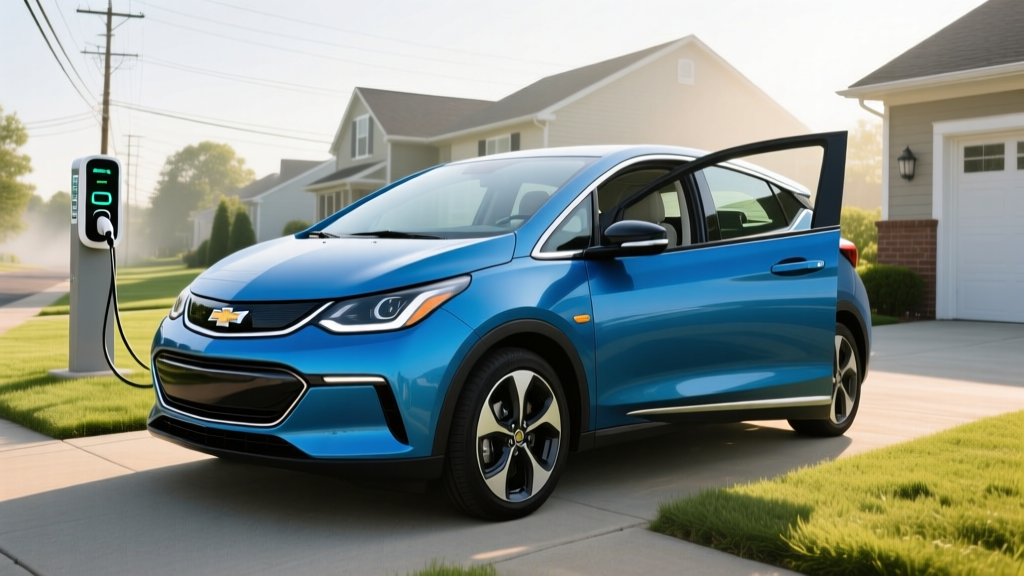
New Jersey has quietly become one of the most EV-friendly states in the country, with robust charging infrastructure along the Turnpike and Garden State Parkway corridors, strong utility incentives for home charging, and a zero-emissions mandate that keeps dealers stocking affordable battery-electric options. For Garden State shoppers eyeing a budget-friendly commuter EV, the 2026 Chevrolet Bolt EV remains one of the most compelling entries — and leasing one can sidestep some of the uncertainty around depreciation and battery longevity.
This profile covers everything you need to evaluate a Chevy Bolt lease in NJ: real-world range expectations for Northeast winters, DC fast-charging reality, home charging economics, current federal tax credit rules, and how the Bolt stacks up against competitors in the sub-$30,000 EV segment.
2026 Chevy Bolt EV: At-a-Glance Specs
| Specification | 2026 Chevrolet Bolt EV |
|---|---|
| EPA Estimated Range | 255 miles |
| Usable Battery Capacity | 65 kWh (NMC lithium-ion) |
| Efficiency | 120 MPGe combined / 28 kWh per 100 mi |
| Max DC Fast Charge Rate | 55 kW (CCS1 connector) |
| 10–80% DC Charge Time | ~54 minutes |
| Level 2 Home Charging Rate | 11.5 kW (~39 mi/hr) |
| Motor Output | 200 hp / 266 lb-ft torque |
| Drivetrain | Front-wheel drive (single motor) |
| 0–60 mph | 6.5 seconds |
| Cargo Volume (rear seats up) | 16.3 cu ft |
| Cargo Volume (rear seats folded) | 57.0 cu ft |
| Rear Legroom | 36.0 inches |
| Base MSRP (1LT) | $26,500 |
| Battery Warranty | 8 years / 100,000 miles |
Source: EPA fueleconomy.gov, Chevrolet product specifications.
Real-World Range: What NJ Drivers Actually Get
EPA Sticker: 255 miles
Real-World Expectation: ~220–240 miles (mixed driving); ~190–210 miles (highway at 70+ mph); ~170–195 miles (winter below 32°F with cabin heat)
The Bolt EV's 65 kWh NMC (nickel manganese cobalt) battery pack delivers its EPA-rated 255 miles under moderate conditions — city and suburban driving at moderate speeds with mild temperatures. That number holds up well around town, where regenerative braking recaptures energy in stop-and-go traffic along routes like NJ-17 or the Pulaski Skyway.
However, the Bolt's relatively compact battery and single-speed reduction gear mean highway efficiency drops noticeably. Sustained 70–75 mph cruising on the Garden State Parkway will typically yield 220 miles or less before you need to plan a charge stop. And in New Jersey's cold winters — where January temperatures regularly dip into the 20s — expect a 20–30% range reduction. The Bolt EV does not include a standard heat pump (it relies on resistive cabin heating), which draws heavily from the battery in cold weather.
For a daily commuter covering 30–50 miles round trip, the Bolt's real-world range is more than adequate even in January. But if your commute stretches from Trenton to Manhattan and back (~130 miles), you'll want reliable Level 2 home charging and awareness that winter range may dip below 200 miles.
Charging Speed: The Bolt's Biggest Compromise
| Charging Level | Power | Speed (Approx.) | Use Case |
|---|---|---|---|
| Level 1 (120V household) | 1.2 kW | ~4 miles per hour | Emergency / overnight trickle |
| Level 2 (240V home/public) | 11.5 kW | ~39 miles per hour | Daily home charging (~6.5 hr for full) |
| DC Fast Charge (CCS1) | 55 kW peak | ~150 miles per hour (peak) | Road trips; 10–80% in ~54 min |
Here is where the Bolt EV requires honest expectation-setting. The 55 kW peak DC fast-charge rate is the vehicle's most significant limitation in 2026. Competitors like the Hyundai Kona Electric (100+ kW) and even the base Tesla Model 3 (170 kW) charge at roughly two to three times the Bolt's speed at a public fast charger.
At a 50–55 kW DC fast charger — which still makes up a meaningful portion of Electrify America and EVgo stations in the NJ/NY metro — a 10–80% session takes approximately 54 minutes. That's workable for a sit-down lunch stop but not the quick 18–20 minute top-ups you'll see advertised for 800-volt EVs. On a road trip from Newark to Washington, D.C. (~210 miles), you'll likely need one full charge stop lasting close to an hour.
Home charging is the Bolt's sweet spot. The onboard 11.5 kW Level 2 charger is genuinely excellent for this price class. Plug into a 240V/48-amp Level 2 wallbox (like a ChargePoint Home Flex or Emporia V2) and you'll add roughly 39 miles of range per hour — enough to fully replenish the 65 kWh pack in about 6.5 hours. Most NJ commuters can plug in at 10 PM and wake up to a full battery every morning.
NJ install note: Expect $600–$1,800 for a Level 2 home charger installation depending on your electrical panel capacity. Older NJ homes with 100-amp panels may require a $1,500–$3,000 service upgrade. Check with PSE&G, JCP&L, or Atlantic City Electric for any active EV charger rebates.
Pricing, Lease Economics & Federal Tax Credit Eligibility
| Trim | Base MSRP | Est. Monthly Lease (36 mo, NJ) |
|---|---|---|
| 1LT | $26,500 | $249–$299 |
| 2LT | $30,100 | $299–$359 |
| As-Tested (2LT w/ options) | ~$32,400 | — |
Does the Bolt Qualify for the §30D Federal Tax Credit?
The 2026 Chevy Bolt EV is assembled at GM's Orion Township plant in Michigan and uses battery components that have historically positioned it well for the IRS §30D Clean Vehicle Credit. However, eligibility is not automatic — it depends on three moving targets:
- MSRP Cap: The Bolt's MSRP is well under the $55,000 cap for sedans/hatchbacks — ✅ passes.
- Buyer Income Cap: Modified AGI must not exceed $150,000 (single), $225,000 (head of household), or $300,000 (joint). Check your tax situation.
- Battery Sourcing Requirements: Critical minerals and battery components must meet escalating domestic-content thresholds under the Inflation Reduction Act. GM has worked to localize Bolt battery supply chains, but verify current-year compliance on fueleconomy.gov before signing.
Leasing workaround: Under the "commercial vehicle" provision (§45W), leased EVs can pass through the $7,500 credit to the lessee as a capitalized-cost reduction — even if the lessee's income exceeds the §30D caps or the battery sourcing rules aren't fully met. Many NJ Chevy dealers structure Bolt leases to capture this benefit, effectively reducing your monthly payment by ~$200/month over 36 months. Always confirm with the dealer's finance department exactly how the credit is applied.
Disclaimer: Tax credit rules change frequently. Consult a tax professional and verify eligibility at irs.gov before committing to a purchase or lease.
Performance, Interior & Daily-Drive Impressions
The Bolt EV's 200-horsefront front-mounted motor delivers 266 lb-ft of instant torque, pushing the car to 60 mph in approximately 6.5 seconds. That's genuinely quick for a sub-$30,000 hatchback — the Bolt will merge onto I-95 with confidence and punch through gaps in traffic. The single-motor FWD layout means some torque steer under hard acceleration, but it's manageable.
Inside, the 2026 Bolt carries over the refreshed interior introduced with the prior generation. You get an 11-inch diagonal touchscreen running Chevrolet's latest infotainment software with wireless Apple CarPlay and Android Auto, a 10.2-inch digital driver display, and a suite of standard driver-assist features under the Chevy Safety Assist umbrella (automatic emergency braking, lane-keep assist, following-distance indicator, IntelliBeam headlights).
Notable drawbacks: The rear seat is tighter than competitors — 36.0 inches of legroom is adequate for adults on short trips but cramped for long rides. The seats themselves are flatly padded. And while the 16.3 cu ft cargo area (57.0 cu ft with seats folded) is useful for a hatchback, the load floor sits high due to the battery pack underneath.
- Strong value — one of the cheapest new EVs available
- 255-mile EPA range covers most commutes easily
- Peppy 200 hp motor, fun around town
- Excellent 11.5 kW Level 2 home charging
- Generous 8-yr/100,000-mi battery warranty
- Lease credit workaround may bypass income caps
- 55 kW DC fast charging is painfully slow for 2026
- No heat pump — significant winter range loss in NJ
- CCS1 connector (not NACS) — adapter needed for Superchargers
- Rear seat and cargo space lag behind Kona, ID.4
- No advanced cruise control on base 1LT trim
Who Is the Bolt EV Lease Best For?
- Daily commuter driving 20–60 miles round trip with Level 2 home charging access
- Budget-conscious EV adopter who wants a new EV under $300/month via lease
- Second-car household — the Bolt excels as an around-town runabout while a larger vehicle handles road trips
- Urban/suburban NJ drivers in areas like Hoboken, Jersey City, Morristown, or Princeton with short commutes and available home or workplace charging
- You road-trip frequently (the 55 kW DC charge rate will test your patience)
- You need a family vehicle with spacious rear seating and large cargo area
- You lack access to Level 2 charging at home or work (Level 1 charging is too slow for daily use)
Bolt EV vs. Key Competitors: Quick Comparison
| Spec | 2026 Chevy Bolt EV | 2026 Hyundai Kona Electric | 2026 Nissan LEAF (SV Plus) |
|---|---|---|---|
| EPA Range | 255 mi | 261 mi | 212 mi |
| Battery | 65 kWh NMC | 64.8 kWh NMC | 60 kWh NMC |
| DC Fast Charge | 55 kW | 100+ kW | 100 kW (CHAdeMO) |
| 0–60 mph | 6.5 sec | ~7.0 sec | ~6.9 sec |
| Starting MSRP | $26,500 | ~$33,000 | ~$30,000 |
| Connector | CCS1 | NACS / CCS1 | CHAdeMO |
The Bolt wins on price by a wide margin. The Kona Electric charges roughly twice as fast on DC and offers a slightly more spacious interior, but costs $6,000+ more. The LEAF's CHAdeMO connector is increasingly orphaned in the U.S. as the industry moves to NACS/CCS. For a lease-focused buyer who prioritizes monthly cost above all else, the Bolt is difficult to beat.
Frequently Asked Questions
What is the real-world range of the 2026 Chevy Bolt EV?
Expect 220–240 miles in mixed driving, 190–210 miles at sustained highway speeds, and 170–195 miles in freezing temperatures with cabin heat running. The EPA rates it at 255 miles under ideal conditions.
How fast does the Bolt charge at home and on the road?
At home on a 240V Level 2 charger (11.5 kW), you'll add ~39 miles per hour — a full charge takes about 6.5 hours. On DC fast chargers, the Bolt peaks at just 55 kW, meaning a 10–80% session takes roughly 54 minutes. This is the vehicle's primary weakness.
How much does a Chevy Bolt lease cost in NJ after tax credits?
Typical 36-month Bolt leases in the NJ metro range from $249–$359/month depending on trim and down payment. If the $7,500 federal credit passes through as a cap-cost reduction (common under the lease commercial-credit provision), monthly payments can drop by roughly $200/month compared to credit-ineligible leases.
Does the 2026 Bolt qualify for the $7,500 federal EV tax credit?
It likely qualifies for many buyers — the Bolt is U.S.-assembled and under the MSRP cap. However, eligibility depends on your income, the battery's critical-mineral sourcing compliance for the current tax year, and whether you buy or lease. Leasing may unlock the credit via §45W even if you exceed income caps. Always verify at irs.gov.
Is the Bolt EV worth it vs. competitors?
If your priority is the lowest possible monthly payment on a new EV with adequate commuter range, yes — the Bolt is the segment's value champion. If you road-trip often or need faster DC charging, the Hyundai Kona Electric or a used Tesla Model 3 may serve you better despite higher cost.
Can I use Tesla Superchargers with the Chevy Bolt?
Yes, but only with a CCS-to-NACS adapter. Tesla has opened select Supercharger stalls to non-Tesla CCS vehicles via the Magic Dock adapter or approved third-party adapters. Check Tesla's Supercharger map for CCS-enabled stations in your NJ area — coverage is growing but not yet universal.