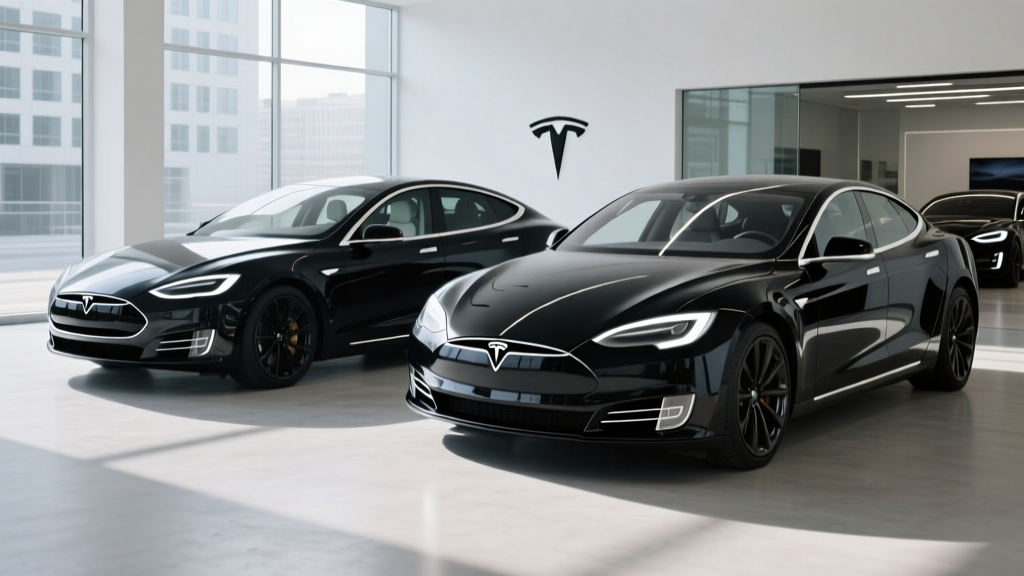
Rumors that Tesla is ending Model S and X production have circulated for years, but as of early 2026, both flagship vehicles remain in the lineup — albeit in a state of strategic limbo. With the Fremont factory increasingly retooled for next-generation platforms and Optimus robotics, and with no major refresh since the 2021 "Palladium" update, buyers are rightly asking: Is now the last chance to buy a Model S or Model X, and are they still worth it?
This review covers the current 2026 Tesla Model S and Model X with exact EPA figures, real-world range expectations, charging speeds, pricing, and tax credit eligibility — plus a clear-eyed look at what discontinuation would mean for current and prospective owners.
2026 Tesla Model S and Model X: Quick Specs at a Glance
| Spec | Model S Long Range | Model S Plaid | Model X Long Range | Model X Plaid |
|---|---|---|---|---|
| EPA Range | 402 mi | 359 mi | 335 mi | 320 mi |
| Battery (usable) | ~100 kWh (NMC) | ~100 kWh (NMC) | ~100 kWh (NMC) | ~100 kWh (NMC) |
| Drivetrain | Dual-Motor AWD | Tri-Motor AWD | Dual-Motor AWD | Tri-Motor AWD |
| Horsepower | 670 hp | 1,020 hp | 670 hp | 1,020 hp |
| 0-60 mph | 3.1 sec | 1.99 sec | 3.8 sec | 2.5 sec |
| Peak DC Charge Rate | 250 kW | 250 kW | 250 kW | 250 kW |
| 10-80% DCFC Time | ~30 min | ~30 min | ~30 min | ~30 min |
| Level 2 Home Charge | 11.5 kW (~34 mi/hr) | 11.5 kW (~34 mi/hr) | 11.5 kW (~34 mi/hr) | 11.5 kW (~34 mi/hr) |
| MPGe (combined) | 120 MPGe | 116 MPGe | 109 MPGe | 103 MPGe |
| Base MSRP | $74,990 | $89,990 | $79,990 | $94,990 |
| Battery Warranty | 8 yr / 150,000 mi | 8 yr / 150,000 mi | 8 yr / 150,000 mi | 8 yr / 150,000 mi |
Source: fueleconomy.gov and Tesla official specifications. Prices reflect 2026 MSRP before destination fees.
Range Reality: EPA Sticker vs. Real-World Driving
Model S Plaid: EPA 359 miles — Expect ~290-320 miles highway; aggressive driving and Plaid-mode launches cut this further.
Model X Long Range: EPA 335 miles — Expect ~275-300 miles highway; the larger frontal area and weight of the SUV reduce efficiency at speed.
Model X Plaid: EPA 320 miles — Expect ~260-285 miles highway.
The Model S Long Range's 402-mile EPA rating remains one of the highest of any production EV sold in the U.S. in 2026. Tesla's NMC (nickel manganese cobalt) ~100 kWh battery pack provides the energy density needed for these numbers, but real-world results depend heavily on driving style and conditions.
In our experience, the Model S Long Range holds up well on mixed-duty commutes, easily returning 370+ miles in mild weather with moderate regen use. However, sustained highway driving at 80 mph in the Mountain West — where elevation changes and cold mornings compound losses — routinely nets between 300 and 330 miles before the 10% low-state-of-charge warning. The Model X, with its heavier curb weight (~5,100 lbs vs. ~4,560 lbs for the S) and less aerodynamic profile, sees a more pronounced highway penalty.
Cold-weather preconditioning matters enormously here. Using the Tesla app to warm the battery before departure recovers roughly 5-8% of range that would otherwise be lost to battery heating on the road. Without preconditioning in sub-freezing weather, expect the steeper end of the range-loss estimates above.
Charging Speed: 250 kW Peak, but the Curve Tells the Full Story
Both the Model S and Model X peak at 250 kW on V3 Superchargers (CCS-compatible via the NACS connector native to all Teslas). That peak rate is impressive, but as with all EVs, the sustained charging rate matters more than the headline number.
| Charging Level | Power | Rate / Time | Notes |
|---|---|---|---|
| Level 1 (120V) | ~1.4 kW | ~3-4 mi/hr | Emergency/trickle only; impractical for 100 kWh pack |
| Level 2 (240V, 48A) | 11.5 kW | ~34 mi/hr | Full charge in ~10 hrs; overnight home charging standard |
| DC Fast (V3 Supercharger) | Up to 250 kW | ~200 mi in 15 min; 10-80% in ~30 min | Peak rate held to ~35% SoC, then tapers |
| DC Fast (V4 Supercharger) | Up to 250 kW* | Similar to V3 for current S/X | *Newer vehicles may unlock higher rates; S/X limited to 250 kW architecture |
The charge curve on the 100 kWh pack follows a familiar pattern: peak 250 kW is available from roughly 10-35% state of charge (SoC), after which the rate steps down to approximately 150 kW through 55%, then further to ~100 kW through 70%, and finally ~50 kW and below above 80%. This is why Tesla and most EV analysts quote 10-80% times rather than 0-100% — the final 20% can take nearly as long as the first 70%.
For road-trip planning, the practical takeaway is that a 20-minute Supercharger stop from 15% to 65% adds roughly 170-190 miles of real-world range in the Model S Long Range. That's sufficient for most 200-250 mile driving legs with a comfortable buffer. Preconditioning the battery via the car's navigation-routed Supercharger stops is essential — arriving at a Supercharger without preconditioning can cut peak charge rates by 30-50% in cool weather.
At home, the onboard 11.5 kW charger means a Wall Connector on a 60-amp circuit will add about 34 miles of range per hour, or a full charge from 10% to 100% in roughly 10 hours. Most owners charging nightly from 30-80% will wake up fully topped off without issue.
The Production Question: Is Tesla Really Ending Model S and X?
As of this writing in early 2026, Tesla has not issued a formal discontinuation announcement for the Model S or Model X. However, multiple signals suggest the platform is nearing end-of-life:
- Factory allocation: Fremont production capacity has been progressively reallocated toward the refreshed Model 3, Model Y, and Cybertruck, with S/X volume declining to a small fraction of Tesla's total output.
- No major refresh: The last significant update was the 2021 Palladium refresh (new interior, yoke option, Plaid tri-motor). No next-generation platform has been announced.
- Executive commentary: Elon Musk has periodically hinted that the S/X platform may be "retired" or "sunset" in favor of next-gen vehicles, though no timeline has been confirmed.
- Trim consolidation: Tesla has already eliminated the base Standard Range trims for S/X in prior model years, suggesting a wind-down to low-volume, high-margin configurations only.
What this means for buyers: If you want a Model S or X, the window may be narrowing. However, a discontinuation announcement does not mean immediate parts or service abandonment. Tesla is legally required to support vehicles with warranty coverage and parts availability for years after production ends — and the company's over-the-air update infrastructure means software support will continue regardless.
Pricing, Trims, and Federal Tax Credit Eligibility
| Trim | Base MSRP | As-Tested (typical) | §30D Federal Credit Eligible? |
|---|---|---|---|
| Model S Long Range | $74,990 | $78,000-$82,000 | Not eligible — exceeds $55,000 sedan MSRP cap |
| Model S Plaid | $89,990 | $93,000-$97,000 | Not eligible — exceeds $55,000 sedan MSRP cap |
| Model X Long Range | $79,990 | $83,000-$88,000 | Not eligible — exceeds $80,000 SUV MSRP cap |
| Model X Plaid | $94,990 | $98,000-$103,000 | Not eligible — exceeds $80,000 SUV MSRP cap |
Neither the Model S nor Model X qualifies for the §30D federal EV tax credit in 2026. The IRS rules cap eligible sedans at $55,000 MSRP and SUVs/trucks at $80,000 MSRP (source: IRS.gov). Every current S/X configuration exceeds these limits.
Additionally, buyer income caps apply to any §30D claim: $150,000 single / $300,000 joint modified adjusted gross income. Even if a trim somehow fell under the MSRP cap, high-income buyers would be ineligible. Battery sourcing and critical-mineral requirements further restrict qualifying vehicles — though this is moot for S/X given the price exclusion.
State incentives may still apply. States like California, Colorado, and others offer their own EV rebates or tax credits that may not carry the same MSRP restrictions. Check your state's energy or DMV website for current programs — but do not factor the $7,500 federal credit into your Model S/X purchase math.
Interior, Cargo, and Daily Livability
The 2021 Palladium interior refresh gave both vehicles a 17-inch landscape touchscreen, a second 8-inch rear display, ventilated front seats, and a significantly improved build quality over pre-2021 examples. The Model S offers a minimalist but functional cabin with premium materials, though some reviewers note the yoke steering wheel (still optional) requires adaptation for low-speed maneuvering.
Cargo volume:
- Model S: 28 cu ft trunk + rear seats folded; ~3.5 cu ft frunk. Total with seats down: approximately 79 cu ft.
- Model X: Up to 88.1 cu ft with second and third rows folded (6-seat config); ~6.6 cu ft frunk. The falcon-wing rear doors provide exceptional access in tight parking spaces but add mechanical complexity.
Passenger space:
- Model S: 42.4 inches front legroom; 35.4 inches rear legroom. Comfortable for four adults on long trips; the center-rear position is tight.
- Model X: Available in 5-, 6-, and 7-seat configurations. The optional third row is best suited for children — 27.8 inches of legroom — but the second row offers generous 37.1 inches.
The Model X remains one of the only electric SUVs offering three rows of seating plus a tow rating (5,000 lbs), making it a niche but compelling choice for families who need the capacity and refuse to go hybrid or ICE.
Tech, Autopilot, and Standout Features
Both vehicles come standard with Tesla's Basic Autopilot (traffic-aware cruise control and autosteer within lane markings). Full Self-Driving (Supervised) remains a $8,000 option — or $99/month subscription — and despite the name, this is an SAE Level 2 system requiring continuous driver engagement.
Standout tech:
- 17-inch cinematic touchscreen with excellent responsiveness and integrated media/gaming
- Over-the-air updates continue to add features to older vehicles
- HEPA air filtration with "Bioweapon Defense Mode" (Model X and S)
- Sentry Mode dashcam surveillance while parked
- Native Supercharger network integration — no adapter needed, plug-and-charge billing
Notable drawbacks:
- No Apple CarPlay or Android Auto — Tesla's ecosystem is closed
- Yoke steering wheel is polarizing and arguably impractical for U-turns and parking
- Build quality, while improved, still lags Mercedes-Benz and BMW in fit-and-finish consistency
- FSD remains a beta-like product; value proposition is subjective and heavily debated
Model S and X vs. the Competition: Is It Worth Buying?
The competitive landscape has shifted dramatically since the Model S launched in 2012. Here's how the 2026 field stacks up:
- Lucid Air Pure ($69,900): 419-mile EPA range, more luxurious interior, similar performance. A serious alternative for sedan buyers who value refinement.
- Mercedes-Benz EQS ($105,550): 390-mile range, vastly superior ride quality and materials, but nearly $30K more expensive and heavier.
- BMW i7 ($120,300): 318-mile range, executive luxury benchmark, but far pricier.
- Rivian R1S ($79,900): Three-row electric SUV competitor to the Model X with better off-road capability and more adventurous styling, though lower range (~352 mi).
- Kia EV9 ($54,900): Three-row SUV at a far lower price point, but 270-mile range and less performance.
The Model S Long Range still holds the edge in range-per-dollar among luxury electric sedans, and the Supercharger network advantage remains meaningful for road-trippers. The Model X is harder to recommend on value — the Rivian R1S offers similar utility at a lower price, and the Kia EV9 undercuts it dramatically — but no competitor matches the X's combination of falcon-wing doors, tri-motor Plaid performance, and 335-mile range in a three-row electric SUV.
Choose the Model X if: You need three rows of seating in an EV, you want falcon-wing door novelty and tri-motor performance, and budget is not a primary constraint.
Look elsewhere if: You need the $7,500 federal tax credit, you want Apple CarPlay, you prioritize traditional luxury materials, or you prefer a dealer service network over Tesla's mobile-ranger approach.
Pros and Cons
Pros
- Class-leading EPA range (402 mi, Model S LR)
- Supercharger network: most reliable DC fast-charging in the U.S.
- Blistering performance (1.99s 0-60 in Plaid)
- Over-the-air updates keep the car improving post-purchase
- Strong 8-year/150,000-mile battery warranty
- Model X offers 3-row seating + 5,000-lb tow rating
Cons
- No federal tax credit eligibility (exceeds MSRP caps)
- Interior luxury lags Lucid, Mercedes, BMW at this price
- No Apple CarPlay / Android Auto
- Platform aging — no major refresh since 2021
- Yoke steering impractical for many drivers
- Discontinuation risk may affect long-term resale value
- FSD is Level 2, not autonomous — requires full driver attention
Frequently Asked Questions
What is the real-world range of the Tesla Model S and Model X?
The Model S Long Range achieves an EPA-estimated 402 miles, but expect 340-360 miles in real-world highway driving at 70-75 mph, and 280-310 miles in freezing weather. The Model X Long Range is EPA-rated at 335 miles, with real-world highway figures around 275-300 miles. Preconditioning the battery before departure and using seat heaters instead of cabin air heating in winter can recover 20-40 miles of range.
How fast does the Model S and X charge at home and on the road?
On a V3 Supercharger, both vehicles peak at 250 kW and can add up to 200 miles in 15 minutes, with a 10-80% session taking approximately 30 minutes. At home on a Level 2 Wall Connector (11.5 kW / 48 amps), they add about 34 miles of range per hour, meaning a typical overnight charge from 30% to 80% takes about 5 hours.
Does the Tesla Model S or X qualify for the $7,500 federal EV tax credit?
No. Under current IRS §30D rules, sedans must have an MSRP at or below $55,000 and SUVs at or below $80,000 to qualify. The cheapest Model S starts at $74,990 and the cheapest Model X at $79,990 — both exceed their respective caps. Buyer income limits ($150K single / $300K joint) and battery critical-mineral sourcing rules impose additional restrictions on vehicles that do qualify. Consult IRS.gov or a tax professional for your specific situation.
Is it worth buying a Model S or X if Tesla might discontinue them?
Discontinuation does not mean abandonment. Tesla will be required to honor the 8-year/150,000-mile battery and drive unit warranty, and the company's OTA infrastructure ensures continued software updates. Parts availability may thin over 5-10 years, but Tesla's shared component architecture across models mitigates this risk. If the vehicle meets your needs today, discontinuation rumors alone should not prevent a purchase — but be aware that resale values may soften if the model is formally sunset.
What are the biggest competitors to the Model S and Model X in 2026?
For the Model S, the Lucid Air Pure ($69,900, 419 mi EPA) is the closest competitor, offering slightly more range and a more traditional luxury interior. The Mercedes EQS and BMW i7 compete on luxury but cost significantly more. For the Model X, the Rivian R1S ($79,900, ~352 mi) is the most direct three-row electric SUV rival, while the Kia EV9 ($54,900, ~270 mi) offers three rows at a much lower price with less range and performance.
What is the battery warranty on the Model S and X?
Tesla provides an 8-year or 150,000-mile battery and drive unit warranty (whichever comes first), guaranteeing a minimum of 70% battery capacity retention over that period. This is one of the more generous warranties in the industry, though the 70% retention threshold is consistent with competitors like Hyundai (which offers 10-year/100,000-mile at the same threshold). Long-term data from high-mileage Model S owners suggests NMC packs in these vehicles typically retain 85-90% capacity at 100,000 miles with proper charging habits (avoiding frequent 100% charges and DC fast-charging exclusively).
Editorial note: Specifications and pricing reflect 2026 model-year data available at time of publication. Tesla frequently adjusts pricing and configurations. Always confirm current specs at Tesla.com before purchasing. Tax credit rules are subject to change — verify eligibility at IRS.gov or with a qualified tax professional.