Why Tesla Employment Numbers Matter to EV Buyers
When you're spending $40,000 to $100,000 on an electric vehicle, the workforce behind it is not an abstract concern. Tesla employment numbers directly influence production consistency, service center wait times, software update cadence, and even the availability of the specific trim you want. As of early 2026, Tesla employs roughly 140,000 people globally — a figure that has fluctuated significantly through restructuring cycles in 2024 and 2025. Understanding where those workers are concentrated, and where gaps remain, helps you make a smarter purchase decision.
This article examines Tesla's workforce footprint through the lens of a buyer: What does factory staffing mean for the Model Y you're considering? How do service-center headcounts affect your ownership experience? And how does Tesla's employment trajectory compare to legacy automakers scaling their own EV operations?
Tesla's 2026 Global Workforce at a Glance
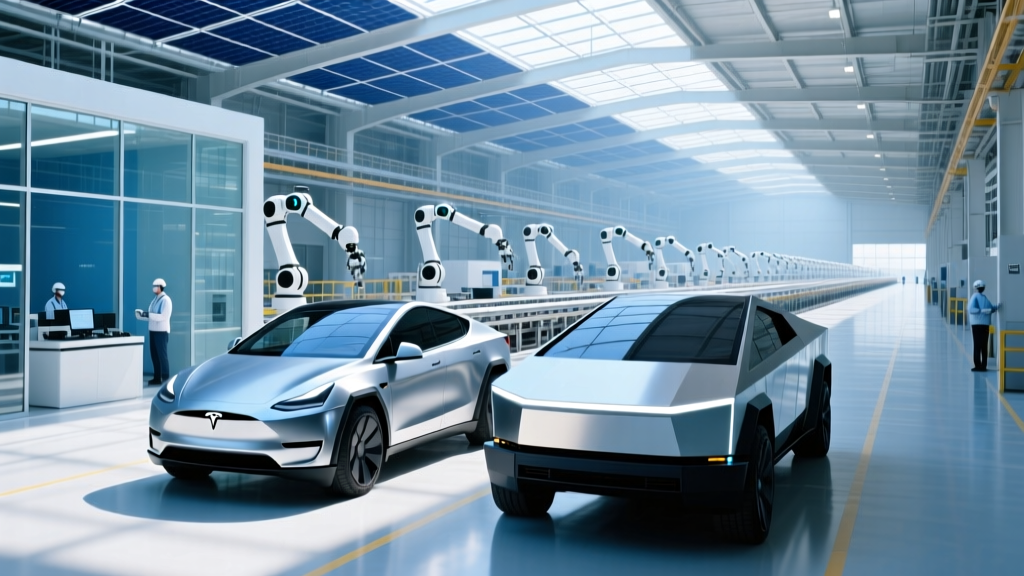
Tesla's headcount has contracted from its peak of approximately 152,000 in late 2023 to roughly 140,000 by early 2026, driven by automation investments, restructuring, and selective hiring freezes at certain facilities. The company's largest employment concentrations remain at its vehicle production hubs:
- Fremont, California: ~20,000 employees — produces Model S, Model X, Model 3, and Model Y for North America
- Gigafactory Texas (Austin): ~20,000 employees — primary Model Y hub, Cybertruck production, and 4680 battery cell manufacturing
- Gigafactory Shanghai: ~20,000+ employees — serves Asia-Pacific and European export markets
- Gigafactory Berlin-Brandenburg: ~12,000 employees — Model Y production for European delivery
- Gigafactory Nevada: ~7,000 employees — battery and powertrain components
For US-based buyers, the Fremont and Austin facilities are most relevant. Vehicles built in Texas tend to arrive at East and Central US delivery centers faster, while Fremont-built cars serve the West Coast. Your proximity to these factories can affect delivery timelines and, in some cases, early-build quality variance as production lines ramp or shift.
What Headcount Means for Build Quality and Service
Tesla's service division has been a persistent pain point for owners, and employment numbers partly explain why. While Tesla has expanded mobile service fleets — technicians who come to your home or workplace for minor repairs — the number of physical service centers has not kept pace with the company's rapidly growing vehicle fleet. As of 2026, Tesla operates roughly 1,300 service locations globally (including mobile units), serving a cumulative fleet of over 6 million vehicles. That ratio means each service point supports thousands of cars.
The practical impact: in major metro areas like Los Angeles, Austin, and New York, you may wait 2 to 4 weeks for a service appointment for non-critical issues. Mobile service helps absorb demand for software-related fixes, 12V battery replacements, and minor hardware swaps, but collision repair and high-voltage system diagnostics still require a physical bay.
Model Y 2026: The Vehicle Most Affected by Tesla's Workforce Shifts
The Model Y remains Tesla's highest-volume vehicle, and it's the model most directly impacted by employment fluctuations at Gigafactory Texas and Fremont. Here's a full spec breakdown for the 2026 Model Year Long Range AWD — the variant most US buyers consider:
| Spec | 2026 Model Y Long Range AWD |
|---|---|
| EPA Range | 320 miles |
| Battery | ~78 kWh usable, NMC chemistry |
| Max DC Fast Charge | 250 kW (peak) |
| 10–80% DC Charge Time | ~27 minutes |
| Level 2 Home Charge Rate | 11.5 kW (~44 miles/hr) |
| 0–60 mph | 4.8 seconds |
| Horsepower | 384 hp (dual motor) |
| Drivetrain | AWD (dual motor) |
| MPGe (combined) | 117 MPGe / 28 kWh/100mi |
| Cargo Volume | 76.2 cu ft (rear seats folded), 30.2 cu ft behind 2nd row |
| Rear Legroom | 41.6 inches |
| Base MSRP | $44,990 (before incentives) |
| Battery Warranty | 8 years / 120,000 miles (70% minimum capacity retention) |
Charging Infrastructure: Where Tesla's Workforce Investment Pays Off
One area where Tesla's employment decisions have clearly benefited owners is the Supercharger network. Tesla employs dedicated teams for charger deployment, maintenance, and network reliability — and the results show. As of 2026, the Supercharger network exceeds 60,000 connectors globally, with roughly 30,000 in North America. Reliability rates consistently exceed 95%, a figure legacy networks like Electrify America and EVgo still struggle to match.
For a Model Y owner, this means:
- DC fast charging at 250 kW peak — though sustained rates taper significantly above 60% SoC. Expect the 10–80% charge to take roughly 27 minutes at a V3 or V4 Supercharger.
- NACS connector standard — Tesla's North American Charging Standard is now the dominant connector, with Ford, GM, Rivian, and others adopting it. This future-proofs your charging access.
- Home Level 2 charging at 11.5 kW — using a Tesla Wall Connector on a 60-amp circuit adds roughly 44 miles of range per hour, meaning a full overnight charge is trivial for most commutes.
| Charging Level | Power (kW) | Miles Added per Hour | Typical Use Case |
|---|---|---|---|
| Level 1 (120V) | 1.4 kW | ~5 mi/hr | Emergency / overnight trickle |
| Level 2 (240V home) | 11.5 kW | ~44 mi/hr | Daily home charging |
| DC Fast (V3 Supercharger) | 250 kW peak | ~200+ mi in 15 min | Road trips |
Pricing, Tax Credits, and Total Cost
The 2026 Model Y Long Range AWD starts at $44,990 (MSRP, excluding destination). Here's how federal incentives apply under current IRS §30D rules:
| Item | Amount |
|---|---|
| Base MSRP | $44,990 |
| Federal Tax Credit (§30D) | Up to $7,500 (subject to eligibility) |
| Effective Price (if eligible) | ~$37,490 |
Critical eligibility caveats — per IRS §30D rules:
- Income caps: Modified adjusted gross income must not exceed $150,000 (single), $225,000 (head of household), or $300,000 (joint filers).
- MSRP cap: The Model Y qualifies as an SUV, so the MSRP cap is $80,000 — well above the base price.
- Battery sourcing: At least a percentage of critical minerals and battery components must meet North American sourcing or free-trade-agreement requirements. Tesla's domestic battery production at Giga Nevada and Giga Texas helps, but eligibility can shift year-to-year as sourcing rules tighten. Always verify current eligibility on the IRS site or with a tax professional before relying on the credit.
- Point-of-sale transfer: As of 2024+, you can transfer the credit to the dealer at purchase, reducing your out-of-pocket cost immediately rather than waiting for a tax refund.
Tech, Driver Assistance, and What Tesla's Engineering Headcount Delivers
Tesla allocates a significant portion of its workforce to software and AI engineering — an estimated 15,000+ roles across Autopilot, Full Self-Driving (Supervised), infotainment, and energy products. This investment shows in the vehicle's over-the-air update cadence: Tesla pushes meaningful software updates every 2–4 weeks, adding features, refining regen profiles, and improving efficiency in ways that legacy OEMs still can't match.
Standout tech features:
- 15.4-inch center touchscreen with responsive UI and integrated navigation, media, and vehicle controls
- Autopilot (standard) — adaptive cruise control and lane centering on highways
- Full Self-Driving Supervised ($8,000 add-on) — enhanced lane changes, traffic light recognition, and city-street navigation assist
- Sentry Mode, Dashcam, and Dog Mode — practical features competitors still lack or charge subscriptions for
- Heat pump — standard, improving cold-weather efficiency vs. resistive heating
Notable drawbacks:
- No Apple CarPlay or Android Auto — Tesla's closed ecosystem frustrates some buyers
- Minimalist interior lacks physical buttons for climate, mirrors, and glovebox — all screen-controlled
- Panel gaps and paint quality have improved but remain inconsistent vs. German or Korean competitors
- FSD (Supervised) still requires constant vigilance and does not eliminate driving responsibility
How Tesla's Employment Footprint Compares to Competitors
To put Tesla's ~140,000 global headcount in context: Hyundai Motor Group (including Kia and Genesis) employs over 270,000 globally, and Ford employs roughly 170,000. But those companies produce a far wider range of ICE and hybrid vehicles. Tesla's workforce is concentrated almost entirely on BEVs and energy products, which gives it a per-vehicle engineering density that's hard to match.
The trade-off: Tesla's leaner service workforce means longer wait times and fewer physical touchpoints than a Ford or Hyundai dealer network. If you value in-person service relationships and rapid appointment availability, this is a genuine ownership friction point.
Pros
- Best-in-class Supercharger network reliability
- Frequent OTA updates add real features post-purchase
- 320-mile EPA range is competitive for the segment
- 76 cu ft cargo space rivals midsize SUVs
- Strong efficiency (117 MPGe) keeps charging costs low
- NACS connector ensures long-term charging compatibility
Cons
- Service center wait times can stretch weeks in some markets
- No CarPlay/Android Auto
- FSD is expensive and still Level 2 — not autonomous
- Build quality inconsistency, though improving
- Leaner physical service footprint than legacy OEMs
- Tax credit eligibility subject to annual sourcing rule changes
Who Should Buy the 2026 Model Y — and Who Should Look Elsewhere
Best for: Tech-forward commuters and families who have home Level 2 charging access, take occasional road trips (Supercharger network excels here), and value software-driven features. If you live within 30 miles of a Tesla Service Center and your income falls within §30D caps, the Model Y Long Range offers compelling value at ~$37,490 after the credit.
Look elsewhere if: You need guaranteed rapid service appointments, prefer physical controls and CarPlay, or tow heavy loads (the Model Y's 3,500-lb tow rating trails the Ford Mustang Mach-E's available setup and significantly trails truck-based EVs). If you're in a charging desert without reliable home charging, any EV — not just Tesla — will require lifestyle adjustment.
Frequently Asked Questions
What is the real-world range of the 2026 Tesla Model Y?
The EPA rates it at 320 miles. Real-world highway driving at 70–75 mph yields roughly 270–290 miles. In sub-30°F temperatures, expect 220–250 miles due to battery chemistry limitations, even with Tesla's heat pump.
How fast does the Model Y charge at home and on the road?
At home on a 240V Level 2 charger (11.5 kW), you gain about 44 miles of range per hour — a full overnight charge handles any commute. On a V3 Supercharger (250 kW peak), 10–80% takes roughly 27 minutes, though the charge curve tapers sharply above 60% SoC.
How much does the Model Y cost after the federal tax credit?
The base MSRP is $44,990. If you qualify for the full $7,500 §30D credit (income caps, battery sourcing, and MSRP caps all apply), the effective price drops to approximately $37,490. Always verify current-year eligibility on IRS.gov.
Does the 2026 Model Y qualify for the $7,500 federal EV tax credit?
It can, but eligibility depends on your income (≤$300,000 joint / $150,000 single), the vehicle's battery component and critical mineral sourcing meeting current-year thresholds, and the MSRP staying under the $80,000 SUV cap. Tesla's domestic battery production helps, but rules tighten annually — confirm before purchasing.
Is the Model Y worth buying vs. the Ford Mustang Mach-E or Hyundai Ioniq 5?
The Model Y wins on Supercharger access, cargo volume, and software update frequency. The Ioniq 5 offers 800V architecture (faster peak charging on compatible chargers), CarPlay, and a more conventional interior. The Mach-E provides a more traditional dealer service experience. If Supercharger reliability and OTA features are priorities, the Model Y holds an edge; if service accessibility and CarPlay matter more, cross-shop aggressively.
How do Tesla employment numbers affect my ownership experience?
Leaner service staffing means longer appointment wait times in some markets — potentially 2–4 weeks for non-urgent issues. However, Tesla's engineering-heavy workforce delivers frequent software improvements and a reliable charging network. Your experience depends heavily on proximity to a service center and your tolerance for mobile-service-first support.