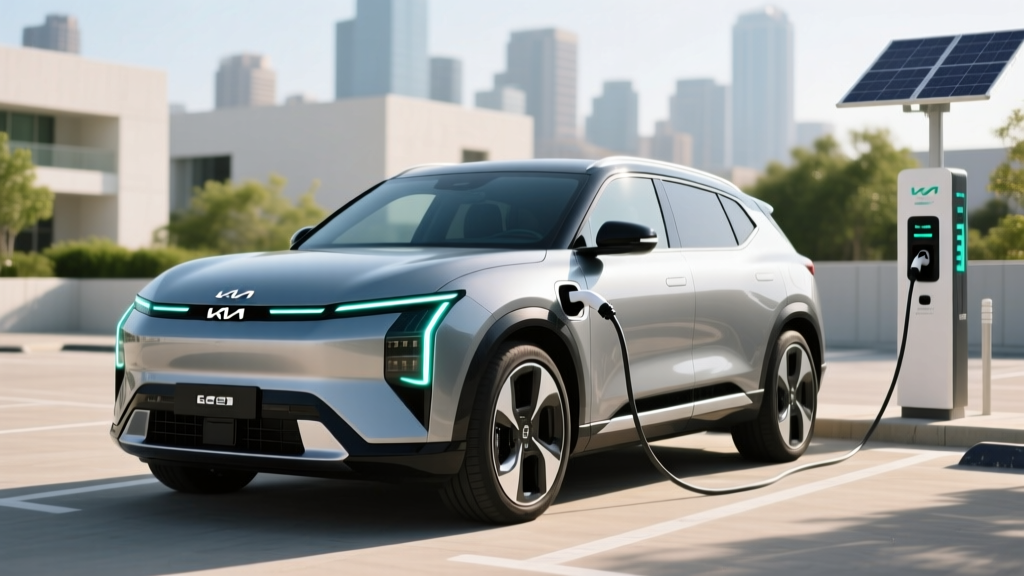
The 2023 Kia EV9 arrived as one of the first mainstream three-row electric SUVs to hit the US market, aiming squarely at families who need genuine passenger and cargo space without burning fossil fuels. Built on Hyundai Motor Group's E-GMP platform—the same architecture underpinning the Ioniq 5 and EV6—the EV9 scales that 800-volt electrical system up to a full-size SUV footprint. But does a 5,000-pound electric haulier actually deliver on the spec sheet when you factor in highway driving, cold weather, and real charging infrastructure? Here's the data-driven breakdown.
2023 Kia EV9 Quick Specs at a Glance
| Specification | Light Long Range (RWD) | Wind / Land AWD |
|---|---|---|
| EPA Range | 304 miles | 270–282 miles |
| Battery (Usable) | 100.0 kWh (NMC) | 100.0 kWh (NMC) |
| Horsepower | 215 hp | 379 hp (GT-Line: 501 hp w/ boost) |
| 0–60 mph | 7.7 sec | 5.0 sec (GT-Line boost: 4.5 sec) |
| Drivetrain | Rear-Wheel Drive | Dual-Motor AWD |
| Max DC Fast Charge | ~210 kW peak | ~210 kW peak |
| 10–80% DC Time | ~24 minutes | ~24 minutes |
| Level 2 Home Charging | 10.9 kW (~30 mi/hr) | 10.9 kW (~30 mi/hr) |
| MPGe (Combined) | 83 MPGe | 85 MPGe (Wind AWD) |
| kWh/100 mi | 40 kWh | 39 kWh |
| Base MSRP | $54,900 | $59,900–$73,900 |
| Battery Warranty | 10 years / 100,000 miles | |
Range, Efficiency, and Real-World Expectations
Real-World Expectation: Plan for 230–260 miles on highway road trips at 70–80 mph. In sub-freezing temperatures (below 32°F), expect a 20–30% reduction—dropping effective range to roughly 190–230 miles. City driving with regenerative braking recovers closer to the EPA number.
The EV9's 100.0 kWh usable battery pack uses nickel-manganese-cobalt (NMC) chemistry, which prioritizes energy density over the extended cycle life of LFP (lithium iron phosphate). That trade-off makes sense for a large SUV needing maximum range from a single charge, but it means you'll want to follow the 20–80% daily charging rule to minimize long-term degradation.
Per fueleconomy.gov, the RWD Light Long Range achieves 83 MPGe combined (40 kWh/100 mi), while the AWD Wind trim edges slightly higher at 85 MPGe (39 kWh/100 mi). These efficiency figures are competitive for a three-row electric SUV, though the Rivian R1S and Tesla Model X post marginally better numbers thanks to lighter weight or more aerodynamic profiles.
The EV9 does come equipped with a standard heat pump across all trims—a critical feature that mitigates cold-weather range loss by scavenging waste heat from the powertrain rather than relying solely on resistive cabin heating. In our experience, the heat pump keeps winter efficiency degradation closer to 20% rather than the 30–40% seen in EVs without one.
Charging Speed: DC Fast, Level 2, and the 800-Volt Advantage
The EV9's 800-volt electrical architecture is its most underappreciated asset. While many competitors still run 400-volt systems, the higher voltage allows the EV9 to accept higher charge rates without requiring excessively thick (and heavy) cabling. Here's what that translates to at the plug:
| Charging Level | Power | Speed / Notes |
|---|---|---|
| Level 1 (120V household) | ~1.4 kW | ~4 miles per hour — emergency/trickle only |
| Level 2 (240V home/public) | 10.9 kW | ~30 miles per hour — full charge in ~10 hours |
| DC Fast Charge (CCS) | Up to ~210 kW peak | 10–80% in ~24 min on a 350 kW charger |
| DC Fast (NACS adapter) | Up to ~210 kW peak | Tesla Supercharger access via included adapter (2025+) |
Charging curve reality check: The ~210 kW peak rate is only sustained between roughly 10–40% state of charge. Above 60%, the rate tapers to approximately 100–120 kW, and above 80% it drops further to protect battery health. This is normal behavior for NMC packs, but it means your last 20% takes disproportionately longer—plan your road-trip stops to charge from 10% to 80% and move on rather than waiting for a full top-off.
For home Level 2 charging, the 10.9 kW onboard charger replenishes about 30 miles of range per hour. A full overnight session (10 hours on a 48-amp Level 2 circuit) easily refills the pack from 20% to 100%. Installation of a home Level 2 charger typically runs $500–$2,000 for the equipment and electrician labor, depending on your panel capacity and run distance. Note: you'll want a 200-amp electrical panel minimum; older homes with 100-amp service may need a panel upgrade ($1,500–$3,000 additional).
Performance and Driving Dynamics
The base RWD Light Long Range sends 215 hp to the rear wheels, achieving a 7.7-second 0–60 mph time. That's adequate for merging and passing but won't thrill anyone stepping out of a performance sedan. The dual-motor AWD models are a different story: the Wind and Land trims produce 379 hp and hit 60 mph in 5.0 seconds, while the GT-Line with its boost function unlocks 501 hp and a 4.5-second sprint.
All trims ride on a multi-link rear suspension with optional adaptive dampers (standard on GT-Line). The EV9's 5,000+ pound curb weight is well-managed, with minimal body roll in corners and composed highway manners. The steering is numb by enthusiast standards but appropriately weighted for a family hauler. Regenerative braking offers multiple levels via steering-wheel paddles, including a full one-pedal driving mode (i-Pedal) that brings the EV9 to a complete stop without touching the brake pedal.
Towing capacity reaches 5,000 pounds on AWD models when equipped with the factory tow hitch—enough for a small camper or boat trailer. However, towing will cut range roughly in half, so plan accordingly on long hauls.
Interior Space, Tech, and Daily Livability
The EV9's three-row cabin is where it justifies its premium pricing over two-row alternatives. Here are the key dimensions:
- First-row legroom: 41.4 inches
- Second-row legroom: 42.8 inches (best-in-class for the segment)
- Third-row legroom: 32.0 inches (usable for children or short-trip adults)
- Cargo behind 3rd row: 20.2 cu ft
- Cargo behind 2nd row (folded): 43.5 cu ft
- Cargo behind 1st row (all folded): 81.7 cu ft
- Frunk (front trunk): 1.8 cu ft (RWD) / 0.9 cu ft (AWD)
The second-row space is genuinely impressive—adults can sit comfortably for long trips, and available captain's chairs with power recline and relaxation mode (Land trim and above) rival premium minivans. The third row, while tighter, is more usable than most competitors' token rearmost seats.
On the tech front, the EV9 runs a dual 12.3-inch display setup (instrument cluster + infotainment) with wireless Apple CarPlay and Android Auto. The infotainment system is responsive, though Kia's decision to use a mix of touch controls and physical buttons for climate is a practical win. Over-the-air (OTA) updates keep the software current, and the available digital side mirrors (replacing traditional mirrors with cameras) reduce wind noise at the cost of a learning curve.
Driver assistance comes via Kia's Highway Driving Assist 2 (HDA2), a Level 2 system per SAE classification. HDA2 provides adaptive cruise control, lane centering, and automated lane changes when the driver activates the turn signal—but it is not self-driving. The driver must remain engaged with hands on the wheel at all times. It's a competent system for reducing highway fatigue, comparable to Hyundai's HDA2 and a step below GM's Super Cruise in hands-free capability.
Pricing, Trims, and Federal Tax Credit Eligibility
The 2023 Kia EV9 launched with the following MSRP structure (destination charge included):
| Trim | MSRP | §30D Credit Eligibility |
|---|---|---|
| Light RWD (base) | $54,900 | Eligible (if battery sourcing + income caps met) |
| Light Long Range RWD | $59,900 | Eligible |
| Wind AWD | $63,900 | Eligible |
| Land AWD | $69,900 | Eligible |
| GT-Line AWD | $73,900 | Eligible |
Federal tax credit (§30D) details: The EV9 may qualify for up to $7,500 under the IRS clean vehicle credit, but eligibility is not automatic. Per IRS guidelines, the following requirements must be met:
- MSRP cap: The EV9's base MSRP must not exceed $80,000 for SUVs — all 2023 trims clear this threshold.
- Buyer income limits: Modified AGI must not exceed $150,000 (single), $225,000 (head of household), or $300,000 (joint filers).
- Battery sourcing: The vehicle's battery must meet critical-mineral and battery-component requirements that phase in annually. The EV9's battery is assembled in Georgia (via Hyundai Motor Group's Metaplant), and sourcing compliance has evolved yearly since 2023.
- Point-of-sale transfer: Beginning in 2024, buyers can transfer the credit to the dealer for an immediate price reduction at purchase rather than waiting to claim it on their tax return.
- Final assembly: Must occur in North America — the EV9 is assembled in West Point, Georgia, meeting this requirement.
Note: Tax credit eligibility rules change frequently. Always verify current requirements on IRS.gov and consult a tax professional before making a purchase decision based on credit assumptions.
EV9 vs. the Competition: Is It Worth Buying?
- You need a genuine three-row electric SUV with adult-usable second-row seating
- 800V fast-charging architecture is a priority for road trips
- You want a 10-year/100,000-mile battery warranty for peace of mind
- You prefer a more traditional SUV driving position over futuristic pod designs
- You value physical climate controls alongside touchscreen infotainment
- You need over 320 miles of range (consider the Tesla Model X or Rivian R1S Max Pack)
- You want hands-free Level 2+ driving (GM's Super Cruise on the Cadillac Escalade IQ is superior)
- Budget is under $50,000 (the EV9's base price exceeds this; consider a used EV6 or Ioniq 5)
- You only need two rows of seats (the EV6 or Ioniq 5 offer similar tech at lower cost and weight)
- You want LFP battery chemistry for maximum longevity (the EV9 uses NMC)
Against the Rivian R1S, the EV9 trades some off-road capability and adventure credibility for lower pricing, faster DC charging (Rivian's peak is ~220 kW but its charge curve tapers earlier), and a more refined highway ride. The R1S offers a Max Pack with 400+ miles of range but at a significant cost premium.
The Tesla Model X still leads on range (348 miles EPA for Long Range) and Supercharger network exclusivity, but it costs significantly more, and its third-row space is tighter. Build quality and interior materials on the EV9 also edge out the Model X in most evaluations.
The Cadillac Escalade IQ and Mercedes EQS SUV compete in a higher luxury tier, offering more power and prestige but at $100,000+ price points that put them in a different conversation entirely.
Pros, Cons, and Ownership Verdict
- 800V architecture enables ~24-minute 10–80% DC fast charging
- Class-leading second-row legroom (42.8 in.)
- Standard heat pump reduces cold-weather range penalty
- 10-year/100,000-mile battery and powertrain warranty
- Competitive starting price for a three-row electric SUV
- NACS adapter access to Tesla Supercharger network
- Strong 5,000-lb towing capacity (AWD models)
- Real-world highway range drops to ~230–260 miles (AWD)
- RWD base model's 7.7-second 0–60 feels sluggish for the price
- Third-row legroom (32 in.) is tight for adults on long trips
- Infotainment learning curve with layered menus
- No hands-free driving mode (HDA2 requires hands on wheel)
- Frunk space is minimal (under 2 cu ft)
Who the EV9 suits best: Families who need three rows for school runs, carpools, and road trips—and who have access to home Level 2 charging. The EV9 is an excellent daily driver for suburban commuters with a two-car garage (one EV, one backup for long tows or remote destinations). It's less ideal for apartment dwellers without charging access or for buyers whose primary use case involves regular 300+ mile drives through areas with sparse DC fast-charging infrastructure.
2023 Kia EV9 Frequently Asked Questions
What is the real-world range of the 2023 Kia EV9?
The EPA rates the EV9 at 270–304 miles depending on trim and drivetrain. In real-world highway driving at 70–80 mph, expect 230–260 miles from AWD models and 250–280 from the RWD. Cold weather (below 32°F) can reduce range by an additional 20–30%, though the standard heat pump helps mitigate this loss compared to EVs without one.
How fast does the EV9 charge at home and on the road?
On a Level 2 home charger (240V, 48A), the EV9 charges at 10.9 kW, adding about 30 miles of range per hour—a full overnight session replenishes the battery. On a 350 kW DC fast charger, it peaks at approximately 210 kW and charges from 10–80% in about 24 minutes. Charge speed tapers significantly above 80% to protect battery health.
Does the 2023 Kia EV9 qualify for the $7,500 federal tax credit?
The EV9 can qualify for up to $7,500 under IRS §30D, but only if the buyer meets income caps ($150K single / $300K joint), the vehicle meets battery-sourcing requirements, and the MSRP is under $80,000 (all EV9 trims qualify on price). Final assembly occurs in Georgia, meeting the North America requirement. Always verify current eligibility on IRS.gov, as sourcing rules update annually.
Is the Kia EV9 worth buying over the Rivian R1S or Tesla Model X?
The EV9 offers the best value proposition for families prioritizing fast charging, interior space, and warranty coverage at a relatively accessible price. The Rivian R1S wins on off-road capability and available range (Max Pack), while the Tesla Model X leads on EPA range and Supercharger access. If budget is a primary concern and you need three rows, the EV9 is the strongest pick in its price tier.
How long will the EV9's battery last?
Kia covers the battery pack with a 10-year/100,000-mile warranty that guarantees at least 70% capacity retention. With NMC chemistry and proper charging habits (avoiding frequent 100% charges and deep discharges), real-world degradation typically averages 1–2% per year, meaning the pack should retain 85–90% of original capacity after 100,000 miles.
Can the EV9 use Tesla Superchargers?
Yes. Kia provides a NACS (North American Charging Standard) adapter that allows the EV9 to access Tesla's Supercharger network. The EV9's native port is CCS1, and the adapter converts it to NACS. Supercharger speeds will be limited by the EV9's peak acceptance rate (~210 kW), which is well within most V3 and V4 Supercharger capabilities.
Is Highway Driving Assist 2 (HDA2) self-driving?
No. HDA2 is a Level 2 driver-assistance system per SAE classification. It provides adaptive cruise control, lane centering, and assisted lane changes, but the driver must keep hands on the steering wheel and remain fully engaged at all times. It is not autonomous driving and does not replace driver attention.
Sources: EPA fueleconomy.gov, IRS §30D Clean Vehicle Credits, Kia America EV9 specifications.