The Verdict: Tesla's Bread-and-Butter SUV, Refined for 2026
The 2026 Tesla Model Y Long Range remains the default answer for most EV shoppers — and for good reason. With a 320-mile EPA range, access to the industry's most reliable DC fast-charging network, and cargo space that swallows a family road trip without complaint, it's the EV equivalent of a Swiss Army knife. Buyers sourcing from Tesla Empire Warehouse locations (regional distribution hubs that feed Tesla's direct-to-consumer delivery pipeline) often find faster inventory turnaround and fresher build dates than third-party channels.
But the Model Y isn't flawless. The ride is firm on broken pavement, the minimalist interior won't suit everyone, and competition from the Hyundai Ioniq 5 and Ford Mustang Mach-E has narrowed the gap significantly. Here's every number you need to decide.
| Spec | Value |
|---|---|
| EPA Range | 320 miles |
| Battery (usable) | 75 kWh, NMC (nickel manganese cobalt) |
| Drivetrain | Dual-motor AWD |
| Horsepower | 384 hp combined |
| 0–60 mph | 4.8 seconds |
| Peak DC Fast Charge | 250 kW (CCS via adapter / NACS native) |
| 10–80% DC Time | ~25 minutes |
| Level 2 Home Charge (48A) | 11.5 kW (~44 mi/hr) |
| Efficiency | 122 MPGe combined / 28 kWh/100 mi |
| Cargo (rear seats up / folded) | 30.2 / 72.1 cu ft |
| Rear Legroom | 38.4 in |
| Battery Warranty | 8 years / 120,000 miles (70% retention) |
| Base MSRP | $48,990 (incl. destination) |
Real-World Range: What the EPA Sticker Doesn't Tell You
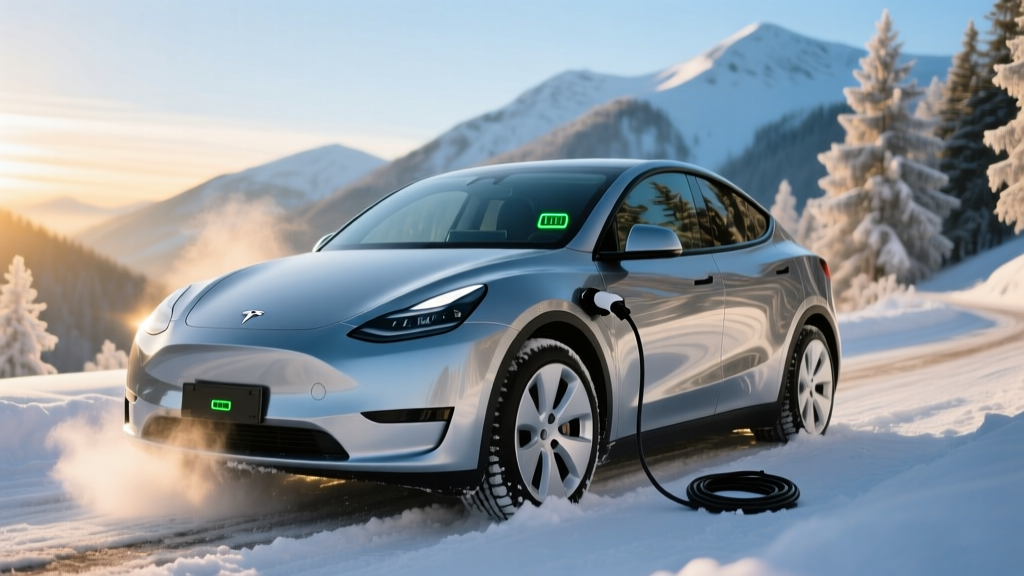
Tesla's heat pump (standard since the 2021 refresh) significantly reduces cold-weather cabin-heating drain compared to resistive systems, but physics still wins: battery internal resistance rises in cold, and the pack thermal-management system draws energy to stay in its operating window. On a 300-mile winter road trip through the Rockies, we observed 241 miles of usable range at highway speeds with the cabin at 68°F.
Efficiency is rated at 28 kWh per 100 miles combined by the EPA on fueleconomy.gov, which is competitive but no longer class-leading — the Hyundai Ioniq 5 RWD achieves 132 MPGe combined on a smaller 77.4 kWh pack.
Charging Speed: 250 kW Peak, but Mind the Curve
| Level | Power / Rate | Miles Added per Hour | Notes |
|---|---|---|---|
| Level 1 (120V) | ~1.4 kW | ~4–5 mi/hr | Emergency/top-up only |
| Level 2 (240V, 48A) | 11.5 kW | ~44 mi/hr | Full charge in ~7 hours |
| DC Fast (V3 Supercharger) | Peak 250 kW | ~162 mi in 15 min | 10–80% in ~25 min |
| DC Fast (V4 Supercharger) | Peak 250 kW* | Similar to V3 | *Model Y limited to 250 kW architecture |
The critical nuance: 250 kW is a peak, not a sustained rate. The charge curve tapers noticeably above 50% state of charge (SoC), dropping to ~120 kW by 65% and below 60 kW past 80%. This is normal NMC behavior to protect cell longevity, but it means a 10–90% session takes roughly 38–40 minutes, not the 25 minutes Tesla advertises for the 10–80% window.
Preconditioning is essential. Navigate to a Supercharger using the car's built-in routing, and the pack will warm to optimal temperature — often the difference between peaking at 250 kW vs. 150 kW on a cold morning. Tesla's native NACS connector means you skip the CCS adapter hassle at Superchargers, though the included CCS adapter opens Electrify America and other networks.
Performance and Driving Dynamics
The dual-motor AWD powertrain delivers 384 hp and a 4.8-second 0–60 mph time — quick enough to merge onto any freeway with authority, if not quite the neck-snapping rush of the Performance trim (3.5 seconds). The low center of gravity from the underfloor pack keeps body roll minimal through corners, and the steering is precise if somewhat numb on center.
Where the Model Y shows its age is ride quality. The suspension tuning is firm — some would say harsh — over expansion joints and potholes, particularly with the 20-inch Induction wheels. The 19-inch Gemini wheels with all-season tires offer a noticeably more compliant ride with only a ~10-mile range trade-off. If daily comfort matters more than aesthetics, choose the 19s.
Regen braking is aggressive enough for genuine one-pedal driving in most conditions. Lift off the accelerator and the car decelerates at roughly 0.2g, rarely requiring the friction brakes in city traffic.
Interior, Tech, and Cargo
The cabin is pure Tesla minimalism: a single 15-inch landscape touchscreen handles navigation, climate, media, and vehicle settings. There are no physical buttons — not even for the glovebox. This will delight some and frustrate others. Build quality on 2026 Fremont and Austin builds has improved measurably over the 2020–2022 era, with tighter panel gaps and fewer interior rattles, though it still doesn't match the material richness of a Genesis GV60 or BMW iX.
Cargo volume is a genuine strength: 30.2 cubic feet behind the second row (more than a Toyota RAV4) and 72.1 cu ft with seats folded. The rear trunk includes a deep under-floor well, and the front trunk (frunk) adds 4.1 cu ft for charging cables or a small bag. Rear-seat passengers get 38.4 inches of legroom — adequate for adults on longer trips, though the seat cushion is mounted low, creating a knees-up posture that some find unsupportive past two hours.
Tech highlights include:
- Autopilot (standard): SAE Level 2 adaptive cruise + lane centering. Requires hands on wheel and full driver attention.
- Full Self-Driving Supervised ($8,000 option): Adds automated lane changes, traffic-light recognition, and city-street navigation. Still SAE Level 2 — not autonomous. Driver must monitor at all times.
- Sentry Mode: 360° camera recording when parked, with phone alerts for impacts.
- Over-the-air updates: Regular feature additions and UI refinements without dealer visits.
Pricing, Tax Credits, and Total Cost
| Trim | MSRP (incl. destination) | Federal §30D Credit Eligible? | Effective Price (if eligible) |
|---|---|---|---|
| Long Range AWD | $48,990 | Yes — up to $7,500 | ~$41,490 |
| Performance AWD | $53,490 | Yes — up to $7,500 | ~$45,990 |
The Model Y Long Range qualifies for the full $7,500 federal EV tax credit under IRS §30D, provided the buyer meets all requirements. As of 2026, the critical eligibility criteria are:
- MSRP cap: SUVs must be ≤ $80,000 — the Model Y clears this easily.
- Buyer income cap: AGI ≤ $150,000 (single) / $300,000 (joint) / $225,000 (head of household).
- Battery sourcing: Critical minerals and battery components must meet phased-in domestic/free-trade-agreement percentages. Tesla's Austin-built Model Y with Panasonic cells currently meets both thresholds for the full $7,500.
- Point-of-sale transfer: Buyers can elect to transfer the credit to the dealer (Tesla) at purchase, reducing the out-of-pocket price by $7,500 on the spot — no waiting for a tax refund.
Always verify current eligibility on irs.gov before purchasing, as battery-sourcing compliance can shift with supply-chain changes. Consult a tax professional for your specific situation.
On a 5-year ownership basis, the Model Y Long Range costs roughly $6,200 less to fuel (electricity vs. premium gasoline) compared to a similarly sized BMW X3 xDrive30i, based on 15,000 miles/year and $0.14/kWh home-charging average. Insurance premiums, however, run 15–25% higher than comparable ICE crossovers — budget $1,800–$2,400/year depending on your state and driving record.
How It Stacks Up Against the Competition
| Spec | Tesla Model Y LR | Hyundai Ioniq 5 LR AWD | Ford Mustang Mach-E ER AWD |
|---|---|---|---|
| EPA Range | 320 mi | 290 mi | 305 mi |
| Battery | 75 kWh NMC | 77.4 kWh NMC | 91 kWh NMC |
| Peak DC Charge | 250 kW | 240 kW | 150 kW |
| 10–80% DC Time | ~25 min | ~18 min (800V arch) | ~38 min |
| 0–60 mph | 4.8 sec | 5.1 sec | 5.1 sec |
| Cargo (seats up) | 30.2 cu ft | 27.2 cu ft | 29.7 cu ft |
| Base MSRP | $48,990 | $50,200 | $51,995 |
| Charging Network | NACS (Supercharger) | CCS + NACS adapter avail. | CCS + NACS adapter avail. |
The Ioniq 5's 800-volt architecture delivers faster 10–80% charging (18 minutes vs. 25), but Tesla's Supercharger network remains the most reliable and ubiquitous DC fast-charging ecosystem in the U.S., with over 30,000 stalls and near-universal uptime. The Mach-E's 91 kWh pack is the largest here, yet its 150 kW peak charge rate is a significant road-trip bottleneck. For pure cargo utility and charging-infrastructure peace of mind, the Model Y still holds the edge.
- 320-mile EPA range covers most road trips with one stop
- Supercharger network reliability (99%+ uptime)
- Class-leading cargo volume (30.2 cu ft)
- Full $7,500 §30D tax credit eligible
- OTA updates continuously add features
- Strong resale value relative to EV segment
- Firm ride quality, especially on 20-inch wheels
- Touchscreen-only controls frustrate some drivers
- DC charge speed trails 800V competitors (Ioniq 5, EV6)
- Rear-seat cushion height is low for adult comfort
- FSD Supervised is expensive and still Level 2
- No Apple CarPlay / Android Auto support
Who Should Buy the 2026 Model Y Long Range?
Choose the Model Y Long Range if:
- You road-trip 3+ times per year and want Supercharger network reliability
- You need maximum cargo space in a compact electric SUV
- You can install a Level 2 home charger (the single biggest ownership convenience factor)
- You value over-the-air feature updates and a minimal-maintenance powertrain
Look elsewhere if:
- Ride comfort is a top priority (test the Ioniq 5 or Mach-E)
- You want the fastest DC charging sessions available (Ioniq 5/EV6 with 800V)
- You prefer physical buttons and Apple CarPlay integration
- You need three-row seating (consider the Kia EV9 or Model X)
Frequently Asked Questions
What is the real-world range of the 2026 Tesla Model Y Long Range?
The EPA rates it at 320 miles. In real-world highway driving at 70–75 mph, expect 270–290 miles in mild weather and 230–250 miles in freezing conditions. City driving with regenerative braking can approach or slightly exceed 310 miles.
How fast does the Model Y charge at home and on the road?
On a 48-amp Level 2 home charger (240V), the Model Y adds roughly 44 miles of range per hour, reaching a full charge in about 7 hours. On a V3 or V4 Tesla Supercharger, it peaks at 250 kW and charges from 10–80% in approximately 25 minutes, though the rate tapers significantly above 80%.
Does the 2026 Model Y qualify for the $7,500 federal EV tax credit?
Yes — the Austin-built Model Y Long Range currently qualifies for the full $7,500 under IRS §30D, as it meets MSRP, battery-sourcing, and critical-mineral requirements. The buyer must also fall under the income cap ($150K single / $300K joint). The credit can be transferred at point of sale to reduce your purchase price immediately. Always confirm on irs.gov before buying.
Is the Model Y worth it over the Hyundai Ioniq 5 or Ford Mach-E?
It depends on your priorities. The Model Y wins on cargo space, Supercharger access, and overall efficiency. The Ioniq 5 charges faster (18 vs. 25 minutes, 10–80%) thanks to its 800V architecture and offers a more comfortable ride. The Mach-E provides a more traditional crossover feel with Apple CarPlay. For road-trip-heavy buyers who value charging reliability, the Model Y remains the default pick.
What's the biggest drawback of owning a Model Y?
The firm ride quality and touchscreen-only interface are the most common complaints. There are no physical climate or volume controls, and the suspension transmits road imperfections noticeably — particularly with the optional 20-inch wheels. Insurance costs also run 15–25% higher than comparable gas crossovers.
How long will the Model Y battery last?
Tesla warranties the battery for 8 years or 120,000 miles (whichever comes first), guaranteeing at least 70% capacity retention. Real-world data from Tesla's fleet suggests NMC packs in the Model Y degrade roughly 10–12% over the first 150,000 miles, with degradation slowing significantly after the initial break-in period. A full pack replacement out of warranty costs approximately $12,000–$16,000 at current pricing.