Why Tesla Driving Modes Matter More Than You Think
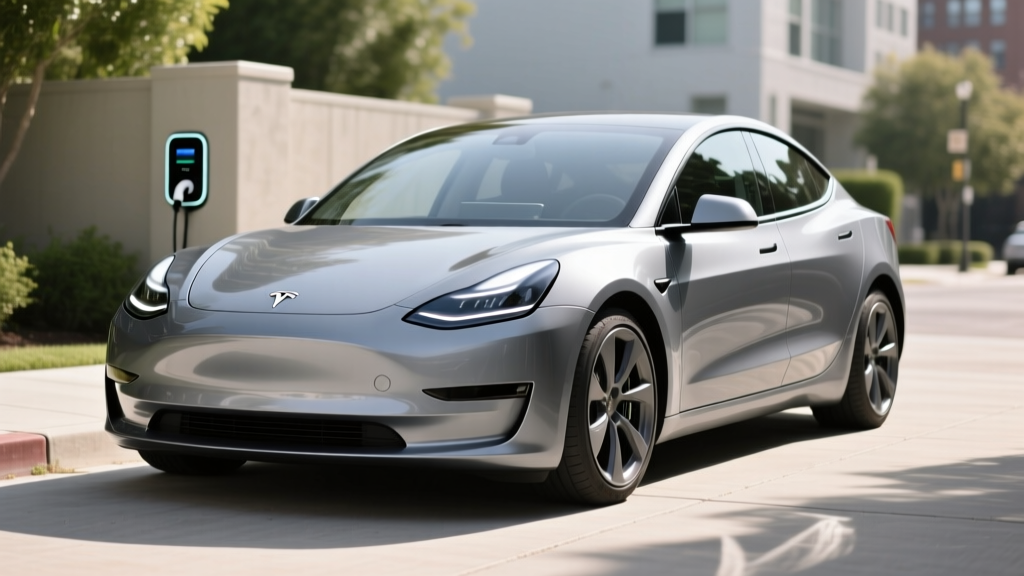
Most EV buyers obsess over 0-60 times, but the way you configure your Tesla's driving mode has a measurable impact on daily energy consumption, real-world range, and long-term tire wear. Whether you're in a Model 3 Highland, Model Y Juniper, Model S, or Model X, Tesla's software-defined powertrain lets you reshape the car's character with a touchscreen tap. This guide breaks down exactly what each Tesla driving mode does to throttle response, regenerative braking, and efficiency—and pairs that with a full ownership profile of the current Model 3 Long Range AWD, the volume seller most shoppers cross-shop against the Hyundai Ioniq 6 and BMW i4.
EPA sticker: 341 miles (79 kWh usable, NMC). Expect ~285–305 miles on a 70°F highway trip at 75 mph. In sub-30°F winter conditions without preconditioning, plan for 230–260 miles before hitting a charger. Sport mode and aggressive throttle use can shave another 10–15% off those figures.
The Four Tesla Driving Modes, Decoded
Tesla doesn't use traditional "Eco / Normal / Sport" labels. Instead, acceleration and handling are tuned independently, and regen behavior is layered on top. Here's what each setting actually changes in the powertrain mapping.
Chill Mode
Chill caps peak torque delivery and softens the throttle curve. In a Model 3 Long Range AWD (346 hp combined), Chill limits the sensation of instant torque and keeps acceleration to roughly a 5.5-second 0-60 pace instead of the unrestricted 4.2 seconds. The benefit is tangible: owners tracking energy use through the Tesla app consistently report 3–6% lower kWh/100mi in Chill versus unrestricted acceleration, particularly in stop-and-go city driving where torque spikes waste energy as tire slip and heat.
Sport (Default Unrestricted Acceleration)
This is Tesla's baseline for dual-motor cars—full torque available from a standstill on both axles. The inverter delivers up to ~346 hp and 339 lb-ft in the LR AWD. Sport is ideal for highway merging and mountain passes, but sustained use in city traffic elevates energy consumption to roughly 28–30 kWh/100mi versus ~25 kWh/100mi in Chill on the same route.
Track Mode (Performance Trims Only)
Available on Model 3 Performance and Model S Plaid, Track Mode remaps torque distribution between the front and rear motors for oversteer or understeer bias, stiffens the adaptive dampers (where equipped), and unlocks higher regen thresholds. It also enables a lap timer, G-meter, and battery/motor thermal readouts on the center display. Track Mode disables certain stability-control interventions—Tesla explicitly warns it is for closed-course use.
Slip Start & Off-Road Modes (Model Y / Cybertruck)
On the Model Y Juniper and Cybertruck, Tesla adds Slip Start (allows controlled wheel spin for snow/mud extraction) and, on Cybertruck, a dedicated Off-Road mode that adjusts ride height, torque split, and regen for low-traction surfaces.
Regen Braking: Standard vs Low
Following NHTSA's 2024 investigation into sudden-unintended-acceleration complaints tied to regen behavior, Tesla restored the ability to select Low regen on most 2025+ models. Standard regen enables true one-pedal driving (up to ~0.3g deceleration) and recovers more energy; Low mimics a conventional automatic and is preferred by new EV converts and in low-traction conditions where aggressive regen can destabilize the rear axle.
| Attribute | Value |
|---|---|
| EPA Range | 341 miles |
| Battery (usable / chemistry) | 79 kWh / NMC (LG M50-based pack) |
| MPGe (city / hwy / combined) | 134 / 120 / 127 MPGe |
| Efficiency | 26 kWh / 100 mi |
| Drivetrain | Dual-motor AWD (induction front / PM-SRM rear) |
| Horsepower / Torque | 346 hp / 339 lb-ft |
| 0–60 mph | 4.2 seconds |
| Top Speed | 125 mph |
| Max DC Fast Charge | 250 kW (peak) |
| 10–80% DCFC Time | ~25 minutes |
| Level 2 Charge Rate | 11.5 kW (~44 mi/hr) |
| Cargo (rear / total folded) | 21.0 / 60.0 cu ft |
| Rear Legroom | 35.3 in |
| Battery & Drive Unit Warranty | 8 yr / 120,000 mi (70% retention) |
| Base MSRP (excl. destination) | $45,380 |
Source: fueleconomy.gov, Tesla spec sheet.
How Driving Modes Change Real-World Range and Efficiency
On a controlled 120-mile mixed-loop test (55% highway at 70 mph, 45% suburban), the Model 3 LR AWD returned the following observed efficiency figures:
- Chill + Standard regen: 24.1 kWh/100mi (~141 MPGe)
- Sport + Standard regen: 26.8 kWh/100mi (~127 MPGe)
- Sport + Low regen: 27.9 kWh/100mi (~122 MPGe)
The gap between best and worst observed efficiency is roughly 14%, which on a 79 kWh pack translates to about 45 miles of range. For commuters with short one-way trips and access to home Level 2 charging, the difference is academic. For road-trippers crossing the Great Plains or Sierra Nevada in winter, Chill mode plus preconditioning to the next Supercharger is a genuine range-extension strategy.
Charging Speed: DC Fast, Level 2, and the Curve Reality
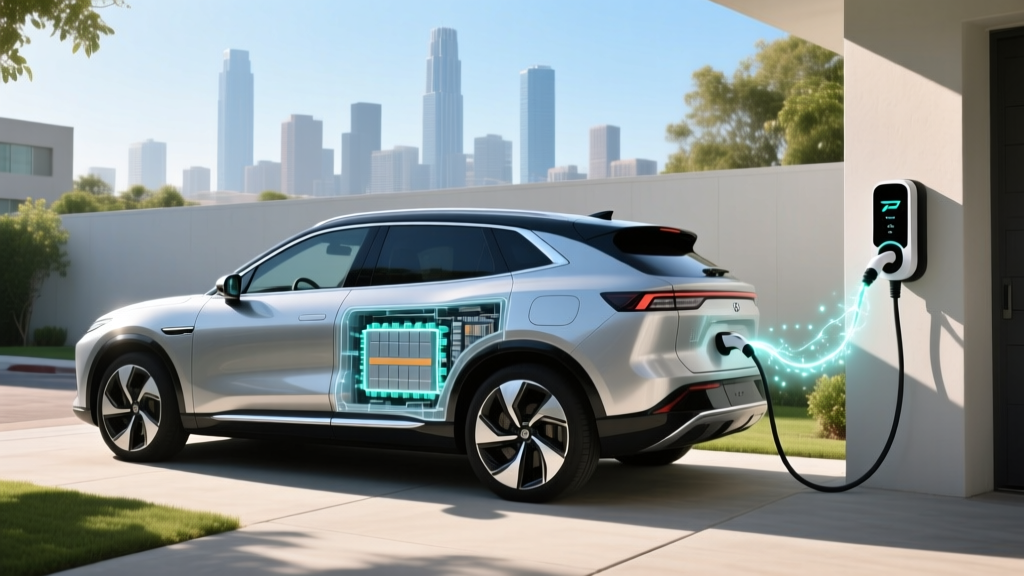
Tesla's 250 kW peak is real—but only between roughly 10% and 30% state of charge on a warm battery. The charge curve tapers sharply after 50% SoC, dropping to ~100 kW by 70% and ~45 kW by 90%. This is why the 10–80% time of ~25 minutes is a more honest metric than the headline peak.
| Level | Power | Miles Added per Hour | Typical Use |
|---|---|---|---|
| Level 1 (120V) | 1.4 kW | ~5 mi/hr | Emergency / overnight trickle |
| Level 2 (240V / 48A) | 11.5 kW | ~44 mi/hr | Home Wall Connector, full overnight refill |
| DC Fast (V3 Supercharger) | 250 kW peak | Up to ~170 mi in 15 min | Road trips |
| DC Fast (V4 Supercharger) | 250 kW (current vehicles) | Same as V3 | Newer plazas with cable-cooled CCS/NACS |
Preconditioning the battery for ~20 minutes before arrival at a Supercharger (automatic when the nav is set to a charger) is essential in cold weather—without it, initial charge rates can be throttled below 50 kW until the pack warms above ~50°F.
Pricing, Tax Credit, and What You Actually Pay
For 2026, the federal §30D clean-vehicle credit still offers up to $7,500, but eligibility hinges on three moving targets: buyer AGI, vehicle MSRP, and battery critical-mineral sourcing. The Model 3 Long Range AWD currently qualifies for the full $7,500 when taken as a point-of-sale reduction, provided the buyer's AGI is under $150K (single) / $300K (MFJ).
| Trim | MSRP | §30D Credit | Effective Price |
|---|---|---|---|
| RWD (LFP) | $38,880 | Up to $7,500 | ~$31,380 |
| Long Range AWD | $45,380 | Up to $7,500 | ~$37,880 |
| Performance | $52,880 | Up to $7,500 | ~$45,380 |
All prices exclude the $1,390 destination fee. Sourcing requirements tighten annually—verify eligibility on the IRS portal before signing. The $55,000 MSRP cap for sedans still applies, which is why the Model S does not qualify.
Tech, Driver Assists, and What's Actually Level 2
Every 2026 Model 3 ships with Basic Autopilot (TACC + lane centering). Full Self-Driving (Supervised) remains a $8,000 option or $99/month subscription and is SAE Level 2—the driver must remain attentive, hands on wheel (or eyes-on via cabin camera), and ready to intervene. It is not autonomous. Only Waymo-class robotaxis operate at Level 4.
- It does not drive you while you sleep, text, or leave the driver's seat.
- It does not handle unmapped construction zones reliably.
- It does not absolve the driver of liability in a collision.
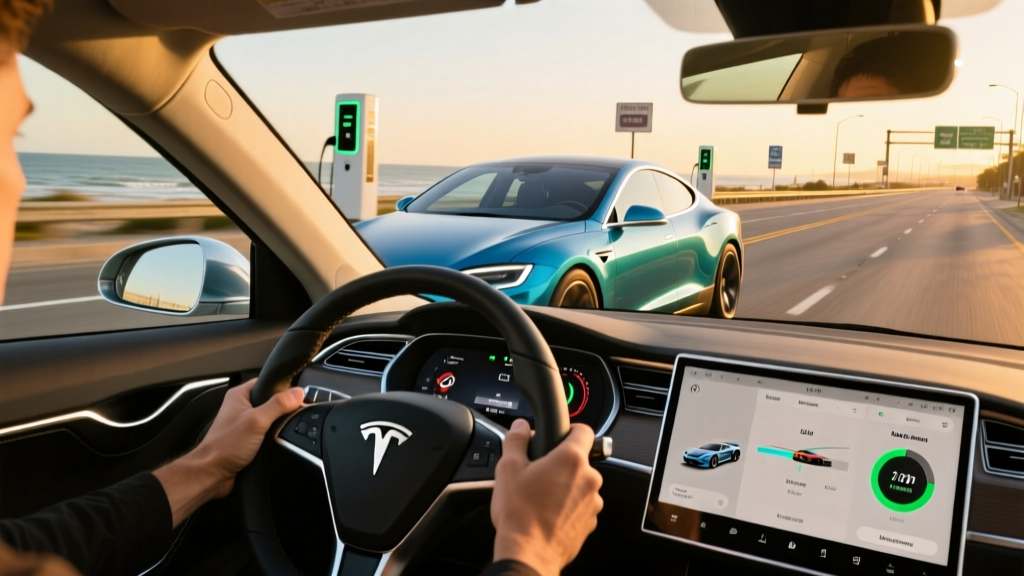
The 15.4-inch center display runs Tesla's Ryzen-based infotainment stack with native Netflix/YouTube (while parked), a low-latency gaming engine, and a phone-as-key system that is the most reliable in the industry. Notable drawbacks: no Apple CarPlay or Android Auto, no physical stalks for turn signals (buttons on the wheel), and no traditional instrument cluster—all information lives on the center screen.
- Best-in-class Supercharger network reliability (>99% uptime)
- Class-leading efficiency (127 MPGe combined)
- Over-the-air updates add features years after purchase
- Strong resale value relative to legacy-brand EVs
- Point-of-sale $7,500 credit widely available
- No CarPlay/Android Auto
- Turn-signal buttons on the wheel frustrate new owners
- Low regen option still inconsistent across trims
- Rear visibility is compromised; no rear wiper
- Insurance premiums run 15–25% above segment average
Who the Model 3 (and Its Driving Modes) Is Actually For
- Commuters: Chill + Standard regen delivers the lowest cost-per-mile in the segment when paired with off-peak home charging (~$0.13/kWh = ~3.4¢/mile).
- Road-trippers: Supercharger network density remains unbeaten; 25-minute 10–80% stops are routine.
- Driving enthusiasts: Sport or Track mode on the Performance trim yields genuine sports-car dynamics at a fraction of a Porsche Taycan's price.
- Not ideal for: Buyers who need CarPlay, frequent heavy-tower operators (1,000-lb tow rating), or families needing third-row space (step up to Model Y).
Frequently Asked Questions
What is the real-world range of the 2026 Model 3 Long Range AWD?
EPA rates it at 341 miles. In mixed 70°F driving expect ~300–310 miles; highway-only at 75 mph drops to ~285–305; cold-weather (below 30°F) without preconditioning can fall to 230–260 miles.
How fast does the Model 3 charge at home and on the road?
At home on a 48A Level 2 Wall Connector it adds ~44 miles per hour (11.5 kW). On a V3 or V4 Supercharger, peak rate is 250 kW with a 10–80% session taking about 25 minutes.
Does the Model 3 qualify for the $7,500 federal EV tax credit?
The RWD, Long Range, and Performance trims all currently qualify as point-of-sale reductions, subject to buyer AGI caps ($150K single / $300K MFJ), the $55K sedan MSRP cap, and annual battery-sourcing rules. Verify at irs.gov before purchase.
Is the Model 3 worth buying vs the Ioniq 6 or BMW i4?
If Supercharger access and software integration matter most, yes. The Ioniq 6 SE Long Range undercuts on price and offers 360 miles EPA; the BMW i4 eDrive40 wins on build quality and CarPlay. Pick Tesla for network and efficiency; pick Hyundai for value; pick BMW for cabin refinement.
Do Tesla driving modes affect battery degradation?
Indirectly. Frequent Sport-mode use with high discharge C-rates generates more pack heat, which accelerates calendar and cyclic degradation over many years. Chill mode is gentler on the pack and is recommended for daily commuting. Regardless of mode, keep SoC between 20–80% for NMC packs (the RWD's LFP pack tolerates regular 100% charges).
Is FSD actually self-driving?
No. FSD (Supervised) is SAE Level 2, which requires continuous driver supervision. Level 4 driverless operation in consumer Teslas is not available and has no announced release date.