Quick Verdict: Dojo Is Tesla's AI Engine, Not a Car Part
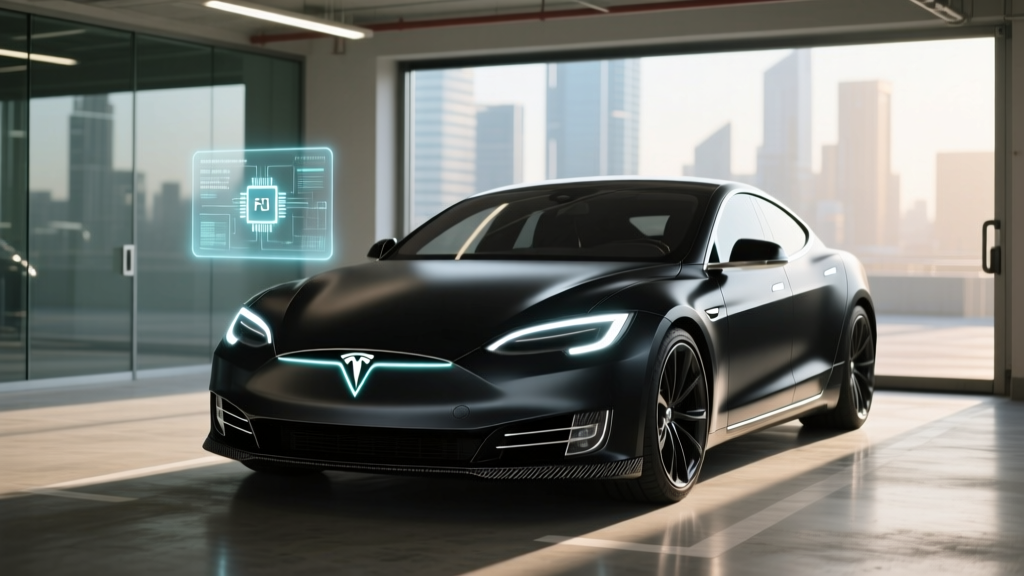
If you've been searching for the Tesla Dojo chip while researching your next EV purchase, the first thing to understand is that Dojo isn't a component inside any Tesla vehicle you can buy. It's the custom silicon at the heart of Tesla's supercomputer, purpose-built to train the neural networks that power Full Self-Driving (Supervised). In 2026, Dojo's influence is felt indirectly: it accelerates how quickly Tesla improves FSD, refines Autopilot, and optimizes vehicle efficiency through over-the-air updates. For buyers, the real question isn't whether a car has a Dojo chip — it's whether Tesla's AI-driven approach to driver assistance and vehicle optimization makes its 2026 lineup the right choice for your garage.
This review examines how Dojo fits into the Tesla ownership experience and evaluates the current 2026 Tesla lineup — focusing on the high-volume Model Y and Model 3 — through the lens of what Dojo-trained software actually delivers on the road.
What the Tesla Dojo Chip Actually Does
Tesla designed the Dojo D1 chip to process the enormous volumes of real-world driving video captured by Tesla's fleet. Rather than relying on third-party data-center GPUs alone, Tesla built a custom architecture optimized for vision-based neural network training. Each D1 chip delivers substantial compute throughput, and Tesla tiles these chips into integrated modules called Dojo ExaPODs, which collectively perform at the exaflop scale.
For context, training a single major FSD version requires processing billions of video frames. Dojo allows Tesla to iterate faster — compressing training cycles that once took weeks into days. According to Tesla's AI research pages, the Dojo system is designed specifically for video-level machine learning, handling the spatial and temporal complexity of driving scenarios that generic compute hardware processes less efficiently.
How Dojo Shapes the 2026 Tesla Lineup
Dojo's output reaches your Tesla through over-the-air (OTA) software updates. In 2026, the most visible results are in three areas:
- FSD (Supervised) capability: Smarter navigation of construction zones, unprotected left turns, and dense urban environments. Dojo-trained models have reduced intervention frequency on complex routes.
- Energy efficiency optimization: Tesla uses fleet data to refine thermal management, regenerative braking profiles, and powertrain calibration — squeezing incremental range from existing hardware.
- Safety systems: Improved object recognition, more precise emergency braking calibration, and better lane-keeping in degraded-visibility conditions.
The vehicles themselves still rely on the Hardware 4 (HW4) AI computer onboard, which handles real-time inference (the act of driving). Dojo handles training (learning how to drive better). Think of it as the difference between the classroom and the exam — Dojo is the classroom.
2026 Tesla Model Y: The Dojo Beneficiary Most Buyers Consider
The 2026 Model Y remains Tesla's best-selling vehicle globally and the primary canvas for Dojo-trained FSD improvements. Here are the specs that matter:
| Spec | Long Range AWD | Performance |
|---|---|---|
| EPA Range | 320 miles | 295 miles |
| Battery | ~78 kWh usable, NMC | ~78 kWh usable, NMC |
| Drivetrain | Dual-motor AWD | Dual-motor AWD |
| Horsepower | 384 hp | 456 hp |
| 0-60 mph | 4.8 sec | 3.5 sec |
| Max DC Charge | 250 kW | 250 kW |
| 10-80% DC Time | ~25 min | ~25 min |
| Level 2 Home Rate | ~44 mi/hr at 11.5 kW | ~44 mi/hr at 11.5 kW |
| MPGe (combined) | 111 MPGe | 102 MPGe |
| Cargo Volume | 72 cu ft (rear seats folded) | 72 cu ft (rear seats folded) |
| Base MSRP | $44,990 | $51,490 |
| Battery Warranty | 8 yr / 120,000 mi | 8 yr / 120,000 mi |
Charging: Dojo Doesn't Change Physics
No amount of AI training changes the fundamental charge curve of an NMC battery pack. The 2026 Model Y peaks at 250 kW on a Tesla V3 Supercharger, but that peak is sustained only between roughly 10-30% State of Charge (SoC). Above 50%, the rate tapers significantly, and above 80%, charging slows dramatically to protect battery health — a universal EV behavior, not a Tesla limitation.
| Charging Level | Power | Miles Added per Hour | Best Use Case |
|---|---|---|---|
| Level 1 (120V) | ~1.4 kW | ~4 mi/hr | Emergency/overnight trickle |
| Level 2 (240V, 48A) | 11.5 kW | ~44 mi/hr | Daily home charging |
| DC Fast (V3 Supercharger) | 250 kW peak | ~1,000+ mi/hr (peak) | Road trips, 10-80% in ~25 min |
Where Dojo plays a subtle role is in charge-route preconditioning. When you navigate to a Supercharger, the car's thermal management system — informed by data-driven models — preheats or precools the battery to arrive at the optimal temperature for fast charging. Tesla's fleet data has refined this algorithm over successive OTA updates, shaving minutes off real-world charging sessions.
Pricing, Tax Credits, and the Bottom Line
The 2026 Model Y Long Range starts at $44,990 before destination fees. Adding FSD (Supervised) costs $8,000 as a one-time purchase or $99/month as a subscription in 2026. The Performance trim starts at $51,490.
| Trim | Base MSRP | Est. After §30D Credit* | Eligibility |
|---|---|---|---|
| Model Y Long Range AWD | $44,990 | ~$37,490 | Eligible (if sourcing rules met) |
| Model Y Performance | $51,490 | ~$43,990 | Eligible (if sourcing rules met) |
| Model 3 Long Range AWD | $42,490 | ~$34,990 | Eligible (if sourcing rules met) |
*Federal §30D credit eligibility depends on battery critical-mineral sourcing, buyer income caps ($150K single / $300K joint MAGI), and the vehicle MSRP cap ($80K for SUVs, $55K for sedans). Credit may be transferred at point of sale. Rules are subject to change — consult IRS.gov and a tax professional before purchasing.
- MSRP cap: Model Y qualifies (SUV cap is $80,000); Model 3 qualifies (sedan cap is $55,000 for most trims)
- Income cap: Modified AGI must not exceed $150,000 (single), $225,000 (head of household), or $300,000 (joint)
- Battery sourcing: A percentage of critical minerals and battery components must be sourced from the US or FTA partners — Tesla's supply chain has been progressively qualifying, but verify at point of sale
- Point-of-sale transfer: You can apply the credit as a down-payment reduction at the dealer, rather than waiting for tax filing
Competitor Comparison: Where Dojo-Trained Teslas Stand
The Model Y's strongest rivals in 2026 include the Hyundai Ioniq 5, Ford Mustang Mach-E, and the refreshed Kia EV6. Here's how they compare on the metrics that matter:
| Metric | Tesla Model Y LR | Hyundai Ioniq 5 LR | Ford Mach-E ER AWD |
|---|---|---|---|
| EPA Range | 320 mi | 318 mi | 290 mi |
| Max DC Charge | 250 kW | 350 kW | 150 kW |
| 10-80% Time | ~25 min | ~18 min | ~38 min |
| ADAS Quality | FSD (Level 2) | HDA2 (Level 2) | BlueCruise (Level 2) |
| Charging Network | Supercharger (NACS) | NACS (adapter included) | NACS (adapter included) |
| Base MSRP | $44,990 | $46,950 | $48,995 |
The Ioniq 5 charges faster thanks to its 800V architecture (vs. Tesla's 400V), and Ford's BlueCruise offers excellent hands-free highway driving on approved roads. But Tesla's Dojo-trained FSD handles a broader variety of road scenarios — including unmarked urban streets — more fluidly than its competitors' systems. The Supercharger network, now accessible to rival brands via adapters, remains the most reliable DC fast-charging ecosystem in the US, though the gap has narrowed as Electrify America and other networks have expanded.
Pros and Cons
Pros
- Best-in-class ADAS coverage (FSD handles most road types)
- Access to 25,000+ Supercharger stalls nationwide
- Continuous OTA improvements powered by Dojo training
- Strong efficiency (111 MPGe combined on LR trim)
- Class-leading cargo capacity (72 cu ft)
- Competitive pricing after §30D credit
Cons
- FSD costs $8,000 extra (or $99/mo) and is still Level 2
- No 800V architecture — slower peak charging than Ioniq 5/EV6
- Minimalist interior lacks physical buttons (turn signals on stalk removed)
- Insurance premiums higher than segment average
- Cold-weather range loss significant without preconditioning
- Sedan-body Model 3 has limited cargo versatility vs crossover rivals
Who Should Buy a Tesla in 2026 — and Who Shouldn't
Choose Tesla if:
- You want the most capable Level 2 driver-assist system available for varied driving environments
- You road-trip frequently and value the Supercharger network's reliability
- You appreciate continuous software improvements that add features post-purchase
- You have home Level 2 charging access and a daily commute under 80 miles
Look elsewhere if:
- You want the fastest DC charging speeds available (consider Hyundai/Kia 800V platforms)
- You prefer a traditional interior with physical controls and a conventional instrument cluster
- You need hands-free highway driving on approved roads only (Ford BlueCruise or GM Super Cruise may suit better)
- You drive in extreme cold regularly and can't install a home charger for preconditioning
FAQ
Is the Tesla Dojo chip inside my car?
No. Dojo is a data-center supercomputer chip used to train Tesla's driving AI models. Your Tesla runs inference on its onboard Hardware 4 (HW4) computer. Dojo trains the neural networks in the cloud, then Tesla pushes the refined models to your car via OTA updates.
Does Dojo make FSD self-driving?
No. FSD (Supervised) remains an SAE Level 2 system. Dojo accelerates how quickly Tesla improves FSD's capability, but the driver must remain engaged and is legally responsible for the vehicle at all times. True driverless operation (Level 4) is currently limited to geofenced robotaxi services like Waymo.
What is the real-world range of a 2026 Tesla Model Y?
The EPA rates the Model Y Long Range at 320 miles. Real-world highway driving at 70 mph yields approximately 265-285 miles. In cold weather below 30°F, expect 210-240 miles. Preconditioning while plugged in and using seat heaters instead of cabin heat can recover 15-30 miles of range.
How fast does the Model Y charge at home and on the road?
At home on a Level 2 (240V, 48A) charger, the Model Y adds approximately 44 miles of range per hour — a full overnight charge from 20% to 100% takes about 8-9 hours. On a V3 Supercharger, 10-80% takes roughly 25 minutes, though the rate tapers significantly above 50% SoC.
Does the 2026 Model Y qualify for the $7,500 federal tax credit?
The Model Y is eligible for the §30D federal EV tax credit, provided the buyer meets income caps ($150K single / $300K joint), the vehicle meets battery critical-mineral sourcing requirements, and the MSRP is under the $80,000 SUV cap. Eligibility can change as sourcing rules evolve — verify at point of sale and consult IRS guidance.
Is a Tesla worth buying over the Hyundai Ioniq 5 or Ford Mach-E?
If you prioritize ADAS capability across diverse road types, OTA improvements, and Supercharger access, Tesla remains the strongest choice. If you want faster DC charging, a more conventional interior, or hands-free highway driving on mapped roads, the Ioniq 5 or Mach-E are compelling alternatives at similar price points.