What Is Tesla Dog Mode and Why Do EV Owners Search for It?
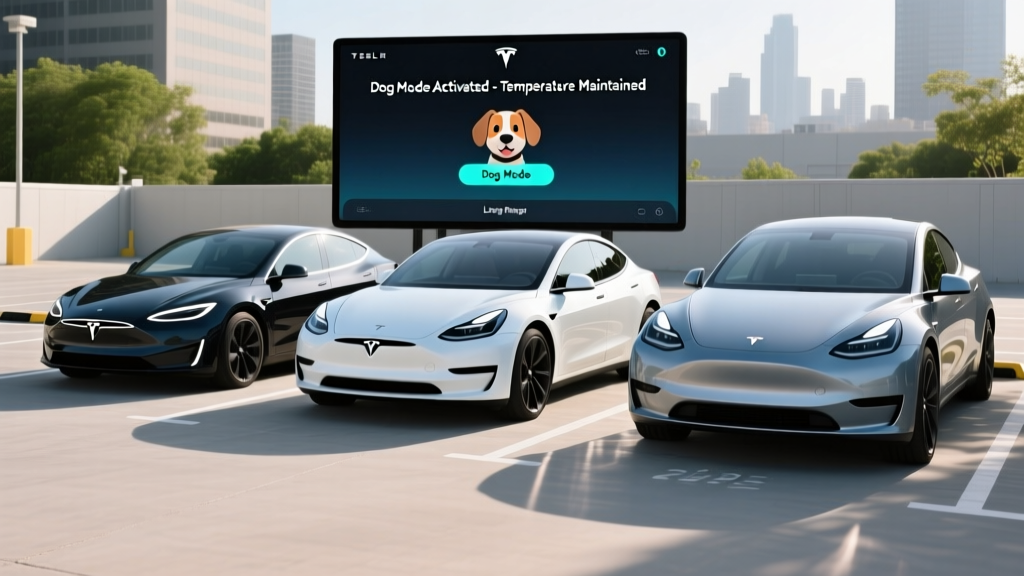
If you have ever typed dog mode Tesla into a search bar, you are not alone. The feature consistently ranks among the top quality-of-life reasons buyers choose a Tesla over competing electric vehicles. Dog Mode is a climate-control setting that keeps the cabin at a safe, set temperature while the driver is away, and it displays a prominent message on the center touchscreen telling passersby that the pet inside is comfortable and that the owner will return shortly.
Unlike a simple "leave the AC on" trick in a gas car, Dog Mode in a Tesla is integrated with the vehicle's thermal management system, the mobile app, and the cabin overheat protection logic. It draws energy from the high-voltage traction battery — not a separate 12V system — meaning runtime is measured in hours, not minutes. For 2026, every current-production Tesla (Model 3, Model Y, Model S, Model X, and the new Cybertruck) supports Dog Mode, but the real-world battery drain, cabin volume, and climate hardware differ significantly between them.
This guide breaks down Dog Mode across the 2026 Tesla lineup with hard numbers: how much range you lose per hour, which battery chemistries handle it best, how the feature interacts with Supercharging, and whether it's worth choosing one Tesla over another specifically for pet owners.
How Tesla Dog Mode Actually Works (Thermal System & Battery Drain)
Dog Mode engages the Tesla's heat pump (standard on all 2026 models) or resistive PTC heater to maintain your selected cabin temperature — default 72°F. The system modulates compressor speed like a home inverter AC, meaning it does not run at full draw continuously. Once the cabin reaches the target temperature, the compressor cycles down to a maintenance load.
Typical power draw in Dog Mode:
- Mild weather (60–80°F ambient): ~200–400 watts average after initial cooldown/warmup
- Hot weather (90–105°F ambient): ~600–1,200 watts during initial cooling, settling to ~400–700 watts
- Cold weather (20–35°F ambient): ~800–2,000 watts depending on whether the heat pump or PTC element is active
Translated to range impact: on a Model Y Long Range with its ~75 kWh usable battery, running Dog Mode in 75°F weather for one hour consumes roughly 0.4–0.7 kWh — about 1–2 miles of EPA range. In extreme heat or cold, that figure can climb to 3–5 miles of range per hour.
Dog Mode Across the 2026 Tesla Lineup: Specs at a Glance
Not all Teslas are equal when it comes to running Dog Mode for extended periods. A larger battery gives you more parked-climate runtime, while cabin volume determines how hard the thermal system has to work. Here is how the current lineup stacks up:
| Spec | Model 3 LR | Model Y LR | Model S LR | Model X LR | Cybertruck AWD |
|---|---|---|---|---|---|
| EPA Range | 363 mi | 320 mi | 402 mi | 335 mi | 340 mi |
| Battery (usable) | ~75 kWh (LFP) | ~75 kWh (LFP) | ~95 kWh (NMC) | ~95 kWh (NMC) | ~123 kWh (NMC) |
| Cargo Volume | 23 cu ft | 30 cu ft | 28 cu ft | 88 cu ft | 34 cu ft bed |
| Dog Mode Hours* (75°F) | ~100+ hrs | ~100+ hrs | ~130+ hrs | ~130+ hrs | ~170+ hrs |
| Dog Mode Hours* (95°F) | ~55–70 hrs | ~55–70 hrs | ~75–90 hrs | ~70–85 hrs | ~90–110 hrs |
| Base MSRP (2026) | $42,380 | $44,990 | $79,990 | $84,990 | $79,990 |
*Estimated hours based on average power draw to maintain 72°F cabin from 80% SoC. Actual runtime varies with sun exposure, cabin pre-conditioning, and insulation. Tesla recommends not leaving pets unattended for extended periods regardless of climate control.
Charging Specs: Getting Back on the Road After a Dog Mode Stop
Dog Mode is only half the equation — how quickly you can replenish the energy it uses matters just as much. Here are the 2026 charging specs for each model, which determine how fast you recover from a long pet-friendly stop:
| Charging Metric | Model 3 LR | Model Y LR | Model S LR | Model X LR | Cybertruck |
|---|---|---|---|---|---|
| Max DC Fast Charge | 170 kW | 250 kW | 250 kW | 250 kW | 250 kW |
| 10–80% DC Time | ~30 min | ~27 min | ~30 min | ~32 min | ~35 min |
| Level 2 Home Rate | 11.5 kW (~44 mi/hr) | 11.5 kW (~44 mi/hr) | 11.5 kW (~34 mi/hr) | 11.5 kW (~30 mi/hr) | 11.5 kW (~30 mi/hr) |
| Connector | NACS (native) | NACS (native) | NACS (native) | NACS (native) | NACS (native) |
All Tesla models use the North American Charging Standard (NACS) connector natively and access the Supercharger network — over 6,000 V3 (250 kW) and V4 stalls across North America as of early 2026. A key advantage: Tesla's navigation system can precondition the battery en route to a Supercharger, warming the pack to optimal temperature so you hit peak charge rate immediately on arrival. Non-Tesla EVs using NACS adapters often lack this preconditioning handshake, resulting in slower initial charge curves.
Practical Dog Mode recovery: If you left your Model Y in Dog Mode for 3 hours on a hot day and consumed ~2 kWh (about 6–7 miles of range), a 5-minute stop at a V3 Supercharger replenishes that energy easily. Dog Mode's drain is negligible in the context of a road trip charging stop.
Performance, Efficiency & Interior Space for Pet Owners
Dog Mode is a software feature, but the physical vehicle around it determines whether your pet is actually comfortable. Cabin volume, floor height, and rear-seat legroom all matter when a 70-lb Lab needs to stretch out.
Performance Specs (2026 Models)
| Metric | Model 3 LR AWD | Model Y LR AWD | Model S LR | Model X LR | Cybertruck AWD |
|---|---|---|---|---|---|
| 0–60 mph | 4.2 sec | 4.8 sec | 3.1 sec | 3.8 sec | 3.9 sec |
| Horsepower | ~346 hp | ~384 hp | ~670 hp | ~670 hp | ~600 hp |
| Drivetrain | Dual-Motor AWD | Dual-Motor AWD | Dual-Motor AWD | Dual-Motor AWD | Dual-Motor AWD |
| MPGe (combined) | 132 MPGe | 122 MPGe | 120 MPGe | 109 MPGe | 87 MPGe |
| kWh/100 mi | 25 | 28 | 28 | 31 | 39 |
| Rear Legroom | 35.3 in | 41.6 in | 35.4 in | 40.9 in | N/A (truck bed) |
For pet comfort, the Model Y stands out with its tall roofline and 41.6 inches of rear legroom — enough for a large dog to lie flat on the rear seat or in the cargo area with the seats folded (76 cu ft total). The Model X offers the most interior volume overall but at a significant price premium. The Model 3, while efficient, has a lower roofline and tighter rear quarters that work better for small-to-medium dogs.
The Cybertruck is a special case: its stainless-steel bed is not a climate-controlled space. Dog Mode only affects the cabin, not the bed. If you need your pet in the cabin, you are working with roughly the same footprint as a Model 3 rear seat.
Pricing, Tax Credits & the True Cost of a Dog Mode–Capable Tesla
Every 2026 Tesla includes Dog Mode as standard — there is no subscription or add-on package required. But the entry price to get into a Tesla with this feature varies dramatically:
| Model / Trim | Base MSRP | §30D Credit Eligible? | Effective Price* |
|---|---|---|---|
| Model 3 Long Range AWD | $42,380 | Yes — up to $3,750† | ~$38,630 |
| Model Y Long Range AWD | $44,990 | Yes — up to $3,750† | ~$41,240 |
| Model S Long Range | $79,990 | No (exceeds MSRP cap) | $79,990 |
| Model X Long Range | $84,990 | No (exceeds MSRP cap) | $84,990 |
| Cybertruck AWD | $79,990 | No (exceeds MSRP cap) | $79,990 |
*Effective price assumes full credit eligibility. †Credit amount reflects partial critical-minerals/battery-component compliance per IRS §30D rules. Battery sourcing requirements change annually — verify current-year compliance on Tesla's order page and IRS.gov before purchasing.
- MSRP caps: $55,000 for sedans (Model 3); $80,000 for SUVs/trucks (Model Y, Model X, Cybertruck)
- Buyer income caps: $150,000 single / $225,000 head of household / $300,000 joint (modified AGI)
- Battery sourcing: Increasing percentages of critical minerals and battery components must be sourced from the US or FTA partners — this determines whether you get the full $7,500 or a partial credit
- Point-of-sale transfer: Eligible buyers can transfer the credit to the dealer at purchase, reducing the upfront price rather than waiting for a tax refund
The Model S, Model X, and Cybertruck all exceed their respective MSRP caps or the buyer may exceed income caps, making the Model 3 and Model Y the practical choices for credit-qualifying buyers who want Dog Mode.
Warranty Coverage & Battery Longevity with Frequent Dog Mode Use
A common concern: does running Dog Mode regularly accelerate battery degradation? The short answer is no — not meaningfully. Dog Mode draws a very low C-rate (typically 0.005C to 0.02C), which is trivially light compared to highway driving or DC fast charging. Your battery's calendar aging will outpace any wear from parked climate control.
2026 Tesla Warranty Coverage:
- Basic Vehicle: 4 years / 50,000 miles
- Battery & Drive Unit: 8 years / 100,000 miles (Model 3/Y) or 8 years / 150,000 miles (Model S/X) — guaranteed to retain ≥70% capacity
- Cybertruck Battery: 8 years / 120,000 miles with ≥70% retention
The Tesla warranty covers battery degradation below the 70% threshold regardless of Dog Mode usage. The LFP batteries in the Model 3 and Model Y RWD variants are particularly well-suited to frequent Dog Mode use because LFP chemistry tolerates sustained high states of charge better than NMC — meaning you can leave the car plugged in at 100% and let Dog Mode draw from the wall rather than the battery during extended stops at home.
Dog Mode vs. Competitors: How Other EVs Handle Pet Safety
Tesla is not the only automaker offering a pet-safe climate mode, but its implementation remains the most visible and integrated. Here is how competitors compare:
- Hyundai Ioniq 5 / Kia EV6: No dedicated "pet mode" — you can leave climate on in accessory mode, but the system may shut down after ~30 minutes. No external display message.
- Ford Mustang Mach-E: No branded pet mode. Climate can remain on while parked but requires manual activation and has no passersby notification.
- Rivian R1S/R1T: Offers "Pet Mode" with a similar screen message and app notification. Comparable functionality, smaller charging network.
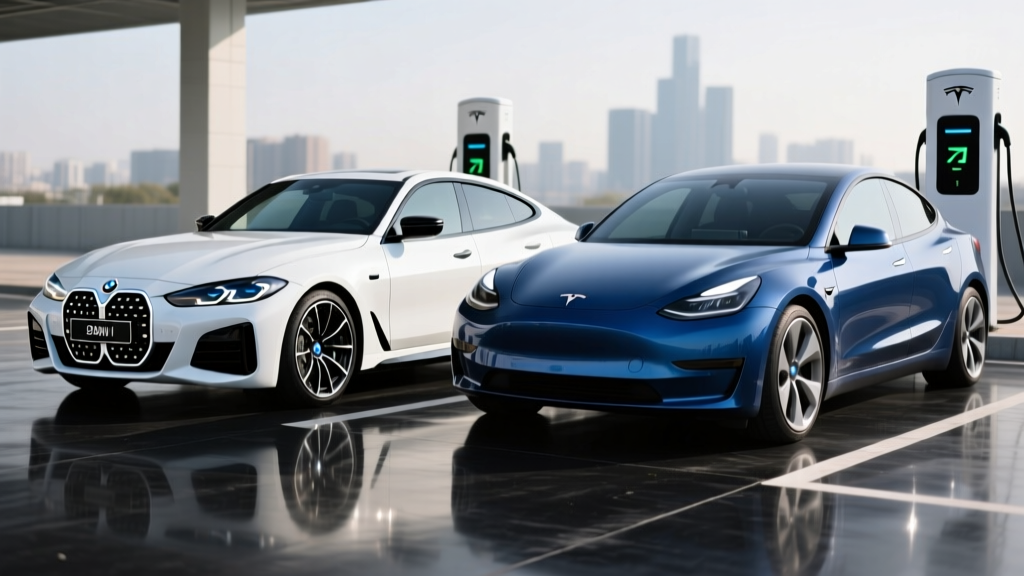
- BMW iX / i4: Climate can be activated remotely via app, but no dedicated pet mode with external messaging.
Tesla's advantage is the combination of Dog Mode's prominent screen message, mobile app monitoring (you can check cabin temperature remotely), and the Supercharger network that makes range recovery trivial. For pet owners who make frequent stops — vet visits, trailheads, drive-throughs — this ecosystem integration is difficult to replicate elsewhere.
Pros, Cons & Who Should Buy a Tesla for Dog Mode
Pros
- Best-in-class external display message — visible from several feet away
- Mobile app shows real-time cabin temp and SoC while you are away
- Heat pump efficiency keeps energy draw low in mild weather
- Supercharger network makes range recovery from parked climate use trivial
- LFP battery option (Model 3/Y) tolerates 100% SoC for extended parked use
- No subscription fee — included on every Tesla, every trim
Cons
- No backup if the 12V system faults and the vehicle powers down entirely
- Extreme heat (>110°F) can push cabin temps higher than target in direct sun
- Model 3 rear cabin is tight for large dogs
- Model S/X/Cybertruck do not qualify for the federal tax credit due to MSRP caps
- Tesla's insurance premiums tend to run higher than segment average
- No physical barrier between cargo area and rear seats (Model Y) without aftermarket accessories
Decision Framework: Which Tesla for Dog Owners?
- Choose the Model Y Long Range if you have a medium-to-large dog, want the best cargo space-to-price ratio, qualify for the partial §30D credit, and need AWD for trailhead access.
- Choose the Model 3 Long Range if you have a small-to-medium dog, prioritize efficiency (132 MPGe), want the lowest entry price, and mostly use Dog Mode for quick errands.
- Choose the Model X if budget is not a constraint, you need maximum interior volume for multiple large dogs, and you value falcon-wing doors for easy pet loading.
- Skip the Cybertruck for pet use unless your dog rides in the cabin — the bed is not climate-controlled even with a tonneau cover.
Frequently Asked Questions
Does Dog Mode drain the Tesla battery significantly?
In mild weather (70–80°F), Dog Mode draws roughly 200–400 watts on average after the cabin reaches the target temperature. That translates to about 1–2 miles of EPA range per hour on a Model Y. Even in extreme heat (95°F+), you are looking at 3–5 miles per hour. For a typical 30-minute errand, the range loss is negligible — usually under 3 miles.
Can I monitor Dog Mode from my phone?
Yes. The Tesla mobile app displays real-time cabin temperature, current state of charge, and confirms Dog Mode is active. You can also adjust the target temperature remotely. If the battery drops below 20% SoC, the app sends a push notification warning you to return to the vehicle.
Does Dog Mode work while Supercharging?
Yes. If you activate Dog Mode before plugging in, the climate system will continue running and draw power from the Supercharger rather than the battery. This is useful if you want to leave a pet in the car while you grab food at a Supercharger-adjacent restaurant — the car is actively charging while keeping the cabin cool.
Is Tesla Dog Mode safe in extreme heat?
Dog Mode is designed to maintain cabin temperature in ambient conditions up to approximately 110°F. However, in direct sunlight with ambient temps above 100°F, cabin surfaces (seats, dashboard) can still become warm. Tesla recommends parking in shade when possible and does not recommend leaving pets unattended for extended periods. Always ensure your state of charge is adequate — Tesla warns at 20% SoC and will notify you via the app.
Does Dog Mode require a Tesla subscription or FSD package?
No. Dog Mode is included as a standard feature on every Tesla, regardless of trim, Autopilot package, or FSD purchase. It is part of the base vehicle software and has been since its introduction in 2019. There is no monthly fee.
What happens if the Tesla loses connectivity while in Dog Mode?
Dog Mode operates independently of cellular connectivity. The climate system will continue maintaining temperature using onboard systems even if the car loses its cell signal. However, you will not receive app notifications or be able to monitor cabin temperature remotely until connectivity is restored. The touchscreen message for passersby remains active regardless of connectivity.
How does Dog Mode compare to Cabin Overheat Protection?
Cabin Overheat Protection is a separate feature that activates automatically when the parked cabin exceeds 105°F, running the AC to prevent dangerous temperatures. Dog Mode is manually activated, maintains your chosen temperature (not just a ceiling), and displays the passersby message. Most owners use Dog Mode intentionally when leaving a pet, while Cabin Overheat Protection runs as a passive safety net. Both can be active simultaneously.
Sources: EPA efficiency data via fueleconomy.gov; Tesla vehicle specifications via Tesla Owner's Manual; federal tax credit rules via IRS.gov §30D.