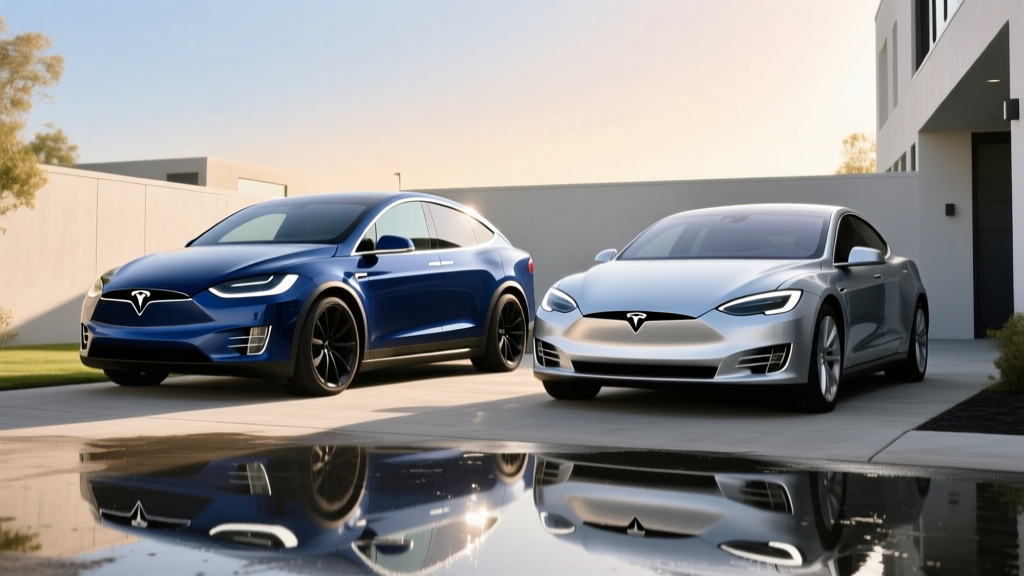
If you've been following EV headlines in early 2026, you've likely encountered speculation about Tesla discontinuing Model X and S. Between Elon Musk's public pivots toward robotaxi development, Optimus robotics, and the next-generation compact platform, Tesla's legacy flagship vehicles have received comparatively little spotlight. Yet as of this writing, both the Model S sedan and Model X SUV remain available for order on Tesla's website, with production continuing at the Fremont, California factory.
But the question is fair: are these vehicles on borrowed time? And more importantly, if you're considering one, what exactly are you getting in 2026 — and does it still hold up against a rapidly evolving luxury EV field? This profile examines the current state of both vehicles with hard data, real-world ownership context, and a clear-eyed look at whether a purchase makes sense today.
The Current State of Model S and Model X in 2026
Tesla streamlined the Model S and Model X lineups significantly over the past two years. Gone are the days of numerous configuration permutations. As of the 2026 model year, both vehicles are offered in two primary variants: the dual-motor all-wheel-drive (AWD) Long Range and the performance-focused tri-motor Plaid. Tesla dropped the standard-range rear-wheel-drive variants of these flagships years ago, positioning them firmly in the premium tier.
Neither vehicle has received a substantial exterior redesign since the 2021 "Palladium" refresh that introduced the yoke steering option, revised interior with rear touchscreen, and the Plaid powertrain. Tesla has instead focused engineering resources on the Cybertruck ramp, the refreshed Model 3 "Highland" and Model Y "Juniper" updates, and the next-generation platform. This context matters: you're buying a vehicle whose architecture dates back substantially, even if incremental software and battery tweaks continue.
| Spec | Model S Long Range | Model S Plaid | Model X Long Range | Model X Plaid |
|---|---|---|---|---|
| EPA Range | 402 mi | 359 mi | 348 mi | 326 mi |
| Battery (usable, est.) | ~100 kWh (NMC) | ~100 kWh (NMC) | ~100 kWh (NMC) | ~100 kWh (NMC) |
| Drivetrain | Dual-Motor AWD | Tri-Motor AWD | Dual-Motor AWD | Tri-Motor AWD |
| Horsepower | 670 hp | 1,020 hp | 670 hp | 1,020 hp |
| 0–60 mph | 3.1 sec | 1.99 sec | 3.8 sec | 2.5 sec |
| Peak DC Fast Charge | 250 kW | 250 kW | 250 kW | 250 kW |
| 10–80% DCFC Time | ~30 min | ~30 min | ~30 min | ~30 min |
| Level 2 Charge Rate | 11.5 kW (44 mi/hr) | 11.5 kW (44 mi/hr) | 11.5 kW (44 mi/hr) | 11.5 kW (44 mi/hr) |
| MPGe (combined) | 120 MPGe | 116 MPGe | 109 MPGe | 101 MPGe |
| Base MSRP | $74,990 | $89,990 | $79,990 | $94,990 |
Source: fueleconomy.gov and Tesla.com order configurator, accessed January 2026. Specs reflect current published figures and may change without notice.
Real-World Range: What the EPA Sticker Doesn't Tell You
EPA vs. Reality: The Model S Long Range carries a 402-mile EPA estimate — among the highest of any production EV sold in the US. However, EPA range is derived from a controlled lab cycle that blends low-speed city and moderate-highway driving. In sustained 75-mph highway testing, expect approximately 320–340 miles in mild weather. In freezing temperatures (below 32°F), that same highway trip may yield 260–290 miles due to battery resistance, cabin heating load, and reduced regenerative braking efficiency.
The Model X, heavier and less aerodynamic, typically delivers 270–300 highway miles in fair weather and 220–250 miles in deep cold.
Tesla's thermal management system — which includes a heat pump on current-production vehicles — mitigates some cold-weather losses compared to earlier resistive-heating models. But physics is physics: a ~100 kWh NMC (nickel manganese cobalt) battery pack loses efficiency when cold, and the Model X's larger frontal area compounds highway energy consumption. If your commute is primarily city driving at moderate speeds, you'll approach or even exceed the EPA number thanks to regenerative braking. Road-trippers and cold-climate owners should plan around 75–80% of the sticker range for conservative trip planning.
Both vehicles use NMC chemistry rather than LFP (lithium iron phosphate). NMC offers higher energy density — critical for fitting 400+ miles into a sedan platform — but comes with a slightly more conservative recommended daily charge limit of 80–90% for longevity, versus LFP's 100% tolerance. For daily commuting on an 80% charge, a Model S Long Range effectively provides about 320 miles of usable range, which is still exceptional.
Charging Speed and Infrastructure Access
Charging remains one of Tesla's strongest ownership advantages, though the gap has narrowed as CCS-equipped competitors gain access to the expanding Supercharger network via NACS adapters.
| Charging Level | Power / Connector | Rate | Notes |
|---|---|---|---|
| Level 1 (120V) | ~1.4 kW | ~4–5 mi/hr | Emergency/trickle only; impractical for daily use on a 100 kWh pack |
| Level 2 (240V home) | 11.5 kW / NACS (J3400) | ~44 mi/hr | Full charge in ~9 hours; requires 60A circuit (48A continuous draw) |
| DC Fast Charge | 250 kW peak / NACS | 10–80% in ~30 min | Peak rate sustained to ~50% SoC, then tapers; 250 kW is not average rate |
A critical nuance on DC fast charging: the 250 kW peak figure represents the maximum rate the vehicle will accept at a low state of charge (typically 10–20%) on a V3 Supercharger or equivalent 250+ kW station. The charge curve tapers progressively — by 60% SoC you'll see roughly 150 kW, and above 80% it drops to under 50 kW to protect battery health. The ~30-minute 10–80% time reflects this real-world curve, not sustained peak power.
Tesla's native NACS (North American Charging Standard, now formalized as SAE J3400) connector gives Model S and X owners seamless access to over 25,000 Supercharger stalls across North America without adapters. With the broader industry adopting NACS through 2025–2026, this advantage is less exclusive than it was in 2023, but the integrated experience — plug-and-charge authentication, route preconditioning, and stall availability data in the nav system — remains the most frictionless DC charging ecosystem available.
For home charging, the onboard 11.5 kW charger is competitive but not class-leading. A fully depleted 100 kWh pack requires roughly 9 hours at this rate, which is fine for overnight replenishment but means a near-empty battery won't fully recharge during a short window. Ensure your electrician installs a NEMA 14-60 or hardwired Wall Connector on a dedicated 60-amp circuit to capture the full 48-amp (11.5 kW) rate.
Performance, Efficiency, and Practicality
The performance story splits dramatically between Long Range and Plaid variants. The Long Range dual-motor setup produces 670 horsepower and delivers a 3.1-second 0–60 mph time in the Model S — genuinely supercar territory from just a few years ago. The Plaid's tri-motor configuration (one front, two rear) generates 1,020 hp and a claimed 1.99-second 0–60, though achieving that figure requires specific surface conditions, prepped tires, and drag-strip launch mode.
The Model X carries a weight penalty — roughly 5,100–5,400 lbs depending on configuration — that softens acceleration by about 0.7 seconds versus the sedan. It still hits 60 mph in 3.8 seconds (Long Range) or 2.5 seconds (Plaid), which is absurdly quick for a three-row SUV.
Efficiency, measured in MPGe and kWh per 100 miles, favors the Model S. According to fueleconomy.gov, the Model S Long Range achieves 120 MPGe combined (28 kWh/100 mi), while the Model X Long Range lands at 109 MPGe combined (31 kWh/100 mi). The Plaid variants drop further due to performance-oriented tuning and wider tires. For context, these figures remain among the most efficient in the luxury EV segment, thanks to Tesla's motor efficiency and relatively low drag coefficients (0.208 Cd for the Model S).
Cargo and passenger space is where the Model X justifies its premium. With falcon-wing rear doors and available six- or seven-seat configurations, the Model X offers up to 88.1 cubic feet of cargo volume behind the front row (seats folded), 41.1 cu ft behind the second row, and a modest front trunk (frunk). Third-row legroom is tight at approximately 32.7 inches — adequate for children on longer trips, cramped for adults. The Model S provides 28 cu ft of rear cargo (with the rear seats up) plus a front trunk, which is generous for a sedan but not SUV-competitive.
Pricing, Tax Credits, and the Ownership Math
| Variant | Base MSRP | As-Tested (typical config) | §30D Federal Credit Eligible? |
|---|---|---|---|
| Model S Long Range | $74,990 | $79,000–$85,000 | No — exceeds $55,000 sedan MSRP cap |
| Model S Plaid | $89,990 | $95,000–$105,000 | No — exceeds $55,000 sedan MSRP cap |
| Model X Long Range | $79,990 | $85,000–$95,000 | No — exceeds $80,000 SUV MSRP cap |
| Model X Plaid | $94,990 | $100,000–$115,000 | No — exceeds $80,000 SUV MSRP cap |
This is the hard truth for prospective buyers: neither the Model S nor the Model X qualifies for the $7,500 federal EV tax credit under IRS §30D rules. The Model S is classified as a sedan, subject to a $55,000 MSRP cap; the Model X qualifies as an SUV with an $80,000 MSRP cap. Both exceed their respective thresholds in every available trim. Additionally, buyer income caps ($150,000 single / $300,000 joint modified AGI) and battery critical-mineral sourcing requirements further restrict credit eligibility across the EV market. See IRS.gov §30D guidelines for current-year rules.
State-level incentives may partially offset the cost. California's Clean Vehicle Rebate Project, Colorado's innovative motor vehicle tax credit (up to $5,000 for vehicles priced under $80,000), and various utility rebates can reduce effective cost — but these vary by jurisdiction and often carry their own price caps. Consult your state's energy office or a tax professional for specifics.
Warranty coverage includes Tesla's standard 4-year/50,000-mile basic limited warranty and an 8-year/150,000-mile battery and drive unit warranty with a minimum 70% capacity retention guarantee. This battery warranty is competitive with industry norms (BMW offers 8/100k, Hyundai 10/100k) and reflects confidence in the NMC pack's longevity. Real-world degradation data from high-mileage Model S and X owners suggests approximately 10–12% capacity loss at 100,000 miles, with the curve flattening significantly thereafter.
Tech, Driver Assistance, and the Autopilot Reality
Both vehicles feature Tesla's current-generation infotainment system with a 17-inch center touchscreen, a secondary rear-seat display, a 22-speaker audio system, and over-the-air software updates that continue to add features to vehicles years after purchase. The yoke steering wheel remains optional alongside a conventional round wheel — a preference split that remains deeply personal among owners.
SAE Automation Level: Level 2. Tesla's Autopilot and Full Self-Driving (Supervised) systems are classified as SAE Level 2 driver-assist features. This means the system can manage steering, acceleration, and braking under certain conditions, but the driver must remain fully engaged, eyes on the road, and hands prepared to intervene at all times. Despite the "Full Self-Driving" branding, this is not autonomous driving. Level 4 driverless operation — where no human intervention is needed — is currently offered only by robotaxi services like Waymo in geofenced urban areas. Do not treat FSD as a substitute for attentive driving.
FSD (Supervised) remains a $8,000 option (or $99/month subscription as of early 2026). Its capabilities have expanded to include city-street traffic light and stop sign handling, automatic lane changes, and navigation-guided highway driving. Real-world performance varies significantly by geography and road conditions — it excels on well-marked highways and struggles in construction zones, heavy rain, and unmapped areas. Whether the cost justifies the capability is an individual calculation; many owners find basic Autopilot (included standard) sufficient for highway commuting.
Notable drawbacks include panel-gap inconsistency that persists despite years of production, the absence of Apple CarPlay and Android Auto (Tesla uses its proprietary interface exclusively), the controversial yoke steering option that some drivers find impractical for low-speed maneuvers, and a ride quality that, while improved, still leans firm compared to the air-suspension-equipped Mercedes EQS or BMW i7.
Pros
- Class-leading EPA range (402 mi Model S LR)
- Access to the Supercharger network natively via NACS
- Tri-motor Plaid performance unmatched at this price point
- Continuous OTA updates add features post-purchase
- Strong cargo versatility (Model X) with falcon-wing doors
- Proven powertrain architecture with extensive real-world mileage data
Cons
- No federal tax credit eligibility due to MSRP caps
- Aging exterior/interior design vs. fresher competitors
- 250 kW peak DC charging trails 350+ kW rivals (Lucid, Porsche, Hyundai E-GMP)
- No Apple CarPlay or Android Auto
- Panel gaps and build consistency still lag German luxury OEMs
- Uncertain long-term production commitment from Tesla
Should You Buy Now or Wait? The Discontinuation Question
Tesla has not officially announced an end-of-production date for the Model S or Model X. However, several factors suggest these vehicles occupy an uncertain position in Tesla's forward roadmap. The Fremont factory shares production capacity with the Model 3 and Model Y, and Tesla's capital expenditure has overwhelmingly favored new platforms — Cybertruck in Austin, the next-generation compact vehicle, and Semi production. Sales volumes for Model S and X combined represent a small fraction of Tesla's total deliveries (roughly 2–4% in recent quarterly reports).
If discontinuation occurs, the most likely scenario is a gradual wind-down rather than an abrupt halt — possibly coinciding with the next major platform architecture shift. For buyers, this creates a nuanced decision:
Buy the Model S or X now if: you need the range (402 mi is still top-tier), you value native Supercharger access and Tesla's software ecosystem, you want Plaid-level performance without spending Lucid Air Sapphire money ($250K+), or you need the Model X's three-row SUV practicality with EV powertrain.
Wait or look elsewhere if: you want the latest vehicle architecture and interior design, you prioritize 350+ kW DC fast charging, you need the federal tax credit, you prefer traditional luxury build quality (Mercedes, BMW), or the discontinuation uncertainty gives you concern about long-term parts availability and resale value.
How Do They Stack Up Against Key Competitors?
The luxury EV landscape in 2026 is far more competitive than when the Model S launched in 2012. Key alternatives include:
- Lucid Air Pure/Grand Touring: 419-mile EPA range (Grand Touring), 300+ kW charging capability, more luxurious interior. Base price starts at $69,900 for the Pure — but the range-topping Grand Touring exceeds $125,000 and also misses the tax credit cap.
- BMW i7 xDrive50: 318-mile range, 195 kW DC charging, vastly superior interior materials and ride comfort. MSRP ~$120,000.
- Mercedes-Benz EQS 450+: 390-mile range (2025 refresh), 200 kW DC charging, S-Class-level luxury. MSRP ~$105,000.
- Rivian R1S (tri-motor): 352-mile range, 220 kW charging, genuine off-road capability, three rows. MSRP ~$79,900. A direct Model X competitor for adventure-oriented families.
- Kia EV9 GT-Line AWD: 270-mile range, 236 kW DC charging, three rows, and critically — qualifies for the $7,500 federal credit at ~$73,000 MSRP.
The Model S remains the efficiency and range benchmark among luxury sedans. The Model X occupies a more precarious position — it's the only EV offering falcon-wing doors and three rows, but the Rivian R1S and Kia EV9 provide compelling family-SUV alternatives at lower prices with tax-credit eligibility.
Frequently Asked Questions
Has Tesla officially announced discontinuing the Model S and Model X?
No. As of early 2026, Tesla has not issued an official end-of-production statement for either vehicle. Both remain configurable and orderable on Tesla.com, with estimated delivery timelines. The discontinuation narrative stems from Tesla's shifting strategic focus and relatively low production volumes, not a formal announcement.
What is the real-world highway range of the Model S Long Range?
Expect approximately 320–340 miles at sustained highway speeds (70–75 mph) in mild weather (60–80°F). In freezing temperatures, plan for 260–290 miles. The 402-mile EPA figure reflects a blended city/highway lab cycle that favors regenerative braking and lower speeds.
How fast does the Model S/X charge at a DC fast charger?
Both vehicles accept a peak rate of 250 kW on V3 Superchargers or equivalent CCS/NACS stations. A 10–80% charge takes approximately 30 minutes. The peak rate is not sustained — expect the curve to taper from ~250 kW at low SoC to ~150 kW around 60% and below 50 kW above 80%.
Does the Model S or Model X qualify for the $7,500 federal EV tax credit?
No. Under IRS §30D rules, the Model S (sedan classification) is subject to a $55,000 MSRP cap, and the Model X (SUV classification) to an $80,000 MSRP cap. Both exceed these limits in every available trim. Buyer income caps and battery-sourcing requirements impose additional restrictions. Consult IRS.gov or a tax professional for your specific situation.
Is the Model X worth buying over the Rivian R1S or Kia EV9?
It depends on priorities. The Model X offers more range (348 vs. 352 mi for R1S, 270 mi for EV9), native Supercharger access, and the novelty of falcon-wing doors. The Rivian R1S offers superior off-road capability, a more modern platform, and competitive pricing. The Kia EV9 is significantly more affordable after the federal tax credit (~$65,500 effective). If range and Tesla's ecosystem are paramount, the Model X holds up. If value and tax-credit savings matter more, the EV9 is hard to beat.
What happens to parts and service if Tesla discontinues these models?
US federal regulations require automakers to maintain parts availability for a minimum period after discontinuation (typically 10+ years for safety-critical components). Tesla's parts supply chain for Model S/X would likely remain robust for years given the existing fleet size and shared components with Model 3/Y in areas like electronics and suspension. However, body panels and model-specific trim pieces could become harder to source over time, and resale values may soften on discontinuation news.
What battery chemistry do the Model S and X use, and how should I care for it?
Both use NMC (nickel manganese cobalt) lithium-ion cells. For optimal longevity, Tesla recommends setting the daily charge limit to 80–90% and only charging to 100% when needed for long trips. Avoid leaving the vehicle at very low (below 10%) or very high (100%) states of charge for extended periods. NMC chemistry provides higher energy density than LFP but is more sensitive to high-SoC storage degradation.
The Model S and Model X remain technically impressive vehicles in 2026 — the range, performance, and charging ecosystem are genuinely difficult to match at their price points. But they are also aging designs in a market that has matured dramatically. If you value what Tesla's flagships uniquely offer and accept the tax-credit ineligibility and discontinuation uncertainty, they remain compelling choices. If you prioritize the latest architecture, luxury refinement, or maximum financial incentive, the growing field of alternatives deserves a serious test drive.