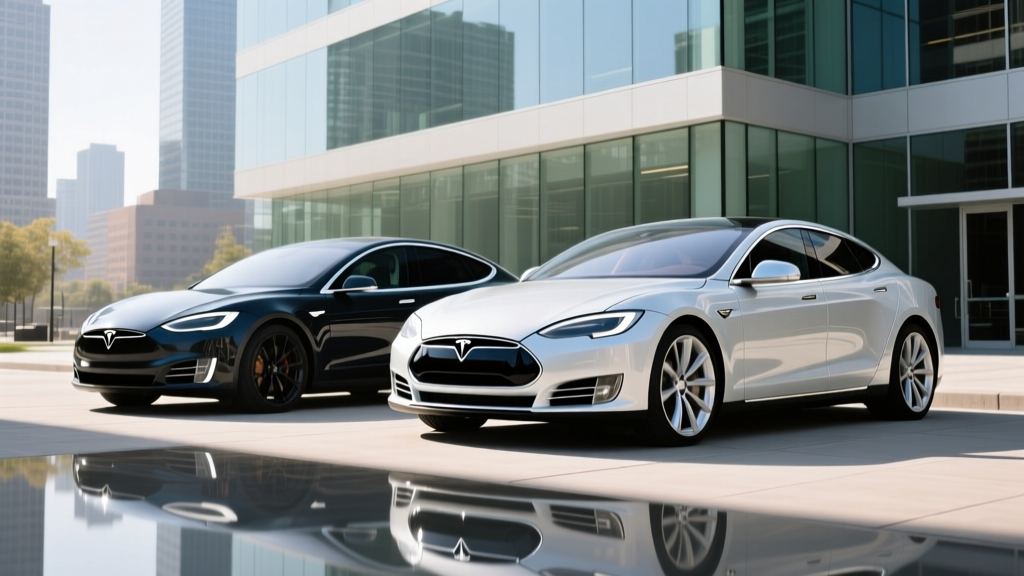
If you've been following EV forums and industry whispers, you've likely seen the recurring speculation: tesla discontinuing model s and x. The question has circulated since 2023, resurfacing with each quarterly earnings call and production update. As of early 2026, both the Model S sedan and Model X SUV remain in Tesla's lineup — but their long-term future is far from guaranteed. Production volumes have thinned, the platform dates back over a decade, and Tesla's investment dollars have shifted heavily toward the refreshed Model 3, Model Y, Cybertruck, and next-generation vehicle programs.
This guide gives you everything you need to decide whether to buy a Model S or Model X now, while you still can. We cover the exact 2026 specs, real-world range expectations, charging performance, pricing, federal tax credit eligibility, and how these legacy flagships stack up against the luxury EV competition that has caught up — and in some cases, surpassed them.
2026 Tesla Model S and Model X: The Current Lineup
Tesla currently offers both vehicles in two primary trims: the standard dual-motor all-wheel-drive version (badged simply as Long Range) and the high-performance tri-motor Plaid variant. The company quietly retired the base RWD Model S years ago, and every 2026 unit rolls out of the Fremont, California factory with AWD as standard.
| Spec | Model S Long Range | Model S Plaid | Model X Long Range | Model X Plaid |
|---|---|---|---|---|
| EPA Range | 402 mi | 359 mi | 335 mi | 311 mi |
| Battery (usable) | ~95 kWh (NMC) | ~95 kWh (NMC) | ~95 kWh (NMC) | ~95 kWh (NMC) |
| Drivetrain | Dual-Motor AWD | Tri-Motor AWD | Dual-Motor AWD | Tri-Motor AWD |
| Horsepower | 670 hp | 1,020 hp | 670 hp | 1,020 hp |
| 0–60 mph | 3.1 sec | 1.99 sec | 3.8 sec | 2.5 sec |
| Top Speed | 155 mph | 200 mph | 155 mph | 163 mph |
| MPGe (combined) | 120 MPGe | 116 MPGe | 109 MPGe | 101 MPGe |
| Base MSRP | $74,990 | $89,990 | $79,990 | $94,990 |
Both models use a ~100 kWh gross battery pack (roughly 95 kWh usable) with NMC (nickel manganese cobalt) chemistry. Tesla has not migrated the S/X platform to the LFP (lithium iron phosphate) cells used in the base Model 3 and Model Y — a choice that preserves energy density for maximum range but means you should follow the 80% daily charge limit recommendation to protect long-term battery health.
Real-World Range: What the EPA Sticker Doesn't Tell You
The Model S Long Range carries an impressive EPA-estimated 402 miles of range — still among the highest of any production EV sold in the U.S. But the EPA test cycle includes a heavy city-driving component where regenerative braking recovers significant energy.
Real-world expectations:
- Highway cruising (70–80 mph): Expect ~310–340 miles in moderate temperatures. Aerodynamic drag scales with the square of speed, and the Model S's large sedan profile is efficient but not immune to physics.
- Cold weather (below 32°F): Plan for 25–35% range reduction, yielding roughly 260–300 miles. The heat pump helps, but battery chemistry slows in the cold.
- Mixed daily driving: 350–380 miles is achievable in temperate conditions with moderate regen use.
Source: EPA fueleconomy.gov
The Model X, heavier and less aerodynamic due to its SUV profile, sees more pronounced real-world drops. The Long Range X's 335-mile EPA figure typically translates to 260–290 miles on the highway and as little as 220 miles in freezing weather. If your commute or road-trip plans depend on squeezing every mile out of a charge, the sedan is the clear efficiency winner.
Charging Speed and Network Access
One enduring advantage Tesla retains is the Supercharger network, now partially opened to other brands via the NACS standard. For Model S and X owners, the experience remains seamless — plug in and walk away, with no adapter required.
| Charging Level | Power / Rate | Time / Miles Added |
|---|---|---|
| Level 1 (120V household) | ~1.4 kW | ~3–4 miles per hour |
| Level 2 (240V home Wall Connector) | 11.5 kW (48A) | ~34 miles per hour / full charge in ~9 hrs |
| DC Fast Charge (V3 Supercharger) | Peak 250 kW | 10–80% in ~27 minutes |
| DC Fast Charge (V4 Supercharger) | Peak 250 kW (S/X limited) | 10–80% in ~27 minutes |
Charging curve reality: The Model S and X peak at 250 kW on V3 Superchargers, but this peak is sustained only briefly — typically between 10–30% state of charge. Above 50%, the rate tapers significantly, dropping below 100 kW past 70%. This is why Tesla quotes 10–80% times rather than full-charge times; charging from 80–100% can add another 20+ minutes. On a road trip, plan your stops around the 10–80% window for maximum efficiency.
Notably, the Model S and X do not support 800V architecture, unlike the Hyundai Ioniq 5, Kia EV6, Porsche Taycan, or Lucid Air. This caps their peak DC charge rate at 250 kW versus the 350 kW possible on 800V platforms. If rapid charging is your top priority, this is a meaningful gap — a Taycan can add 100 miles of range in roughly 10 minutes versus ~15 minutes for the Model S.
For home charging, Tesla's Wall Connector at 11.5 kW is adequate for overnight replenishment. A typical daily commute of 40–60 miles requires only 1.5–2 hours of Level 2 charging. Installation costs vary; expect $500–$2,000 depending on your electrical panel capacity and run length. Always have a licensed electrician assess your panel before committing to a 60A circuit.
Performance: The Plaid Is Still a Benchmark
Performance is where the Model S and X Plaid variants still command respect. The Model S Plaid's 1.99-second 0–60 mph time (with rollout subtracted) remains one of the quickest acceleration figures of any production car, period. The tri-motor setup — one front, two rear — provides torque vectoring that makes this power usable on real roads, not just drag strips.
The standard Long Range dual-motor versions, at 670 hp and 3.1–3.8 seconds to 60, are hardly slow. They outpace most V8-powered luxury sedans and SUVs while delivering a fraction of the operating cost.
On the downside, the S/X platform's age shows in ride refinement. Tesla updated the suspension and interior in 2021, but competitors like the Lucid Air, BMW i7, and Mercedes EQS offer noticeably more composed ride quality and cabin isolation at highway speeds. The Model S is a performance instrument; the Lucid Air and i7 are grand tourers.
Pricing, Tax Credits, and Total Cost
| Model / Trim | Base MSRP | As-Tested (typical) | §30D Federal Credit Eligible? |
|---|---|---|---|
| Model S Long Range | $74,990 | $78,000–$82,000 | No — exceeds $55,000 sedan MSRP cap |
| Model S Plaid | $89,990 | $93,000–$98,000 | No — exceeds $55,000 sedan MSRP cap |
| Model X Long Range | $79,990 | $84,000–$90,000 | No — exceeds $80,000 SUV MSRP cap |
| Model X Plaid | $94,990 | $99,000–$105,000 | No — exceeds $80,000 SUV MSRP cap |
Tax credit reality check: Neither the Model S nor Model X qualifies for the IRS §30D federal EV tax credit. The Model S is classified as a sedan and is subject to the $55,000 MSRP cap; the Model X, classified as an SUV, faces the $80,000 cap. Both exceed their respective thresholds in every available trim. Additionally, buyers must meet income limits ($150,000 single / $300,000 joint MAGI) and the vehicle's battery components and critical minerals must meet domestic-sourcing requirements — but the MSRP cap alone disqualifies these models regardless.
Some state-level incentives may still apply. California's CVRP rebate, Colorado's state tax credit, and various utility-company charging rebates can reduce out-of-pocket cost. Check your state's energy office and local utility for current programs, as these vary by jurisdiction and change frequently.
5-year ownership cost estimate (Model S Long Range, 15,000 miles/year):
- Purchase price (after any state incentives): ~$75,000–$80,000
- Electricity (home charging at $0.14/kWh avg): ~$4,500 over 5 years
- Insurance (national avg for Model S): ~$12,000–$15,000 over 5 years
- Maintenance (no oil changes; tire rotation, cabin filter, wiper fluid): ~$1,500 over 5 years
- Estimated depreciation: ~$30,000–$38,000 over 5 years
- Estimated 5-year total cost: ~$123,000–$139,000
Interior, Cargo, and Daily Livability
The 2021-refreshed interior brought a 17-inch landscape touchscreen, ventilated front seats, a rear-seat entertainment display, and a yoke-style steering wheel (a conventional round wheel is now available at no extra charge). Build quality improved meaningfully over pre-2021 units, though panel-gap consistency still trails German luxury automakers.
Model S dimensions:
- Cargo (rear trunk + frunk): 28.0 cu ft total
- Front legroom: 42.7 inches
- Rear legroom: 35.4 inches
- Seating: 5 passengers standard
Model X dimensions:
- Cargo (behind 3rd row): 15.8 cu ft; behind 2nd row: 44.1 cu ft; max (2nd row folded): 85.1 cu ft
- Front legroom: 41.2 inches
- Rear legroom (2nd row): 37.1 inches
- Seating: 5, 6, or 7 passengers depending on config
- Towing capacity: 5,000 lbs (braked)
The Model X's falcon-wing rear doors are a conversation piece and genuinely helpful for loading children into car seats in tight parking spaces. However, they add mechanical complexity and can be slow to operate in rain. The available third row is best suited for children; adults will find it cramped on longer trips.
Battery Warranty, Degradation, and Longevity
Tesla covers the Model S and X battery and drive unit under an 8-year / 150,000-mile warranty (whichever comes first), with a guaranteed minimum 70% capacity retention over that period. This is competitive with the broader luxury EV segment.
Real-world degradation data from owner surveys and fleet analyses (including Recurrent Auto battery health reports) suggest that Tesla's NMC packs in the S/X lose roughly 8–12% capacity over the first 100,000 miles, with the steepest drop occurring in the first 20,000 miles before leveling off. Best practices for longevity include:
- Set daily charge limit to 80% (the vehicle's software prompts this for NMC packs)
- Avoid frequent 100% charges — reserve for road trips
- Minimize repeated DC fast-charging sessions when Level 2 is available
- Precondition the battery before Supercharging (the navigation system does this automatically when a Supercharger is your destination)
Out-of-warranty battery replacement for the Model S/X runs approximately $13,000–$20,000 depending on the pack configuration and service center. This is a meaningful long-term cost to factor in if you plan to keep the vehicle past 150,000 miles.
Driver Assistance: Autopilot and FSD (Supervised)
Tesla's Autopilot and Full Self-Driving (Supervised) are SAE Level 2 driver-assistance systems. The driver must remain fully engaged, hands on or near the wheel, and eyes on the road at all times. These systems are not self-driving. Tesla's own owner's manual and the NHTSA require continuous driver supervision. Only Level 4 services like Waymo operate without a human driver in defined geographic zones.
The Model S and X come with Basic Autopilot standard (lane-centering and adaptive cruise control). The FSD (Supervised) package — currently priced at $8,000 as a one-time purchase or $99/month — adds features like automatic lane changes, Navigate on Autopilot (highway on/off-ramp handling), Smart Summon, and traffic-light/stop-sign recognition. As of 2026, FSD remains a supervised system that performs impressively in many scenarios but still requires intervention, particularly in construction zones, complex intersections, and adverse weather.
Is It Worth Buying a Model S or X Before They're Gone?
- Class-leading EPA range (402 mi Model S)
- Supercharger network access (native NACS, no adapter)
- Plaid performance is unmatched in its price bracket
- Over-the-air updates continue to add features
- Strong resale recognition and brand cachet
- Spacious frunk + trunk combo (Model S)
- Model X offers 5,000-lb towing + optional 7 seats
- Aging platform (introduced 2012/2015, refreshed 2021)
- No 800V architecture — 250 kW peak vs. 350 kW rivals
- No federal tax credit eligibility (MSRP caps)
- Ride quality and NVH trail BMW i7, Lucid Air, Mercedes EQS
- Falcon-wing doors add complexity (Model X)
- Discontinuation risk may hurt future parts/service support
- Insurance premiums run 20–40% above segment average
- Choose the Model S if: You want maximum EV range in a sedan, rely heavily on the Supercharger network for road trips, value blistering acceleration, and accept the platform's age as a trade-off for proven reliability and a mature charging ecosystem.
- Choose the Model X if: You need an electric SUV with three rows, falcon-wing door utility for child seats, and 5,000-lb towing — and you're willing to sacrifice some range and efficiency versus the sedan.
- Look elsewhere if: You prioritize the latest platform technology (800V charging, air-suspension refinement), need the federal tax credit, or worry about long-term parts availability if Tesla sunsets the line. Consider the Lucid Air (419+ mi range, 900V architecture), BMW i7 (luxury benchmark), Mercedes EQS SUV (three-row comfort), or Rivian R1S (adventure-oriented SUV).
Frequently Asked Questions
Has Tesla officially announced it is discontinuing the Model S and Model X?
As of early 2026, Tesla has not issued an official discontinuation announcement. Both vehicles remain configurable on Tesla's website and in production at the Fremont factory. However, Elon Musk has acknowledged in earnings calls that these models represent a small fraction of Tesla's total production and that the company's future lies in higher-volume platforms. Industry analysts expect production to wind down gradually rather than end abruptly, potentially within the 2026–2028 window.
What is the real-world range of the Model S and Model X?
The Model S Long Range delivers an EPA-estimated 402 miles, but expect approximately 310–340 miles at sustained highway speeds and 260–300 miles in freezing temperatures. The Model X Long Range (335 mi EPA) yields roughly 260–290 highway miles and 220+ in cold weather. Preconditioning the battery and using seat heaters instead of cabin heat can recover some lost range.
How fast does the Model S charge at home and on the road?
At home on a Level 2 Tesla Wall Connector (11.5 kW / 48A), the Model S adds about 34 miles of range per hour, fully charging overnight in roughly 9 hours. On a V3 Supercharger, it peaks at 250 kW and charges from 10–80% in approximately 27 minutes, though the charge curve tapers significantly above 50% SoC.
Does the Model S or Model X qualify for the $7,500 federal EV tax credit?
No. Under IRS §30D rules, the Model S exceeds the $55,000 MSRP cap for sedans, and the Model X exceeds the $80,000 cap for SUVs — in every available trim. Buyer income limits and battery-sourcing requirements are additional hurdles, but the MSRP alone disqualifies both models. Check your state for possible local incentives.
Should I buy now or wait, given the discontinuation rumors?
If the Model S or X fits your needs and budget, buying now ensures you get the vehicle while production continues and Tesla still supports it fully. Waiting risks the models being discontinued with limited final-year availability. However, if you're flexible, competitors like the Lucid Air, BMW i5/i7, and upcoming refreshed platforms from Mercedes and Porsche may offer more modern architectures. Parts and service support for discontinued Tesla models should remain available for years — Tesla is required to support vehicles under warranty — but long-term availability beyond a decade is uncertain.
Is the Tesla Model S still competitive in 2026?
In raw range and performance, yes — the 402-mile EPA rating and 1.99-second Plaid 0–60 remain benchmarks. In luxury refinement, charging architecture (no 800V), and interior material quality, the Model S has been overtaken by the Lucid Air, BMW i7, and Porsche Taycan. It's a compelling choice for Tesla ecosystem loyalists and Supercharger-dependent road trippers, but luxury-first buyers should cross-shop thoroughly.