What Tesla Models Are Being Discontinued — And Which Ones Survive?
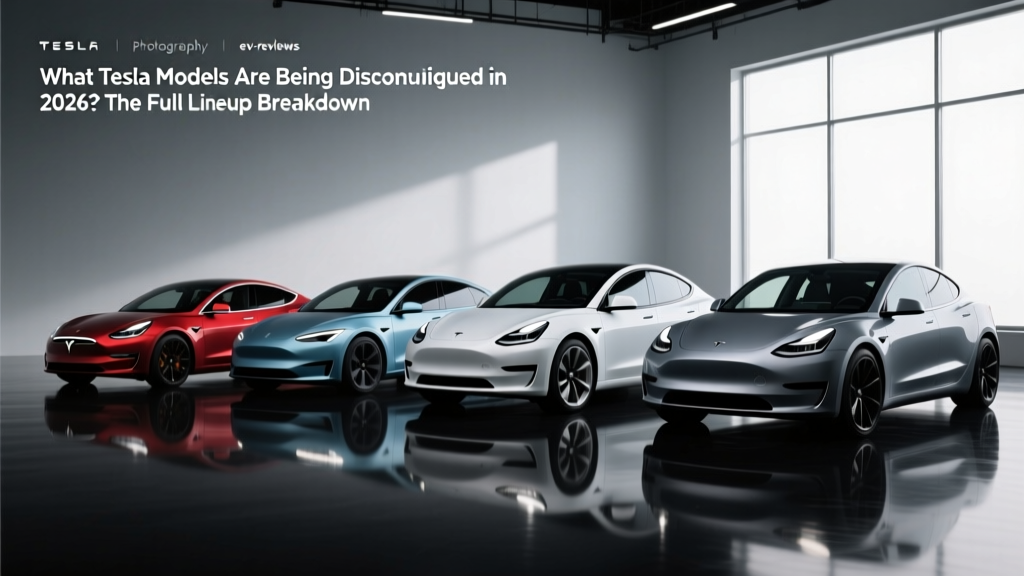
If you've searched "what Tesla models are being discontinued" recently, you're not alone. Rumors swirl every time Tesla adjusts production schedules or drops a trim. As of early 2026, Tesla's U.S. lineup consists of five vehicles: Model S, Model 3, Model X, Model Y, and Cybertruck. The original Roadster, Model S Plaid+ (cancelled pre-delivery), and various regional variants have already been retired. But which current models are actually at risk, and which are safe for the foreseeable future?
Below, we profile every vehicle Tesla currently sells, with exact EPA range figures, charging speeds, battery chemistry, pricing, and federal tax credit eligibility — so you can decide what's worth buying before any potential discontinuation, and what's likely staying put.
The Current 2026 Tesla Lineup: At a Glance
| Model | Body Style | EPA Range | Battery (kWh / Chemistry) | 0-60 mph | Starting MSRP | Status |
|---|---|---|---|---|---|---|
| Model S | Luxury Sedan | 402 mi (Long Range) | ~100 kWh / NMC | 3.1s (LR) / 1.99s (Plaid) | $79,990 | Low volume, future uncertain |
| Model 3 | Compact Sedan | 363 mi (LR RWD) | ~60 kWh (LFP) / ~75 kWh (NMC) | 5.8s (RWD) / 4.2s (LR AWD) | $38,990 | Core model, high volume |
| Model X | Luxury SUV | 335 mi (Long Range) | ~100 kWh / NMC | 3.8s (LR) / 2.5s (Plaid) | $79,990 | Low volume, future uncertain |
| Model Y | Compact SUV | 320 mi (LR AWD) | ~60 kWh (LFP) / ~75 kWh (NMC) | 6.5s (RWD) / 4.8s (LR AWD) | $44,990 | Core model, best-seller |
| Cybertruck | Pickup Truck | 340 mi (AWD) | ~123 kWh / NMC (4680 cells) | 4.1s (AWD) / 2.6s (Cyberbeast) | $79,990 | New platform, ramping |
Sources: fueleconomy.gov, Tesla.com configurator (accessed Feb 2026). Specs reflect latest available model-year data.
Tesla Model S & Model X: The Discontinuation Candidates
When analysts discuss what Tesla models are being discontinued, the Model S and Model X top the list — and for understandable reasons. Both ride on Tesla's older platform architecture, sell in comparatively low volumes, and occupy a price bracket where Tesla faces fierce competition from the Lucid Air, BMW i7, Mercedes EQS SUV, and Rivian R1S.
EPA estimate: 402 miles. Expect ~340–360 miles in mixed highway driving at 70 mph. In cold weather (below 32°F), plan for 280–310 miles. The Model S's large 100 kWh NMC battery provides a generous buffer, but highway speeds and low temperatures erode it meaningfully.
Model S Key Specs
| Spec | Long Range | Plaid |
|---|---|---|
| EPA Range | 402 mi | 359 mi |
| Battery | ~100 kWh NMC | ~100 kWh NMC |
| Drivetrain | AWD (Dual Motor) | AWD (Tri-Motor) |
| Horsepower | 670 hp | 1,020 hp |
| 0-60 mph | 3.1 sec | 1.99 sec |
| Max DC Charge Rate | 250 kW | 250 kW |
| 10-80% DC Time | ~30 min | ~30 min |
| Level 2 Home Charge | 11.5 kW (~44 mi/hr) | 11.5 kW (~44 mi/hr) |
| MPGe (combined) | 120 MPGe | 116 MPGe |
| Cargo Volume | 28 cu ft (rear) + frunk | 28 cu ft (rear) + frunk |
| Base MSRP | $79,990 | $94,990 |
The Model X shares the same platform with similar powertrain options but in an SUV body with falcon-wing rear doors. Cargo space reaches 88 cu ft with seats folded — genuinely useful for families. However, the panel gaps, aging interior relative to rivals, and the $80K+ entry point make both models vulnerable if Tesla decides to consolidate its portfolio around the higher-volume Model 3/Y and the new Cybertruck platform.
Battery Warranty & Longevity
Both the Model S and X carry Tesla's standard battery and drive unit warranty: 8 years / 150,000 miles (whichever comes first), with a guaranteed minimum 70% capacity retention over that period. The NMC chemistry in these vehicles offers higher energy density than LFP but is more sensitive to repeated 100% charges. Tesla recommends daily charging to 80-90% for NMC batteries and reserving 100% for road trips.
Tesla Model 3: Safe, Refreshed, and Tax-Credit Eligible
The refreshed Model 3 (internally called "Highland") launched in late 2023 and continues into 2026 as Tesla's entry-level sedan. It's the model least likely to be discontinued — it's Tesla's volume backbone globally and competes directly with the Hyundai Ioniq 6, BMW i4, and Polestar 2.
EPA estimate: 341 miles. Real-world highway driving yields ~285–305 miles. In freezing temps, expect ~245–270 miles. The RWD base model (LFP battery, 272 mi EPA) is best for commuters with home charging who don't need AWD.
Model 3 Pricing & Federal Tax Credit
| Trim | MSRP | Est. After §30D Credit | Drivetrain |
|---|---|---|---|
| RWD (LFP) | $38,990 | ~$31,490* | Rear-Wheel Drive |
| Long Range AWD | $45,990 | ~$38,490* | Dual-Motor AWD |
| Performance | $52,990 | ~$45,490* | Dual-Motor AWD |
*Federal §30D tax credit eligibility depends on buyer income caps ($150K single / $300K joint), vehicle MSRP cap ($55K for sedans), and battery component/critical mineral sourcing requirements that phase in annually. The Model 3 RWD and Long Range have historically qualified for partial or full credits, but sourcing rules tighten each year. Always verify current eligibility at IRS.gov and confirm with a tax professional. Point-of-sale transfer is available at participating dealers.
Charging Performance
| Charging Level | Rate | Miles Added per Hour | Notes |
|---|---|---|---|
| Level 1 (120V) | ~1.4 kW | ~5 mi/hr | Emergency/trickle only |
| Level 2 (240V, 48A) | 11.5 kW | ~44 mi/hr | Full charge overnight (~7-8 hrs) |
| DC Fast (Supercharger V3) | Peak 250 kW | ~175 mi in 15 min | 10-80% in ~25 min; tapers above 80% |
The Model 3 Long Range uses NMC chemistry in its ~75 kWh pack, while the base RWD model uses a ~60 kWh LFP (lithium iron phosphate) battery. LFP trades energy density for longevity — Tesla recommends charging LFP packs to 100% at least once a week for accurate state-of-charge calibration. If battery lifespan is your top priority, the LFP RWD is the pick; if you need range and AWD, the Long Range is the move.
Tesla Model Y: The Best-Seller That Isn't Going Anywhere
The Model Y is the best-selling vehicle in the world by unit volume (2023-2025 data). Discontinuing it would be commercial suicide. A refreshed version (codenamed "Juniper") has been rolling out globally with updated styling, a quieter cabin, ventilated seats, and ambient lighting — addressing the main complaints about the pre-refresh model.
EPA estimate: 320 miles. Highway reality: ~270–290 miles. Cold weather: ~230–255 miles. The Model Y's taller, less aerodynamic profile costs it ~20 miles versus the mechanically similar Model 3 Long Range.
Model Y Specs & Pricing
| Spec | RWD | Long Range AWD | Performance |
|---|---|---|---|
| EPA Range | 260 mi | 320 mi | 293 mi |
| Battery | ~60 kWh LFP | ~75 kWh NMC | ~75 kWh NMC |
| 0-60 mph | 6.5 sec | 4.8 sec | 3.5 sec |
| HP | 295 hp | 384 hp | 456 hp |
| Max DC Charge | 170 kW | 250 kW | 250 kW |
| 10-80% DC | ~28 min | ~25 min | ~25 min |
| Cargo Volume | 76 cu ft (rear folded) + 4.1 cu ft frunk | ||
| MSRP | $44,990 | $48,990 | $53,490 |
The Model Y qualifies for the §30D federal tax credit under the SUV MSRP cap ($80,000), giving it more pricing headroom than the Model 3 sedan cap ($55,000). This makes the Long Range AWD — after a potential $7,500 credit — one of the most compelling electric SUVs on the market at approximately $41,490 effective price. However, credit eligibility hinges on battery sourcing compliance, which shifts annually. Check current rules before purchasing.
Tesla Cybertruck: The New Platform Betting Big
Cybertruck is Tesla's newest platform and the least likely to be discontinued despite its polarizing design. Production has ramped through 2024-2025, and Tesla is investing heavily in the 4680 cell production line that underpins it.
Cybertruck Key Specs
| Spec | AWD | Cyberbeast |
|---|---|---|
| EPA Range | 340 mi | 320 mi |
| Battery | ~123 kWh NMC (4680 cells) | ~123 kWh NMC (4680 cells) |
| 0-60 mph | 4.1 sec | 2.6 sec |
| HP | 600 hp | 845 hp |
| Towing Capacity | 11,000 lbs | 11,000 lbs |
| Max DC Charge | 250 kW (est. peak) | 250 kW (est. peak) |
| 10-80% DC | ~35 min (large pack) | ~35 min |
| MSRP | $79,990 | $99,990 |
The Cybertruck does not qualify for the §30D federal tax credit — it exceeds neither the MSRP cap (vehicles over $80K for trucks are ineligible at these trims), and its battery sourcing does not currently meet critical-mineral thresholds. It also faces real-world range challenges: independent testing has shown highway range closer to 260–280 miles for the AWD model, well below the 340-mile EPA sticker. The stainless steel exoskeleton is dent-resistant but complicates body repairs, and insurance premiums run 30-50% higher than comparable trucks.
So, Which Tesla Models Are Actually Being Discontinued?
As of this writing, Tesla has made no official announcement discontinuing any current-production model. Here's how we assess the risk:
- Model 3 — Volume leader, recently refreshed, tax-credit eligible
- Model Y — Global best-seller, Juniper refresh underway
- Cybertruck — New platform, heavy investment in 4680 cells
- Model S — Low volume, aging platform, fierce luxury competition
- Model X — Low volume, falcon-wing complexity, niche market
If Tesla discontinues the Model S and X, the likely successor would be a next-generation large sedan/SUV on a new platform — possibly with the steer-by-wire and 48V architecture pioneered in Cybertruck. But that's speculative and at least 2-3 years out.
Tesla's Already-Discontinued Models (Historical)
- Roadster (2008-2012): 245 units, Lotus-based. A new Roadster is announced but has no firm delivery date.
- Model S 60/75 (base trims): Discontinued as battery options consolidated.
- Model S Plaid+: Cancelled by Elon Musk before deliveries; standard Plaid deemed "fast enough."
- Model 3 Standard Range (original): Replaced by RWD trim with LFP battery.
Is Now the Right Time to Buy?
- You want access to the Supercharger network (still the most reliable DC fast-charging network in the U.S.)
- You value over-the-air updates and a minimalist tech-forward interior
- You want strong resale value (Tesla holds value better than most EV brands)
- You prioritize one-pedal driving and regenerative braking customization
- You want physical buttons, Apple CarPlay/Android Auto, or a traditional instrument cluster
- You need the latest luxury interior (BMW iX, Lucid Air, and Genesis Electrified GV70 outclass Tesla here)
- You're buying a Model S or X at $80K+ — the competition at this price point is simply better-executed
Frequently Asked Questions
Is Tesla discontinuing the Model S or Model X in 2026?
Tesla has not officially announced discontinuation of the Model S or Model X as of early 2026. However, both models sell in low volumes relative to Model 3/Y and ride on an older platform. Industry analysts consider them the most likely candidates for eventual phase-out, possibly replaced by a next-generation large vehicle on a newer architecture.
What is the real-world range of the Tesla Model 3 and Model Y?
The Model 3 Long Range AWD (EPA 341 mi) delivers roughly 285–305 miles on the highway and 245–270 miles in freezing weather. The Model Y Long Range AWD (EPA 320 mi) nets about 270–290 highway miles and 230–255 in the cold. Base RWD models with smaller LFP batteries return proportionally less.
Which Tesla models qualify for the $7,500 federal EV tax credit?
The Model 3 (sedan, under $55K MSRP cap) and Model Y (SUV, under $80K MSRP cap) have historically qualified for partial or full §30D credits, depending on battery sourcing compliance and buyer income. The Model S, Model X, and Cybertruck exceed MSRP caps or fail sourcing requirements. Rules change annually — verify at IRS.gov before purchasing.
How fast do Tesla vehicles charge at home and on the road?
All current Teslas accept 11.5 kW on Level 2 (240V), adding roughly 44 miles of range per hour — a full overnight charge. On DC fast charging, most Long Range and Performance models peak at 250 kW on V3 Superchargers, achieving a 10-80% charge in about 25 minutes. Base RWD models with LFP batteries peak lower (~170 kW) and take slightly longer.
Should I buy a Tesla Model S/X now before they're discontinued?
If you specifically want a Model S or X, buying now ensures access to current inventory and any active incentives. However, if you're flexible, the Model 3 and Y offer better value, lower cost of ownership, and more certain long-term parts support. At $80K+, the Model S/X face strong competition from the Lucid Air, BMW i7, and Mercedes EQS lineup that may offer better luxury execution.
What's the battery warranty on Tesla vehicles?
Tesla provides an 8-year / 100,000-mile battery and drive unit warranty on Model 3 and Model Y (Long Range/Performance), and 8-year / 150,000-mile coverage on Model S, Model X, and Cybertruck. The warranty guarantees at least 70% battery capacity retention over the coverage period. Out-of-warranty battery replacement costs range from approximately $12,000 to $20,000+ depending on the model.
What is Autopilot and FSD — are they self-driving?
No. Tesla Autopilot and Full Self-Driving (Supervised) are SAE Level 2 driver-assistance systems. The driver must remain engaged, keep hands on the wheel (or demonstrate attention), and be prepared to take over at any moment. FSD adds features like automatic lane changes, traffic light/stop sign recognition, and city street navigation, but it is not autonomous. Only Level 4 systems like Waymo's driverless robotaxi operate without a human driver.
Bottom Line
Tesla hasn't officially killed any current model — but the writing is on the wall for the aging Model S and Model X if sales continue to lag. The Model 3, Model Y, and Cybertruck represent Tesla's future, with active investment and refresh cycles. If you're shopping a Tesla in 2026, the Model 3 and Model Y offer the strongest combination of range, value, tax-credit eligibility, and long-term support certainty. The Model S and X remain compelling performance machines, but at their price point, cross-shop aggressively before committing.