Quick Answer: Is the 2026 Kia PV5 Right for You?
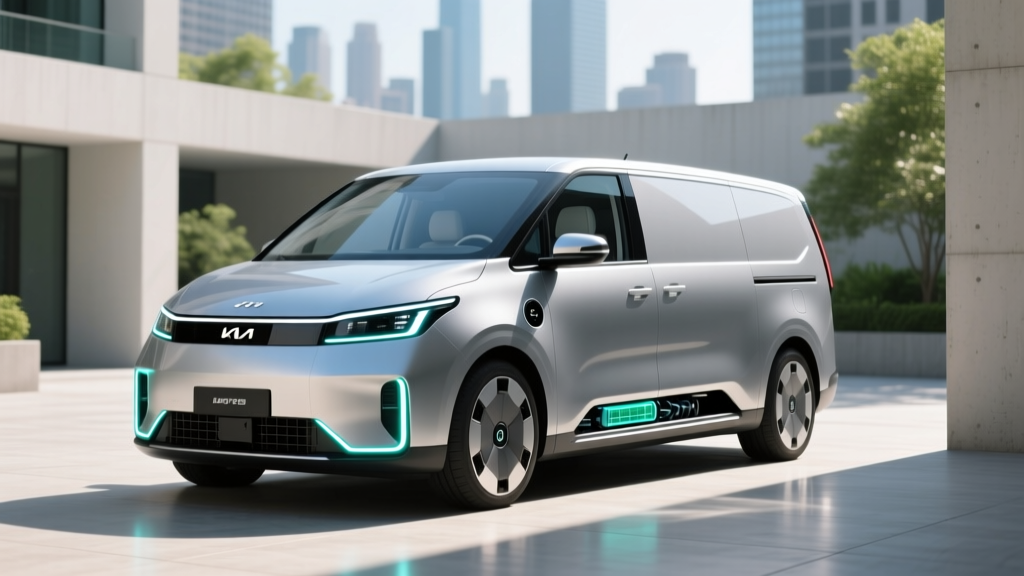
The 2026 Kia PV5 is a purpose-built electric van targeting commercial fleets, last-mile delivery operators, and small-business owners who need configurable cargo space with zero tailpipe emissions. Based on Kia's announced specs, the PV5 will offer an estimated 250–280 miles of EPA range (depending on wheelbase and body configuration), an 84 kWh usable battery pack, and DC fast charging up to 150 kW (10–80% in roughly 30 minutes). Pricing is expected to start around $45,000 for the base short-wheelbase cargo variant, rising to $55,000+ for long-wheelbase passenger configurations. For commercial buyers, the PV5 competes directly with the Ford E-Transit (126-mile EPA range) and the upcoming Rivian EDV, offering significantly more range than the E-Transit at a higher entry price. If you have predictable daily routes under 200 miles, access to depot or home Level 2 charging, and want to reduce per-mile operating costs, the PV5 is a strong candidate. If your routes regularly exceed 250 miles or you operate in extreme cold climates, range limitations require careful planning.
What Is the 2026 Kia PV5 Electric Van?
Kia unveiled its Purpose Beyond Vehicle (PBV) strategy at CES 2024, with the PV5 as the mid-size pillar of a three-vehicle electric van lineup. The PV5 rides on a dedicated EV platform — not a converted internal-combustion chassis — which gives it a flat floor, lower step-in height, and more interior volume than a retrofit. Kia plans three body styles: a short-wheelbase (SWB) cargo van, a long-wheelbase (LWB) cargo van, and a passenger-configurable variant that can serve as a shuttle or rideshare vehicle. The modular rear body — Kia calls it a "multi-purpose body" — allows upfitters to install shelving, refrigeration units, or custom passenger seating.
Production is scheduled to begin at Kia's new PBV factory in Hwaseong, South Korea, with US deliveries anticipated in late 2025 as a 2026 model-year vehicle. Specs below reflect Kia's published preliminary figures and may shift slightly before EPA certification.
| Spec | SWB Cargo | LWB Cargo | Passenger |
|---|---|---|---|
| Estimated EPA Range | ~280 mi | ~260 mi | ~250 mi |
| Battery (usable) | 84 kWh (NMC) | 84 kWh (NMC) | 84 kWh (NMC) |
| Motor Output | ~200 kW (268 hp) | ~200 kW (268 hp) | ~200 kW (268 hp) |
| Drivetrain | FWD | FWD | FWD |
| DC Fast Charge (peak) | 150 kW | 150 kW | 150 kW |
| 10–80% DC Charge | ~30 min | ~30 min | ~30 min |
| Level 2 AC Charge | 11 kW (~8 hr full) | 11 kW (~8 hr full) | 11 kW (~8 hr full) |
| Cargo Volume (est.) | ~230 cu ft | ~310 cu ft | N/A (7–9 seats) |
| Est. Starting MSRP | $45,000 | $50,000 | $55,000 |
| Powertrain Warranty | 10 yr / 100,000 mi (expected) | ||
PV5 vs. Gas Vans vs. Electric Competitors
The PV5's most direct comparison is against the Ford E-Transit, which has been on sale since 2022 with a 126-mile EPA range and a 68 kWh battery. The PV5 nearly doubles that range. Against gas-powered vans like the Ford Transit and Ram ProMaster, the comparison shifts to total cost of ownership rather than range alone.
| Metric | Kia PV5 (est.) | Ford Transit 250 (gas) |
|---|---|---|
| Fuel/Energy Cost per Mile | $0.05–$0.08 (electricity) | $0.18–$0.22 (gasoline at $3.50/gal) |
| Annual Fuel (15,000 mi) | $750–$1,200 | $2,700–$3,300 |
| Annual Maintenance | $400–$600 | $1,200–$1,800 |
| Oil Changes | None | 2–3 per year ($150–$225) |
| Brake Wear | Reduced (regen braking) | Standard replacement cycle |
| Estimated 5-Year Fuel Savings | $8,000–$12,000 (PV5 advantage) | |
The math favors the PV5 heavily for high-mileage fleet use. A delivery van covering 15,000 miles per year saves roughly $1,800–$2,400 annually on energy alone. Over five years, that's $9,000–$12,000 in fuel savings, which offsets a significant portion of the PV5's higher purchase price. Maintenance savings add another $3,000–$5,000 over the same period, as electric powertrains eliminate oil changes, spark plugs, timing belts, and exhaust system repairs. Regenerative braking extends brake pad life substantially — many EV fleet operators report brake replacements at 80,000–100,000 miles instead of the 30,000–50,000 miles typical for gas vans.
Real Costs: Purchase, Charging, Insurance & Incentives
Understanding the full financial picture requires looking beyond the sticker price. Here's a five-year total cost of ownership breakdown for the PV5 SWB Cargo compared to a gas Ford Transit 250.
| Cost Category | Kia PV5 SWB | Ford Transit 250 |
|---|---|---|
| Purchase Price (MSRP) | $45,000 | $42,000 |
| Federal Tax Credit (§30D) | Up to $7,500* | $0 |
| Effective Purchase Price | $37,500 | $42,000 |
| 5-Year Fuel/Energy | $5,000 | $15,000 |
| 5-Year Maintenance | $2,500 | $7,500 |
| 5-Year Insurance (est.) | $9,000 | $7,500 |
| Estimated Resale (5 yr) | -$18,000 | -$15,000 |
| 5-Year Net Cost | $36,000 | $57,000 |
*Federal tax credit eligibility under IRS §30D depends on MSRP caps (vans capped at $80,000 — PV5 qualifies), buyer income limits ($300,000 joint / $225,000 head of household / $150,000 single for personal purchases; commercial fleet buyers may qualify under §45W instead), and battery component/critical mineral sourcing requirements that tighten annually. For 2026 model-year vehicles, verify eligibility at purchase time — rules can shift. The credit can now be transferred to the dealer as a point-of-sale discount, reducing your out-of-pocket cost immediately.
Charging cost breakdown: At the US average commercial electricity rate of $0.13/kWh, fully charging the PV5's 84 kWh battery costs approximately $10.92. That translates to roughly $0.04–$0.05 per mile. Depot-based fleet charging (installing Level 2 chargers at your business) typically costs $0.03–$0.06/kWh depending on your utility's commercial rate and demand charges. Public DC fast charging at networks like Electrify America or EVgo runs $0.35–$0.48/kWh, pushing per-mile cost to $0.12–$0.18 — still cheaper than gas but not the primary use case for a van that should charge overnight at a depot.
Insurance note: EV commercial insurance premiums run 10–25% higher than equivalent gas vehicles, driven by higher repair costs for battery and structural components after collisions. Expect $1,600–$2,000 annually for the PV5 vs. $1,300–$1,600 for a Transit. Get quotes from commercial insurers like Progressive Commercial, Hartford, and Liberty Mutual before committing.
Charging the PV5: Home, Depot & Public Infrastructure
The PV5's 150 kW peak DC fast-charging rate is moderate by 2026 passenger-car standards (many sedans and SUVs now hit 250–350 kW), but it's appropriate for a commercial van that charges primarily overnight. Here's what each charging level looks like in practice:
| Level | Power | Miles Added per Hour | Full Charge Time | Best For |
|---|---|---|---|---|
| Level 1 (120V outlet) | ~1.4 kW | ~4–5 mi/hr | ~60+ hours | Emergency top-up only |
| Level 2 (240V, 48A) | 11 kW | ~35 mi/hr | ~8 hours | Overnight depot/home charging |
| DC Fast (CCS/NACS) | 150 kW peak | ~180 mi/hr (peak) | 10–80% in ~30 min | Mid-shift top-up, road trips |
kW vs. kWh — the critical distinction: kW (kilowatts) measures charging power — how fast energy flows into the battery. kWh (kilowatt-hours) measures battery capacity — how much total energy the battery stores. The PV5's 84 kWh battery charged at a peak rate of 150 kW will not charge in 34 minutes (84 ÷ 150). That math only works at sustained peak rate, which never happens. Charging slows above 80% state of charge to protect the battery — the "charge curve taper." That's why the 10–80% time is ~30 minutes, but 80–100% adds another 25–35 minutes.
Depot charging setup for fleet buyers: Installing commercial Level 2 chargers at a business depot typically costs $3,000–$7,000 per stall (charger hardware + electrical work + permitting). For a 5-van fleet, budget $20,000–$40,000 for a complete depot charging installation, including potential panel upgrades. Many utilities offer commercial EV charging incentives and make-ready programs that offset 50–100% of electrical infrastructure costs — check with your local utility before installation. A licensed electrician should assess your facility's panel capacity; older commercial buildings may need a service upgrade from 200A to 400A, adding $5,000–$15,000.
Common Misconceptions About Electric Cargo Vans
| Myth | Fact |
|---|---|
| "Electric vans can't handle heavy payloads." | The PV5's estimated payload capacity is 2,000–2,600 lbs, competitive with mid-size gas vans. The battery adds weight but the electric motor delivers instant torque (no turbo lag), making it feel responsive even loaded. |
| "The battery will need expensive replacement within a few years." | Kia is expected to offer a 10-year/100,000-mile battery warranty (consistent with their EV lineup). NMC batteries in commercial use typically retain 80–85% capacity after 150,000 miles. Full replacement costs $12,000–$18,000 but is rarely needed within the warranty period. |
| "You can't use an EV van in cold weather." | Cold weather reduces range by 20–30%, which is real and must be planned for. However, preconditioning the battery while plugged in (warming it before departure) recovers much of that loss. Fleet operators in Chicago and Minneapolis successfully run electric vans year-round by adjusting route lengths in winter. |
| "Charging takes too long for commercial use." | Overnight Level 2 charging adds ~35 miles per hour — an 8-hour shift charges the full battery. For most delivery routes under 200 miles, mid-day charging isn't needed. The 30-minute DC fast charge covers the minority of days requiring a mid-shift top-up. |
| "There aren't enough public chargers for a van." | Most commercial vans should charge at a depot, not public stations. Public DC fast chargers are a backup, not a primary strategy. That said, the PV5's CCS/NACS compatibility means it can use Tesla Superchargers (via adapter or native NACS port), Electrify America, and EVgo networks when needed. |
Who Should Buy the 2026 Kia PV5 — And Who Shouldn't
Decision Framework: Is the PV5 Right for Your Operation?
Choose the Kia PV5 if:
- Your daily routes are under 200 miles (temperate) or 160 miles (cold climate)
- You have access to overnight Level 2 charging at a depot, garage, or home
- You drive 12,000+ miles per year (higher mileage = faster payback on the EV premium)
- You operate in a city or metro area with utility commercial EV charging incentives
- You value lower per-mile operating costs and reduced maintenance downtime
- You need a configurable cargo or passenger platform with modern telematics
Look elsewhere (or plan carefully) if:
- Your routes regularly exceed 250 miles without a mid-day charging opportunity
- You lack access to any form of overnight charging (apartment dwellers, no depot space)
- You operate exclusively in extreme cold (regular sub-zero temps) without route-length flexibility
- Your budget can't absorb the higher upfront cost, even with tax credit offsets
- You need a heavy-duty Class 3+ van — the PV5 is a mid-size, light-duty platform
- You require towing — the PV5 is not expected to be rated for significant trailer towing
For buyers who need more range or heavy towing, the Ford E-Transit's shorter range is a dealbreaker for some, while the Rivian EDV (built for Amazon but potentially available to other fleets) offers different capacity trade-offs. For buyers whose routes fit within the PV5's envelope, the operating cost advantage is substantial and the driving experience — quiet, torque-rich, vibration-free — reduces driver fatigue over long shifts.
First-Time EV Buyer Checklist: What to Know Before Ordering
If the PV5 is your first electric vehicle — personal or commercial — here's what to prepare before taking delivery:
- Assess your charging situation first. Can you install a Level 2 (240V) charger where the van parks overnight? If it's a commercial depot, get an electrician's assessment of panel capacity. If it's a home garage, expect $500–$2,500 for a Level 2 installation depending on distance from the panel and whether a panel upgrade is needed.
- Verify tax credit eligibility before purchase. The §30D credit has income caps, MSRP caps, and battery sourcing requirements that change yearly. Commercial buyers purchasing under a business entity may qualify under §45W instead (up to $7,500 for vehicles under 14,000 lbs GVWR). Consult a tax professional.
- Understand your utility's rate structure. Time-of-use (TOU) rates mean charging at night (off-peak) can cost 40–60% less than daytime charging. Some utilities offer dedicated EV rates for commercial customers.
- Plan for cold-weather range reduction. If you operate in freezing climates, build routes around 70% of the EPA range in winter. Preconditioning while plugged in is essential.
- Download the charging network apps. Even if depot charging is primary, have Electrify America, EVgo, and ChargePoint accounts set up for the rare day you need a public fast charge. The PV5 is expected to support Plug & Charge (automatic authentication when you plug in at compatible stations).
- Get insurance quotes early. Commercial EV insurance varies widely by insurer. Some specialty carriers offer better rates for electric fleet vehicles.
Frequently Asked Questions
When will the 2026 Kia PV5 be available in the US?
Kia has announced US deliveries beginning in late 2025 as a 2026 model-year vehicle. Initial availability may be limited to select metro markets and fleet buyers before expanding to retail. Check with your local Kia commercial dealer for allocation timelines.
Does the Kia PV5 qualify for the $7,500 federal tax credit?
The PV5 is expected to qualify for up to $7,500 under §30D for personal purchases (subject to buyer income caps and battery sourcing rules) or under §45W for commercial/business purchases. The van's MSRP falls well below the $80,000 cap for vans/SUVs. However, battery component and critical mineral sourcing requirements tighten each year — confirm eligibility at point of purchase. The credit can be applied as a point-of-sale discount through a registered dealer.
How does the PV5's range compare to the Ford E-Transit?
The PV5's estimated 250–280 miles of EPA range nearly doubles the Ford E-Transit's 126-mile EPA rating. This is the PV5's single largest competitive advantage. However, the E-Transit has been on sale since 2022 and has an established dealer and service network, while the PV5 is a new entrant with a less proven support infrastructure in the US market.
Can I charge the PV5 at Tesla Superchargers?
Kia has been transitioning to the NACS (North American Charging Standard) connector for its newer EVs. If the PV5 ships with a native NACS port, it will access Tesla Superchargers directly. If it ships with CCS, a Kia-approved adapter will enable Supercharger access. Confirm the connector type at purchase — this matters for route planning.
What happens if the battery degrades over time?
Kia is expected to warranty the PV5's battery for 10 years or 100,000 miles against capacity loss below 70% of original. In practice, modern NMC batteries in commercial fleet use (with mostly Level 2 charging and limited DC fast charging) typically retain 80–88% capacity at 100,000 miles. If degradation does trigger a warranty claim, Kia covers the repair or replacement. Out-of-warranty battery replacement costs $12,000–$18,000, but this scenario is uncommon within the first 150,000+ miles.
Is the PV5 suitable for passenger shuttle or rideshare use?
The passenger variant seats an estimated 7–9 occupants and offers the quiet, smooth ride quality that EVs are known for — a significant comfort upgrade for passengers compared to a diesel shuttle. The 250-mile estimated range covers most airport shuttle, hotel shuttle, and corporate transport routes. Verify local rideshare/TNC vehicle requirements in your jurisdiction before purchasing for that purpose.