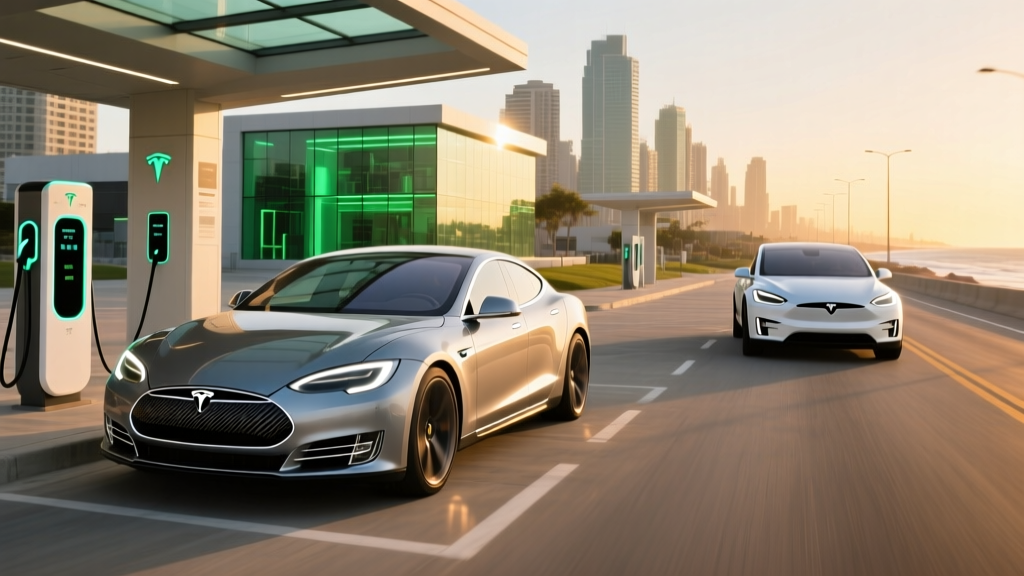
After more than a decade of defining the premium electric sedan and SUV segments, Tesla has officially wound down production of the Model S and Model X. For 2026, the automaker confirmed it will not offer new model-year variants of either vehicle, shifting its Fremont factory capacity toward next-generation platforms and its robotics division. If you've been searching for tesla discontinued model s model x news, here's the definitive breakdown of what happened, what remaining inventory looks like, and whether these legacy flagships are still worth your money in 2026.
Range Reality Check
EPA Estimated: Model S Long Range — 402 miles | Model X Long Range — 348 miles
Real-World Expectation: Highway cruising at 75 mph drops range to ~320 mi (Model S) and ~275 mi (Model X). In sub-freezing winter conditions, expect an additional 15–25% reduction due to battery thermal demands and cabin heating. Plan road trips around ~260–290 usable miles per charge in mixed conditions.
Why Tesla Discontinued the Model S and Model X
Tesla's decision wasn't sudden — it was a long-telegraphed pivot. The Model S launched in 2012 and the Model X in 2015, but by 2025, combined global sales of both vehicles had fallen below 30,000 units annually. The aging Fremont production line required significant retooling that Tesla chose not to invest in. Instead, the company is redirecting engineering and manufacturing resources toward its more affordable next-generation vehicle platform, the Cybertruck production ramp, and the Optimus humanoid robot program.
For buyers, this means Tesla will continue to honor all existing warranties and provide service parts, but no 2026 model-year versions will be produced. Dealerships and Tesla's online inventory may still have leftover 2025 model-year units at discounted prices — which creates a narrow window for bargain hunters willing to accept the risks of a discontinued model.
Specs That Still Impress: 2025 Model S and Model X at a Glance
Before evaluating whether to buy, let's anchor the discussion in hard numbers. These are the final production specs for the 2025 model year — the last versions you'll find in new-car inventory.
| Specification | Model S Long Range | Model S Plaid | Model X Long Range | Model X Plaid |
|---|---|---|---|---|
| EPA Range | 402 mi | 359 mi | 348 mi | 326 mi |
| Battery (usable) | ~95 kWh (NMC) | ~95 kWh (NMC) | ~95 kWh (NMC) | ~95 kWh (NMC) |
| Drivetrain | Dual-Motor AWD | Tri-Motor AWD | Dual-Motor AWD | Tri-Motor AWD |
| Horsepower | 670 hp | 1,020 hp | 670 hp | 1,020 hp |
| 0–60 mph | 3.1 sec | 1.99 sec | 3.8 sec | 2.5 sec |
| Peak DC Fast Charge | 250 kW | 250 kW | 250 kW | 250 kW |
| 10–80% DC Charge | ~30 min | ~30 min | ~32 min | ~32 min |
| Level 2 Home Charge | 11.5 kW (~34 mi/hr) | 11.5 kW (~34 mi/hr) | 11.5 kW (~34 mi/hr) | 11.5 kW (~34 mi/hr) |
| MPGe (combined) | 120 MPGe | 116 MPGe | 109 MPGe | 103 MPGe |
| Efficiency | 28 kWh/100 mi | 29 kWh/100 mi | 31 kWh/100 mi | 33 kWh/100 mi |
| Cargo (rear seats up) | 28 cu ft | 28 cu ft | 42 cu ft | 42 cu ft |
| Cargo (rear seats folded) | 79 cu ft | 79 cu ft | 92 cu ft | 92 cu ft |
| Seating | 5 passengers | 5 passengers | 5, 6, or 7 passengers | 5, 6, or 7 passengers |
| Rear Legroom | 40.9 in | 40.9 in | 41.1 in | 41.1 in |
| Battery Warranty | 8 yr / 150,000 mi | 8 yr / 150,000 mi | 8 yr / 150,000 mi | 8 yr / 150,000 mi |
Source: EPA fueleconomy.gov, Tesla 2025 specifications
Charging Performance: What Owners Actually Experience
Tesla's 250 kW V3 Supercharger network remains one of the most reliable DC fast-charging ecosystems available. On a V3 stall, both the Model S and Model X can accept a peak charge rate of 250 kW, though — as with all EVs — that peak is only sustained briefly at a low state of charge (SoC).
In practice, a 10–80% charge takes approximately 30 minutes for the Model S and 32 minutes for the Model X. Above 80% SoC, the charge curve tapers sharply to protect the NMC battery chemistry, adding another 15–20 minutes to reach full. For road-trip planning, budget 25–30 minutes per Supercharger stop and aim to charge from roughly 10% to 80% rather than topping off completely.
At home on a Tesla Wall Connector (48-amp, 11.5 kW), both vehicles add approximately 34 miles of range per hour of charging. A full overnight charge from 20% to 100% takes roughly 7–8 hours. If your home electrical panel supports only a 40-amp circuit (9.6 kW), expect about 28 miles per hour of charge. Always have a licensed electrician evaluate your panel capacity before installation.
One important note: Tesla vehicles use the proprietary Tesla connector (now transitioning to NACS for newer models). The Model S and Model X use Tesla's legacy connector, which is compatible with all Supercharger stalls and, via adapter, with J1772 Level 2 public chargers. If you plan to use CCS-based public chargers (Electrify America, EVgo), you'll need a Tesla-to-CCS adapter.
Pricing, Tax Credits, and the Discontinuation Discount
Here's where the discontinuation story gets interesting for buyers. Final MSRP figures for the 2025 model year were as follows:
| Trim | Base MSRP | Federal §30D Credit | Effective Price |
|---|---|---|---|
| Model S Long Range | $79,990 | Not eligible (MSRP exceeds $55,000 sedan cap) | $79,990 |
| Model S Plaid | $94,990 | Not eligible (MSRP exceeds $55,000 sedan cap) | $94,990 |
| Model X Long Range | $84,990 | Not eligible (MSRP exceeds $80,000 SUV cap) | $84,990 |
| Model X Plaid | $99,990 | Not eligible (MSRP exceeds $80,000 SUV cap) | $99,990 |
Under current IRS §30D rules, the federal EV tax credit imposes MSRP caps of $55,000 for sedans and $80,000 for SUVs, along with adjusted gross income limits ($150,000 single / $300,000 joint filers) and battery critical-mineral sourcing requirements. Because every Model S and Model X trim exceeds these price caps, neither vehicle qualifies for the $7,500 federal tax credit — regardless of buyer income or battery sourcing.
However, Tesla and individual dealers have been offering discontinuation discounts on remaining 2025 inventory. Buyers have reported negotiated discounts of $5,000–$12,000 off MSRP, depending on region and how long the vehicle has sat in inventory. Additionally, some states offer their own EV rebates that are not bound by federal MSRP caps — check your state's energy office or DMV for current programs.
Technology and Driver Assistance: Still Competitive?
The Model S and Model X share Tesla's latest infotainment platform, featuring a 17-inch center touchscreen with excellent responsiveness, over-the-air (OTA) software updates, a built-in app ecosystem, and Tesla's premium audio system (22 speakers in the Model S, 22 in the Model X). The yoke-style steering wheel remains standard, though a traditional round wheel is available at no extra charge.
On the driver-assistance front, every Model S and Model X ships with Tesla's Basic Autopilot (adaptive cruise control, lane-keeping assist). The optional Full Self-Driving (Supervised) package — currently priced at $8,000 or $99/month — adds automated lane changes, traffic light and stop sign recognition, and Navigate on Autopilot.
Tesla's Autopilot and FSD (Supervised) are classified as SAE Level 2 driver-assistance systems. The driver must remain fully attentive, keep hands on the wheel (or demonstrate attentiveness via the cabin camera), and be prepared to take over at any moment. These systems do not make the vehicle self-driving. Only Level 4 services like Waymo operate without a human driver in defined geographic areas.
The Model X's signature feature remains its Falcon Wing rear doors — dramatic, practical for loading child seats in tight parking spaces, but historically a source of maintenance complexity. The Model S offers a front trunk (frunk) with approximately 5.3 cu ft of space, useful for charging cables or small bags.
Notable drawbacks of the final-generation vehicles include panel-gap inconsistency (a long-running Tesla issue that improved but never fully resolved), the absence of Apple CarPlay and Android Auto, and a ride quality that some reviewers found firm compared to German luxury competitors like the Mercedes EQS and BMW iX.
Who Should Still Consider a Model S or Model X?
Even as discontinued models, the Model S and Model X serve specific use cases well:
- Road-trip enthusiasts: With 402 miles of EPA range (Model S LR) and access to the Supercharger network, long-distance travel remains a strong suit. Real-world highway range of ~320 miles means fewer stops than most competitors.
- Performance sedan buyers: The Model S Plaid's 1.99-second 0–60 time is still among the fastest of any production car, electric or otherwise.
- Large families needing an EV: The Model X offers 6- and 7-seat configurations — a rarity in the electric SUV segment — with up to 92 cu ft of cargo space.
- Tesla ecosystem loyalists: If you're already invested in the Supercharger network, Powerwall integration, and OTA update cadence, staying within the Tesla family has tangible convenience benefits.
Who should look elsewhere? Buyers who prioritize cutting-edge interior luxury, those who want the latest vehicle architecture (the Model S/X platform dates to 2012/2015), and anyone counting on the federal tax credit to offset the purchase price.
How Do They Compare to 2026 Competitors?
The premium EV landscape has shifted dramatically. Here's how the discontinued Teslas stack up against current alternatives:
| Vehicle | EPA Range | 0–60 mph | Peak DC Charge | Base MSRP | §30D Credit |
|---|---|---|---|---|---|
| 2025 Tesla Model S LR | 402 mi | 3.1 sec | 250 kW | $79,990 | No |
| 2026 Lucid Air Pure | 419 mi | 3.5 sec | 200 kW | $69,900 | No (exceeds cap) |
| 2026 Mercedes EQS 450+ | 390 mi | 5.9 sec | 200 kW | $104,400 | No |
| 2025 Tesla Model X LR | 348 mi | 3.8 sec | 250 kW | $84,990 | No |
| 2026 BMW iX xDrive50 | 324 mi | 4.4 sec | 200 kW | $87,250 | No |
| 2026 Rivian R1S (Dual) | 352 mi | 4.5 sec | 220 kW | $75,900 | Partial* |
*Rivian R1S eligibility depends on trim MSRP and battery sourcing. Verify at fueleconomy.gov.
The Lucid Air Pure offers more range at a lower price, though its charging speed is slower and its service-center footprint is smaller. The Mercedes EQS delivers superior interior luxury but at a steep price premium. The Rivian R1S is the only competitor here that may qualify for partial federal credit, and it offers genuine off-road capability and 7-seat configuration — a credible Model X alternative for families.
Pros
- Class-leading range (Model S: 402 mi EPA)
- Access to Tesla Supercharger network (17,000+ stalls in North America)
- Plaid performance is unmatched (1.99 sec 0–60)
- Regular OTA software updates continue
- Model X offers rare 6/7-seat EV configuration
- Discontinuation discounts on remaining inventory
- Strong battery warranty: 8 yr / 150,000 mi
Cons
- No federal §30D tax credit eligibility
- Aging platform design (2012/2015 origins)
- Long-term parts availability uncertainty post-discontinuation
- No Apple CarPlay or Android Auto
- Panel-gap quality inconsistency
- Falcon Wing doors (Model X) add repair complexity
- Resale value depreciation risk as a discontinued model
- Charging speed (250 kW) now trailing 800V competitors
The Long-Term Ownership Question
Buying a discontinued vehicle always carries a residual-value risk. Historically, discontinued models depreciate faster once manufacturer support begins to wind down. However, Tesla has committed to maintaining parts supply and service support for the Model S and Model X for a minimum of 10 years after the end of production. The 8-year/150,000-mile battery and drive unit warranty remains fully honored.
The NMC battery chemistry in both vehicles has demonstrated solid longevity data. Tesla's own impact reports show average battery degradation of approximately 12% after 200,000 miles for vehicles with similar pack architecture. That means a Model S with 402 miles of original range would still offer roughly 354 miles after 200,000 miles of driving — still more than most new EVs on the market today.
For used-car buyers, the discontinuation may actually create an opportunity: expect 2024–2025 Model S and Model X listings on the used market to carry significant depreciation discounts by late 2026 and into 2027, making them compelling value propositions for buyers who accept the trade-offs.
Decision Framework: Should You Buy?
Buy a remaining Model S if:
- You want 400+ miles of range and access to the best charging network
- You can negotiate a $5,000–$10,000 discount off MSRP on leftover inventory
- Performance is a priority and the Plaid's 1,020 hp appeals to you
- You plan to own the vehicle for 5+ years and accept above-average depreciation
Buy a remaining Model X if:
- You need a 6- or 7-seat electric SUV and the Rivian R1S doesn't fit your needs
- Falcon Wing doors genuinely improve your daily loading routine
- You value Supercharger network access for family road trips
Look elsewhere if:
- You want the federal $7,500 tax credit (consider Rivian R1S, select trims of other EVs)
- You prioritize the latest vehicle architecture and interior luxury
- Long-term resale value is a top concern
- You want Apple CarPlay/Android Auto integration
Frequently Asked Questions
What is the real-world range of the Tesla Model S and Model X?
The EPA rates the Model S Long Range at 402 miles and the Model X Long Range at 348 miles. In real-world highway driving at 75 mph, expect approximately 320 miles (Model S) and 275 miles (Model X). Cold weather below 32°F can reduce range by an additional 15–25%, bringing effective winter highway range to roughly 250–275 miles for the Model S and 210–235 miles for the Model X.
How fast do the Model S and Model X charge?
Both vehicles accept a peak DC fast-charge rate of 250 kW on Tesla V3 Superchargers, achieving a 10–80% charge in approximately 30–32 minutes. At home on a Level 2 Tesla Wall Connector (11.5 kW), they add about 34 miles of range per hour. Note that 250 kW is the peak rate — sustained charging averages closer to 150–180 kW across the full 10–80% session due to the charge curve taper.
Does the Model S or Model X qualify for the federal EV tax credit?
No. Under current IRS §30D rules, the federal clean vehicle credit imposes an MSRP cap of $55,000 for sedans and $80,000 for SUVs. All Model S and Model X trims exceed these caps. Buyer income limits ($150,000 single / $300,000 joint) and battery critical-mineral sourcing requirements also apply to the credit generally, but the MSRP cap alone disqualifies both vehicles.
Is it worth buying a discontinued Tesla Model S or Model X?
It can be — if you negotiate a significant discount on remaining 2025 inventory and accept the depreciation risk. The Supercharger network, strong range, and proven powertrain are genuine advantages. However, if resale value, the latest tech platform, or tax-credit eligibility are priorities, competitors like the Lucid Air, Rivian R1S, or BMW iX may serve you better.
Will Tesla still service the Model S and Model X?
Yes. Tesla has committed to providing parts and service support for at least 10 years after end of production. The 8-year/150,000-mile battery and drive unit warranty remains fully in effect. Mobile service and Supercharger access continue unchanged.
What happens to resale value now that they're discontinued?
Discontinued vehicles typically experience accelerated depreciation in the first 2–3 years after production ends, particularly if the manufacturer's long-term parts commitment is uncertain. Tesla's 10-year service pledge should moderate this effect, but expect steeper depreciation than a current-production model. This makes the used market (2–3 years post-discontinuation) a potentially strong value opportunity for patient buyers.