The short answer: There is no Honda Fit electric car sold in the United States. Honda never produced a fully electric version of the Fit (known as the Jazz outside North America) for the U.S. market, and the gas-powered Fit was discontinued after the 2020 model year. The closest thing Honda ever built was the Honda e, a retro-styled subcompact EV sold only in Europe and Japan with roughly 137 miles of WLTP range — far too limited for American buyers and never officially imported. If you want a small, practical, Honda-like EV in 2026, your real options are the Nissan LEAF (starting ~$28,140, up to 212 miles EPA), the Hyundai Kona Electric (~$32,975, 261 miles EPA), or Honda's own Prologue midsize SUV (283–296 miles EPA, starting ~$47,400). For Fit-like affordability and city efficiency, a certified pre-owned gas Fit or a compact hybrid like the Toyota Prius remains hard to beat on pure cost.
Why the Honda Fit Electric Car Doesn't Exist in America
The third-generation Honda Fit (2015–2020) was one of the best subcompacts ever sold in the U.S.: 33 MPG combined, 52.7 cubic feet of cargo with the rear seats folded, and Honda's clever Magic Seat system. But Honda chose not to electrify it for the American market. Instead, in 2020, Honda pulled the Fit from U.S. showrooms entirely, citing declining subcompact sales and tightening emissions standards that made the low-margin model difficult to justify.
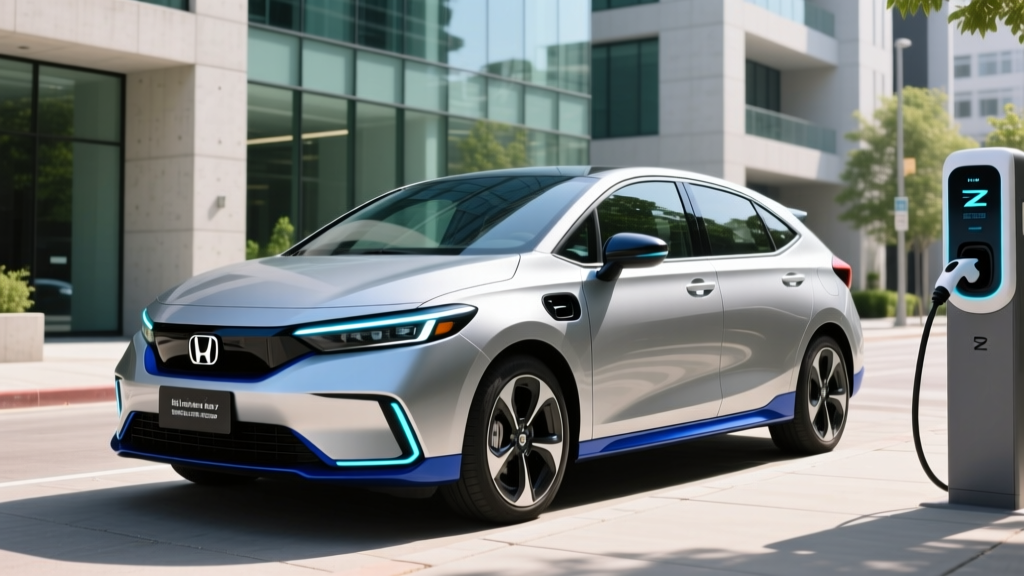
The Honda e, which debuted in Europe in 2020, was the spiritual EV successor. It featured a 35.5 kWh battery, 154 hp, and a charming design. But its WLTP-rated range of 222 km (~137 miles) was considered inadequate even for European city drivers. Real-world highway range dropped closer to 100 miles. Honda discontinued the e in 2024 due to weak sales. It was never homologated for the U.S., meaning no EPA testing, no NHTSA crash ratings, and no dealer support stateside.
Honda's U.S. EV strategy pivoted to larger vehicles. The 2024–2026 Honda Prologue, built on General Motors' Ultium platform, is Honda's first mainstream American EV — but it's a two-row SUV starting near $47,000, nothing like the $17,000 Fit of old.
Best Alternatives if You Want a Fit-Sized EV in 2026
Since the Honda Fit electric car isn't an option, here are the closest substitutes for buyers who want small dimensions, city-friendly efficiency, and cargo versatility:
| Vehicle | Powertrain | EPA Range / MPG | Starting MSRP | Cargo (rear seats down) |
|---|---|---|---|---|
| Nissan LEAF S (40 kWh) | BEV | 149 mi EPA | ~$28,140 | 30.0 cu ft |
| Nissan LEAF SV Plus (60 kWh) | BEV | 212 mi EPA | ~$36,190 | 30.0 cu ft |
| Hyundai Kona Electric SEL | BEV | 261 mi EPA | ~$32,975 | 63.7 cu ft |
| Honda Prologue EX | BEV | 296 mi EPA (FWD) | ~$47,400 | 57.7 cu ft |
| Toyota Prius LE (2026) | HEV | 57 MPG combined | ~$28,550 | 50.7 cu ft |
| Honda Fit (2020 CPO) | Gas | 33 MPG combined | ~$16,000–$19,000 | 52.7 cu ft |
The Kona Electric stands out as the closest Fit analogue in the EV space: similar footprint, hatchback cargo area, and enough range for road trips. The LEAF SV Plus is a strong value pick, though its CHAdeMO connector (not CCS/NACS) limits future DC fast-charging access as networks standardize around NACS. The Prologue offers more space and range but at nearly $15,000 more than a Kona.
Real Costs: EV Subcompact vs. Used Honda Fit vs. Hybrid
Let's compare five-year ownership costs for a buyer choosing between a new Kona Electric, a new Prius hybrid, and a certified pre-owned 2020 Honda Fit. This breakdown assumes 12,000 miles per year, home Level 2 charging at the U.S. average electricity rate of ~$0.17/kWh, and gas at $3.30/gallon.
| Cost Category (5 Years) | 2026 Kona Electric SEL | 2026 Toyota Prius LE | 2020 Honda Fit EX (CPO) |
|---|---|---|---|
| Purchase Price (MSRP) | $32,975 | $28,550 | $17,500 |
| Federal Tax Credit (§30D) | Up to $7,500* | $0 (HEV ineligible) | $0 |
| Effective Purchase Price | ~$25,475 | $28,550 | $17,500 |
| Fuel / Electricity (60,000 mi) | ~$2,850 | ~$4,160 | ~$6,000 |
| Maintenance (est.) | ~$1,200 | ~$2,500 | ~$3,000 |
| Insurance (avg. 5 yr) | ~$9,500 | ~$8,000 | ~$6,500 |
| Depreciation (est.) | ~$10,000 | ~$8,500 | ~$5,000 |
| Total 5-Year Cost | ~$49,025 | ~$51,710 | ~$38,000 |
*The §30D federal EV tax credit has income caps ($150K single / $300K joint), MSRP caps ($55K for cars), and battery-sourcing requirements that change annually. Check current IRS rules before relying on the full $7,500. As of 2026, the credit can be transferred to the dealer at point of sale for an instant discount.
The used Fit remains the cheapest option by a wide margin — about $11,000 less than the Kona over five years. But the Kona Electric, after the tax credit, closes the gap significantly and offers dramatically lower fueling costs. The Prius sits in the middle, with no charging dependency and excellent reliability.
Charging Realities for Subcompact EV Owners
Small EVs like the Kona Electric and LEAF have smaller batteries, which means faster charging times but also more noticeable range loss in cold weather and at highway speeds.
Kona Electric charging specs (2026):
- Battery: 64.8 kWh usable (NMC chemistry)
- Level 1 (120V, 1.4 kW): ~3–4 miles of range per hour — a full charge takes 40+ hours
- Level 2 (240V, 10.9 kW onboard): ~26 miles per hour; 10–100% in roughly 6.5 hours
- DC fast charge (CCS, peak ~100 kW): 10–80% in approximately 43 minutes; tapers significantly above 80%
The Kona's ~100 kW peak DC rate is a limitation compared to rivals like the Hyundai Ioniq 5 (which peaks at ~240 kW on 800V architecture). On a road trip, you'll spend noticeably more time at chargers. And with 64.8 kWh of usable capacity, expect real-world range to fall to 200–220 miles at sustained 70 mph highway speeds, and 170–190 miles in freezing temperatures due to cabin heating demands and reduced battery efficiency.
Home charging access is critical. If you can install a Level 2 charger (240V, ~$500–$1,500 for equipment and electrician depending on panel capacity), a subcompact EV is extremely convenient — plug in overnight, wake up to a full battery for under $4 in electricity. If you're apartment-dwelling or street-parking without charging access, a hybrid like the Prius avoids the public-charging dependency entirely.
Common Misconceptions About a Honda Fit EV
| Myth | Fact |
|---|---|
| "Honda makes an electric Fit you can buy in the U.S." | No. The Fit was discontinued in the U.S. after 2020. The Honda e was never sold here and was discontinued globally in 2024. |
| "The Honda Prologue is basically an electric Fit." | The Prologue is a midsize, two-row SUV starting at ~$47,400 — nearly three times the Fit's original MSRP and 1,000+ lbs heavier. |
| "Small EVs aren't worth it because of limited range." | The Kona Electric delivers 261 miles EPA — more than enough for 95% of American daily driving. The issue is road-trip charging speed, not daily range. |
| "EVs always save money vs. a cheap used gas car." | A CPO Honda Fit at $17,500 will cost less over 5 years than nearly any new EV, even after tax credits. EVs save on fuel and maintenance, but higher purchase prices and insurance offset some gains. |
| "I can import a Honda e from Europe or Japan." | U.S. import laws (25-year rule for most non-conforming vehicles) make this impractical. The e also lacks NHTSA certification and U.S.-spec charging hardware. |
Decision Framework: Which Path Should You Take?
Choose a new subcompact EV (Kona Electric, LEAF) if:
- You have reliable home Level 2 charging (garage or driveway with 240V access)
- Your daily commute is under 80 miles round-trip
- You qualify for the §30D federal tax credit (income under $150K single / $300K joint; check battery sourcing on fueleconomy.gov)
- You want low running costs and zero tailpipe emissions for daily driving
- You take road trips fewer than 4–5 times per year and can plan DC fast-charging stops
Choose a hybrid (Toyota Prius, Honda Civic Hybrid) if:
- You lack home charging access (apartment, street parking, no 240V circuit)
- You frequently drive 300+ miles in a single day and don't want to plan charging stops
- You live in a region with extreme cold (below 10°F) where EV range drops 20–30%
- You want new-car reliability and warranty without the EV price premium
Choose a certified pre-owned Honda Fit (2018–2020) if:
- Your total vehicle budget is under $20,000
- You need maximum cargo versatility in a subcompact footprint (the Fit's 52.7 cu ft and Magic Seats are unmatched)
- You drive fewer than 10,000 miles per year, minimizing fuel cost differences
- You want the absolute lowest 5-year total cost and don't mind an aging gas powertrain
What Honda's EV Future Holds (and Doesn't)
Honda has announced its "0 Series" EV lineup, beginning with models expected for the 2026–2027 model years. These will use Honda's own new dedicated EV platform, moving away from the GM Ultium underpinnings of the Prologue. However, Honda's announced 0 Series vehicles — a sedan and an SUV — are positioned above the compact segment. There is no indication that Honda plans to revive a Fit-class EV for the U.S. market.
The economics work against it: subcompact EVs carry nearly the same battery cost as larger vehicles but command lower MSRPs, compressing margins. Until battery costs drop substantially (solid-state or next-gen LFP cells), automakers will continue pushing buyers toward crossovers and SUVs. The Honda Fit electric car, unfortunately, remains a vehicle that should exist but probably won't — at least not in this decade.
Frequently Asked Questions
Did Honda ever make an electric Fit?
No. Honda produced the Fit with gasoline and hybrid powertrains (the hybrid was sold in Japan and Europe, not the U.S.). The closest Honda came to a small EV was the Honda e, a city car sold only in Europe and Japan from 2020–2024 with ~137 miles of WLTP range. It was never offered in the United States.
Can I buy a Honda e in the U.S.?
No. The Honda e was never certified by NHTSA or EPA for U.S. sale, and Honda did not import it. U.S. import regulations require a vehicle to be at least 25 years old (or go through an expensive federalization process) to be legally imported, making the Honda e effectively unavailable.
What is the cheapest small EV I can buy in 2026?
The Nissan LEAF S starts around $28,140 with 149 miles of EPA range. The LEAF SV Plus (~$36,190, 212 miles) and Hyundai Kona Electric (~$32,975, 261 miles) are the next most affordable. After the §30D tax credit (if you qualify), the effective price of the LEAF can drop below $21,000 — approaching used Fit territory.
Is the Honda Prologue a good alternative to a Fit EV?
The Prologue is a competent midsize SUV with 283–296 miles of EPA range and GM Ultium underpinnings. But at ~$47,400 to start, it's a different vehicle class entirely. If you need Fit-like city dimensions and cargo efficiency at a low price, the Prologue isn't the answer. It's better compared to a Tesla Model Y or Hyundai Ioniq 5.
How much does it cost to charge a subcompact EV at home?
At the U.S. average rate of ~$0.17/kWh, fully charging a Kona Electric's 64.8 kWh battery costs about $11. For a LEAF SV Plus (60 kWh usable), it's roughly $10.20. That provides 200–260 miles of range — equivalent to about $35–$45 in gasoline for a Fit getting 33 MPG. Over 12,000 miles per year, home EV charging saves approximately $600–$700 annually vs. fueling a gas Fit.
Will Honda ever make a small, affordable EV for America?
Honda's announced "0 Series" EVs target the midsize and larger segments. There is no confirmed plan for a subcompact Honda EV in the U.S. The global trend toward crossovers and the economics of battery packaging make a Fit-class EV unlikely before 2030, unless battery costs drop dramatically or regulatory pressure increases on the subcompact segment.