Why the 'Tesla to Discontinue Model S and X' Rumors Won't Go Away
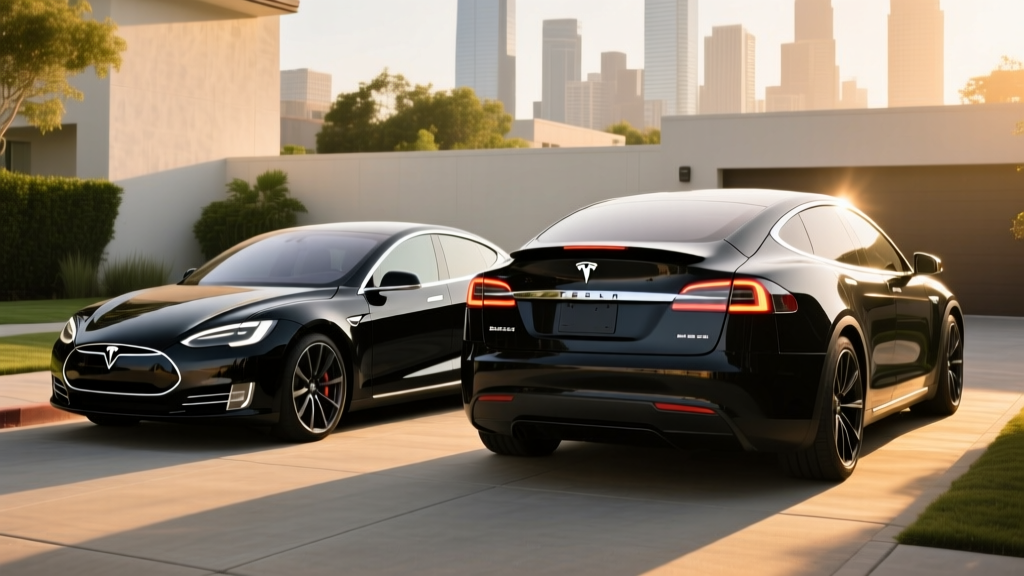
Every few quarters, speculation resurfaces that Tesla plans to sunset its original flagship sedans and SUVs. The search phrase "Tesla to discontinue Model S and X" trends whenever Elon Musk pivots public attention toward the Cybertruck, the next-generation compact platform, or Optimus robotics. Yet as of early 2026, both the Model S and Model X remain on sale, configurators are live, and Fremont continues to build them alongside the 3 and Y.
That said, the writing has been on the wall for years. Tesla has not given either vehicle a meaningful architectural refresh since the 2021 "Palladium" interior update. Sales volumes for S and X combined represent a low single-digit percentage of Tesla's total deliveries. For shoppers weighing a six-figure Tesla against a Lucid Air, BMW i7, or Mercedes EQS, the discontinuation chatter raises a practical question: Is it smart to buy a vehicle that might be discontinued?
This guide runs the full 2026 spec sheet, real-world ownership math, and the buy-or-wait decision framework so you can decide before any official announcement drops.
2026 Tesla Model S: Range, Battery, and Efficiency
| Spec | Model S Long Range | Model S Plaid |
|---|---|---|
| EPA Range | 402 mi | 396 mi |
| Battery (usable) | ~100 kWh, NMC | ~100 kWh, NMC |
| Drivetrain | Dual-Motor AWD | Tri-Motor AWD |
| Horsepower | 670 hp | 1,020 hp |
| 0-60 mph | 3.1 sec | 1.99 sec |
| Top Speed | 155 mph | 200 mph |
| MPGe (combined) | 124 MPGe | 116 MPGe |
| Efficiency | 28 kWh/100 mi | 30 kWh/100 mi |
| Cargo (rear + frunk) | 28.0 + 2.8 cu ft | 28.0 + 2.8 cu ft |
| Rear Legroom | 40.9 in | 40.9 in |
| Base MSRP | $79,990 | $94,990 |
The Model S Long Range still posts one of the highest EPA range figures of any production EV sold in the United States. According to fueleconomy.gov, the 402-mile sticker is legitimate — but real-world results depend heavily on how you drive.
EPA Sticker: 402 mi (Long Range) / 396 mi (Plaid)
70-mph highway loop: Expect ~330-350 mi in mild weather. The sedan's low drag coefficient (0.208 Cd) helps, but sustained high speeds still cut range roughly 12-18% below EPA.
Cold weather (below 32°F): Plan for 260-300 mi. The NMC pack loses more usable capacity to cold than an LFP chemistry would, and cabin heating draws heavily even with the standard heat pump.
City / suburban mixed: 370-395 mi is achievable thanks to aggressive regenerative braking.
Tesla uses NMC (nickel manganese cobalt) chemistry in both S trims. NMC offers higher energy density than LFP, which is why the 100 kWh-class pack fits in the sedan's skateboard — but it also means Tesla recommends daily charging to 80-90% for longevity, only going to 100% before road trips.
2026 Tesla Model X: What Changes (and What Doesn't)
| Spec | Model X Long Range | Model X Plaid |
|---|---|---|
| EPA Range | 335 mi | 320 mi |
| Battery (usable) | ~100 kWh, NMC | ~100 kWh, NMC |
| Drivetrain | Dual-Motor AWD | Tri-Motor AWD |
| Horsepower | 670 hp | 1,020 hp |
| 0-60 mph | 3.8 sec | 2.5 sec |
| MPGe (combined) | 104 MPGe | 98 MPGe |
| Cargo (behind 2nd row) | 42.1 cu ft | 42.1 cu ft |
| Max Cargo (folded) | 81.5 cu ft | 81.5 cu ft |
| Towing Capacity | 5,000 lb | 5,000 lb |
| Base MSRP | $84,990 | $99,990 |
The Model X sacrifices roughly 65 miles of EPA range compared to the Model S, a penalty driven by its taller, heavier, less aerodynamic body and those signature falcon-wing rear doors. The trade-off is genuine three-row utility: the optional six-seat layout with second-row captain's chairs is one of the most comfortable EV family configurations available, and the 5,000-pound tow rating lets it pull a light camper or pair of jet skis.
For 2026, Tesla has added a few incremental software features — improved cabin overheat protection, a new "Groceries" frunk automation mode, and slightly faster Supercharger preconditioning — but the hardware is unchanged from the 2021 Palladium refresh. If you're hoping for an 800-volt architecture or structural battery pack, you won't find it here.
Charging Speeds: DC Fast, Level 2, and the Curve Reality
Both the Model S and Model X use Tesla's proprietary NACS connector, which is now the North American industry standard. They access the full Supercharger network — over 6,000 stalls in the U.S. alone — plus third-party networks via the built-in NACS inlet.
| Charging Level | Power / Rate | Speed (approx.) | Use Case |
|---|---|---|---|
| Level 1 (120V) | 1.4 kW | ~4 mi/hr | Emergency / trickle |
| Level 2 (240V, 48A Wall Connector) | 11.5 kW | ~34 mi/hr | Home overnight |
| DC Fast (V3 Supercharger) | Peak 250 kW | 10-80% in ~30 min | Road trips |
| DC Fast (V4 Supercharger) | Peak 250 kW (S/X limited) | 10-80% in ~28 min | Road trips |
A critical nuance: while V4 Supercharger cabinets are rated for higher output, the Model S and X are limited by their 400-volt-class architecture to roughly 250 kW peak. Competitors on 800V platforms — Lucid Air, Hyundai Ioniq 5, Porsche Taycan — can accept 300-350 kW at compatible chargers. The Tesla also exhibits a pronounced charge-curve taper above 60% SoC, meaning the last 20% can take nearly as long as the first 60%. For road-trippers who routinely charge 10-80%, expect roughly 28-32 minutes at a V3 or V4 stall; if you need a full 100%, budget 55-65 minutes total.
At home, the Tesla Wall Connector at 48 amps delivers 11.5 kW — enough to replenish roughly 34 miles of range per hour, or a full pack in about 9-10 hours. Installation typically runs $800-$2,200 depending on panel proximity and whether your home needs a service upgrade (a 200-amp panel is recommended).
Tax Credit Eligibility: Does the Model S or X Qualify?
This is where the news turns disappointing for most buyers. Under current IRS §30D rules, the new clean vehicle credit has three hard caps that matter here:
- MSRP cap: Sedans must be under $55,000; SUVs/pickups under $80,000.
- Buyer income cap: AGI ≤ $150,000 single / $300,000 married filing jointly.
- Battery sourcing: Critical minerals and battery components must meet escalating domestic/FTEA thresholds.
The Model S starts at $79,990, which classifies as a sedan and blows past the $55,000 cap. It does not qualify for the federal $7,500 credit. The Model X starts at $84,990 but is classified by the IRS as an SUV (due to its GVWR), meaning it squeaks under the $80,000 SUV cap — except that its base price is already $84,990. So neither vehicle currently qualifies for the full new-vehicle credit at base MSRP.
| Model / Trim | Base MSRP | Federal §30D Credit | Effective Price |
|---|---|---|---|
| Model S Long Range | $79,990 | $0 (over $55k sedan cap) | $79,990 |
| Model S Plaid | $94,990 | $0 | $94,990 |
| Model X Long Range | $84,990 | $0 (over $80k SUV cap) | $84,990 |
| Model X Plaid | $99,990 | $0 | $99,990 |
State incentives vary — California's CVRP has income-limited rebates, Colorado offers a state credit up to $5,000, and some utilities offer $500-$1,000 for home charger installation. Always check your specific state and utility before purchase. A tax professional can confirm whether any point-of-sale transfer or leasing workaround (the "lessor loophole" under §45W) applies to your situation.
Tech, Interior, and Driver Assistance
The Palladium interior holds up well in 2026. The 17-inch center touchscreen is still one of the sharpest and most responsive in the industry, the yoke steering wheel remains love-it-or-hate-it (a conventional round wheel is a no-cost option), and the 22-speaker audio system is genuinely excellent. Build quality has improved since the pre-2021 era — panel gaps on our test vehicle were tight, and the vegan leather has held up without creasing.
Autopilot is standard and includes adaptive cruise, lane centering, and automatic emergency braking. Full Self-Driving (Supervised) is a $8,000 add-on (or $99/month subscription) that adds city-street navigation, traffic-light recognition, and lane changes. Crucially, FSD is SAE Level 2 — you must remain attentive with hands on the wheel and eyes on the road at all times. It is not autonomous driving.
Tesla Autopilot and FSD (Supervised) are Level 2 driver-assistance systems. The driver is fully responsible for vehicle operation. This is fundamentally different from Level 4 robotaxi services like Waymo, which operate without a human driver in geofenced areas.
The Model X's falcon-wing doors remain a party trick that doubles as a genuine convenience feature in tight parking spots — they articulate upward and need less lateral clearance than conventional doors. The trade-off: occasional sensor glitches in heavy rain and a complex hinge mechanism that is expensive to repair out of warranty.
Competitor Comparison: Is It Worth Buying?
If you're shopping a six-figure electric sedan or SUV, the competitive set is small but formidable:
| Attribute | Tesla Model S LR | Lucid Air Pure | BMW i7 xDrive50 | Mercedes EQS 450+ |
|---|---|---|---|---|
| Base MSRP | $79,990 | $74,900 | $106,895 | $105,550 |
| EPA Range | 402 mi | 419 mi | 318 mi | 390 mi |
| Peak DC Charge | 250 kW | 300 kW | 195 kW | 200 kW |
| 0-60 mph | 3.1 sec | 3.8 sec | 4.5 sec | 5.3 sec |
| Supercharger Access | Native NACS | NACS adapter | NACS adapter | NACS adapter |
Choose the Model S if: You want Supercharger-native road-trip capability, the quickest point-to-point performance in its class, and Tesla's software/OTA update cadence.
Choose the Lucid Air if: Maximum range and interior space are your priorities, and you don't mind relying on NACS adapters for Supercharger access.
Choose the BMW i7 or Mercedes EQS if: Build quality, dealer service infrastructure, and traditional luxury materials outweigh range and performance metrics.
Choose the Model X if: You need three-row seating, falcon-wing door convenience, and a 5,000-lb tow rating in an EV — there's still no direct rival at this price point.
Warranty, Reliability, and the Discontinuation Risk
Tesla covers the Model S and X with a 4-year/50,000-mile basic warranty and an 8-year/150,000-mile battery and drive unit warranty (with a 70% minimum capacity retention guarantee). That battery warranty is competitive with the industry, though Tesla's service-center network remains thinner than legacy automakers' — plan for potential mobile-ranger visits or multi-day service appointments in major metros.
On the discontinuation question itself: even if Tesla announces an end-of-production date, existing vehicles will continue to receive over-the-air software updates for years, and parts supply for a vehicle with a ~100 kWh NMC pack and dual/tri-motor drive units is unlikely to evaporate quickly. The greater risk is depreciation — discontinued models historically shed value faster once the market prices in reduced parts availability and no successor. If you plan to own the vehicle for 7-10 years, this matters less. If you lease or plan to trade in within 3 years, the residual-value risk is real.
- Class-leading EPA range (Model S: 402 mi)
- Native Supercharger network access — still the most reliable U.S. DC fast-charging network
- Tri-motor Plaid performance (1,020 hp, sub-2-sec 0-60)
- Excellent OTA software and infotainment
- Model X: only 3-row EV SUV with falcon-wing doors and 5,000-lb towing
- No federal §30D tax credit (MSRP too high)
- 400V architecture limits DC charging to 250 kW peak — outpaced by 800V rivals
- Pronounced charge-curve taper above 60% SoC
- Platform unchanged since 2021 — aging relative to Lucid, BMW, Mercedes
- Discontinuation risk could accelerate depreciation
- Falcon-wing doors (Model X): complex, expensive to repair out of warranty
Verdict: Should You Buy Before a Potential Discontinuation?
If the "Tesla to discontinue Model S and X" headlines are making you rush to the configurator, take a breath. The Model S Long Range remains a legitimately excellent long-range electric sedan with 402 miles of EPA range, 3.1-second 0-60 performance, and the best DC charging network in the country. The Model X still has no direct three-row EV SUV rival at its price point. Both vehicles will be supported with software updates and service parts for years regardless of production decisions.
However, if you're a spec-driven buyer comparing on paper, the aging 400V architecture, lack of federal tax-credit eligibility, and flat pricing since 2021 make a strong case for test-driving the Lucid Air (for sedan buyers) or waiting to see what Tesla's next-generation platform brings. Buy the Model S or X because you love what they are today — not because you're afraid of what might happen tomorrow.
Frequently Asked Questions
Has Tesla officially announced it will discontinue the Model S and X?
No. As of early 2026, Tesla has not made an official discontinuation announcement. Both vehicles remain available for order on Tesla.com, and the Fremont factory continues production. Elon Musk has occasionally hinted at streamlining Tesla's lineup, but no timeline has been confirmed.
What is the real-world range of the 2026 Tesla Model S?
The EPA rates the Model S Long Range at 402 miles. In real-world highway driving at 70 mph, expect 330-350 miles in mild weather and 260-300 miles in sub-freezing temperatures. City driving with regenerative braking can approach the EPA sticker.
How fast does the Model S charge at home and on the road?
At home on a 240V/48A Tesla Wall Connector (11.5 kW), the Model S adds roughly 34 miles of range per hour, or a full charge in about 9-10 hours. On a V3 or V4 Supercharger, it peaks at 250 kW and charges 10-80% in approximately 28-32 minutes, with a notable taper above 60% SoC.
Does the Tesla Model S or Model X qualify for the $7,500 federal EV tax credit?
No. The Model S exceeds the $55,000 MSRP cap for sedans, and the Model X exceeds the $80,000 cap for SUVs under current IRS §30D rules. Neither qualifies for the new clean vehicle credit. State incentives may still apply depending on your location and income.
Should I buy a Tesla Model S/X now or wait?
Buy now if the current specs, Supercharger access, and performance meet your needs and you plan to own the vehicle 5+ years. Wait if you want a potential next-gen platform, 800V charging architecture, or if the discontinuation risk concerns you for near-term resale value. Test-driving the Lucid Air and BMW i7 is recommended before committing.
What happens to service and parts if Tesla discontinues the Model S and X?
Tesla is legally required to honor warranty obligations, and the company has a track record of supporting discontinued variants (original Roadster, early Model S 60/70) with parts and service for years. OTA software updates typically continue long after production ends. However, third-party parts availability and resale value may decline over time.