Why Buying Tesla Direct Changes the EV Shopping Experience
If you've shopped for a conventional car, you know the drill: negotiate with a dealer, battle markup, and hope the invoice price bears some resemblance to reality. Tesla eliminated that entire dance by selling Tesla direct — straight from the manufacturer to the buyer through its website and company-owned showrooms. No franchised dealers, no haggling, no surprise destination fees buried in paperwork.
For 2026, the direct-sales model remains Tesla's biggest structural advantage and its most polarizing one. You get transparent pricing and a streamlined order process. You lose the ability to test-drive multiple trims back-to-back at a single lot and the leverage that dealer competition sometimes provides. This review focuses on the 2026 Tesla Model Y Long Range AWD — Tesla's best-selling vehicle and the one most buyers encounter when they land on Tesla's site.
2026 Tesla Model Y Long Range AWD: Core Specs at a Glance
| Spec | Value |
|---|---|
| EPA Range | 320 miles |
| Battery (usable) | ~75 kWh, NMC chemistry |
| Drivetrain | Dual-motor AWD |
| Horsepower | 384 hp (combined) |
| 0–60 mph | 4.8 seconds |
| Peak DC Fast Charge | 250 kW (CCS via NACS adapter or native NACS) |
| 10–80% DC Charge Time | ~27 minutes |
| Level 2 Home Charging | 11.5 kW (~44 mi/hr) |
| Efficiency | 122 MPGe combined / 28 kWh/100 mi |
| Cargo (rear seats up / folded) | 30.2 / 72.1 cu ft |
| Rear Legroom | 41.6 in |
| Base MSRP | $44,990 |
| Battery Warranty | 8 years / 120,000 miles (min 70% retention) |
Source: fueleconomy.gov, Tesla.com order page (2026 model year).
Real-World Range vs. the EPA Sticker
Real-World Expectation: ~270–290 miles on a highway road trip at 70–75 mph; ~240–260 miles in freezing weather (below 32°F) with cabin heat; ~300+ miles in mild city/suburban driving with regen braking.
The Model Y Long Range's 320-mile EPA figure is achievable in mixed driving during moderate temperatures. But EPA tests don't capture sustained highway speeds or winter conditions — the two scenarios where EV range contracts most noticeably.
In our experience and consistent with third-party testing from outlets like Edmunds and Consumer Reports, expect to lose roughly 10–15% at highway speeds and 20–30% in sub-freezing temperatures. Tesla's heat pump (standard since the 2021 refresh) helps mitigate cold-weather loss compared to older EVs using resistive heaters, but physics still wins: cold batteries are less efficient, and cabin heating draws significant energy.
For a 300-mile road trip in summer, you'll likely arrive with 30–50 miles of buffer if you start at 100%. In January in the Midwest, plan a 15-minute Supercharger stop around the 220-mile mark to stay comfortable.
Charging Speed: Supercharger Network and Home Setup
Charging is where the Tesla direct ecosystem earns its reputation. The Supercharger network remains the most reliable and geographically complete DC fast-charging infrastructure in North America, with over 6,000 stalls in the U.S. alone as of early 2026.
| Charging Level | Power | Miles Added per Hour | Typical Use Case |
|---|---|---|---|
| Level 1 (120V) | ~1.4 kW | ~3–5 mi/hr | Emergency / overnight trickle |
| Level 2 (240V, 48A) | 11.5 kW | ~44 mi/hr | Home daily charging (Wall Connector) |
| DC Fast (Supercharger V3) | Peak 250 kW | ~1,000+ mi/hr (at peak) | Road trips; 10–80% in ~27 min |
| DC Fast (Supercharger V4) | Up to 350 kW* | Varies | Newer stations; Model Y caps at ~250 kW |
*V4 stalls deliver higher power, but the Model Y's onboard architecture limits intake to approximately 250 kW peak. The charge curve tapers significantly above 80% State of Charge — expect the final 20% to take as long as the first 70%.
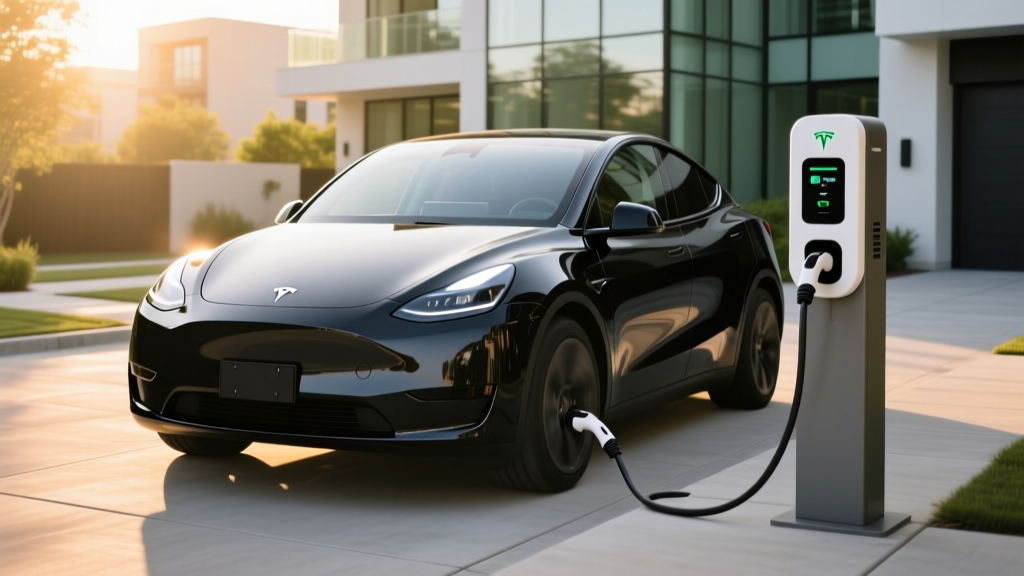
Home charging reality: The Tesla Wall Connector ($420) on a 60-amp circuit delivers the full 11.5 kW (48 amps continuous). Most owners with a 200-amp electrical panel can accommodate this with a $500–$1,500 electrician install, depending on run length from panel to garage. If your home has a 100-amp panel, budget an additional $1,500–$3,000 for a panel upgrade — a common gotcha for first-time EV buyers.
With the industry-wide shift to NACS (North American Charging Standard), the Model Y charges natively at Tesla stalls without an adapter. For CCS-network chargers (Electrify America, EVgo), Tesla provides a CCS adapter — included with new vehicles as of late 2025.
Pricing, Trims, and Federal Tax Credit Eligibility
Because Tesla sells direct, the price you see on Tesla.com is the price you pay. No dealer markups, no doc fees padded with extras. Here's the 2026 Model Y lineup:
| Trim | MSRP | Est. After §30D Credit | Drivetrain |
|---|---|---|---|
| Long Range AWD | $44,990 | ~$37,490* | Dual-motor AWD |
| Performance | $48,990 | ~$41,490* | Dual-motor AWD (456 hp) |
*Estimated after the $7,500 federal tax credit (IRS §30D). Eligibility is NOT automatic. You must meet all of the following:
- Income caps: Modified AGI ≤ $150,000 (single), $225,000 (head of household), $300,000 (joint) — per IRS §30D rules.
- MSRP cap: Vehicle base MSRP must not exceed $80,000 for SUVs (Model Y qualifies as an SUV per IRS classification).
- Battery sourcing: Critical minerals and battery components must meet phased-in domestic/free-trade sourcing thresholds — Tesla has generally maintained compliance for U.S.-built Model Y, but verify at purchase.
- Point-of-sale transfer: As of 2024+, you can transfer the credit to the dealer (Tesla) at purchase, reducing your out-of-pocket cost directly rather than waiting for a tax refund.
The Performance trim adds a lowered suspension, 21-inch wheels, carbon-fiber spoiler, and track mode. It sacrifices roughly 15 miles of EPA range (305 mi) for the 3.3-second 0–60 time. For most buyers, the Long Range AWD is the value pick.
Interior, Cargo, and Daily Livability
The 2026 Model Y interior carries forward Tesla's minimalist approach: a single 15.4-inch center touchscreen controls virtually everything, from climate to glovebox release. The refreshed "Juniper" interior (introduced for the 2025 model year) added ambient lighting, ventilated front seats, a rear-seat touchscreen, and improved sound insulation — addressing the most common complaints from the pre-refresh cabin.
Cargo space remains a strong suit. With 30.2 cubic feet behind the rear seats and 72.1 cu ft with them folded, the Model Y swallows luggage for a family of four on a week-long trip without a roof box. The rear hatch is a true liftgate, not a sedan trunk, making it practical for bulky items like furniture or bikes.
Passenger space is adequate for adults in the rear (41.6 inches of legroom), though the sloping roofline cuts into headroom for anyone over 6'2". The front seats are comfortable for long drives, and the panoramic glass roof creates an airy feel — though it does let in heat on summer days (the tint helps, but a sunshade is worth the $50 accessory).
Driver Assistance: Autopilot, FSD, and What They Actually Do
Tesla includes basic Autopilot (adaptive cruise control + lane centering) as standard equipment. It handles highway driving competently but requires steering-wheel torque input to confirm driver attention.
Full Self-Driving (Supervised) — currently a $8,000 one-time purchase or $99/month subscription — adds automated lane changes, traffic-light and stop-sign recognition, and city-street navigation. As of 2026, FSD (Supervised) remains a Level 2 system. It can handle many routine driving scenarios, but it still makes errors that require immediate human intervention: phantom braking, misreading construction zones, and occasionally hesitating at complex intersections.
For buyers who want hands-free highway driving without constant steering-wheel nudges, GM's Super Cruise and Ford's BlueCruise on mapped highways offer a more relaxed experience — though neither matches Tesla's route-coverage breadth.
Pros, Cons, and the Verdict
Pros
- 320-mile EPA range covers most road trips with one stop
- 250 kW Supercharger network: unmatched reliability and coverage
- Direct sales = no dealer markup, transparent pricing
- Class-leading cargo versatility (hatchback + frunk)
- Over-the-air updates continuously add features
- Strong resale value relative to EV segment average
Cons
- No physical controls — everything through the touchscreen
- FSD (Supervised) is expensive and still requires full attention
- Rear headroom tight for tall passengers
- Service center wait times can stretch weeks in some markets
- No Apple CarPlay / Android Auto (Tesla's proprietary system only)
- Insurance premiums run 15–30% higher than comparable gas SUVs
Who Should Buy the Model Y Long Range AWD?
Choose this if: You want the lowest-friction EV ownership experience — reliable home charging, the best public charging network, and a vehicle that handles daily commuting, family hauling, and road trips without compromise. The direct-sales model means no negotiation, and Tesla's OTA updates keep the car current.
Look elsewhere if: You prefer physical buttons and knobs (try the Hyundai Ioniq 5 or Kia EV6), need hands-free highway driving without steering-wheel monitoring (GM Super Cruise), or live far from a Tesla Service Center and need dealer-based support infrastructure.
Frequently Asked Questions
What is the real-world range of the 2026 Tesla Model Y Long Range?
The EPA rates it at 320 miles. In real-world highway driving at 70–75 mph, expect 270–290 miles. In freezing weather with cabin heat, plan for 240–260 miles. City driving with regenerative braking can push past 300 miles in mild conditions.
How fast does the Model Y charge at home and on the road?
At home on a Level 2 Wall Connector (11.5 kW), you add about 44 miles of range per hour — enough to fully recharge overnight from a typical daily commute. On a 250 kW Supercharger V3 stall, the 10–80% charge takes approximately 27 minutes. Charging slows significantly above 80% to protect battery health.
How much does the Model Y cost after the federal tax credit?
The Long Range AWD starts at $44,990. If you qualify for the full $7,500 §30D credit (income within limits, vehicle meets battery-sourcing requirements), the effective price drops to approximately $37,490. You can transfer the credit at point of sale, reducing your upfront cost directly. Verify your eligibility on irs.gov or with a tax professional.
Does the Tesla Model Y qualify for the federal EV tax credit?
As of early 2026, yes — the U.S.-built Model Y qualifies for the full $7,500 credit, provided the buyer meets IRS income caps ($150K single / $300K joint) and the vehicle's battery components meet critical-mineral sourcing thresholds. Rules can change; always confirm before purchasing.
Is the Model Y worth buying over the Hyundai Ioniq 5 or Ford Mustang Mach-E?
The Model Y wins on charging infrastructure (Supercharger access), range (320 vs. ~300 mi for competitors), and cargo space. The Ioniq 5 charges faster on non-Tesla DC networks (up to 350 kW peak on 800V architecture) and offers Apple CarPlay. The Mach-E provides a more traditional interior with physical controls. If Supercharger reliability and Tesla's software ecosystem matter most to you, the Model Y remains the default choice.
What does Tesla's battery warranty cover?
Tesla warranties the Model Y Long Range battery and drive unit for 8 years or 120,000 miles, whichever comes first, with a minimum 70% capacity retention guarantee. If the battery degrades below 70% of its original capacity within that window, Tesla will repair or replace it at no cost. Real-world degradation data from Tesla's fleet suggests most Model Y packs retain 85–90% capacity at 100,000 miles.