The Tesla Ownership Data Stack: Diagnostic Software Meets the 2026 Model Y
Most EV reviews stop at the spec sheet. But Tesla owners quickly learn that understanding your vehicle's health, battery degradation, and charging behavior requires going deeper — into the world of Tesla diagnostic software. Whether you're a prospective Model Y buyer evaluating long-term ownership or a current owner monitoring State of Health (SoH), pairing Tesla's built-in telemetry with third-party diagnostic tools gives you a data advantage that no other EV brand matches.
This guide serves double duty: a comprehensive 2026 Tesla Model Y review with exact range, charging, pricing, and tax-credit figures, plus a practical breakdown of the diagnostic software ecosystem that helps you monitor and maintain your investment over time.
2026 Tesla Model Y: Core Specifications at a Glance
| Attribute | Value |
|---|---|
| EPA Estimated Range | 320 miles |
| Battery Capacity (Usable) | ~75 kWh (LFP chemistry, Long Range RWD); ~78 kWh (NMC, Long Range AWD) |
| Max DC Fast Charge Rate | 250 kW (peak) |
| 10–80% DC Fast Charge Time | ~27 minutes (AWD/NMC); ~30 minutes (RWD/LFP) |
| Level 2 Home Charge Rate | 11.5 kW (~44 miles/hr) |
| 0–60 mph | 4.8 seconds (Long Range AWD) |
| Horsepower | 384 hp (dual-motor AWD) |
| Drivetrain | Dual-motor AWD (Long Range); Single-motor RWD (base) |
| Efficiency | 122 MPGe combined / 28 kWh/100 mi |
| Cargo Volume (rear seats up) | 30.2 cu ft |
| Cargo Volume (rear seats folded) | 72.0 cu ft |
| Rear Legroom | 37.0 inches |
| Battery/Drive Unit Warranty | 8 years / 120,000 miles (Long Range AWD) |
| Base MSRP (Long Range AWD) | $48,990 |
| As-Tested Price (w/ FSD) | ~$56,990 |
Real-World Range: What the EPA Sticker Doesn't Tell You
EPA Sticker: 320 miles
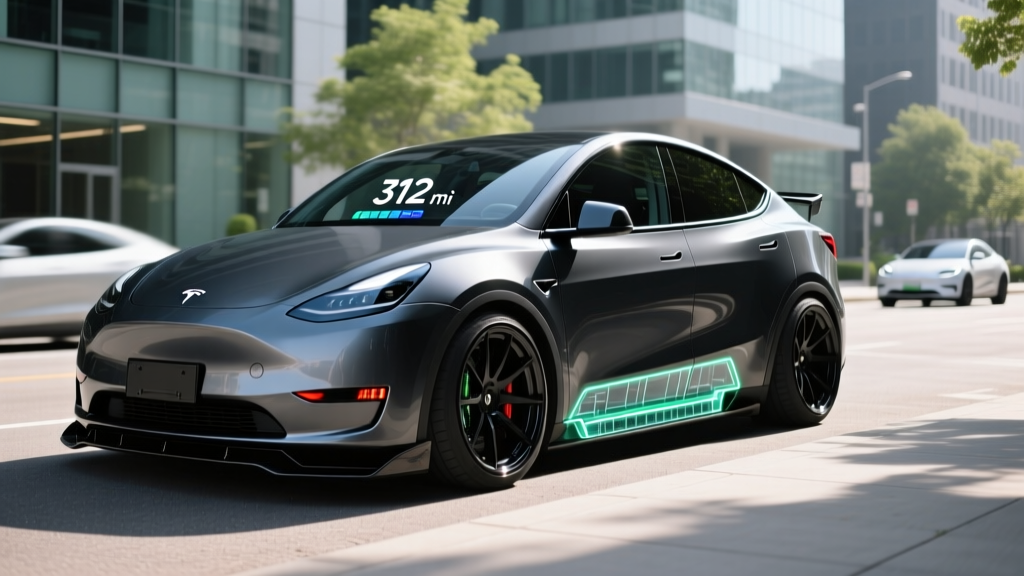
Real-World Highway (70–75 mph, mild weather): ~270–290 miles
Real-World City/Mixed (moderate regen use): ~295–315 miles
Cold Weather (below 32°F, highway): ~220–250 miles (25–30% reduction)
Note: Tesla's heat pump significantly mitigates cold-weather cabin energy draw, but battery chemistry itself loses efficiency in freezing temperatures. Preconditioning while plugged in recovers ~5–8% of range.
The 320-mile EPA figure is achievable in ideal city-driving conditions with moderate climate-control use. On highway road trips at sustained speeds above 70 mph, expect to plan charging stops around the 270-mile mark. In sub-freezing winter conditions, range contracts further — a reality every EV buyer should budget for. According to fueleconomy.gov, the Model Y Long Range AWD delivers 122 MPGe combined, making it one of the most efficient electric SUVs in its class.
Charging Speed: DC Fast, Level 2, and the Charge-Curve Reality
Tesla's Supercharger network remains the gold standard for public DC fast charging, but peak kW ratings require context. The Model Y Long Range AWD (NMC battery) peaks at 250 kW on V3 Superchargers, but that rate is sustained only briefly between roughly 10–30% State of Charge (SoC). Above 50%, the charge curve tapers progressively — by 80%, you're pulling closer to 60–80 kW.
| Charging Level | Power (kW) | Speed (miles/hr added) | Typical Use Case |
|---|---|---|---|
| Level 1 (120V household) | ~1.4 kW | ~3–5 mi/hr | Emergency/overnight trickle |
| Level 2 (240V, 48A home Wall Connector) | 11.5 kW | ~44 mi/hr | Daily home charging |
| DC Fast (V3 Supercharger, peak) | 250 kW | ~1,000+ mi/hr (peak) | Road trips |
| DC Fast (10–80% average) | ~130 kW avg | ~27 min total | Practical road-trip stop |
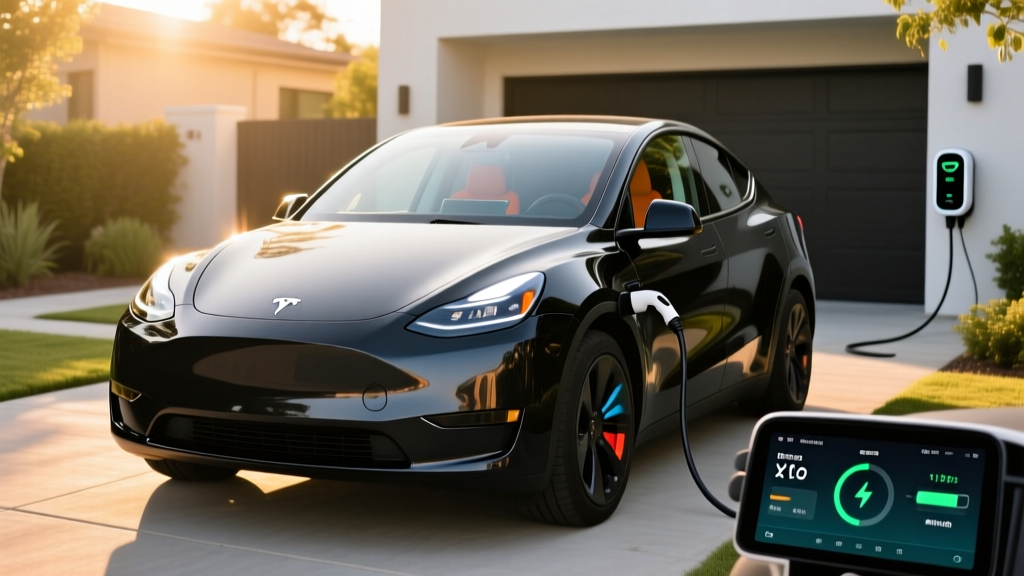
For home charging, Tesla's Wall Connector at 48 amps delivers 11.5 kW — enough to replenish a full day's driving in roughly two hours. Most owners charging overnight on a 240V/48A circuit never need public charging for daily use. The critical distinction: kW is the rate of power delivery (how fast energy flows), while kWh is the total energy stored in the battery. A 78 kWh battery charging at 11.5 kW takes roughly 6.8 hours from 0–100%.
Tesla Diagnostic Software: Monitoring Your Model Y's Health
This is where Tesla ownership diverges from every other EV brand. Beyond the Tesla app's built-in service diagnostics, a growing ecosystem of Tesla diagnostic software tools lets owners pull granular data about battery health, drive-unit performance, thermal management efficiency, and charge-curve behavior.
Built-In Tesla Diagnostics
The Tesla mobile app includes a "Service" menu where owners can run remote diagnostics. Tesla's service center can remotely access vehicle logs to identify issues before a physical visit. The in-car "Service Mode" (accessible via the software menu) exposes real-time sensor data including individual cell voltages, battery pack temperature, coolant flow rates, and HVAC compressor draw.
Third-Party Diagnostic Tools
- TeslaFi / Tessie: Fleet-tracking apps that log every charge session, range data point, and energy-consumption event. Tessie provides estimated battery degradation curves based on your charging history.
- Scan My Tesla (OBD-II adapter + app): Connects to the vehicle's CAN bus via an OBDLink adapter and exposes live data streams — cell-level voltage imbalance, pack current, battery inlet temperature, and drive-unit torque.
- Enhanced Diagnostics (Service Mode): Tesla's own engineering-level interface accessible in-car, showing real-time BMS (Battery Management System) data, 12V battery health, and suspension sensor readings.
For prospective used-Model-Y buyers, running a TeslaFi or Scan My Tesla session reveals actual State of Health (SoH) — a metric Tesla does not surface directly in the app. A healthy 2–3-year-old Model Y typically shows 3–7% degradation, consistent with NMC and LFP chemistry benchmarks published by battery researchers.
Pricing, Trim Levels, and Federal Tax Credit Eligibility
| Trim | Base MSRP | Est. Price After §30D Credit | Key Features |
|---|---|---|---|
| Long Range RWD | $44,990 | ~$37,490* | LFP battery, 320 mi range, single motor |
| Long Range AWD | $48,990 | ~$41,490* | NMC battery, dual motor, 320 mi range |
| Performance AWD | $52,490 | ~$44,990* | 3.5s 0–60, track mode, 21" wheels |
*Federal §30D tax credit eligibility requires meeting ALL of the following (per IRS guidelines):
- MSRP Cap: SUVs/vans/pickups must be ≤$80,000 (Model Y qualifies)
- Buyer Income Cap: AGI ≤$150,000 (single) / ≤$300,000 (joint filing)
- Battery Sourcing: Critical minerals and battery components must meet phased-in domestic/free-trade-agreement sourcing thresholds (Tesla has shifted significant supply chain to comply — verify current-year status at purchase)
- Point-of-Sale Transfer: The credit can now be transferred to the dealer at purchase, reducing your out-of-pocket cost immediately rather than waiting for tax filing
Tax-credit rules evolve annually. Always confirm eligibility with your tax professional and the IRS clean vehicle credit page before purchasing.
Performance, Interior, and Technology
The Model Y Long Range AWD hits 60 mph in 4.8 seconds with 384 horsepower from its dual-motor setup — brisk acceleration that merges confidently onto highways. The Performance trim drops that to 3.5 seconds. Regenerative braking is strong and predictable, enabling one-pedal driving in most conditions.
Inside, the minimalist cabin centers on a 15.4-inch touchscreen running Tesla's proprietary infotainment OS. There is no Apple CarPlay or Android Auto — Tesla's native navigation, media, and vehicle controls are integrated directly. The 30.2 cu ft rear cargo area (72.0 cu ft with seats folded) competes favorably with the Hyundai Ioniq 5 and Ford Mustang Mach-E for family hauling.
Driver assistance comes via Autopilot (standard) and Full Self-Driving (Supervised) ($8,000 option or $99/month). Both are SAE Level 2 systems — the driver must remain attentive and hands-on at all times. FSD Supervised handles highway lane changes, on-ramp-to-off-ramp navigation, and some city-street scenarios, but it is not autonomous driving. Only Level 4 robotaxi services like Waymo operate without a driver in the loop.
Tesla Autopilot and FSD (Supervised) are SAE Level 2 driver-assistance systems. They require continuous driver supervision and do not make the vehicle self-driving. You are legally and operationally the driver at all times.
Pros, Cons, and Competitive Positioning
- Best-in-class Supercharger network reliability
- 250 kW peak DC charging; practical 27-min 10–80%
- 320-mile EPA range; strong real-world highway efficiency
- Rich diagnostic software ecosystem (built-in + third-party)
- Over-the-air updates continuously add features
- Competitive cargo space (72 cu ft max)
- Heat pump standard (cold-weather efficiency)
- No Apple CarPlay / Android Auto
- FSD (Supervised) is expensive and not truly autonomous
- Ride quality firm on 20"/21" wheels
- Insurance premiums above segment average
- LFP battery (RWD) charges ~3 min slower to 80%
- Minimalist interior lacks physical controls some drivers prefer
Against the Hyundai Ioniq 5 (305-mi EPA, 350 kW charging capability, ~$47,000), the Model Y trades slightly longer range and a superior charging network for the Ioniq 5's faster peak charge rate and more conventional interior. The Ford Mustang Mach-E (312-mi EPA, ~$45,000) is a strong value alternative but trails in Supercharger-equivalent network access.
Who Should Buy the 2026 Model Y?
Best for: Tech-forward commuters and families who prioritize charging-network reliability, long-term software support, and data-rich ownership. If you road-trip frequently, the Supercharger ecosystem remains the most frictionless long-distance EV experience available. Diagnostic-software enthusiasts who want granular battery and drivetrain monitoring will find Tesla's ecosystem unmatched.
Consider alternatives if: You need Apple CarPlay, prefer physical buttons, want the absolute fastest DC charging (Hyundai/Kia E-GMP platform peaks at 350 kW), or find Tesla's insurance premiums prohibitive in your state.
Frequently Asked Questions
What is the real-world range of the 2026 Tesla Model Y?
EPA-rated at 320 miles. Expect ~270–290 miles on highway road trips in mild weather, and as low as 220–250 miles in freezing temperatures at highway speeds. City driving with regenerative braking can approach or match the EPA figure.
How fast does the Model Y charge at home and on DC fast chargers?
At home on a 240V/48A Level 2 circuit, it adds ~44 miles per hour (11.5 kW). On a V3 Supercharger, it peaks at 250 kW and charges from 10–80% in approximately 27 minutes (NMC/AWD) or 30 minutes (LFP/RWD).
Does the 2026 Model Y qualify for the $7,500 federal EV tax credit?
It can, if you meet all IRS §30D requirements: buyer AGI within caps ($150K single / $300K joint), MSRP under $80K (Model Y qualifies), and current-year battery-sourcing thresholds are satisfied. The credit can be transferred at point of sale. Always verify with a tax professional and the IRS clean vehicle credit page.
What Tesla diagnostic software tools can I use as an owner?
Tesla's built-in Service Mode and app-based remote diagnostics provide first-party data. Third-party tools like TeslaFi, Tessie, and Scan My Tesla (via OBD-II CAN bus adapter) offer deeper logging of battery cell voltages, degradation trends, charge-session analytics, and drive-unit telemetry.
Is the Model Y worth buying versus the Hyundai Ioniq 5 or Ford Mach-E?
Choose the Model Y if Supercharger network access, Tesla's software ecosystem, and diagnostic transparency matter to you. Choose the Ioniq 5 if you want 350 kW DC charging capability and a more traditional interior. The Mach-E offers strong value but with a less mature public-charging footprint.
What is the battery warranty on the 2026 Model Y?
Tesla covers the battery and drive unit for 8 years or 120,000 miles (whichever comes first) on Long Range and Performance trims, with a minimum 70% capacity retention threshold during the warranty period.