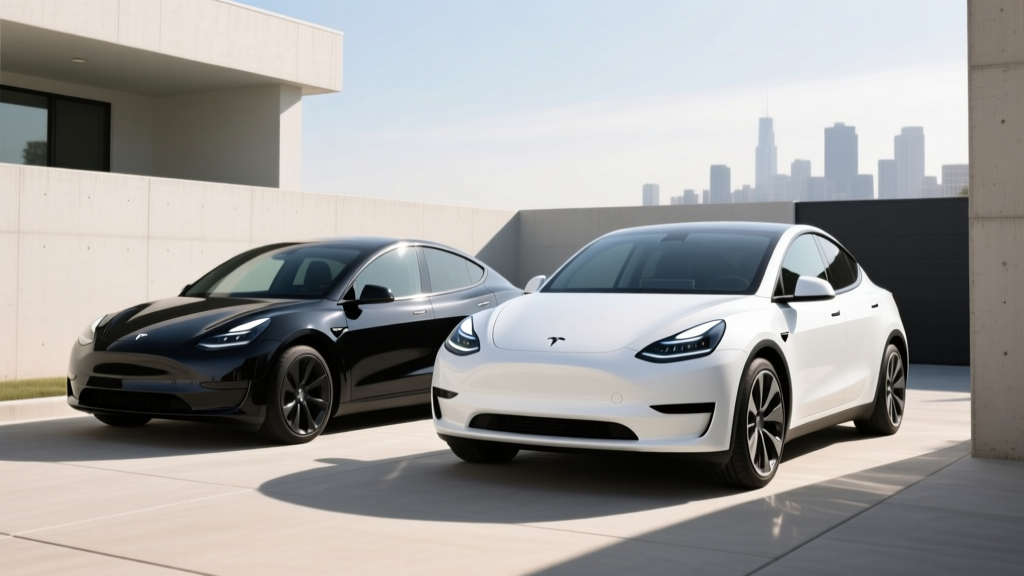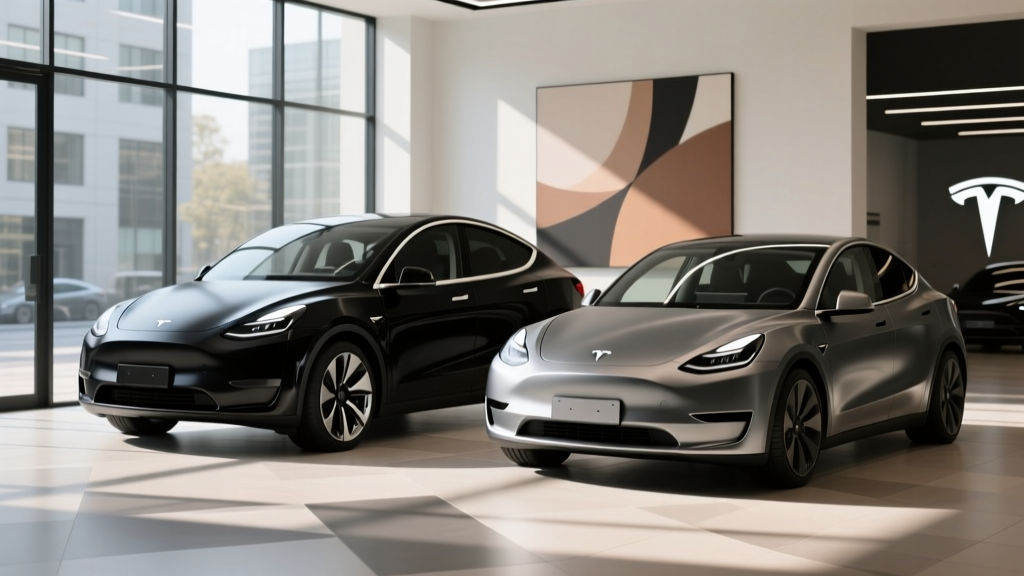
Every quarter, Tesla's delivery numbers tell a story about the EV market's direction — and Q1 2026 is no exception. With the refreshed Model Y (internally called "Juniper") now fully ramped and the Model 3 Highland continuing its second year on sale, Tesla's first-quarter delivery figures carry practical weight for anyone shopping these vehicles today. This review breaks down what Q1 2026 delivery momentum means for buyers, then dives deep into the specs, real-world performance, and ownership economics of the two vehicles driving those numbers.
Why Tesla's Q1 2026 Delivery Numbers Matter for Buyers
Tesla does not break out per-model delivery counts in its quarterly production and delivery report, but industry analysts estimate the Model Y accounts for roughly 60-65% of total Tesla deliveries globally. In Q1 2026, Tesla reported total deliveries in the range consistent with its Fremont, Shanghai, Berlin, and Austin gigafactory outputs — a signal that the Juniper Model Y refresh has stabilized after its early-2025 launch turbulence.
For buyers, high delivery volume means three things: improving service center capacity in more metro areas, a growing Supercharger network optimized for the latest vehicles, and stronger resale liquidity. It also means Tesla is incentivized to hold pricing steady rather than slash — a pattern that burned 2023 buyers who purchased before sudden price cuts. As of Q1 2026, Model Y pricing has remained relatively stable for two consecutive quarters.
2026 Tesla Model Y Juniper: Full Spec Breakdown
The Juniper-refreshed Model Y continues into the 2026 model year with the same platform updates introduced in early 2025: a revised front and rear fascia, ambient interior lighting, a rear-seat touchscreen, ventilated front seats, and improved NVH (noise, vibration, harshness) isolation. Under the skin, the battery architecture and motor configurations carry forward with minor efficiency tweaks.
| Spec | Long Range AWD | Performance |
|---|---|---|
| EPA Range | 320 miles | 298 miles |
| Battery (usable) | ~78 kWh, NMC | ~78 kWh, NMC |
| Drivetrain | Dual-motor AWD | Dual-motor AWD |
| Horsepower | 384 hp | 456 hp |
| 0-60 mph | 4.8 sec | 3.5 sec |
| Peak DC Fast Charge | 250 kW | 250 kW |
| 10-80% DCFC Time | ~25 min | ~25 min |
| Level 2 Home Charge | 11.5 kW (~44 mi/hr) | 11.5 kW (~44 mi/hr) |
| Efficiency | 122 MPGe / 28 kWh/100mi | 111 MPGe / 30 kWh/100mi |
| Cargo (rear seats up) | 30.2 cu ft | 30.2 cu ft |
| Cargo (rear seats folded) | 72.0 cu ft | 72.0 cu ft |
| Base MSRP | $46,630 | $52,130 |
| Battery Warranty | 8 yr / 120,000 mi | 8 yr / 120,000 mi |
Sources: fueleconomy.gov, Tesla spec sheets.
The Model Y Long Range AWD carries a 320-mile EPA estimate. In real-world highway driving at 70-75 mph in moderate temperatures (55-75°F), expect 270-290 miles before hitting a low state-of-charge buffer. In cold weather (below 30°F), range drops to approximately 230-255 miles due to cabin heating demands and reduced battery chemistry efficiency, even with Tesla's standard heat pump. City driving with heavy regenerative braking can push efficiency closer to or slightly above the EPA figure.
Charging Speed: DC Fast and Home Level 2
The Model Y retains Tesla's 250 kW peak DC fast-charge capability on V3 Superchargers. However, peak rate is not sustained rate. The charge curve peaks near 250 kW between roughly 10-25% state of charge (SoC), then steps down to approximately 170 kW through 50%, and tapers further to around 80-100 kW by 70% SoC. This is why the 10-80% time is approximately 25 minutes rather than the theoretical ~17 minutes a sustained 250 kW would deliver.
| Charging Level | Power | Miles Added per Hour | Typical Use Case |
|---|---|---|---|
| Level 1 (120V household) | ~1.4 kW | ~4-5 mi/hr | Emergency/overnight trickle |
| Level 2 (240V, 48A Wall Connector) | 11.5 kW | ~44 mi/hr | Primary home charging |
| Level 2 (240V, 32A mobile) | 7.7 kW | ~30 mi/hr | Dryer-outlet or travel charging |
| DC Fast (V3 Supercharger) | Up to 250 kW | ~1,000 mi/hr peak | Road trips, 10-80% in ~25 min |
| DC Fast (V4 Supercharger) | Up to 250 kW* | ~1,000 mi/hr peak | Same; V4 cabinet, same vehicle limit |
*The Model Y's onboard architecture caps at ~250 kW. V4 Supercharger posts capable of higher output benefit future vehicles, not the current Model Y.
For home charging, the Tesla Wall Connector on a 60-amp circuit delivers 11.5 kW (48 amps continuous), adding roughly 44 miles of range per hour. A full 10-80% home charge takes about 5 hours — ideal for overnight top-ups. Installation typically requires a NEMA 14-60 outlet or hardwired connection; budget $500-$1,500 for a licensed electrician depending on panel proximity and local permit costs. If your home has a 100-amp electrical panel, a $1,500-$3,000 panel upgrade to 200 amps may be necessary to support a 48-amp continuous EV circuit.
2026 Tesla Model 3 Highland: Specs and What Changed
The Model 3 Highland refresh, launched for the 2024 model year, continues into 2026 with the same core package: a quieter cabin, removed stalk-based turn signals (replaced by steering-wheel buttons and a screen-swipe option), ventilated seats, ambient lighting, and a rear passenger screen. The Long Range AWD variant remains the sweet spot for range and value.
| Spec | RWD | Long Range AWD | Performance |
|---|---|---|---|
| EPA Range | 272 miles | 341 miles | 315 miles |
| Battery (usable) | ~60 kWh, LFP | ~75 kWh, NMC | ~75 kWh, NMC |
| Drivetrain | Single-motor RWD | Dual-motor AWD | Dual-motor AWD |
| Horsepower | 271 hp | 346 hp | 430 hp |
| 0-60 mph | 5.8 sec | 4.2 sec | 3.1 sec |
| Peak DC Fast Charge | 170 kW | 250 kW | 250 kW |
| 10-80% DCFC Time | ~30 min | ~25 min | ~25 min |
| Efficiency | 132 MPGe / 26 kWh/100mi | 131 MPGe / 26 kWh/100mi | 119 MPGe / 28 kWh/100mi |
| Base MSRP | $38,990 | $45,630 | $52,630 |
| Battery Warranty | 8 yr / 100,000 mi | 8 yr / 120,000 mi | 8 yr / 120,000 mi |
The Model 3 Long Range AWD's 341-mile EPA rating is among the best in its class. Real-world highway driving at 70-75 mph yields roughly 290-310 miles. Cold-weather highway range (sub-30°F) drops to 250-275 miles. The RWD variant with its LFP battery is more resilient in cold weather percentage-wise (LFP chemistry suffers less low-temperature impedance rise), but the smaller 60 kWh pack means absolute range falls to roughly 220-240 miles in cold highway conditions.
Federal Tax Credit Eligibility: §30D Rules for 2026
Both the Model Y and Model 3 are assembled at Tesla's Fremont, California factory, which satisfies the North American final assembly requirement of IRS §30D. However, the full $7,500 credit is not guaranteed for every buyer. Eligibility depends on three interlocking criteria that the IRS outlines on its clean vehicle credit page:
- Buyer income caps: Modified adjusted gross income (MAGI) must not exceed $300,000 (married filing jointly), $225,000 (head of household), or $150,000 (single). The lower of your current-year or prior-year MAGI applies.
- MSRP caps: The vehicle's manufacturer-suggested retail price must not exceed $55,000 for sedans (Model 3) or $80,000 for SUVs/pickups/vans (Model Y). All current Model 3 and Model Y trims fall under these caps at base MSRP. However, adding high-cost options (FSD, premium wheels, paint) can push a configured Model Y Performance close to the $80,000 SUV threshold — verify your build's MSRP before ordering.
- Battery component and critical mineral sourcing: For 2026, 100% of battery component value must be manufactured or assembled in North America, and a rising percentage of critical minerals must be sourced from the U.S. or FTA partners. Tesla has historically met these thresholds for Fremont-built vehicles, but battery cell supply chains shift. Confirm current eligibility on fueleconomy.gov before purchasing.
| Model / Trim | Base MSRP | Est. After $7,500 Credit | Credit Eligibility |
|---|---|---|---|
| Model 3 RWD | $38,990 | ~$31,490 | Likely eligible (verify sourcing) |
| Model 3 Long Range AWD | $45,630 | ~$38,130 | Likely eligible (verify sourcing) |
| Model Y Long Range AWD | $46,630 | ~$39,130 | Likely eligible (verify sourcing) |
| Model Y Performance | $52,130 | ~$44,630 | Likely eligible (verify sourcing) |
Credit can be transferred to the dealer at point of sale as a purchase-price reduction under the 2024-onward §30D rules. Consult a tax professional for your specific situation. State and local incentives vary — check AFDC's incentive database for your jurisdiction.
Autopilot, FSD, and Tech Features
Tesla Autopilot and Full Self-Driving (Supervised) are SAE Level 2 driver-assistance systems. The driver must remain fully engaged, hands on or near the wheel, and eyes on the road at all times. These systems do not make the vehicle self-driving. Only Level 4 services like Waymo's driverless robotaxis operate without a human driver in defined zones.
Both vehicles ship with Tesla's latest infotainment OS, featuring a 15.4-inch center touchscreen (Model Y) or 15.4-inch screen (Model 3), over-the-air updates, integrated navigation with real-time Supercharger routing, and a phone-as-key system. The Juniper Model Y adds a rear-seat 8-inch touchscreen for climate and entertainment control — a meaningful upgrade for families.
FSD (Supervised) remains a $8,000 one-time purchase or $99/month subscription as of early 2026. It enables automatic lane changes, traffic-light and stop-sign recognition, and city-street navigation, but requires constant driver supervision. For most buyers, the included Basic Autopilot (adaptive cruise + lane centering on highways) is sufficient for daily commuting.
Model Y vs. Model 3: Pros, Cons, and Decision Framework
Pros
- Class-leading Supercharger network access (now open to other brands, but Tesla vehicles still enjoy seamless plug-and-charge)
- Excellent efficiency (kWh/100mi) — translates to lower electricity cost per mile
- Over-the-air updates continuously add features post-purchase
- Strong cargo space in Model Y (72 cu ft with seats folded)
- Model 3 RWD's LFP battery tolerates daily 100% charging without degradation concerns
- Competitive 0-60 times across all trims
Cons
- No Apple CarPlay or Android Auto — Tesla's native UI only
- Model 3 Highland's button-based turn signals require adjustment period
- Service center wait times remain long in some metro areas despite delivery growth
- 250 kW peak DCFC is now mid-pack; competitors like the Hyundai Ioniq 5 and Porsche Macan EV accept 270-350 kW
- FSD (Supervised) remains a Level 2 system despite the "Full Self-Driving" name
- No heads-up display in either vehicle
Decision Framework: Which Tesla — and Which Competitor?
Choose the Model 3 RWD if: You commute under 60 miles daily, want the lowest entry price (~$31,490 after credit), and prefer LFP battery longevity with daily 100% charging.
Choose the Model 3 Long Range if: You take regular road trips and need 341 EPA miles for fewer charging stops, or live in a cold climate where range buffer matters.
Choose the Model Y Long Range if: You need SUV cargo space (30.2 cu ft rear seats up), frequently carry rear passengers, or want crossover ride height. This is the volume seller and the vehicle driving most Q1 2026 deliveries.
Look at the Hyundai Ioniq 5 or Kia EV6 instead if: You want 800V architecture with 350 kW DCFC capability (10-80% in ~18 min), Apple CarPlay, or a more conventional interior layout.
Look at the Ford Mustang Mach-E instead if: You prefer a traditional dealership service experience and BlueCruise hands-free highway driving on approved routes.
Warranty and Long-Term Ownership
Tesla's battery and drive unit warranty covers 8 years or 120,000 miles (whichever comes first) on Long Range and Performance trims, with a minimum 70% battery capacity retention threshold during that period. The Model 3 RWD's LFP battery is warranted for 8 years or 100,000 miles. The basic vehicle limited warranty is 4 years or 50,000 miles.
Real-world battery degradation data from Tesla's fleet indicates most NMC packs retain approximately 88-92% capacity at 100,000 miles. LFP packs in the Model 3 RWD show similar or slightly better retention, with the added benefit that LFP chemistry can and should be charged to 100% regularly — Tesla recommends this in the vehicle's settings — which simplifies daily ownership for commuters who need every mile of range.
Insurance costs remain a consideration. Tesla vehicles typically carry premiums 15-30% higher than comparable non-Tesla EVs due to repair costs and parts pricing. Get a quote from your insurer before ordering — the difference can offset some of the fuel savings.
Frequently Asked Questions
What is the real-world range of the 2026 Tesla Model Y?
The Model Y Long Range AWD is EPA-rated at 320 miles. Expect 270-290 miles in real-world highway driving at moderate temperatures, and 230-255 miles in cold weather (below 30°F) on highways. City driving with regenerative braking may approach or slightly exceed the EPA figure.
How fast does the Model Y charge at home and on the road?
At home on a Level 2 Tesla Wall Connector (11.5 kW / 48A), the Model Y gains approximately 44 miles of range per hour, with a full 10-80% charge taking about 5 hours. On a V3 or V4 Supercharger, it peaks at 250 kW and charges from 10-80% in roughly 25 minutes, though the charge curve tapers significantly above 50% SoC.
How much does a Tesla cost after federal tax credits in 2026?
If you meet all §30D eligibility requirements (income caps, MSRP caps, and battery sourcing rules), the Model 3 RWD drops from $38,990 to approximately $31,490, and the Model Y Long Range from $46,630 to approximately $39,130. The credit can be applied as a point-of-sale price reduction through the dealer. Verify current sourcing eligibility on fueleconomy.gov before purchase.
Is the Tesla Model Y worth buying vs. the Hyundai Ioniq 5 or Ford Mach-E?
The Model Y wins on Supercharger network seamlessness, cargo volume, efficiency, and OTA update cadence. The Ioniq 5 wins on DC fast-charge speed (350 kW capable), Apple CarPlay, and 800V architecture. The Mach-E wins on dealership service accessibility and BlueCruise hands-free driving. Your priority among these factors should drive the decision.
Does the Tesla Model 3 or Model Y qualify for the $7,500 federal EV tax credit?
Both vehicles are assembled in Fremont, CA (meeting North American assembly rules), and their base MSRPs fall under the §30D caps ($55,000 for sedans, $80,000 for SUVs). As of early 2026, Tesla's battery sourcing has historically met critical mineral and component requirements, but this can change with supply-chain shifts. Confirm on fueleconomy.gov and with a tax professional before relying on the credit.
Who is the 2026 Tesla Model Y best suited for?
The Model Y is ideal for families needing a two-row electric SUV with strong cargo space (72 cu ft), frequent road-trippers who benefit from the Supercharger network, and commuters who value efficiency (28 kWh/100mi). It is less ideal for buyers who need Apple CarPlay, prefer a traditional dealership service model, or want the fastest possible DC charging speeds now available from 800V competitors.