Why the Tesla Dealership Ban Exists and How Buyers Work Around It
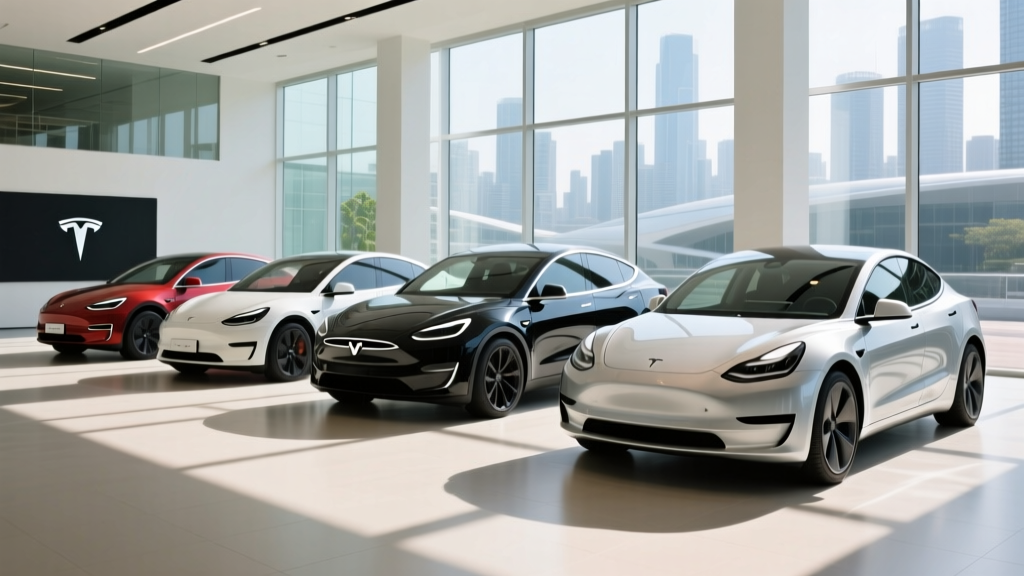
Tesla's direct-to-consumer sales model has clashed with state franchise laws for over a decade. As of 2026, roughly a dozen U.S. states — including Texas, Michigan, Connecticut, and parts of Virginia — either ban or severely restrict Tesla from operating traditional showrooms and delivering vehicles directly. This creates a real friction point for buyers who want to see, test-drive, or take delivery of a Model Y, Model 3, Model S, or Model X locally.
The good news: a practical Tesla dealership ban workaround exists, and thousands of buyers use it every month. The core strategy involves ordering online from Tesla's website, selecting delivery from an out-of-state gallery or service center where direct sales are legal, and arranging transport or a cross-border pickup. Below, we break down exactly how this process works, then dive into the 2026 Tesla Model Y Long Range AWD — the most popular vehicle buyers are ordering through this workaround — with every spec, price, and ownership metric you need before committing.
The Direct-Order Workaround: Step by Step
Here is the proven process buyers in restricted states use to purchase a Tesla without a local franchise dealership:
- Configure and order online. Tesla's website (tesla.com) serves as the only "showroom" you need. Select your model, trim, color, wheels, and interior. A non-refundable order fee (typically $250–$500 depending on the model year) locks your place in the production queue.
- Choose a delivery location in a direct-sales-legal state. During checkout, Tesla presents available delivery centers. Buyers in Texas often select Austin, Dallas (where a gallery exists under a specific legal structure), or Oklahoma City. Michigan buyers frequently choose Toledo, OH or Chicago, IL. Connecticut buyers opt for Westchester, NY or Providence, RI.
- Arrange transport or self-pickup. Tesla offers third-party enclosed or open-carrier transport to your driveway (typically $800–$1,500 depending on distance). Alternatively, many buyers fly to the delivery center, complete paperwork on-site, and drive home — a popular road-trip ritual in the EV community.
- Handle registration and taxes in your home state. Tesla provides all necessary Manufacturer's Certificate of Origin (MCO) and window sticker documentation. You register the vehicle at your local DMV and pay your state's sales tax as you would with any out-of-state purchase. Some states charge a use-tax equivalent.
- Service through mobile rangers or regional centers. Tesla's mobile service fleet handles most warranty and maintenance work at your home or office. For larger repairs, regional service centers in neighboring states or in-state galleries with service bays (where legally permitted) handle the work.
This workaround adds roughly 1–3 weeks to delivery time and $0–$1,500 in transport cost compared to buying in a direct-sales state, but it remains fully legal and is how the majority of Tesla buyers in restricted states take ownership.
2026 Tesla Model Y Long Range AWD: Full Spec Sheet
The Model Y remains Tesla's highest-volume vehicle and the most common model ordered through the workaround above. Here are the confirmed 2026 specs for the Long Range AWD trim, the sweet-spot configuration for most buyers:
| Specification | 2026 Model Y Long Range AWD |
|---|---|
| EPA Estimated Range | 320 miles |
| Battery Capacity (Usable) | ~78 kWh (NMC chemistry) |
| Drivetrain | Dual-motor all-wheel drive |
| Horsepower | 384 hp (combined) |
| 0–60 mph | 4.8 seconds |
| Top Speed | 135 mph |
| Max DC Fast Charge Rate | 250 kW (peak) |
| 10–80% DC Fast Charge Time | ~25 minutes |
| Level 2 Home Charge Rate | 11.5 kW (~44 mi/hr) |
| MPGe (Combined) | 122 MPGe |
| Energy Consumption | 28 kWh/100 mi |
| Cargo Volume (rear seats up) | 34.3 cu ft |
| Cargo Volume (rear seats folded) | 72.1 cu ft |
| Rear Legroom | 40.5 in |
| Curb Weight | ~4,398 lbs |
| Towing Capacity | 3,500 lbs (with tow hitch) |
| Battery/Drive Unit Warranty | 8 years / 120,000 miles |
| Basic Vehicle Warranty | 4 years / 50,000 miles |
Sources: EPA Fueleconomy.gov, Tesla.com Model Y specs
Real-World Range: What the EPA Sticker Doesn't Tell You
EPA Estimate: 320 miles
Real-World Highway (70–80 mph, 75°F): ~265–285 miles
Real-World City/Mixed: ~290–310 miles
Cold Weather (20°F, highway, heater on): ~210–245 miles
The 320-mile EPA figure assumes a blend of city and highway driving at moderate temperatures. On sustained highway trips at 75–80 mph, aerodynamic drag pushes consumption higher, and you should plan for roughly 265–285 usable miles before needing a charge stop. Tesla's trip planner in the navigation system accounts for this automatically, routing you through Superchargers with arrival SoC estimates.
Cold weather is the larger variable. At 20°F with cabin heating active, expect 25–35% range reduction. The Model Y's heat pump (standard on all 2026 trims) recovers significant energy compared to resistive heating, but physics is physics — battery chemistry slows and cabin demand rises. Preconditioning the battery while plugged in at home mitigates some of this loss by warming the pack before departure.
Charging Speed: DC Fast, Level 2, and the Charge Curve Reality
Charging speed is arguably the single most important ownership metric after range. Here is the full picture for the 2026 Model Y Long Range:
| Charging Level | Power | Miles Added Per Hour | Typical Use Case |
|---|---|---|---|
| Level 1 (120V outlet) | ~1.4 kW | ~4–5 mi/hr | Emergency/trickle top-up |
| Level 2 (240V, 48A) | 11.5 kW | ~44 mi/hr | Home overnight, workplace |
| DC Fast (V3 Supercharger) | Peak 250 kW | ~1,000+ mi/hr (at peak) | Road trips, highway stops |
Charge curve detail: The 250 kW peak rate applies only at low state of charge (roughly 10–30% SoC) and with a preconditioned battery. Above 50% SoC, the rate tapers to ~150 kW, and above 80% it drops below 60 kW. This is why Tesla and the broader EV industry quote 10–80% times — the final 20% takes nearly as long as the first 70%. A 10–80% session at a V3 Supercharger takes approximately 25 minutes; a 10–95% session stretches to 45–50 minutes.
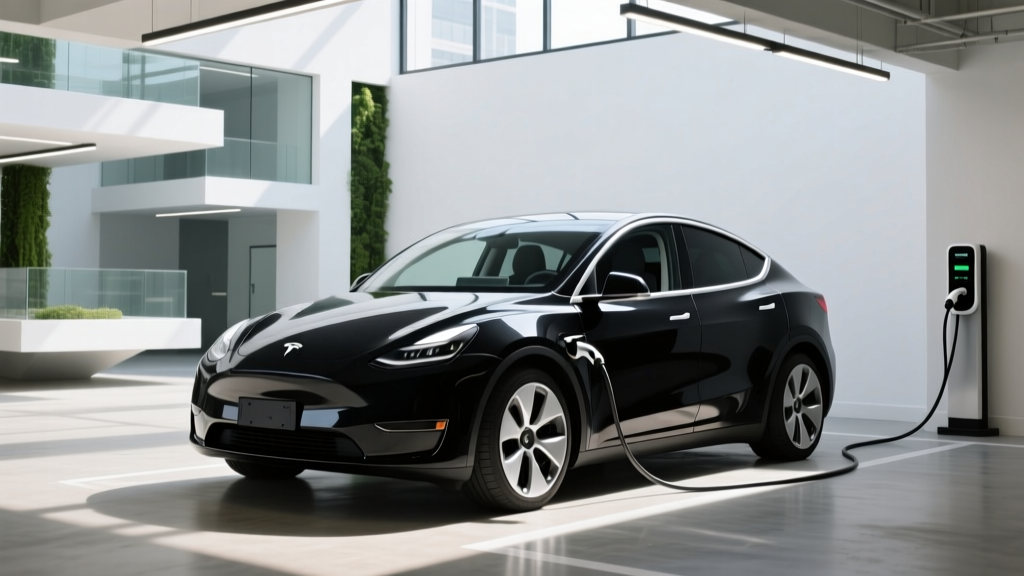
For home charging, a Tesla Wall Connector on a 60-amp circuit delivers the full 11.5 kW, adding roughly 44 miles of range per hour. An overnight charge from 20% to 80% takes about 4 hours — more than sufficient for daily use. Installation cost for a dedicated 240V/60A circuit typically runs $800–$2,000 depending on panel proximity and local permitting.
Pricing, Trims, and Federal Tax Credit Eligibility
| Trim | 2026 Base MSRP | Est. After §30D Credit* |
|---|---|---|
| Model Y Long Range AWD | $48,990 | $41,490 |
| Model Y Performance AWD | $53,990 | $46,490 |
*Federal tax credit caveat: The $7,500 IRS §30D clean vehicle credit is not automatic. Eligibility depends on three factors that change periodically:
- MSRP cap: SUVs/crossovers must have a base MSRP at or below $80,000. The Model Y qualifies.
- Buyer income cap: Modified AGI must not exceed $150,000 (single), $225,000 (head of household), or $300,000 (joint). Check your prior-year or current-year tax return.
- Battery sourcing: Critical minerals and battery components must meet escalating percentages of U.S./FTA-country sourcing. Tesla has progressively shifted supply chains, but specific eligibility can change mid-year. Verify current status on fueleconomy.gov before ordering.
As of early 2026, the point-of-sale transfer option is available — meaning you can assign the credit to Tesla at delivery and receive the $7,500 as a direct price reduction rather than waiting to claim it on your tax return. This effectively lowers your out-of-pocket cost at delivery. Consult a tax professional to confirm your personal eligibility.
Tech, Driver Assistance, and Interior
The 2026 Model Y continues Tesla's minimalist interior approach: a single 15.4-inch center touchscreen handles navigation, media, climate, and vehicle settings. There is no traditional instrument cluster; speed and range display in the upper-left corner of the screen. A rear-seat 8-inch screen provides climate and media controls for passengers.
Autopilot and FSD (Supervised): Every Model Y ships with basic Autopilot (Traffic-Aware Cruise Control and Autosteer). Full Self-Driving (Supervised) is an $8,000 option or $99/month subscription. FSD is a Level 2 SAE driver-assistance system — not autonomous driving. The driver must keep hands on the wheel (or demonstrate attentiveness via the cabin camera) and remain responsible for all vehicle operation at all times. FSD adds automatic lane changes, traffic light/stop sign recognition, and navigation-guided on/off-ramp handling. It is capable in many scenarios but requires active supervision and can make errors in construction zones, faded lane markings, or unusual intersections.
Notable drawbacks: The absence of physical buttons for climate and wipers frustrates some buyers. The all-glass roof, while spacious, can create cabin heat in direct summer sun (the included tinted panel helps, but aftermarket ceramic tint is a common upgrade). Panel gap quality has improved significantly since the Fremont-built early Model Y years, with Austin-built 2026 examples showing much tighter tolerances, but occasional variance still surfaces compared to legacy luxury brands.
Who the Model Y Suits Best
Choose the Model Y Long Range if:
- You commute 30–80 miles daily and can charge at home overnight
- You take road trips 2–6 times per year and want Supercharger network access
- You need crossover cargo space (72 cu ft with seats folded) for family gear, bikes, or camping equipment
- You value over-the-air updates that add features post-purchase
Look elsewhere if:
- You cannot install a Level 2 home charger and lack reliable workplace or public charging
- You require a traditional dealership experience with in-person negotiation and immediate trade-in appraisal
- You need three-row seating (consider the Model X or a 3-row competitor like the Kia EV9)
- You want physical knobs and buttons for climate/audio controls
Model Y vs. Key Competitors: Is It Still the Default?
The 2026 crossover EV market is far more competitive than it was even two years ago. Here is how the Model Y Long Range stacks up against its primary rivals:
| Spec | Tesla Model Y LR AWD | Hyundai Ioniq 5 Limited AWD | Ford Mustang Mach-E Premium AWD |
|---|---|---|---|
| EPA Range | 320 mi | 290 mi | 300 mi |
| Battery | ~78 kWh (NMC) | 84 kWh (NMC) | 91 kWh (NMC) |
| Peak DC Charge | 250 kW | 238 kW | 150 kW |
| 10–80% Time | ~25 min | ~18 min | ~38 min |
| 0–60 mph | 4.8 sec | 5.1 sec | 5.1 sec |
| Base MSRP | $48,990 | $54,200 | $50,975 |
| Cargo (rear up) | 34.3 cu ft | 27.2 cu ft | 29.7 cu ft |
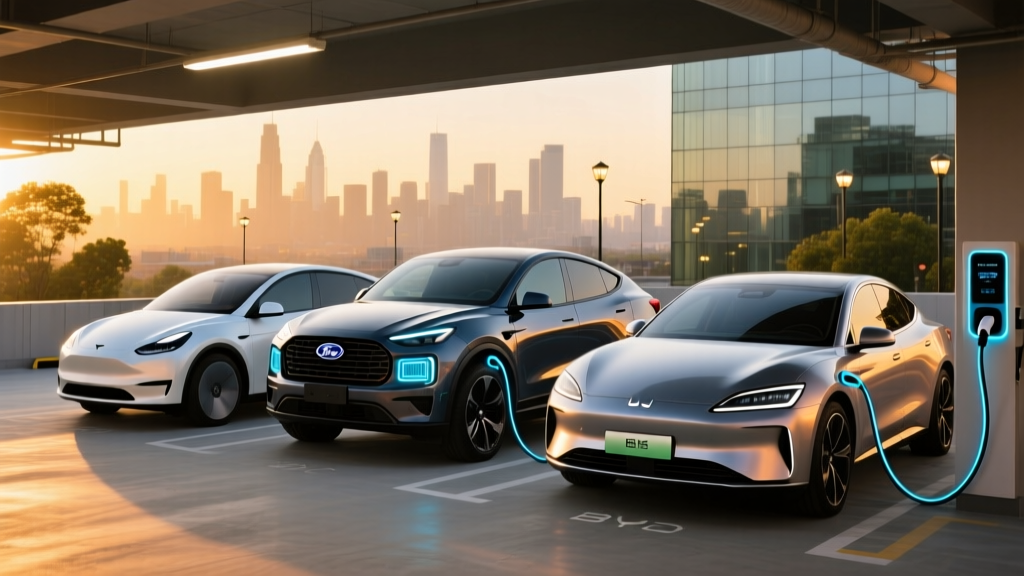
| NACS Native | Yes | Yes (2026+) | Yes (2026+) |
The Ioniq 5 charges faster (18-minute 10–80% thanks to its 800V architecture), but carries less range and cargo volume. The Mach-E offers a more traditional interior feel but charges noticeably slower. The Model Y's enduring advantages are the Supercharger network (now open to other brands via NACS, but still most seamless for Tesla owners), the lowest base MSRP in this comparison, and the highest cargo capacity. If you prioritize charging speed above all else, the Ioniq 5 edges ahead. For overall value and space, the Model Y holds its position.
Pros and Cons at a Glance
Pros
- Lowest MSRP in the premium electric crossover segment
- Supercharger network integration remains the most reliable long-distance charging experience
- Class-leading cargo volume (72.1 cu ft)
- Strong efficiency (122 MPGe combined, 28 kWh/100 mi)
- Over-the-air updates continuously add features
- Heat pump standard for cold-weather efficiency
Cons
- No physical buttons — all controls via touchscreen
- Direct-sales ban in some states adds delivery complexity
- FSD (Supervised) is expensive ($8,000) and still requires full driver attention
- Insurance premiums run 15–30% higher than comparable gas crossovers
- Resale value has declined as new EV competition increases
- Panel gaps, while improved, can still vary unit to unit
Frequently Asked Questions
What is the real-world range of the 2026 Tesla Model Y?
The EPA rates the Model Y Long Range AWD at 320 miles. In real-world highway driving at 75–80 mph and moderate temperatures, expect 265–285 miles. In city and mixed driving, 290–310 miles is achievable. In cold weather (20°F), plan for 210–245 miles with the heat pump active.
How fast does the Model Y charge at home and on the road?
At a V3 Supercharger (250 kW peak), the Model Y charges from 10–80% in approximately 25 minutes, though the rate tapers significantly above 80%. At home on a Level 2 Wall Connector (11.5 kW), it adds roughly 44 miles of range per hour, fully replenishing overnight.
How much does the Model Y cost after federal tax credits?
The 2026 Model Y Long Range AWD starts at $48,990. If you qualify for the full $7,500 §30D federal tax credit (subject to income caps, MSRP limits, and battery-sourcing requirements), the effective price drops to approximately $41,490. Use the point-of-sale transfer option to receive the discount at delivery.
Does the Model Y qualify for the federal EV tax credit?
As of early 2026, the Model Y qualifies for the full $7,500 credit, provided the buyer meets income thresholds ($150K single / $300K joint) and the specific vehicle's battery meets critical-mineral and component-sourcing requirements. Verify on fueleconomy.gov at the time of purchase, as sourcing rules are subject to change.
Is the Model Y worth buying vs. the Hyundai Ioniq 5 or Ford Mach-E?
The Model Y offers the best combination of range, cargo space, price, and charging infrastructure access in this segment. The Ioniq 5 charges faster (18-min 10–80%) and the Mach-E provides a more conventional interior layout. If Supercharger reliability and maximum cargo volume matter most, the Model Y wins. If you prioritize peak charging speed or physical controls, consider the alternatives.
How does the Tesla dealership ban workaround actually work?
Order online at tesla.com, select a delivery center in a state where direct sales are legal (e.g., an Austin or Chicago location), and either fly to pick up the vehicle or pay $800–$1,500 for carrier transport to your home. Register and pay taxes in your home state as with any out-of-state vehicle purchase. Service is handled via Tesla's mobile ranger fleet or regional service centers.