If you've ever wondered whether your Tesla is silently capturing footage of a fender-bender, you're not alone. The question "does Tesla automatically record accidents?" comes up constantly among owners and prospective buyers. The short answer is nuanced: Tesla's onboard cameras can record accident footage, but whether they actually do depends on which features you've enabled, how you've configured them, and what type of incident occurs. Below, we break down exactly how Tesla's recording systems work — and then put the current-generation 2026 Tesla Model Y through a full review so you know exactly what you're buying.
How Tesla's Camera Recording Systems Actually Work
Tesla vehicles are equipped with eight external cameras (front, front-side, rear-side, and rear) primarily designed for the Autopilot and Full Self-Driving (Supervised) systems. These cameras also feed two driver-accessible recording features:
Dashcam: The Closest Thing to Automatic Accident Recording
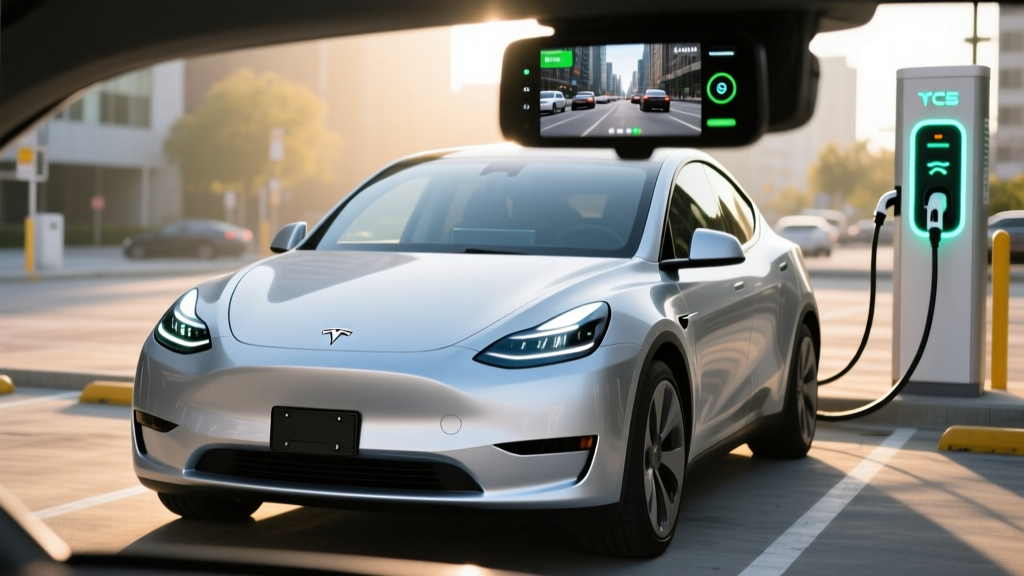
Tesla's Dashcam feature continuously records video from up to four cameras (front, left repeater, right repeater, rear) while driving. It operates on a rolling buffer — the last 10 minutes of footage is stored in a circular loop on a USB drive (or built-in SSD in newer models). Here's the critical distinction:
- Auto-save triggers: Dashcam automatically saves the prior 10 minutes when it detects a collision, airbag deployment, or certain safety events (like automatic emergency braking activating). In this sense, yes, Tesla does automatically record accidents — but only if Dashcam is set to "Auto" or "On" in the vehicle's Safety menu.
- Manual save: You can tap the Dashcam icon on the touchscreen to manually save the last 10 minutes at any time.
- What it does NOT do: Dashcam does not record when the vehicle is parked and powered off (that's Sentry Mode's job), and it does not upload footage to Tesla's servers automatically — it stays on your local drive.
Sentry Mode: Parking Surveillance
When the car is parked and locked, Sentry Mode monitors the surroundings using the external cameras. It has three escalating states:
- Standby: Cameras monitor but don't record.
- Alert: A perceived threat (someone leaning on the car) triggers recording and a screen warning.
- Alarm: A break-in attempt, collision, or glass break triggers full recording, sounds the alarm, and sends a push notification to your phone.
So if someone hits your parked Model Y in a lot, Sentry Mode should capture the incident — provided it's enabled and the impact is significant enough to trigger the Alarm state. Minor door dings may not always cross the threshold.
Does Tesla Send Accident Data to Its Servers?
In the event of a serious collision, Tesla vehicles log an event data snapshot (speed, brake application, steering angle, airbag deployment) — similar to the "black box" in conventional cars. This data may be transmitted to Tesla. However, this is telemetry data, not video footage. Your Dashcam and Sentry Mode video stays on your USB drive unless you manually share it.
2026 Tesla Model Y: Full EV Review & Specs
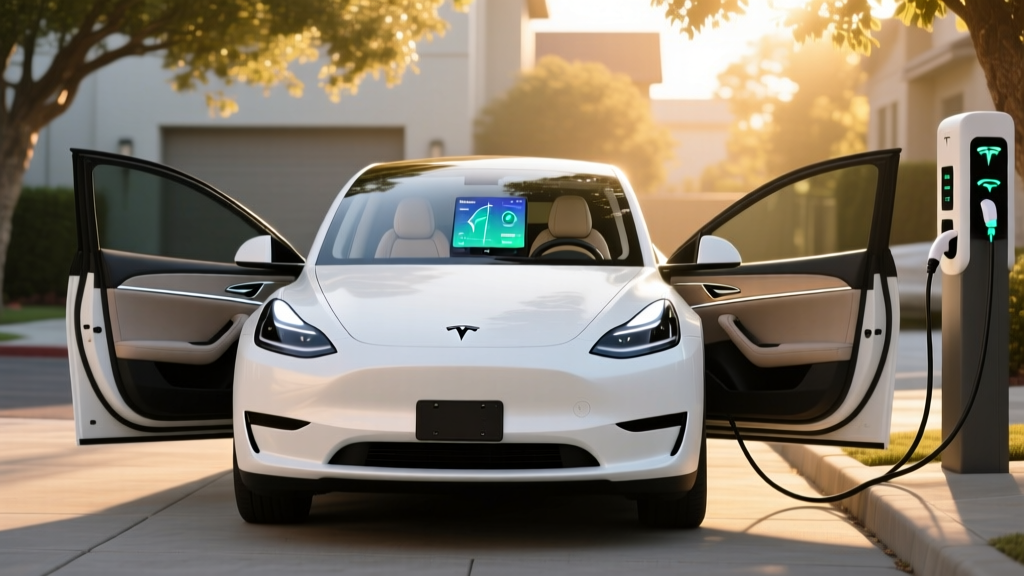
Now that we've answered the recording question, let's look at the vehicle itself. The refreshed Model Y (internally called "Juniper") launched in early 2025 and carries into the 2026 model year with minor software and trim updates. It remains Tesla's best-selling vehicle globally and the benchmark in the compact electric SUV segment.
| Spec | Long Range AWD | Performance AWD |
|---|---|---|
| EPA Range | 320 miles | 293 miles |
| Battery (usable) | ~75 kWh, NMC | ~75 kWh, NMC |
| Drivetrain | Dual-motor AWD | Dual-motor AWD |
| Horsepower | 384 hp | 456 hp |
| 0–60 mph | 4.8 sec | 3.5 sec |
| Max DC Fast Charge | 250 kW (CCS via adapter/NACS native) | 250 kW |
| 10–80% DCFC Time | ~27 min | ~27 min |
| Level 2 Home Charge | 11.5 kW (~44 mi/hr) | 11.5 kW (~44 mi/hr) |
| MPGe (combined) | 111 MPGe | 106 MPGe |
| Efficiency | 30 kWh/100 mi | 32 kWh/100 mi |
| Cargo (rear seats up) | 30.2 cu ft | 30.2 cu ft |
| Cargo (rear seats down) | 72.1 cu ft | 72.1 cu ft |
| Rear Legroom | 38.4 in | 38.4 in |
| Base MSRP | $46,630 | $52,130 |
| Battery Warranty | 8 yr / 120,000 mi | 8 yr / 120,000 mi |
Source: EPA / fueleconomy.gov, Tesla.com specifications.
Real-World Range: What the EPA Sticker Doesn't Tell You
EPA Estimate: 320 miles
Highway (70–80 mph, moderate temps): ~255–275 miles
City / suburban mixed driving: ~290–310 miles
Cold weather (below 30°F): ~220–260 miles (30–40% reduction is common at highway speeds in deep cold)
With heat pump preconditioning: Cold-weather loss can be reduced to ~15–20%
The Juniper Model Y's efficiency is among the best in its class, thanks to improved aerodynamics (a drag coefficient reduction over the pre-2025 model) and Tesla's heat pump, which scavenges waste heat from the drivetrain to warm the cabin. On a Fueleconomy.gov-verified cycle, the Long Range achieves 111 MPGe combined — roughly 30 kWh per 100 miles. That means a full charge from empty costs about $4.50–$6.00 at average US residential electricity rates ($0.15–$0.20/kWh), or about $13–$18 at a typical DC fast charger ($0.35–$0.48/kWh).
On a real-world road trip from Denver to Moab (roughly 350 miles), expect one charging stop at a Supercharger — plan for ~20 minutes of charging at a V3 or V4 station with battery preconditioning enabled via navigation routing.
Charging Speed: DC Fast Charging and Home Setup
| Level | Power | Miles Added per Hour | Notes |
|---|---|---|---|
| Level 1 (120V outlet) | ~1.4 kW | ~4–5 mi/hr | Emergency only; full charge takes ~55+ hours |
| Level 2 (240V, 48A) | 11.5 kW | ~44 mi/hr | Full charge overnight in ~7 hours; recommended home setup |
| Level 2 (240V, 32A Mobile Connector) | 7.7 kW | ~30 mi/hr | Included Mobile Connector with NEMA 14-50 adapter |
| DC Fast (Supercharger V3/V4) | Peak 250 kW | Up to ~1,000 mi/hr at peak | 10–80% in ~27 min; tapers significantly above 80% |
Charging curve reality check: The Model Y peaks at 250 kW only briefly between roughly 10–30% State of Charge (SoC). From 30–60%, it sustains around 150–180 kW. Above 80%, it drops below 50 kW to protect battery health. Always route to a Supercharger using the car's navigation — this triggers battery preconditioning, warming the pack to optimal temperature for maximum charge acceptance. Without preconditioning (e.g., arriving at a non-Tesla charger in cold weather), your 10–80% time could stretch to 40+ minutes.
The Model Y uses the NACS (North American Charging Standard) connector natively. Tesla's Supercharger network now exceeds 30,000 stalls in North America and remains the most reliable public DC fast-charging network, with uptime consistently above 95%.
Pricing, Trims, and Federal Tax Credit Eligibility
| Trim | Base MSRP | §30D Credit (if eligible) | Effective Price |
|---|---|---|---|
| Long Range AWD | $46,630 | Up to $7,500 | As low as ~$39,130 |
| Performance AWD | $52,130 | Up to $7,500 | As low as ~$44,630 |
Tax credit caveats (IRS §30D, 2026 rules):
- MSRP cap: SUVs must be under $80,000 — both Model Y trims qualify.
- Income cap: Modified AGI must not exceed $150,000 (single), $225,000 (head of household), or $300,000 (joint filers).
- Battery sourcing: The credit is split into two halves ($3,750 each) — one for critical minerals sourcing and one for battery component manufacturing. Tesla's US-built batteries (Nevada/California) have progressively met more sourcing requirements, but the exact credit amount ($3,750 or $7,500) can change as IRS sourcing rules update quarterly. Always verify current eligibility on IRS.gov before purchasing.
- Point-of-sale transfer: As of 2024, the credit can be transferred to the dealer at purchase, reducing your out-of-pocket cost immediately rather than waiting for a tax refund.
As-tested pricing: A Long Range AWD with $1,500 Ultra Red paint, $1,000 20" Helix wheels, and no other options comes to roughly $49,130 MSRP — or ~$41,630 after the full $7,500 credit if you qualify.
Interior, Tech, and Driver Assistance
The Juniper refresh brought significant interior improvements over the pre-2025 Model Y:
- 15.4" center touchscreen with faster processor and ventilated front seats as standard
- 8" rear touchscreen for climate and entertainment control
- Ambient lighting strip across the dashboard (a first for Model Y)
- Power-folding second-row seats (button-operated from the cargo area)
- Improved NVH: Laminated glass on all windows reduces highway noise substantially
- Ventilated front seats now standard across all trims
Driver assistance (SAE Level 2):
Tesla's Autopilot (included) and Full Self-Driving Supervised ($8,000 option or $99/mo) are Level 2 driver-assistance systems. They provide lane centering, adaptive cruise control, and (with FSD) traffic-light and stop-sign response. The driver must remain fully attentive and keep hands on the wheel at all times. These are not self-driving systems. Tesla's FSD is called "Supervised" for a reason — you are the supervisor.
Notable drawbacks:
- No physical instrument cluster or heads-up display — all info routes through the center screen
- No Apple CarPlay or Android Auto (Tesla's proprietary infotainment only)
- Turn-signal stalk removed in the Juniper refresh — signals are now steering-wheel buttons (polarizing among owners)
- Rear visibility is compromised by the sloping roofline; the rear camera is essential for parking
- Insurance premiums tend to run 15–30% higher than comparable non-Tesla SUVs due to repair costs
- Class-leading efficiency (111 MPGe combined)
- Access to Tesla Supercharger network (30,000+ stalls)
- Spacious cargo area (72.1 cu ft with seats folded)
- Over-the-air updates continuously add features
- Strong resale value relative to EV segment average
- Dashcam and Sentry Mode provide built-in incident recording
- No physical gauges or HUD
- No CarPlay/Android Auto
- Turn-signal buttons on steering wheel take adaptation
- Higher insurance costs than segment rivals
- FSD subscription is expensive and still Level 2
- Rear headroom tight for passengers over 6'2"
How the Model Y Compares to Key Competitors
The compact electric SUV segment is crowded in 2026. Here's how the Model Y Long Range stacks up:
| Tesla Model Y LR | Hyundai Ioniq 5 Limited | Ford Mustang Mach-E Premium | |
|---|---|---|---|
| EPA Range | 320 mi | 305 mi | 290 mi |
| Max DCFC | 250 kW | 350 kW | 150 kW |
| 10–80% Time | ~27 min | ~18 min | ~38 min |
| Cargo (seats up) | 30.2 cu ft | 27.2 cu ft | 29.7 cu ft |
| Base MSRP | $46,630 | $53,500 | $45,995 |
| CarPlay/Android Auto | No | Yes | Yes |
- Choose the Model Y if: You prioritize Supercharger network access, cargo space, efficiency, and built-in Dashcam/Sentry recording. Best for road-trippers and Tesla ecosystem users.
- Choose the Ioniq 5 if: You want the fastest DC charging (350 kW capability), CarPlay, and a more traditional interior with physical buttons. Best for frequent fast-charging stops.
- Choose the Mach-E if: You want a lower starting price, Ford dealer service network access, and CarPlay. Best for budget-conscious buyers transitioning from gas cars.
Who the 2026 Model Y Suits Best
- Daily commuters (20–60 mi/day): Excellent. A single overnight Level 2 charge covers multiple days. Efficiency keeps electricity costs under $100/month for most commuters.
- Families with 1–2 kids: Strong fit. 30.2 cu ft cargo handles strollers and groceries. Rear seat fits two car seats comfortably, though the middle seat is tight for a third child on long trips.
- Road trippers: The Supercharger network is the Model Y's biggest advantage. 320 miles of range plus 250 kW charging means stops are brief and plentiful along major corridors.
- Towing: Rated for 3,500 lbs — adequate for a small utility trailer or a pair of dirt bikes, but not a camper. Towing cuts range by roughly 30–50%.
- Cold-climate owners: The heat pump is a genuine advantage, but expect 20–40% range loss in sub-freezing temperatures. Garage charging and preconditioning are essential.
Frequently Asked Questions
Does Tesla automatically record accidents while driving?
Yes — if Dashcam is set to "Auto" mode (which is the default), the system automatically saves the prior 10 minutes of multi-camera video when it detects a collision or airbag deployment. The footage is stored on the vehicle's USB drive or internal SSD, not uploaded to Tesla.
Does Tesla record accidents when the car is parked?
Only if Sentry Mode is enabled. When a parked Model Y experiences a significant impact, Sentry Mode escalates to "Alarm" state and records video from all external cameras. Minor bumps (like a shopping cart tap) may not trigger recording.
How long does Tesla keep Dashcam and Sentry Mode footage?
Footage is stored on your local USB drive in a rolling loop. Auto-saved clips (from collisions or alerts) are kept until the drive fills up and overwrites the oldest files. Tesla does not store your Dashcam or Sentry video on its servers.
Can police or insurance companies access Tesla camera footage?
They can access footage stored on your USB drive if you provide it or if it's obtained via legal process. Tesla's event data recorder (EDR) logs telemetry (speed, braking, steering) at the time of a crash — this data can be subpoenaed. But Tesla does not have access to your Dashcam/Sentry video files.
What is the real-world range of the 2026 Tesla Model Y?
The EPA rates the Long Range AWD at 320 miles. In real-world highway driving at 70–80 mph, expect 255–275 miles. In cold weather below 30°F, highway range can drop to 220–260 miles. City driving is more efficient due to regenerative braking.
How fast does the Model Y charge at home and on the road?
At home on a 240V/48A Level 2 charger, the Model Y adds ~44 miles of range per hour (11.5 kW), fully charging overnight in ~7 hours. On a Tesla Supercharger (V3/V4), it peaks at 250 kW and charges from 10–80% in approximately 27 minutes with battery preconditioning.
Does the 2026 Tesla Model Y qualify for the federal EV tax credit?
The Model Y is eligible for up to $7,500 under IRS §30D, subject to buyer income limits ($150K single / $300K joint), MSRP caps ($80K for SUVs — both trims qualify), and battery-sourcing requirements that update quarterly. The credit can be transferred at point of sale. Always verify current eligibility on IRS.gov before purchasing.
Is the Model Y worth buying over the Hyundai Ioniq 5 or Ford Mach-E?
It depends on your priorities. The Model Y wins on range, cargo space, efficiency, and Supercharger access. The Ioniq 5 wins on DC charging speed and CarPlay. The Mach-E wins on starting price and dealer service access. For road-trippers and Tesla app users, the Model Y remains the segment benchmark.
Does Tesla's FSD make the Model Y self-driving?
No. Full Self-Driving (Supervised) is an SAE Level 2 system. It can handle lane changes, traffic lights, and highway navigation, but the driver must remain fully engaged, monitor the road, and be ready to take over instantly. It is not autonomous driving.
Sources: fueleconomy.gov (EPA range and efficiency data), IRS.gov (§30D clean vehicle credit eligibility), Tesla.com official specifications. All pricing and specs reflect 2026 model year data available at time of publication. Tax credit eligibility is subject to change — consult a tax professional.