The Volvo C30 Polestar: Where Volvo's Electric Story Began
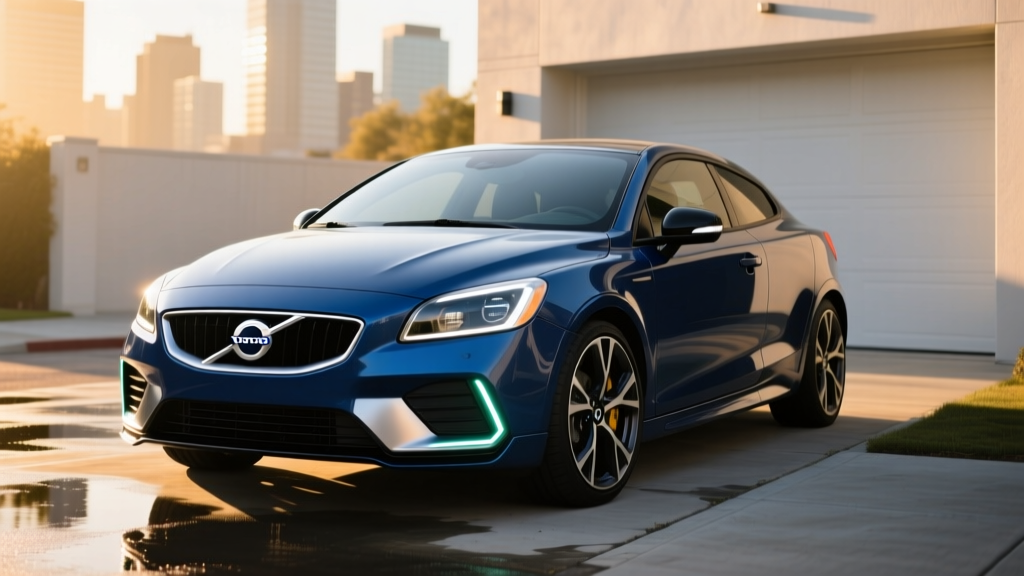
If you've been searching for Volvo C30 Polestar information, you've likely stumbled upon one of the most fascinating chapters in Volvo's electrification history. The Volvo C30 Polestar Performance Prototype was a battery-electric concept vehicle developed in 2010–2011 as a collaboration between Volvo Cars and Polestar — years before Polestar became its own standalone EV brand. This compact electric hatchback was never sold to consumers, but it laid the engineering groundwork for every Volvo and Polestar EV that followed.
Understanding the C30 Polestar matters in 2026 because it clarifies Volvo's EV lineage and helps buyers contextualize the current lineup — from the Volvo EX30 and EX90 to the Polestar 2, 3, and 4. Let's examine what this prototype achieved, what its specs looked like, and which modern Volvo or Polestar EV actually delivers on the promise the C30 Polestar first hinted at.
Volvo C30 Polestar Prototype: Original Specs and Engineering
The Volvo C30 Electric (also badged and tested with Polestar performance tuning as the C30 Polestar Performance Prototype) was built on Volvo's compact C30 platform. Volvo produced a fleet of approximately 250 test vehicles between 2010 and 2012, leasing some to Swedish and European fleets for real-world data collection. Here's what the engineering looked like:
| Specification | Value |
|---|---|
| Battery Capacity | 24 kWh usable (lithium-ion, NMC chemistry) |
| EPA-Estimated Range | ~93 miles (EPA cycle, 2011 testing) |
| Motor Output | 84 kW (111 hp), front-wheel drive |
| 0–60 mph | ~10.5 seconds |
| Top Speed | 81 mph (electronically limited) |
| DC Fast Charging | Not equipped (CHAdeMO was emerging; prototype used AC only) |
| Level 2 AC Charging | ~3.3 kW (approximately 8 hours from empty) |
| Cargo Volume | ~15.4 cu ft (standard C30 hatch area, batteries under floor/rear seats) |
| Curb Weight | ~3,240 lbs (roughly 440 lbs heavier than gas C30) |
The Polestar Performance Prototype variant, unveiled in 2012, featured uprated suspension tuning, cosmetic enhancements, and slight powertrain calibration tweaks aimed at demonstrating that electric Volvos could deliver engaging driving dynamics — a concept that directly led to Polestar's eventual spin-off as a performance EV brand in 2017.
Why the C30 Polestar Was Never Sold to Consumers
The C30 Electric was always a development platform, not a production vehicle. Several factors prevented consumer sales:
- Battery cost: In 2011, lithium-ion battery packs cost roughly $600–$800 per kWh, making the 24 kWh pack alone worth approximately $15,000–$19,000 in raw materials — economically unviable for a compact hatchback.
- DC fast charging: The prototype lacked DC fast-charging capability. Without 30-minute road-trip charging, consumer adoption would have been extremely limited outside of urban commuting.
- Infrastructure gaps: In 2011, public charging networks were virtually nonexistent in most markets. The EV ecosystem the C30 needed simply didn't exist yet.
- Volvo's strategic pivot: Volvo chose to focus engineering resources on scalable platforms (SPA and CMA architectures) that could support future dedicated EVs rather than retrofitting existing models.
The C30 Polestar's real contribution was data: over 2 million miles of fleet testing that informed battery management, thermal systems, and electric drivetrain durability standards Volvo still uses today.
What the C30 Polestar Evolved Into: Volvo and Polestar EVs You Can Buy in 2026
If the C30 Polestar's concept appeals to you — a compact, efficient, Scandinavian-designed electric vehicle with engaging dynamics — here are the production vehicles that carry its DNA forward in 2026:
| Model | EPA Range | Battery | 0–60 mph | Max DC Charge | Base MSRP |
|---|---|---|---|---|---|
| Volvo EX30 (Single Motor) | 275 mi | 69 kWh (NMC) | 5.1s | 153 kW | $36,450 |
| Volvo EX30 (Twin Motor) | 265 mi | 69 kWh (NMC) | 3.4s | 153 kW | $44,950 |
| Polestar 2 (Long Range Single Motor) | 320 mi | 82 kWh (NMC) | 5.9s | 205 kW | $49,900 |
| Polestar 2 (Long Range Dual Motor) | 298 mi | 82 kWh (NMC) | 4.2s | 205 kW | $54,900 |
| Volvo EX90 (Twin Motor) | 310 mi | 111 kWh (NMC) | 4.7s | 250 kW | $77,990 |
Sources: fueleconomy.gov, Volvo Cars USA, Polestar USA. EPA range figures reflect 2025/2026 model-year testing.
Closest Modern Match: The Volvo EX30
If the C30 Polestar had a spiritual successor, it's the Volvo EX30. Both are compact, stylish, urban-oriented hatchbacks with a premium Scandinavian interior. Here's how the EX30 stacks up for buyers evaluating it as the "modern C30 Electric":
EPA-estimated range: 275 miles (Single Motor Extended Range). In real-world highway driving at 70 mph, expect approximately 230–250 miles. In cold weather (below 30°F / -1°C), range can drop to 190–220 miles without preconditioning. The EX30's heat pump and battery preconditioning system significantly outperform the C30 prototype's passive thermal approach.
| Charging Method | Power | Speed |
|---|---|---|
| Level 1 (120V household) | ~1.4 kW | ~5 miles per hour |
| Level 2 (240V home/public) | 11 kW (onboard charger) | ~35 miles per hour; full charge in ~7 hours |
| DC Fast Charge (peak) | 153 kW | 10–80% in approximately 26 minutes |
The 153 kW peak DC charge rate is competitive for the compact crossover segment, though it tapers noticeably above 80% State of Charge — typical behavior for NMC chemistry. For road-trip planning, budget roughly 30–35 minutes per stop at a 150+ kW charger when charging from 10% to 80%.
Pricing, Tax Credits, and Ownership Economics
The Volvo EX30 starts at $36,450 for the Single Motor Core trim, making it one of the most affordable premium electric crossovers available. But federal tax credit eligibility requires careful attention to IRS §30D rules:
| Trim | MSRP | Federal Credit (§30D) | Effective Price |
|---|---|---|---|
| Core Single Motor | $36,450 | Up to $3,750* | ~$32,700 |
| Plus Single Motor | $39,950 | Up to $3,750* | ~$36,200 |
| Ultra Twin Motor AWD | $44,950 | Up to $3,750* | ~$41,200 |
*Tax credit amount depends on critical-mineral and battery-component sourcing requirements per IRS §30D rules. The EX30 is assembled in China (Zhangjiakou), which affects eligibility under current sourcing requirements. The maximum credit may be $3,750 (critical minerals only) or $7,500 (if both critical minerals and battery component requirements are met). Buyer income caps apply: $150,000 single / $300,000 joint filers. The credit can be transferred to the dealer at point of sale as a purchase-price reduction. Always verify current eligibility with your tax professional and the IRS before purchasing.
For comparison, the Polestar 2 starts at $49,900 and qualifies for up to $7,500 in federal credits (assembled in China, with sourcing requirements applying similarly). The higher MSRP reflects the larger battery, longer range, and more powerful drivetrain options.
Tech, Safety, and What the C30 Polestar Couldn't Offer
The C30 prototype predated modern EV infotainment and ADAS by a decade. Today's Volvo and Polestar EVs offer technology that would have seemed like science fiction in 2011:
- Google Built-In (Volvo) / Android Automotive (Polestar): Native Google Maps with EV-aware route planning that factors in charging stops, terrain, and weather.
- Pilot Assist (Volvo) / Pilot Pack (Polestar): SAE Level 2 driver assistance with adaptive cruise control, lane centering, and traffic-jam assist. This is not autonomous driving — the driver must remain engaged at all times.
- Over-the-air updates: Both brands deliver performance, range, and feature improvements wirelessly — something impossible on the C30 prototype.
- Vehicle-to-load (V2L): Select Volvo models offer power-export capability, turning the EV into a mobile battery for camping or emergency use.
- LiDAR (EX90): The flagship EX90 includes roof-mounted LiDAR as standard for enhanced pedestrian and obstacle detection — a safety leap the C30 era couldn't imagine.
Who Should Buy a Modern Volvo/Polestar EV (and Who Shouldn't)
✅ Best For
- Urban commuters who want premium Scandinavian design with easy home charging
- Cold-climate buyers — Volvo's heat pump and preconditioning systems are among the best in the industry
- Safety-prioritized families — Volvo and Polestar consistently earn IIHS Top Safety Pick+ ratings
- Tech-forward buyers who want native Google integration and OTA updates
- Compact EV seekers who want something smaller than a Tesla Model Y or Ford Mustang Mach-E
❌ Not Ideal For
- Frequent long-distance road trippers — the EX30's 275-mile range and 153 kW charge rate mean more stops than a Hyundai Ioniq 5 or Tesla Model Y
- Towing needs — the EX30 is not rated for towing; step up to the EX90 (up to 5,000 lbs) for that
- Budget-first buyers — even at $36K, the EX30 carries a premium over the Chevrolet Equinox EV or Nissan LEAF
- Those needing maximum cargo space — the EX30 offers ~32 cu ft with rear seats folded, less than many compact crossovers
Warranty Coverage
Volvo and Polestar both provide competitive warranty coverage that reflects confidence in their battery and drivetrain engineering:
- Battery warranty: 8 years / 100,000 miles, whichever comes first, with a minimum 70% capacity retention guarantee. If the battery degrades below 70% of its original usable capacity within this period, Volvo/Polestar will repair or replace it.
- Powertrain warranty: 8 years / 100,000 miles, covering the electric motor(s), power electronics, and reduction gear.
- Vehicle limited warranty: 4 years / 50,000 miles bumper-to-bumper.
- Complimentary maintenance: Volvo includes scheduled maintenance for the first 3 years / 36,000 miles on most 2026 models.
Compared to Hyundai/Kia's 10-year/100,000-mile battery warranty, Volvo's 8-year coverage is slightly shorter but aligns with industry norms from European and American manufacturers.
Frequently Asked Questions
Was the Volvo C30 Polestar ever available for purchase?
No. The Volvo C30 Electric and its Polestar Performance Prototype variant were development and fleet-testing vehicles produced between 2010 and 2012. Approximately 250 units were built, and they were leased to select fleets in Sweden and Europe. None were sold to private consumers. The C30 Polestar served as an engineering testbed that informed Volvo's subsequent EV strategy.
What is the closest modern equivalent to the Volvo C30 Polestar?
The Volvo EX30 is the closest spiritual successor — a compact, premium electric hatchback/crossover with Scandinavian design, engaging performance (especially the Twin Motor AWD variant at 3.4 seconds to 60 mph), and a starting price of $36,450. The Polestar 2 also carries the C30 Polestar's performance-oriented DNA but in a larger, longer-range package.
Does the Volvo EX30 qualify for the $7,500 federal EV tax credit?
Eligibility depends on current IRS §30D requirements. The EX30 qualifies for up to $3,750 based on critical-mineral sourcing, with the full $7,500 possible if battery-component sourcing requirements are also met. Buyer income caps ($150,000 single / $300,000 joint) and the vehicle's MSRP (under the $55,000 SUV / $80,000 truck cap) are within limits. The credit can be applied as a point-of-sale price reduction at participating dealers. Always verify eligibility with your tax professional before purchase.
How does the Volvo EX30 compare to the Tesla Model Y?
The EX30 is smaller, more affordable (starting $10K+ below the Model Y), and offers a more premium interior at its price point. However, the Model Y delivers more range (320+ miles EPA), faster DC charging (250 kW peak), access to the Supercharger network, and significantly more cargo space (76 cu ft vs. ~32 cu ft). The EX30 wins on design, urban maneuverability, and price; the Model Y wins on range, charging speed, and practicality.
What happened to Polestar after the C30 prototype?
Polestar evolved from Volvo's performance tuning partner (similar to AMG's relationship with Mercedes) into a standalone electric performance brand in 2017, co-owned by Volvo Cars and Geely. Polestar now produces the Polestar 2 (compact fastback), Polestar 3 (midsize SUV), and Polestar 4 (coupe-SUV), with the Polestar 5 (grand tourer) and Polestar 6 (roadster) forthcoming. Every Polestar vehicle is fully electric.
For the latest EPA range and efficiency data, visit fueleconomy.gov. For current federal tax credit rules, consult IRS.gov.