Quick Verdict: The Benchmark Sedan Keeps Evolving
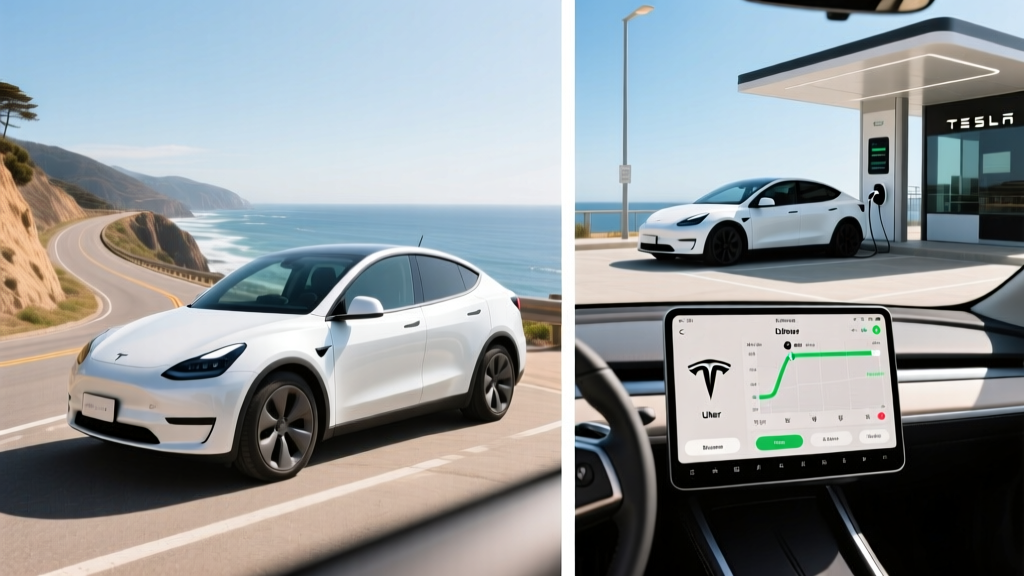
The Tesla Model 3 remains the default electric sedan against which every rival is measured. For 2026, Tesla continues the refreshed "Highland" platform introduced in late 2023, adding incremental software and efficiency tweaks while keeping the core appeal intact: class-leading efficiency, access to the Supercharger network, and a starting price that undercuts most luxury EV sedans. The palette of colors of Tesla Model 3 has also stabilized after the Highland redesign retired several legacy shades and introduced new ones like Ultra Red and Quicksilver.
But the Model 3 is not without compromises. The minimalist interior forces nearly all controls through the central touchscreen, rear visibility is limited, and the ride on the 19-inch wheels can be firm on broken pavement. If you're cross-shopping the Hyundai Ioniq 6, BMW i4, or Polestar 2, this review gives you the exact numbers you need to decide.
Full 2026 Tesla Model 3 Spec Table
| Specification | Model 3 RWD | Model 3 Long Range AWD | Model 3 Performance |
|---|---|---|---|
| EPA Range | 272 mi | 341 mi | 315 mi |
| Battery (usable) | ~57.5 kWh (LFP) | ~75 kWh (NMC) | ~75 kWh (NMC) |
| Drivetrain | Rear-Wheel Drive | Dual-Motor AWD | Dual-Motor AWD |
| Horsepower | 271 hp | 346 hp | 510 hp |
| 0-60 mph | 5.8 sec | 4.2 sec | 2.9 sec |
| Peak DC Fast Charge | 170 kW | 250 kW | 250 kW |
| 10-80% DC Time | ~25 min | ~22 min | ~22 min |
| Level 2 Home Charge | 11.5 kW (~44 mi/hr) | 11.5 kW (~44 mi/hr) | 11.5 kW (~44 mi/hr) |
| MPGe (combined) | 132 MPGe | 125 MPGe | 118 MPGe |
| kWh/100 mi | 25 | 26 | 28 |
| Base MSRP | $38,990 | $44,990 | $52,990 |
| Battery Warranty | 8 yr / 100,000 mi | 8 yr / 120,000 mi | 8 yr / 120,000 mi |
Sources: EPA / fueleconomy.gov, Tesla.com. Prices exclude destination fee ($1,390). Specs reflect 2026 model year.
Range and Efficiency: EPA Numbers vs. the Real World
EPA Sticker: 341 miles (Long Range AWD) / 272 miles (RWD)
Real-World Expectation: On mixed highway driving at 70-75 mph, expect roughly 280-300 miles from the Long Range and 220-240 from the RWD. In cold weather (below 30°F), plan for 20-30% range reduction unless you precondition the battery while plugged in. The heat pump on the Highland platform significantly reduces cabin-heating energy draw compared to pre-2024 models, but physics still governs the battery.
The RWD Model 3 uses a lithium iron phosphate (LFP) battery, which trades energy density for longevity and cost. Tesla recommends charging LFP packs to 100% regularly — something you should not do daily with the NMC packs in the Long Range and Performance trims. If your commute is under 40 miles round-trip and you have home charging, the RWD's 272-mile EPA rating is more than adequate, and you'll benefit from the LFP chemistry's slower degradation over time.
Efficiency is where the Model 3 shines. At 25 kWh/100 mi for the RWD, it sips electrons more frugally than nearly any EV on sale. For comparison, the Hyundai Ioniq 6 SE achieves 24 kWh/100 mi, while the BMW i4 eDrive40 uses about 29 kWh/100 mi. That efficiency advantage translates directly into lower electricity costs and more miles per charging session.
Charging Speed: DC Fast, Level 2, and the Supercharger Advantage
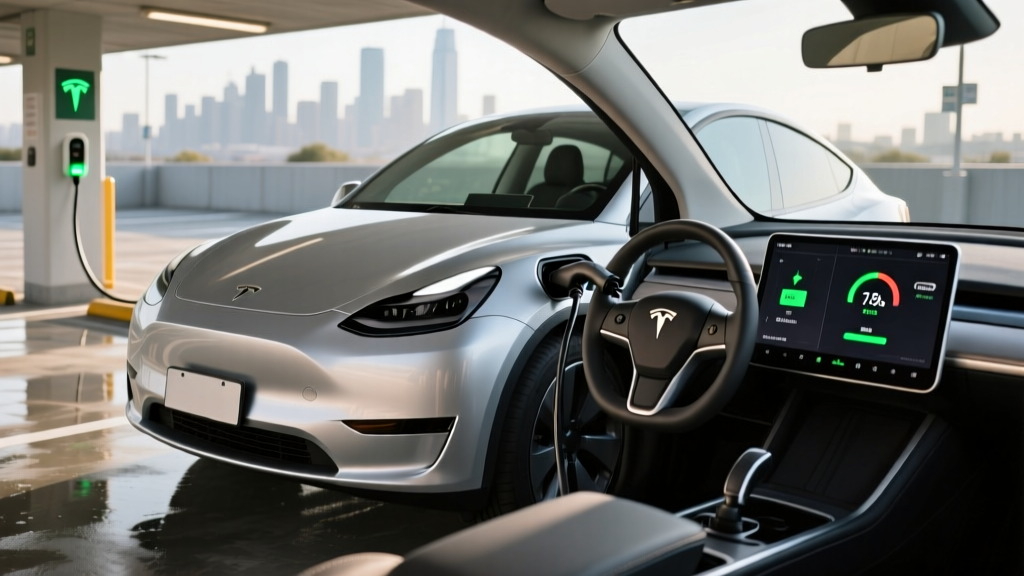
The Model 3 Long Range and Performance support peak DC fast charging at 250 kW on V3 Superchargers. In practice, that peak rate holds only through roughly 30-40% state of charge before tapering. A typical 10-80% session takes about 22 minutes, but if you arrive at a charger above 40% SoC, your effective average speed drops considerably. Always precondition the battery by navigating to a Supercharger in the car's nav — this warms the pack and enables peak charge rates even in cold weather.
| Charging Level | Power | Miles Added per Hour | Typical Use Case |
|---|---|---|---|
| Level 1 (120V) | ~1.4 kW | ~5 mi/hr | Emergency / overnight trickle |
| Level 2 (240V, 48A) | 11.5 kW | ~44 mi/hr | Home Wall Connector overnight |
| DC Fast (V3 Supercharger) | Up to 250 kW | ~750+ mi/hr (peak) | Road trips, 10-80% in ~22 min |
At home on a Tesla Wall Connector (or any J1772/NACS Level 2 station at 48 amps), you'll add about 44 miles of range per hour of charging. A full overnight session from 20% to 100% on the Long Range takes roughly 7 hours. The RWD's smaller LFP pack fills faster in absolute time — about 5.5 hours from 20% to 100%.
One of the Model 3's enduring advantages is seamless access to Tesla's Supercharger network, now the largest and most reliable DC fast-charging network in North America. With the industry-wide shift to NACS, competitors are gaining access too, but Tesla owners still enjoy the most frictionless plug-and-charge experience.
All Colors of Tesla Model 3 for 2026
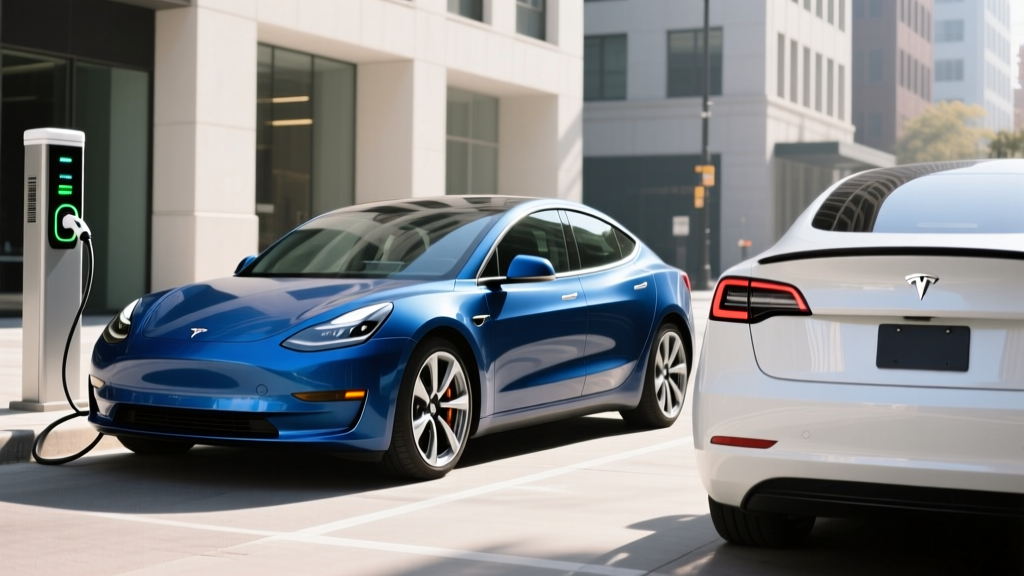
After the Highland refresh, Tesla streamlined the Model 3 exterior palette. Here are the five colors of Tesla Model 3 available for the 2026 model year, along with pricing and practical notes:
- Pearl White Multi-Coat — No-cost option. The most popular Model 3 color by volume. Shows dirt and road grime faster than darker shades but hides light scratches well.
- Solid Black — No-cost option. Deep, glossy finish that looks sharp when clean but shows swirl marks and dust aggressively. Popular in warmer climates where it contrasts with tinted windows.
- Deep Blue Metallic — $1,000 premium. A rich navy with metallic flake that reads as understated luxury. Hides minor imperfections better than black.
- Ultra Red — $2,000 premium. Introduced with the Highland redesign, this multi-coat red replaces the previous Red Multi-Coat. It has more depth and a slight candy-apple effect under direct sunlight.
- Quicksilver — $2,000 premium. A warm silver with a faint champagne undertone. The best color for hiding road dust, water spots, and minor paint defects — a practical pick for daily drivers in snowy or dusty regions.
Tesla periodically rotates colors in and out of the lineup without much advance notice. If a specific shade matters to you, order directly through Tesla's configurator rather than relying on dealer lot inventory.
Interior, Cargo, and Technology
The Highland-generation Model 3 interior is a marked improvement over the pre-2024 cabin. Ambient lighting, ventilated front seats, acoustic glass all around, and an 8-inch rear touchscreen for passengers are now standard. The 15.4-inch central display handles everything from climate controls to glovebox release — there are virtually no physical buttons.
Cargo space: 23 cubic feet total (19.8 cu ft trunk + 3.1 cu ft front trunk/frunk). That's competitive with compact luxury sedans but trails the Hyundai Ioniq 6's 27.4 cu ft trunk. Rear legroom measures 35.3 inches — adequate for adults on shorter trips but tighter than a midsize sedan like the Model S.
Driver assistance: Basic Autopilot (lane centering + adaptive cruise) is standard. Enhanced Autopilot ($6,000) adds automatic lane changes and auto-park. Full Self-Driving (Supervised) remains a $8,000 option or $99/month subscription.
Important: Tesla Autopilot and FSD (Supervised) are SAE Level 2 driver-assistance systems. You must keep your hands on the wheel and eyes on the road at all times. These are not self-driving systems. Only SAE Level 4 services like Waymo operate without a human driver, and those are limited to geofenced urban areas.
Pricing, Trims, and Federal Tax Credit Eligibility
| Trim | Base MSRP | Destination | Est. Total | §30D Credit Eligibility |
|---|---|---|---|---|
| Model 3 RWD | $38,990 | $1,390 | $40,380 | Eligible (up to $7,500) |
| Model 3 Long Range AWD | $44,990 | $1,390 | $46,380 | Eligible (up to $7,500) |
| Model 3 Performance | $52,990 | $1,390 | $54,380 | Eligible (up to $7,500) |
All three Model 3 trims fall under the IRS §30D sedan MSRP cap of $55,000 and are currently eligible for the full federal tax credit, provided you meet the buyer requirements. As of 2026, the point-of-sale transfer option allows you to apply the credit as an immediate discount at delivery rather than waiting to claim it on your tax return.
§30D Federal EV Tax Credit Requirements (2026):
- Buyer AGI must not exceed $150,000 (single) / $225,000 (head of household) / $300,000 (joint) — source: IRS.gov
- Vehicle MSRP must be ≤ $55,000 for sedans (all Model 3 trims qualify)
- Battery critical minerals and component sourcing must meet annual thresholds (Tesla's North American supply chain currently satisfies these for the Model 3)
- Vehicle must be assembled in North America (Model 3 is built in Fremont, CA and Austin, TX)
- Point-of-sale transfer available — apply credit as instant discount at purchase
Always verify current-year eligibility at IRS.gov or with a tax professional before purchasing. Sourcing rules tighten annually.
Pros and Cons
Pros
- Class-leading efficiency (25 kWh/100 mi on RWD)
- Supercharger network access — most reliable DC charging in North America
- Strong real-world range: 280-300 mi highway (Long Range)
- OTA updates continuously add features
- LFP battery on RWD allows daily 100% charging with minimal degradation concern
- Qualifies for full $7,500 §30D credit (income permitting)
Cons
- No physical buttons — all climate/media controls via touchscreen
- Rear visibility compromised by thick C-pillars and small rear window
- Rear seat legroom (35.3 in) is tight for taller passengers on long trips
- Turn signal stalks removed — signals on steering wheel buttons (takes adaptation)
- FSD subscription cost is high for a Level 2 system
- Insurance premiums often 15-25% higher than comparable gas sedans
Who Should Buy the 2026 Tesla Model 3?
Choose the Model 3 RWD if: You have home Level 2 charging, your daily commute is under 50 miles round-trip, and you want the lowest entry price into a premium EV with strong efficiency and LFP battery longevity.
Choose the Model 3 Long Range AWD if: You take regular road trips exceeding 200 miles, live in a cold-weather region where AWD traction matters, or frequently carry rear-seat passengers who appreciate the extra range buffer for detours.
Choose the Model 3 Performance if: You want sports-sedan acceleration (2.9 seconds to 60 mph) and track-capable handling, and you're willing to pay a premium and accept slightly lower range for it.
Look elsewhere if: You need a physical-button interior, maximum rear-seat space (consider the Model S or Hyundai Ioniq 6), or you want a non-Tesla brand with Apple CarPlay/Android Auto support.
Frequently Asked Questions
What is the real-world range of the Tesla Model 3?
The Long Range AWD achieves 341 miles EPA, but expect 280-300 miles in real-world highway driving at 70-75 mph. In winter conditions below 30°F, plan for 20-30% less unless you precondition while plugged in. The RWD's 272-mile EPA rating translates to roughly 220-240 miles on the highway.
How fast does the Model 3 charge at home and on the road?
On a Level 2 home charger (11.5 kW / 48A), the Model 3 adds about 44 miles of range per hour — a full overnight charge easily refills any trim. On a V3 Supercharger, the Long Range and Performance peak at 250 kW and go from 10-80% in roughly 22 minutes. The RWD peaks at 170 kW, taking about 25 minutes for the same session.
How much does the Tesla Model 3 cost after tax credits?
The RWD starts at $40,380 including destination. If you qualify for the full $7,500 §30D credit (income and sourcing requirements met), your effective cost drops to ~$32,880. The Long Range comes to ~$38,880 after credit, and the Performance to ~$46,880.
Does the Model 3 qualify for the federal EV tax credit?
Yes — all three 2026 Model 3 trims fall under the $55,000 sedan MSRP cap and are assembled in North America. Eligibility depends on your adjusted gross income (≤$150K single / ≤$300K joint) and current battery-sourcing rules. Verify at IRS.gov before purchase.
What colors does the 2026 Tesla Model 3 come in?
Five colors are available: Pearl White Multi-Coat (free), Solid Black (free), Deep Blue Metallic ($1,000), Ultra Red ($2,000), and Quicksilver ($2,000). Tesla has historically rotated colors without much notice, so order through the configurator if a specific shade is important to you.
Is the Model 3 worth buying vs. the Hyundai Ioniq 6 or BMW i4?
The Model 3 wins on Supercharger network access, over-the-air updates, and overall software integration. The Ioniq 6 offers slightly better efficiency (24 kWh/100 mi on SE trim), more cargo space, and physical buttons. The BMW i4 provides a more traditional luxury interior and Apple CarPlay but charges slower on DC (205 kW peak) and costs more. If Supercharger reliability matters to you for road trips, the Model 3 still holds the edge.
How long will the Model 3 battery last?
Tesla warranties the battery for 8 years / 100,000 miles (RWD) or 8 years / 120,000 miles (Long Range/Performance), guaranteeing at least 70% capacity retention. Real-world data from high-mileage owners suggests NMC packs retain roughly 85-90% capacity at 100,000 miles with proper charging habits. LFP packs in the RWD may last even longer due to the chemistry's superior cycle life.