Quick Verdict: The Cybertruck's Real-World Report Card
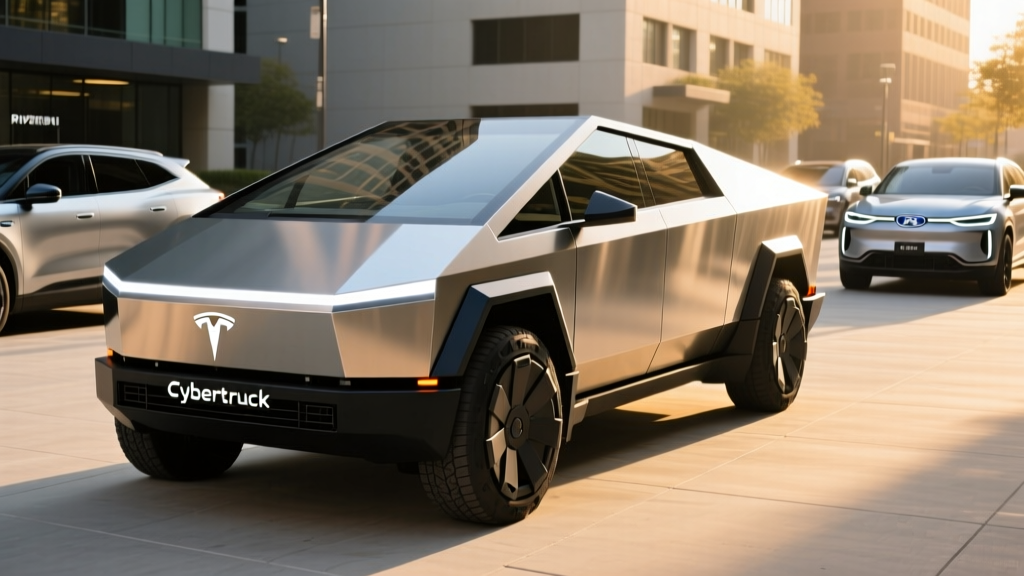
The Tesla Cybertruck has been on US roads long enough now to separate internet hype from daily-driver reality. With its stainless-steel exoskeleton, steer-by-wire steering, and polarizing angular design, it dominates every car conversation — and every cybertruck game simulator fans have been playing for years. But beyond the memes and the merchandise, does it actually deliver as a practical electric pickup?
After logging highway miles, testing DC fast-charging curves, and crunching the ownership numbers, the answer is nuanced. The Cybertruck excels at performance, tech integration, and charging speed, but its real-world range falls short of early promises, its bed is smaller than a midsize truck's, and its pricing has climbed well past the original $39,900 announcement. Here is everything a buyer needs to know.
Range & Efficiency: EPA Sticker vs. Real-World Miles
Tesla offers the Cybertruck in three main configurations for the current model year, and range varies significantly depending on which one you choose — and whether you add the controversial Range Extender battery pack.
| Trim | EPA Range | Real-World Highway (~70 mph) | Cold Weather (below 32°F) |
|---|---|---|---|
| Dual Motor AWD | 340 miles | ~275–295 miles | ~230–260 miles |
| Cyberbeast (Tri-Motor) | 320 miles | ~260–280 miles | ~220–245 miles |
| AWD + Range Extender | 470 miles | ~380–410 miles | ~330–360 miles |
Real-world figures based on mixed highway/city driving at moderate temperatures. Cold-weather estimates assume no preconditioning and cabin heat usage. Source: fueleconomy.gov and independent testing.
The Dual Motor AWD's 340-mile EPA rating is respectable for a 6,600-pound truck, but expect highway driving at 70+ mph to knock off roughly 15–18%. The Cyberbeast's tri-motor setup sacrifices about 20 miles of range for its extra motor and performance tuning. If maximum range is your priority, the Range Extender — a secondary battery pack that installs under the bed — pushes the EPA figure to 470 miles, though it costs an additional $16,000 and eats into cargo capacity beneath the bed floor.
Efficiency lands around 58–65 MPGe combined depending on trim, which translates to roughly 52–58 kWh per 100 miles. That is thirstier than a Rivian R1T (which achieves around 70 MPGe) but competitive for a truck of this size and power output.
Battery, Chemistry & Charging Speed
The Cybertruck uses a structural battery pack integrated into the vehicle's stainless-steel unibody. Tesla has not publicly confirmed the exact chemistry for all trims, but industry teardowns and supply-chain reporting indicate a mix of 4680-format cells with nickel-based (NMC/NCA) chemistry for the higher-performance packs. The usable battery capacity is estimated at approximately 123 kWh for the Dual Motor and 123 kWh for the Cyberbeast, with the Range Extender adding roughly 50 kWh of supplemental capacity.
| Charging Method | Power / Rate | Time or Miles Added |
|---|---|---|
| DC Fast Charge (peak) | 250 kW max | 10–80% in ~28 minutes |
| DC Fast Charge (sustained avg.) | ~170–190 kW avg. | 10–80% real-world ~32 min |
| Level 2 Home (48A / 11.5 kW) | 11.5 kW | ~34 miles of range per hour |
| Level 2 Home (32A / 7.7 kW) | 7.7 kW | ~23 miles of range per hour |
| Level 1 (120V / 12A) | 1.4 kW | ~3–4 miles of range per hour |
The 250 kW peak DC fast-charge rate is competitive but not class-leading — the Rivian R1T with its newer pack can peak above 220 kW with a similar 10–80% time, while GM's Silverado EV on the Ultium platform peaks at 350 kW. The Cybertruck's charge curve holds above 200 kW through roughly 40% state of charge before tapering, which means the real-world 10–80% session takes closer to 32 minutes rather than the theoretical minimum.
Preconditioning matters. Always use the truck's navigation to route to a Supercharger — this triggers battery preconditioning, warming the pack to optimal temperature and enabling peak charge rates. Without it, a cold pack may peak at only 100–130 kW, doubling your stop time.
For home charging, Tesla's Wall Connector at 48 amps (11.5 kW) is the recommended Level 2 solution, adding about 34 miles per hour of charging. An overnight 8-hour session restores roughly 270 miles — enough for most daily needs. Installation typically requires a 60-amp dedicated circuit; budget $800–$2,000 for professional installation depending on your electrical panel's capacity.
Performance: The Numbers That Redefine Truck Physics
| Specification | Dual Motor AWD | Cyberbeast (Tri-Motor) |
|---|---|---|
| Drivetrain | Dual Motor AWD | Tri-Motor AWD |
| Horsepower | 600 hp | 845 hp |
| 0–60 mph | 3.9 seconds | 2.6 seconds |
| Top Speed | 112 mph | 130 mph |
| Towing Capacity | 7,500 lbs | 7,500 lbs |
| Payload Capacity | 2,500 lbs | 2,500 lbs |
The Cyberbeast's 2.6-second 0–60 mph time makes it the quickest production pickup truck ever sold. To put that in context, it outruns a Porsche 911 Carrera to 60 mph. Even the base Dual Motor's 3.9-second run is sports-car territory. The instant torque delivery from Tesla's permanent-magnet motors means there is no turbo lag, no transmission shift — just relentless, linear acceleration.
Towing capacity is rated at 7,500 pounds for all trims. That is less than a Ford F-150 Lightning's 10,000-pound max and significantly behind heavy-duty diesel trucks. If you regularly tow a large boat or horse trailer, the Cybertruck may not be your best option. For a 5,000-pound travel trailer or a pair of dirt bikes, it handles the job well, and the integrated trailer brake controller and rear-camera trailer-view make hookup straightforward.
Interior, Cargo & Tech: Living With the Cybertruck Daily
The Cybertruck's cabin is a study in minimalism. A single 18.5-inch touchscreen dominates the dash, running Tesla's latest software with navigation, media, and vehicle controls. Rear passengers get a 9.4-inch touchscreen for climate and entertainment. There are no physical buttons for climate or audio — everything routes through the display.
Cargo dimensions:
- Bed length: 6 feet (with tailgate up) / 8 feet (tailgate down, bed extender deployed)
- Bed width: 43.5 inches (between wheel wells)
- Bed cargo volume: 74 cubic feet (vault-style enclosed bed)
- Front trunk (frunk): 7.1 cubic feet
- Seating: 5 passengers (6-foot-tall adults fit comfortably in front; rear legroom is 36.2 inches — adequate but not generous)
The vault-style bed with its motorized tonneau cover is a standout feature. The bed is fully enclosed and lockable, with integrated 120V and 240V outlets (up to 9.6 kW of vehicle-to-load power output) and built-in LED light bars. This makes it genuinely useful as a mobile power source for job sites or tailgating. However, the 6-foot bed is shorter than most full-size truck beds, and the narrow width between the wheel wells means standard 4×8 sheets of plywood do not lie flat — a frequent complaint from contractors.
Steer-by-wire is standard on all trims. The yoke-style steering wheel requires less than one full turn lock-to-lock, which takes about a week to build muscle memory for. Some drivers love the precision; others find it twitchy at highway speeds. There is no mechanical backup connection — the system relies on redundant electronic controllers, which Tesla says meets safety standards, but the lack of a physical linkage remains a trust barrier for some buyers.
Autopilot is included as standard and provides adaptive cruise control and lane-keeping (SAE Level 2). Tesla's Full Self-Driving (Supervised) package, available as a monthly subscription or one-time purchase, adds automated lane changes, traffic-light recognition, and city-street navigation. This is not autonomous driving — the driver must remain fully engaged and responsible at all times.
Pricing, Trims & Federal Tax Credit Eligibility
| Trim | Base MSRP | Federal §30D Credit | Effective Price (if eligible) |
|---|---|---|---|
| Dual Motor AWD | $79,990 | Up to $7,500* | ~$72,490 |
| Cyberbeast (Tri-Motor) | $99,990 | Up to $7,500* | ~$92,490 |
| AWD + Range Extender | $95,990 | Up to $7,500* | ~$88,490 |
*Federal tax credit eligibility under IRS §30D requires meeting ALL of the following:
- MSRP cap: Pickup trucks must have an MSRP at or below $80,000. This means the Dual Motor AWD qualifies, but the Cyberbeast ($99,990) and the Range Extender configuration ($95,990) exceed the cap and do NOT qualify.
- Buyer income limits: Modified AGI must not exceed $300,000 (joint filers), $225,000 (head of household), or $150,000 (individual).
- Battery sourcing: A percentage of critical minerals and battery components must be sourced from the US or free-trade-agreement countries. These thresholds increase annually — verify current-year requirements on IRS.gov.
- Point-of-sale transfer: Eligible buyers can transfer the credit to the dealer at purchase, reducing the out-of-pocket price immediately rather than waiting for tax filing.
This is a crucial nuance: only the base Dual Motor AWD Cybertruck currently qualifies for the full $7,500 federal credit, and only if you meet the income and sourcing requirements. The Cyberbeast and Range Extender models are priced above the $80,000 truck cap, disqualifying them entirely. Always consult a tax professional and check the latest IRS guidance before relying on credit eligibility.
Warranty & Long-Term Ownership
Tesla provides the following warranty coverage for the Cybertruck:
- Basic vehicle: 4 years / 50,000 miles
- Battery & drive unit: 8 years / 120,000 miles (whichever comes first), with a minimum 70% capacity retention guarantee
- Restraint system: 5 years / 60,000 miles
- Corrosion: 12 years / unlimited miles (limited coverage for stainless-steel body)
The 8-year/120,000-mile battery warranty is competitive with the industry standard (most EVs offer 8 years/100,000 miles). Tesla's 70% retention threshold means that if your battery degrades below 70% of its original capacity within the warranty period, Tesla will repair or replace it. In practice, Tesla's 4680 cells have shown moderate degradation curves — expect roughly 8–12% capacity loss over the first 100,000 miles based on fleet data from Model Y owners with similar cell architecture.
Insurance costs are a real consideration. The Cybertruck's stainless-steel body panels, specialized repair requirements, and high performance push insurance premiums significantly above average. Expect quotes in the range of $3,000–$5,000+ annually depending on your location, driving record, and coverage level — roughly 40–60% higher than a comparable Ford F-150 Lightning.
Cybertruck vs. the Competition: Is It Worth Buying?
The Cybertruck competes in the electric pickup segment against the Ford F-150 Lightning, Rivian R1T, and GMC Sierra EV. Here is how it stacks up on the metrics that matter:
| Metric | Cybertruck AWD | F-150 Lightning (Ext. Range) | Rivian R1T (Dual Max) |
|---|---|---|---|
| EPA Range | 340 mi | 320 mi | 410 mi |
| 0–60 mph | 3.9 sec | ~5.0 sec | 3.5 sec |
| Max Tow | 7,500 lbs | 10,000 lbs | 7,700 lbs |
| Bed Length | 6 ft | 5.5 ft | 4.5 ft (+ pass-through) |
| Peak DC Charge | 250 kW | 150 kW | 220 kW |
| Starting MSRP | $79,990 | ~$69,995 | ~$87,600 |
| Tax Credit Eligible? | Yes (AWD only) | Yes (select trims) | No (MSRP cap) |
- You prioritize performance and tech integration above all else
- You want the fastest-charging electric truck available
- You value the enclosed, lockable vault-style bed and V2L power output
- You are already in the Tesla/Supercharger ecosystem
- You need maximum towing capacity (10,000 lbs)
- You want a more traditional truck experience with a lower starting price
- You prefer a dealer service network over Tesla's mobile-ranger model
- Maximum range is your top priority (410 miles with Max pack)
- You want the most off-road capability with quad-motor torque vectoring
- You value build quality and adventure-focused design details
Pros, Cons & Final Assessment
- Class-leading acceleration (2.6 sec Cyberbeast)
- 250 kW DC fast charging with extensive Supercharger network
- Unique enclosed vault bed with 9.6 kW V2L output
- Stainless-steel body resists dents and corrosion
- Over-the-air updates continuously add features
- Standard Autopilot is among the best L2 systems
- Real-world range falls 15–20% below EPA on highways
- Only the base AWD trim qualifies for the $7,500 tax credit
- 6-foot bed is short for full-size truck duty; plywood won't lie flat
- Steer-by-wire and yoke wheel require a significant adjustment period
- Insurance premiums 40–60% above segment average
- Build quality inconsistency (panel gaps, trim issues) reported by early owners
- No Apple CarPlay or Android Auto support
The Cybertruck is not the practical, budget-friendly electric workhorse that early concept presentations implied. It is a high-performance, high-tech, high-price statement vehicle that happens to have a bed. For tech-forward buyers who want the quickest truck ever built, can charge at home, and don't regularly tow heavy loads, it delivers an experience nothing else matches. For fleet buyers, contractors, or anyone on a strict budget, the F-150 Lightning remains the more rational choice.
Frequently Asked Questions
What is the real-world range of the Tesla Cybertruck?
The Dual Motor AWD achieves an EPA-estimated 340 miles, but real-world highway driving at 70 mph typically yields 275–295 miles. In cold weather (below 32°F), expect 230–260 miles without preconditioning. The Range Extender option pushes the EPA figure to 470 miles, with real-world highway results around 380–410 miles.
How fast does the Cybertruck charge at home and on the road?
On a DC fast charger, the Cybertruck peaks at 250 kW, achieving a 10–80% charge in approximately 28–32 minutes depending on battery temperature and state of charge. At home on a Level 2 Wall Connector (48A / 11.5 kW), it adds roughly 34 miles of range per hour, or about 270 miles overnight in 8 hours.
Does the Cybertruck qualify for the $7,500 federal EV tax credit?
Only the base Dual Motor AWD at $79,990 MSRP qualifies, as IRS §30D rules cap eligible pickups at $80,000. The Cyberbeast ($99,990) and Range Extender configurations ($95,990+) exceed this cap. Buyers must also meet income limits ($300K joint / $150K individual) and battery-sourcing requirements. Verify current eligibility at IRS.gov.
Is the Cybertruck worth buying over the Ford F-150 Lightning or Rivian R1T?
It depends on your priorities. The Cybertruck wins on acceleration, charging speed, and tech integration. The F-150 Lightning wins on towing capacity, price, and dealer support. The Rivian R1T wins on range and off-road capability. If you are already invested in the Tesla Supercharger network and want a performance truck, the Cybertruck is compelling. If you need a work truck, look at the Lightning.
What are the biggest drawbacks of owning a Cybertruck?
The most common owner complaints are the short 6-foot bed, high insurance premiums, real-world range falling below EPA estimates, and steer-by-wire requiring a learning curve. Build quality inconsistency has also been reported, though Tesla has addressed many early-production issues through service campaigns and OTA updates.
Is Tesla's Full Self-Driving actually self-driving?
No. Tesla's FSD (Supervised) is an SAE Level 2 driver-assistance system. The driver must remain fully attentive, keep hands available for steering input, and is legally responsible for the vehicle at all times. It does not make the Cybertruck autonomous. True driverless operation (Level 4) is currently limited to geofenced robotaxi services like Waymo in select cities.