Quick Verdict: The Electric Microbus Grows Up
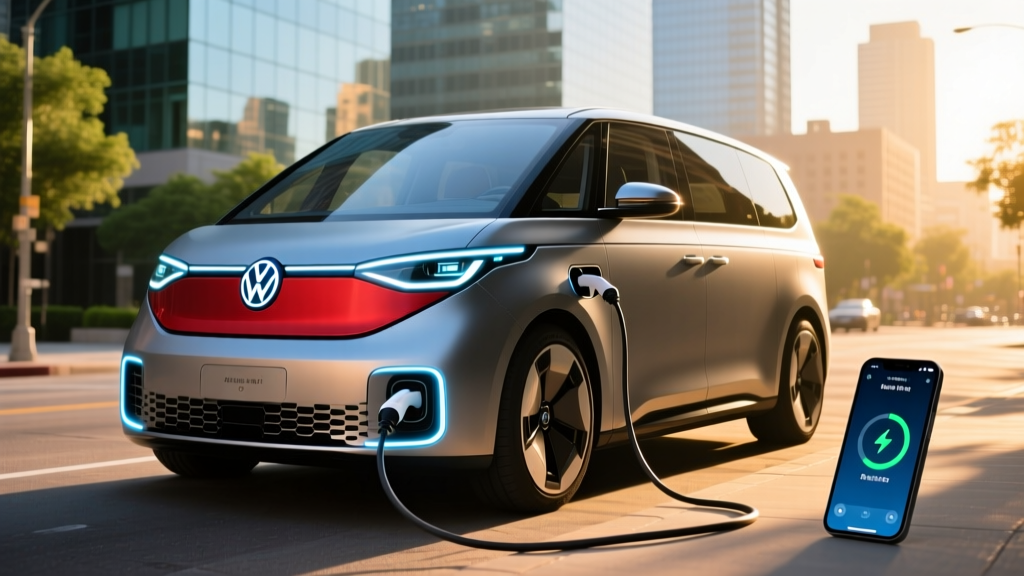
The 2027 VW ID. Buzz arrives in the U.S. as a three-row, long-wheelbase electric van that trades on nostalgia but has to deliver as a practical family hauler. After examining VW's published specifications, EPA filings, and early drive impressions, the picture is clear: this is a spacious, comfortable people-mover with respectable — but not class-leading — range and charging. It occupies a niche that no other mainstream EV fills, which is simultaneously its greatest strength and its biggest risk in a market where buyers cross-shop efficiency above all else.
If you need seven-passenger seating, massive cargo volume, and a distinctive design, nothing else on the market looks or functions quite like the ID. Buzz. If your priority is maximum range per dollar or blistering acceleration, competitors like the Kia EV9 or Tesla Model X will serve you better. Here's the full breakdown.
Range, Battery & Efficiency: What the Numbers Actually Mean
Real-World Expectation: Plan for ~195–215 miles on sustained highway driving at 70+ mph. In cold weather (below 30°F), expect a 15–25% reduction, dropping effective range to roughly 175–200 miles. City driving with regenerative braking can push closer to or slightly above the EPA sticker.
The 2027 ID. Buzz uses a 91 kWh usable battery pack (approximately 91 kWh net, ~96 kWh gross) built on VW's MEB platform. The U.S.-spec model exclusively ships with dual-motor all-wheel drive, which trades some efficiency for traction and year-round confidence. The battery chemistry is NMC (nickel manganese cobalt), which offers higher energy density than LFP but requires more careful thermal management and long-term state-of-charge discipline for optimal longevity.
| Spec | Value |
|---|---|
| EPA Range (AWD Pro S) | 234 miles |
| Battery (Usable / Gross) | 91 kWh / ~96 kWh |
| Battery Chemistry | NMC (Nickel Manganese Cobalt) |
| EPA Efficiency | 87 MPGe combined (est.) |
| Energy Consumption | ~39 kWh/100 mi |
| Drivetrain | Dual-motor AWD |
| Horsepower | 335 hp (combined) |
| 0–60 mph | ~5.9 seconds |
| Max DC Fast Charge | 170 kW (peak) |
| 10–80% DC Charge Time | ~26 minutes |
| Level 2 Home Charge Rate | 11 kW (AC, ~30 mi/hr) |
| Towing Capacity | 2,500 lbs (braked) |
At roughly 39 kWh per 100 miles, the ID. Buzz is less efficient than a compact crossover like the Hyundai Ioniq 5 (around 30 kWh/100 mi), but that's expected for a vehicle this size and weight. The aerodynamic profile of a van simply can't match a sleek crossover, and the three-row cabin adds substantial mass. For context, the similarly sized Kia EV9 achieves around 35–37 kWh/100 mi in AWD form, so the VW is competitive within its segment.
Charging Speed: DC Fast, Level 2 & Real-World Curve Behavior
| Charging Level | Max Power | Speed / Notes |
|---|---|---|
| Level 1 (120V household) | ~1.4 kW | ~3–4 miles per hour |
| Level 2 (240V home/public) | 11 kW | ~30 miles per hour; 0–100% in ~9 hrs |
| DC Fast Charge (CCS) | 170 kW peak | 10–80% in ~26 min |
The 170 kW peak DC fast-charge rate is adequate but not exceptional for 2027. Competitors like the Hyundai Ioniq 5 and Kia EV9 accept up to 236–240 kW on 800V architectures, enabling 10–80% charges in roughly 18 minutes. The ID. Buzz operates on VW's 400V MEB platform, which limits peak charge speed compared to those 800V rivals.
Charging curve reality: The 170 kW figure is a peak, not a sustained rate. In real-world DC fast charging, the ID. Buzz will typically hold around 130–155 kW between 10–50% state of charge, then taper progressively. From 80–100%, expect charge speeds to drop to under 40 kW — this is standard lithium-ion behavior to protect cell health, but it means topping off the last 20% at a public charger is slow and usually not worth the wait on road trips.
For home charging, the 11 kW onboard AC charger is a genuine advantage. On a 48-amp Level 2 circuit (the most common home EVSE installation), you'll add roughly 30 miles of range per hour of charging. A full overnight charge from near-empty takes about 9 hours — easily achievable with a standard overnight schedule. If your home electrical panel only supports a 32-amp circuit, expect closer to 7.7 kW and roughly 21 miles per hour. Always consult a licensed electrician for final home charger specifications.
Performance & Drivetrain: Adequate Power, Refined Delivery
The U.S.-spec 2027 ID. Buzz comes exclusively with dual-motor all-wheel drive producing 335 combined horsepower. The 0–60 mph time of approximately 5.9 seconds is brisk enough for highway merging and confident passing, though it won't thrill anyone coming from a Tesla Model X Plaid or even a well-equipped Kia EV9 GT-Line (which hits 60 in roughly 5.0 seconds).
What the ID. Buzz does well is ride quality. The long wheelbase (118.5 inches on the U.S. LWB model) and VW's suspension tuning deliver a composed, compliant ride that absorbs highway expansion joints and potholes with the kind of composure you'd expect from a vehicle designed with European roads in mind. Steering is light and precise — essential for a van this size — and the turning radius remains manageable for urban driving despite the 195.5-inch overall length.
The dual-motor AWD system provides meaningful traction benefits in rain and light snow, and the 2,500-pound braked towing capacity is enough for a small trailer or a pair of dirt bikes, though it falls short of the EV9's 5,000-pound rating.
Interior, Cargo & Technology: Space Is the Selling Point
The ID. Buzz's cabin is where it justifies its existence. The three-row U.S. long-wheelbase model seats up to seven passengers (2+3+2 configuration). Interior volume is genuinely van-like:
- Cargo behind 3rd row: ~18.2 cu ft
- Cargo behind 2nd row (3rd row folded): ~55.0 cu ft
- Max cargo (2nd & 3rd rows folded): ~134.0 cu ft
- 2nd-row legroom: ~37.6 inches
- 3rd-row legroom: ~33.5 inches
That maximum cargo figure rivals a full-size minivan, and the boxy shape means items actually fit — there's no sloping roofline eating into your loading height. The power-sliding side doors and low load floor make access easy for kids, groceries, or gear.
On the technology front, the ID. Buzz runs VW's latest ID. Software 4.0 infotainment system on a 12.9-inch touchscreen. The system is a meaningful improvement over earlier ID.4 software, with faster response times, better voice control, and wireless Apple CarPlay and Android Auto. A 5.3-inch digital instrument cluster sits ahead of the driver. Available features include a head-up display with augmented-reality navigation, a 14-speaker Harman Kardon audio system, and ambient lighting with 30 color options.
Driver assistance: The ID. Buzz comes equipped with VW's IQ.DRIVE suite, which includes adaptive cruise control with stop-and-go, lane centering, automatic emergency braking with pedestrian detection, blind-spot monitoring, and rear cross-traffic alert. Travel Assist combines adaptive cruise and lane centering for hands-on-wheel highway driving. This is an SAE Level 2 system — the driver must remain attentive and keep hands on the wheel at all times. It is not autonomous or self-driving.
Pricing, Trims & Federal Tax Credit Eligibility
| Trim | MSRP | Est. After §30D Credit* |
|---|---|---|
| Pro S (AWD) | $59,995 | ~$52,495 |
| Pro S Plus (AWD) | $64,995 | ~$57,495 |
| 1st Edition (AWD) | $69,995 | ~$62,495 |
*Federal §30D credit eligibility depends on multiple requirements — see checklist below. Point-of-sale transfer is available at participating dealers. Always verify current eligibility with your tax professional and the IRS qualified vehicles list.
- MSRP cap: Vans classified as SUVs/trucks have an $80,000 MSRP cap; all ID. Buzz trims qualify on price.
- Buyer income limits: AGI must not exceed $150,000 (single), $225,000 (head of household), or $300,000 (joint filers).
- Battery sourcing: Critical minerals and battery components must meet escalating percentage thresholds from qualifying trade partners. VW has been working to source North American battery materials, but final eligibility is determined annually by the IRS — check the IRS qualified vehicle list before purchasing.
- Point-of-sale transfer: Eligible buyers can transfer the credit to the dealer at purchase, reducing the out-of-pocket price immediately rather than waiting for tax filing.
- VIN verification: Confirm the specific vehicle's battery sourcing compliance via the IRS portal or dealer documentation.
The ID. Buzz's pricing places it firmly in premium family-hauler territory. For comparison, the Kia EV9 starts around $54,900 and offers a similar three-row layout with more range, though with less cargo volume and a less distinctive character. The Chrysler Pacifica Hybrid PHEV starts around $50,000 but offers only 32 miles of electric range before switching to hybrid operation.
Warranty, Ownership Costs & Who Should Buy
VW backs the 2027 ID. Buzz with a competitive warranty package:
- Limited vehicle warranty: 4 years / 50,000 miles
- Battery & powertrain warranty: 8 years / 100,000 miles (with a minimum 70% capacity retention threshold)
- Roadside assistance: 4 years / 50,000 miles
The 8-year/100,000-mile battery warranty with a 70% state-of-health floor is industry-standard and matches competitors like Hyundai, Kia, and Ford. NMC batteries in the MEB platform have shown moderate degradation in real-world use — typically losing 5–8% capacity over the first 100,000 miles based on data from European ID.4 and ID. Buzz fleet vehicles. Keeping your state of charge between 20–80% for daily use and using DC fast charging sparingly will help maximize longevity.
Who this EV suits best:
- Families needing 3 rows and maximum cargo space who want a pure BEV rather than a hybrid minivan
- Urban and suburban buyers who value easy access (sliding doors, low step-in) and a manageable footprint for city driving
- Design-conscious buyers who want something distinctive in a sea of crossover SUVs
- Home-charging-capable owners who can charge overnight and use the 234-mile range for daily needs with occasional road trips
Who should look elsewhere:
- Buyers prioritizing maximum range (consider the EV9 or a long-range Model Y)
- Those who need serious towing capacity (the EV9 offers 5,000 lbs)
- Budget-conscious shoppers (the ID. Buzz starts near $60K before options)
- Frequent road-trippers in charging-desert regions where 170 kW peak charging adds time
Pros, Cons & How It Compares to Key Competitors
- Class-leading cargo volume with a practical boxy shape (up to 134 cu ft)
- Distinctive retro-modern design that stands out in any parking lot
- Refined ride quality and composed highway manners
- Standard AWD across all U.S. trims
- Power-sliding doors and low load floor for easy family access
- 11 kW onboard AC charger enables fast home charging
- Improved ID. Software 4.0 infotainment with wireless CarPlay/Android Auto
- 234-mile EPA range trails the Kia EV9 (up to 304 mi RWD)
- 170 kW peak DC charge rate is slower than 800V competitors
- Starting price near $60K is steep for the range delivered
- Third-row legroom is tight for adults on longer trips
- No frunk (front trunk) — charge port and components fill the space
- 2,500-lb towing capacity limits utility vs. SUV alternatives
- Third-row seats don't fold into a floor well like a minivan's
ID. Buzz vs. Kia EV9: The EV9 offers more range (up to 304 miles), faster 800V charging (~240 kW peak), more towing capacity (5,000 lbs), and a lower starting price (~$54,900). The ID. Buzz counters with more total cargo volume, a more distinctive design, and standard AWD. If efficiency and range are your top priorities, the EV9 wins. If cargo space and character matter most, the Buzz has the edge.
ID. Buzz vs. Chrysler Pacifica Hybrid: The Pacifica Hybrid is a PHEV with 32 miles of electric range and 30 mpg combined on gas — it eliminates range anxiety entirely and offers minivan staples like stow-and-go seating. The ID. Buzz is fully electric (zero tailpipe emissions), offers more front-trunk-adjacent interior packaging, and costs more to buy but less to fuel if you have home charging. The right choice depends on your charging access and daily mileage patterns.
Frequently Asked Questions
What is the real-world range of the 2027 VW ID. Buzz?
The EPA rates the AWD Pro S at 234 miles. In real-world highway driving at 70+ mph, expect roughly 195–215 miles. In cold weather below freezing, effective range can drop to 175–200 miles due to battery heating demands and reduced cell efficiency. City driving with frequent regenerative braking opportunities will get you closest to — or occasionally slightly above — the EPA figure.
How fast does the 2027 ID. Buzz charge at home and on the road?
At a DC fast charger, it peaks at 170 kW and charges from 10–80% in approximately 26 minutes, though sustained rates average closer to 130–155 kW through the middle of the curve. At home on a 240V Level 2 charger, the 11 kW onboard charger adds about 30 miles per hour, fully recharging the battery overnight in roughly 9 hours.
Does the 2027 VW ID. Buzz qualify for the $7,500 federal EV tax credit?
All trims fall under the $80,000 MSRP cap for van/SUV classification. However, eligibility also depends on your adjusted gross income (must be under $150K single / $300K joint), and the vehicle's battery must meet critical-mineral and component sourcing thresholds set by the IRS. VW has been working to qualify, but always check the IRS qualified vehicles list and consult a tax professional before relying on the credit.
Is the ID. Buzz worth buying over the Kia EV9 or a hybrid minivan?
It depends on your priorities. If maximum range, faster charging, and towing capacity matter most, the Kia EV9 is the more pragmatic choice. If you want a fully electric vehicle with unmatched cargo volume, sliding doors, and a design that turns heads, the ID. Buzz fills a niche nothing else occupies. If you lack reliable home charging, a hybrid minivan like the Pacifica Hybrid may be the safer bet until public charging infrastructure matures in your area.
How long will the ID. Buzz battery last, and what does replacement cost?
VW warranties the battery for 8 years or 100,000 miles against degradation below 70% capacity. Based on MEB platform fleet data, NMC packs typically lose 5–8% capacity over 100,000 miles with normal use. Full battery replacement costs are estimated at $15,000–$22,000 out of warranty, though module-level repairs may be possible at lower cost. Proper charging habits (20–80% daily SoC, limited DC fast charging) will extend battery life significantly.
Can the 2027 ID. Buzz tow, and what's the payload?
The ID. Buzz is rated for 2,500 pounds of braked towing capacity — enough for a small utility trailer, bike rack, or light camper. Payload (passengers + cargo) is approximately 1,400 pounds. This is adequate for light-duty use but falls well short of the EV9's 5,000-pound rating. Towing will also reduce range by an estimated 30–40%.
What's the difference between kW and kWh, and why does it matter for the ID. Buzz?
kW (kilowatts) measures power — how fast energy flows, like the speed of water through a hose. The ID. Buzz's 170 kW DC charge rate tells you how quickly it can accept energy. kWh (kilowatt-hours) measures energy — the total amount stored, like the size of the tank. The ID. Buzz's 91 kWh battery tells you how much energy it holds. Confusing the two is the most common EV mistake: a high kW charge rate means faster fills, while a high kWh capacity means more range.
Sources: EPA Fuel Economy (fueleconomy.gov), Volkswagen U.S. ID. Buzz specifications, IRS §30D Qualified Clean Vehicles.