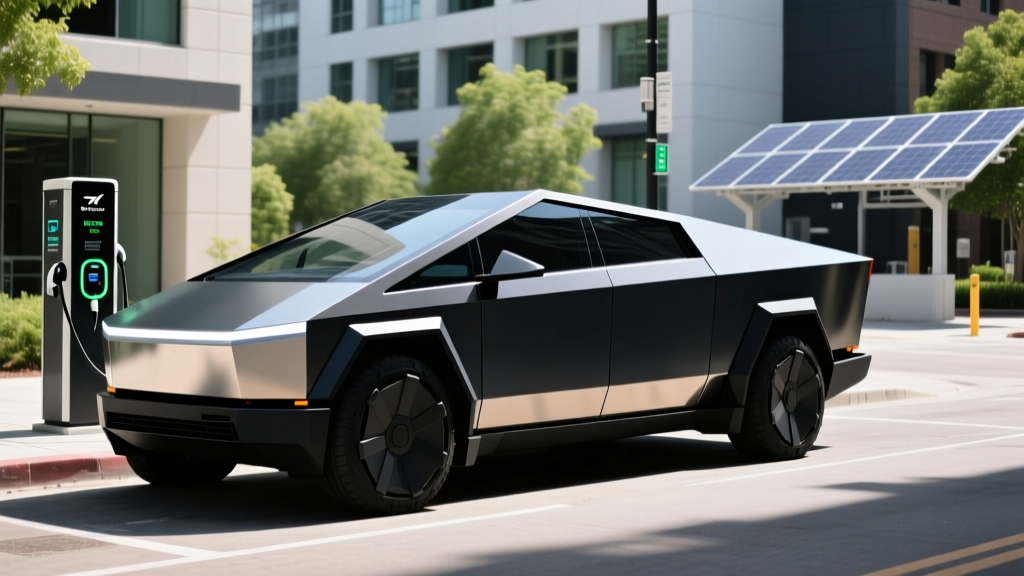
The Tesla Cybertruck is polarizing, massive, and unlike any other electric pickup on the market. Whether you're drawn to its stainless-steel exoskeleton, its 11,000-lb towing capacity, or simply the SpaceX-adjacent mystique, a Cybertruck purchase demands careful financial and practical analysis. This review dissects the numbers that actually matter for buyers — range reality, charging speed, ownership cost, and whether this truck fits your daily life or just your weekend fantasy.
Quick Verdict: Who Should Buy the Cybertruck?
The Cybertruck is best suited for tech-forward truck owners who want standout design, strong towing capability, and access to Tesla's Supercharger network. It's a poor fit for buyers who prioritize traditional truck refinement, backseat passenger comfort, or easy garage parking. At a base price hovering near $80,000 for the Dual Motor AWD and pushing past $100,000 for the Cyberbeast, this is a premium electric pickup — not a fleet work truck.
Specs at a Glance: Cybertruck by the Numbers
| Spec | Dual Motor AWD | Cyberbeast (Tri-Motor) |
|---|---|---|
| EPA Range | 340 miles | 320 miles |
| Battery (usable, est.) | ~123 kWh, NMC | ~123 kWh, NMC |
| Peak DC Fast Charge | 250+ kW | 250+ kW |
| 10–80% DC Charge Time | ~28 min | ~28 min |
| Level 2 Home Charge | 11.5 kW (~37 mi/hr) | 11.5 kW (~37 mi/hr) |
| 0–60 mph | 3.9 sec | 2.6 sec |
| Horsepower | 600 hp | 845 hp |
| Drivetrain | Dual-Motor AWD | Tri-Motor AWD |
| Towing Capacity | 11,000 lbs | 11,000 lbs |
| MPGe (combined) | 79 MPGe | 74 MPGe |
| Base MSRP (2026 est.) | $79,990 | $99,990 |
Real-World Range: What the EPA Sticker Doesn't Tell You
The Cybertruck's angular design creates significant aerodynamic drag compared to more streamlined pickups like the Rivian R1T or the Ford F-150 Lightning. At highway speeds, that brick-wall frontal area eats into efficiency. During EPA testing, the Dual Motor achieves roughly 79 MPGe combined — respectable for a 6,800-lb truck but not class-leading. For daily commuters covering under 100 miles round-trip, range is a non-issue. For road-trippers, plan charging stops every 250 miles to stay comfortable.
Charging Speed: DC Fast and Home Level 2
The Cybertruck supports the NACS (North American Charging Standard) connector natively — no adapter needed for Tesla Superchargers. Tesla has confirmed V4 Supercharger stalls can deliver over 250 kW to the Cybertruck's large pack.
| Charging Level | Power (kW) | Speed (miles/hr) | Notes |
|---|---|---|---|
| Level 1 (120V) | ~1.4 kW | ~3–4 mi/hr | Emergency/trickle only |
| Level 2 (240V, 48A) | 11.5 kW | ~37 mi/hr | Full charge overnight (~9 hrs) |
| DC Fast Charge | 250+ kW peak | ~200+ mi in 15 min | 10–80% in ~28 min; tapers sharply above 80% |
A critical detail many buyers miss: the Cybertruck's massive ~123 kWh battery means that even at 11.5 kW on a home Level 2 charger, a full 0–100% charge takes roughly 10–11 hours. Most owners will charge from 20–80% overnight, which takes about 6 hours — easily manageable with a Tesla Wall Connector or equivalent 48-amp NACS unit. For DC fast charging, the charge curve tapers significantly past 80% SoC, so Tesla's navigation system will typically route you to charge only to the percentage needed for your next leg.
Performance and Drivetrain
The Dual Motor AWD delivers 600 horsepower and a 3.9-second 0–60 mph time — quicker than most sports sedans and absurdly fast for a truck weighing nearly three and a half tons. The Cyberbeast's tri-motor setup pushes 845 hp and a 2.6-second 0–60, placing it among the quickest production vehicles ever made, regardless of powertrain.
Both models feature adaptive air suspension with up to 16 inches of ground clearance in Off-Road mode, rear-wheel steering for tighter low-speed maneuvering, and steer-by-wire — a first for a production consumer vehicle in the US. Steer-by-wire eliminates the mechanical connection between the yoke and the wheels, enabling variable steering ratios. It feels surprisingly natural at highway speeds but takes acclimation in parking lots.
Pricing, Trims, and Federal Tax Credit Eligibility
The Cybertruck lineup has consolidated since its late-2023 launch. As of 2026, the primary trims are:
- Dual Motor AWD: ~$79,990 MSRP
- Cyberbeast (Tri-Motor): ~$99,990 MSRP
Both trims exceed the IRS §30D MSRP cap of $80,000 for pickup trucks (vans, SUVs, and trucks have a higher cap than sedans, but the Cyberbeast still exceeds it). The Dual Motor AWD sits at or near the $80,000 threshold, meaning its eligibility for the full $7,500 federal tax credit depends on the exact as-delivered MSRP, buyer income limits, and battery critical-mineral sourcing compliance for the model year.
- MSRP must be ≤ $80,000 for trucks/vans/SUVs
- Buyer MAGI: ≤ $150,000 (single) / $300,000 (joint)
- Battery critical minerals and component sourcing must meet escalating annual thresholds
- Credit can be transferred to dealer at point of sale for an instant price reduction
- Consult a tax professional — eligibility is taxpayer-specific
Bottom line: many Cybertruck buyers will not qualify for the full federal credit due to income limits or MSRP thresholds. Budget accordingly and verify eligibility at irs.gov before purchase.
Interior, Cargo, and Practicality
The Cybertruck seats five, though the rear bench is tighter than a full-size F-150 Lightning or Rivian R1T. Rear legroom measures approximately 36 inches — adequate for adults on shorter trips but not limousine-grade. The front row features an 18.5-inch central touchscreen running Tesla's latest infotainment OS, with a secondary 9.4-inch rear touchscreen for climate and media controls.
Cargo is where the Cybertruck makes its truck case: the 6-foot stainless-steel bed offers approximately 72 cubic feet of volume with the tonneau cover closed (the motorized cover is standard and remarkably rigid). The bed can handle 4×8 sheets of plywood with the tailgate down. A front trunk (frunk) adds roughly 7 cubic feet of lockable storage — enough for charging cables and a soft-sided cooler. Maximum payload is rated at 2,500 lbs.
Technology, Driver Assists, and Drawbacks
Every Cybertruck ships with Tesla's Autopilot (SAE Level 2 driver-assist) as standard, including Traffic-Aware Cruise Control and Autosteer. Full Self-Driving (Supervised) — still SAE Level 2, requiring constant driver attention — is available as a paid add-on or subscription. The Cybertruck's steer-by-wire system integrates tightly with these features but does not change the fundamental legal or practical reality: the driver is responsible at all times.
Notable tech highlights include bidirectional charging capability (Power Share) that can supply up to 11.5 kW to external devices or a home during an outage, integrated air compressor in the bed, and a 48-volt electrical architecture — a first for a production vehicle that reduces wiring harness weight significantly.
Key drawbacks: the yoke steering wheel is controversial and not to everyone's taste (a round wheel is available as a swap); the stainless-steel body shows fingerprints relentlessly; the truck's 80+ inch width makes tight urban parking and narrow garage entry stressful; and insurance premiums run 25–40% higher than comparable pickups due to repair-cost concerns with the exoskeleton body panels.
Pros and Cons
- Class-leading 0–60 performance (2.6s Cyberbeast)
- 11,000-lb towing capacity
- Native NACS / full Supercharger network access
- Unique, head-turning design
- 48V architecture + Power Share bidirectional charging
- Stainless-steel body resists dents and corrosion
- Highway range loss due to poor aerodynamics
- Tight rear seat for a truck at this price
- Steep MSRP; most buyers won't qualify for full §30D credit
- Yoke steering takes significant acclimation
- Insurance premiums well above truck average
- Stainless-steel exterior shows smudges and is hard to repair
Battery Warranty and Longevity
Tesla provides an 8-year / 120,000-mile battery and drive unit warranty for the Cybertruck, with a guaranteed minimum 70% capacity retention over that period. The NMC chemistry in the ~123 kWh pack is proven across Tesla's lineup. Based on fleet data from Model S and Model X vehicles using similar chemistry, most packs retain 85–90% capacity at 100,000 miles under normal use. Avoid frequent 100% charges and prolonged storage at extreme SoC levels to maximize longevity.
Is the Cybertruck Worth Buying vs. Competitors?
The Cybertruck competes primarily with the Rivian R1T (Dual-Motor, ~$75,000–$99,000), the Ford F-150 Lightning (Platinum, ~$70,000–$96,000), and the Chevrolet Silverado EV (~$75,000+ for higher trims). The Rivian R1T offers a more refined interior, better rear-seat comfort, and a growing NACS-compatible charging ecosystem. The F-150 Lightning provides a more traditional truck experience with Pro Power Onboard and strong fleet support. The Cybertruck wins on raw acceleration, Supercharger network access, and sheer novelty — but loses on backseat practicality and conventional truck ergonomics.
Frequently Asked Questions
What is the real-world range of the Cybertruck?
EPA-rated at 340 miles (Dual Motor) or 320 miles (Cyberbeast). Real-world highway driving yields 270–300 miles in mild weather and 230–260 miles in freezing conditions.
How fast does the Cybertruck charge?
On a DC fast charger, it peaks above 250 kW and charges from 10–80% in approximately 28 minutes. At home on a 48-amp Level 2 charger (11.5 kW), expect roughly 37 miles of range per hour of charging.
Does the Cybertruck qualify for the federal EV tax credit?
Possibly, but it's not guaranteed. The Dual Motor AWD's ~$79,990 MSRP sits at the §30D truck cap of $80,000, and eligibility depends on buyer income, battery sourcing compliance, and exact as-delivered pricing. The Cyberbeast at ~$99,990 exceeds the cap. Always verify at irs.gov.
Is the Cybertruck good for towing?
Yes — 11,000 lbs of rated capacity is competitive with gas half-tons. However, towing near max capacity can cut range by 40–50%, so plan for frequent Supercharger stops on long hauls.
What's the biggest drawback of owning a Cybertruck?
Beyond the price, the combination of highway range loss from aerodynamic drag, high insurance premiums, and the learning curve of steer-by-wire and the yoke steering wheel are the most commonly cited ownership friction points.