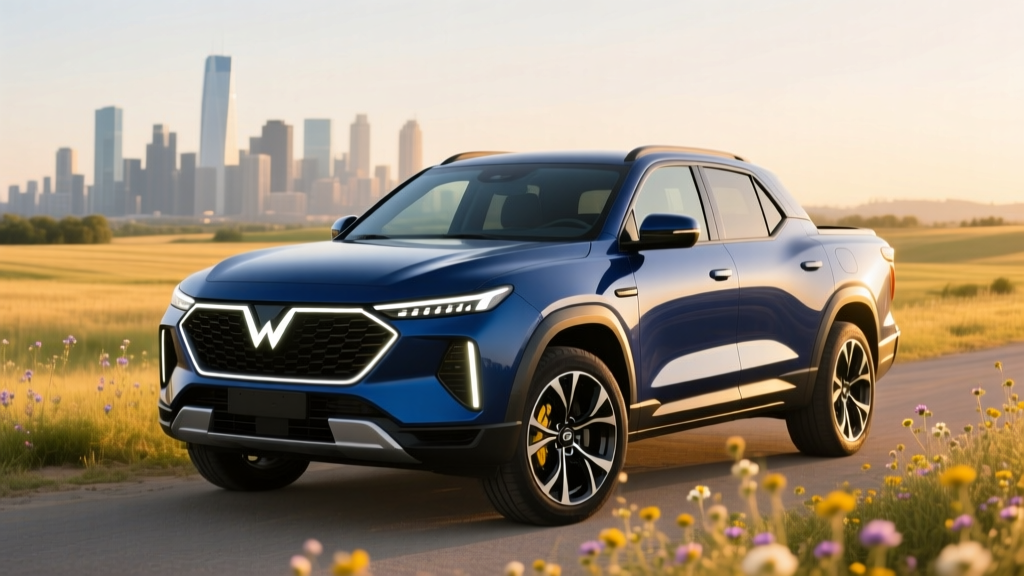
VinFast's electric pickup truck, the VF Wild, remains one of the most anticipated—and most closely watched—entries in the growing EV truck segment. First teased as a design concept and later confirmed for production, the midsize electric pickup targets buyers who want truck utility without the fuel bill. But with the Rivian R1T, Tesla Cybertruck, and Chevrolet Silverado EV already on the road, the VF Wild enters a crowded, spec-driven arena where real-world numbers matter more than concept-car promises.
This profile compiles every confirmed and estimated specification available as of early 2026, pairs them with real-world ownership context, and flags what remains preliminary. If you're researching the VinFast VF Wild before pre-orders open, here's the data-driven breakdown you need.
What We Know: VinFast VF Wild Estimated Specifications
VinFast has confirmed the VF Wild will be a body-on-frame (or unibody-skateboard) midsize electric pickup, slotted between compact urban trucks and full-size heavy haulers. The company has released preliminary powertrain and battery targets, though final EPA certification figures won't arrive until closer to the on-sale date. Below is the best-available data compiled from VinFast press materials and industry reporting.
| Specification | Estimated / Confirmed Value | Status |
|---|---|---|
| EPA Range (target) | ~300–340 miles (large pack) | Preliminary |
| Battery Capacity | ~90–105 kWh usable | Estimated |
| Battery Chemistry | LFP (standard) / NMC (extended range) | Estimated |
| Drivetrain | Dual-motor AWD (standard on most trims) | Confirmed intent |
| Horsepower | ~400–500 hp (dual-motor) | Estimated |
| 0–60 mph | ~4.5–5.5 seconds | Estimated |
| Max DC Fast Charge | ~200–250 kW peak | Estimated |
| 10–80% DC Charge Time | ~25–30 minutes (estimated) | Preliminary |
| Level 2 Home Charging | ~11.5 kW onboard charger | Estimated |
| Towing Capacity | ~7,500–10,000 lbs (target) | Preliminary |
| Payload Capacity | ~1,500–1,800 lbs (target) | Preliminary |
| Bed Length | ~5.0–5.5 ft (standard bed) | Estimated |
| Base MSRP (target) | ~$48,000–$55,000 | Preliminary |
| Battery Warranty | 8 years / 100,000 miles (expected) | Based on VinFast precedent |
Note: All figures marked "Preliminary" or "Estimated" are subject to change before production begins. Final EPA certification and manufacturer spec sheets will supersede these projections.
Range and Efficiency: EPA Estimates vs. Real-World Expectations
EPA Estimated: ~300–340 miles (extended-range pack)
Real-World Highway (70 mph): Expect ~240–280 miles
Cold Weather (below 32°F): Expect ~200–250 miles (20–30% reduction typical for EV trucks)
Heavy Towing (max load): Range can drop 40–50%, yielding ~150–180 miles
Electric pickups face a physics problem that sedans don't: a tall, flat-faced, heavy vehicle pushing air at highway speeds consumes energy at a steep rate. The Rivian R1T (EPA 352 mi, 149 kWh pack) averages roughly 2.0–2.2 mi/kWh on the highway, and the Ford F-150 Lightning (EPA 320 mi, 131 kWh pack) sits around 1.8–2.0 mi/kWh. If the VF Wild targets ~300–340 miles with a ~90–105 kWh pack, its efficiency will need to land in the 2.8–3.2 mi/kWh range—achievable for a midsize truck but ambitious.
For daily commuting under 60 miles round-trip, even the reduced real-world range provides ample buffer. But road-trippers and those towing trailers should plan charging stops every 150–200 miles under load. Cold-weather range loss is not unique to VinFast—it affects all lithium-ion packs—but buyers in northern climates should budget for 20–30% less range from December through February.
In terms of efficiency, expect the VF Wild to target roughly 95–110 MPGe combined (approximately 30–35 kWh per 100 miles), consistent with the midsize electric truck class. Final EPA MPGe figures will be published on fueleconomy.gov once the vehicle is certified.
Charging Speed: DC Fast Charging and Home Level 2
Charging speed is the make-or-break spec for truck owners who tow, road-trip, or lack home charging. Here's what we anticipate for the VF Wild based on VinFast's current charging architecture across the VF 8 and VF 9 lineup:
| Charging Level | Power (kW) | Miles Added per Hour | Notes |
|---|---|---|---|
| Level 1 (120V household) | ~1.4 kW | ~3–4 mi/hr | Emergency/trickle only |
| Level 2 (240V home, 48A) | ~11.5 kW | ~30–35 mi/hr | Full charge in ~9–10 hours |
| DC Fast Charge (peak) | ~200–250 kW | ~150–180 mi in 10 min (peak) | 10–80% in ~25–30 min |
| DC Fast Charge (sustained avg) | ~120–150 kW | Varies by SoC and temp | Charge curve tapers above 80% |
Understanding the charge curve: Peak kW is not sustained kW. The VF Wild's estimated 200–250 kW peak will likely hold from roughly 10% to 40–50% state of charge (SoC), then taper progressively. This is standard behavior for lithium-ion packs managing thermal limits. Expect a 10–80% session to take 25–30 minutes at a compatible 250+ kW charger (such as Electrify America or EVgo 350 kW stations). Charging from 80–100% slows dramatically and can add another 20–30 minutes—plan accordingly on road trips and target 80% stops.
Home charging reality: At 11.5 kW on a Level 2 home charger (requiring a 60A circuit and professional installation by a licensed electrician), the VF Wild will recover roughly 30–35 miles of range per hour. A full overnight charge from 20% to 100% takes approximately 8–10 hours. Home charging installation typically costs $800–$2,500 depending on panel capacity and wiring distance; older homes may need a $2,000–$5,000 panel upgrade to support a 60A circuit. Always consult a licensed electrician for final specifications.
The VF Wild is expected to ship with the NACS (North American Charging Standard) connector, aligning with the industry-wide shift to Tesla's Supercharger network. This gives VF Wild owners access to 25,000+ Supercharger stalls nationwide—a significant advantage over CCS-only vehicles as networks consolidate.
Performance and Drivetrain: Dual-Motor AWD Power
VinFast has signaled that the VF Wild will prioritize all-weather capability and confident acceleration, consistent with the electric truck segment's expectations. The anticipated dual-motor all-wheel-drive layout should deliver:
- Estimated horsepower: 400–500 hp (combined front and rear motors)
- Estimated torque: 500–600 lb-ft (instant delivery from electric motors)
- 0–60 mph: ~4.5–5.5 seconds (competitive with Rivian R1T dual-motor and Ford F-150 Lightning)
- Drivetrain: Standard AWD with torque vectoring; rear-wheel-drive base trim possible but unconfirmed
Electric trucks deliver torque from 0 RPM, which translates to strong low-speed pulling power for towing and off-road crawling. The VF Wild's expected ~7,500–10,000 lb towing capacity would place it in the midsize truck bracket (below the F-150 Lightning's 10,000 lb max but sufficient for boat trailers, small campers, and utility trailers). Regenerative braking with adjustable levels should enable one-pedal driving in most conditions, reducing brake wear on stop-and-go commutes.
Pricing, Trims, and Federal Tax Credit Eligibility
VinFast has targeted an aggressive entry price for the VF Wild, aiming to undercut the Rivian R1T and compete with the Chevrolet Silverado EV and Ford F-150 Lightning on value. Here's the projected pricing structure:
| Trim Level | Estimated MSRP | Key Features |
|---|---|---|
| Eco (base) | ~$48,000–$52,000 | Dual-motor AWD, standard pack (~300 mi), 12" touchscreen |
| Plus (mid) | ~$55,000–$60,000 | Extended-range pack (~340 mi), premium audio, towing package |
| Premium (top) | ~$62,000–$68,000 | Max-range pack, adaptive air suspension, full ADAS suite |
Federal Tax Credit (§30D) Eligibility: This is where the VF Wild faces its biggest question mark. Under current IRS rules, the §30D Clean Vehicle Credit provides up to $7,500, but eligibility depends on several criteria that may work against VinFast:
- MSRP cap: Pickup trucks must have an MSRP at or below $80,000 to qualify. All projected VF Wild trims clear this threshold.
- Buyer income cap: Modified adjusted gross income (MAGI) must not exceed $150,000 (single), $225,000 (head of household), or $300,000 (joint filers).
- Battery component sourcing: A percentage of battery components must be manufactured or assembled in North America, and critical minerals must be sourced from the U.S. or free-trade-agreement countries. These thresholds increase annually.
- Final assembly: The vehicle must undergo final assembly in North America. This is the critical hurdle for VinFast—the company's primary factory is in Hai Phong, Vietnam. Unless VinFast completes its planned North Carolina manufacturing facility before VF Wild production begins, the truck will likely not qualify for the federal credit.
- Point-of-sale transfer: If eligible, buyers can transfer the credit to the dealer for an immediate price reduction at purchase.
For the latest eligibility details, always check the official IRS §30D guidance and the DOE's qualifying vehicle list before purchasing. State and local incentives may also apply independently of federal rules—check your state's energy office for details.
Interior, Cargo, and Technology
As a midsize electric pickup, the VF Wild should offer a crew-cab configuration with seating for five. Estimated interior and cargo dimensions based on the segment:
- Front legroom: ~42–44 inches
- Rear legroom: ~38–40 inches
- Bed length: ~5.0–5.5 feet (standard); a midgate design could extend usable bed length into the cabin (similar to the Silverado EV's Multi-Flex Midgate)
- Bed volume: ~45–55 cu ft (estimated)
- Frunk (front trunk): Likely 8–12 cu ft, suitable for charging cables, tools, or groceries
Technology highlights (estimated):
- 12–15 inch central touchscreen with wireless Apple CarPlay and Android Auto
- Digital instrument cluster (10–12 inch)
- Over-the-air (OTA) software updates
- Vehicle-to-load (V2L) capability — power tools, tailgate appliances, or emergency home backup
- 360-degree camera system with trailer-reverse assist
Driver Assistance (ADAS): Expect VinFast's ADAS suite to include adaptive cruise control, lane-keeping assist, automatic emergency braking, blind-spot monitoring, and rear cross-traffic alert. This constitutes SAE Level 2 driver assistance—the driver must remain fully engaged and hands on the wheel at all times. It is not self-driving. VinFast has not announced a hands-off or eyes-off system comparable to GM's Super Cruise or Ford's BlueCruise for the VF Wild.
Warranty and Ownership Considerations
VinFast offers one of the most competitive warranty packages in the EV industry across its current lineup, and the VF Wild is expected to follow suit:
- Battery warranty: 8 years / 100,000 miles (expected, with a capacity retention threshold of ~70%)
- Powertrain warranty: 8 years / 100,000 miles
- Bumper-to-bumper: 5 years / 60,000 miles (estimated)
- Roadside assistance: 5 years / unlimited miles (estimated)
Battery replacement cost, should it be needed outside warranty, is a significant variable. For a ~90–105 kWh pack, out-of-pocket replacement could range from $12,000 to $18,000 depending on chemistry and labor. However, most EV batteries retain 85–90%+ capacity at 100,000 miles based on industry data from similar NMC and LFP packs, making full replacement rare within the warranty period.
Insurance and depreciation: EV trucks carry higher insurance premiums than their gas counterparts—expect 15–25% higher annual premiums due to repair complexity and battery replacement costs. Depreciation for VinFast vehicles remains an open question; as a newer brand in the U.S. market, residual values are less established than Ford, Chevrolet, or Rivian. Early adopters should factor in potentially steeper first-year depreciation.
- Not yet on sale: The VF Wild is announced but not available for purchase as of early 2026. All specs are preliminary.
- Federal tax credit unlikely: Without North American final assembly, §30D eligibility is improbable unless VinFast's NC factory begins production first.
- Service network: VinFast's U.S. service center footprint is still growing. Buyers in rural areas may face limited authorized repair options.
- Brand maturity: VinFast began U.S. deliveries in 2023. Long-term reliability data for the brand is still accumulating.
- Charging network: While NACS adoption grants Supercharger access, VinFast's own charging partnerships and station reliability are less proven than Tesla or Electrify America.
Who Should Consider the VinFast VF Wild?
- Want a midsize electric pickup at a lower entry price than the Rivian R1T (~$70K+)
- Prioritize dual-motor AWD for all-weather commuting and light off-road use
- Need a truck bed for weekend projects but don't require full-size payload/towing
- Have reliable home Level 2 charging and commute under 80 miles daily
- Are comfortable with a newer brand and willing to wait for production and real-world reviews
- Need the $7,500 federal tax credit to make the math work (likely unavailable for VinFast)
- Require heavy towing (8,000+ lbs regularly) — consider the F-150 Lightning or Silverado EV
- Live in a rural area with limited VinFast service centers
- Want a vehicle you can buy and take delivery of today — the VF Wild is not yet in production
VinFast VF Wild vs. Key Competitors
| Spec | VinFast VF Wild | Rivian R1T (Dual) | Ford F-150 Lightning | Chevy Silverado EV |
|---|---|---|---|---|
| EPA Range | ~300–340 mi | 270–420 mi | 240–320 mi | 350–450 mi |
| Battery (kWh) | ~90–105 | 95–149 | 98–131 | 200 (max) |
| 0–60 mph | ~4.5–5.5s | ~4.5s | ~4.0s (ER) | ~4.5s |
| Max DC Charge | ~200–250 kW | ~200 kW | ~150 kW | ~350 kW |
| Base MSRP | ~$48,000 | ~$69,900 | ~$55,000 | ~$55,000 |
| Tax Credit (§30D) | Unlikely | Eligible (select trims) | Eligible (select trims) | Eligible (select trims) |
| Towing | ~7,500–10,000 lbs | 11,000 lbs | 10,000 lbs | 10,000 lbs |
| On Sale | Not yet | Yes | Yes | Yes |
The VF Wild's primary competitive advantage is price—if VinFast delivers a dual-motor AWD electric truck near $48,000, it undercuts every competitor by $7,000–$20,000. However, the tax-credit gap partially erases this advantage: a $55,000 F-150 Lightning that qualifies for $7,500 nets to $47,500, effectively matching or beating the VF Wild's base price with an established dealer network and proven service infrastructure.
Frequently Asked Questions
What is the real-world range of the VinFast VF Wild?
With an estimated EPA range of 300–340 miles (extended-range pack), expect roughly 240–280 miles at highway speeds, and 200–250 miles in cold weather below freezing. Towing at max capacity could reduce range to 150–180 miles. These are projections based on segment benchmarks until EPA certification is finalized.
How fast does the VF Wild charge at home and on the road?
Estimated DC fast charging peaks at 200–250 kW, delivering a 10–80% charge in approximately 25–30 minutes at a compatible station. Home Level 2 charging at 11.5 kW adds roughly 30–35 miles per hour, fully charging the battery overnight in 8–10 hours.
Does the VinFast VF Wild qualify for the $7,500 federal EV tax credit?
Almost certainly not, unless VinFast shifts final assembly to its planned North Carolina factory before production begins. Current IRS §30D rules require North American final assembly. Without it, the VF Wild is ineligible regardless of price or battery sourcing. Always verify current rules at IRS.gov.
Is the VinFast VF Wild worth buying over the Rivian R1T or F-150 Lightning?
It depends on priorities. The VF Wild targets a lower price point but lacks the established service network, proven reliability track record, and likely federal tax-credit eligibility of its rivals. If price is paramount and you're comfortable with a newer brand, it's worth watching. If you need a truck today with full credit eligibility and robust dealer support, the Lightning or Silverado EV are safer bets.
When will the VinFast VF Wild be available for purchase?
VinFast has not confirmed a firm on-sale date for the U.S. market as of early 2026. The truck was first previewed at CES and subsequent auto shows, with production timing dependent on factory readiness and market conditions. Pre-orders have not yet opened in the United States.
What battery chemistry will the VF Wild use?
VinFast has used both LFP (lithium iron phosphate) and NMC (nickel manganese cobalt) chemistries across its lineup. LFP offers longer cycle life, lower cost, and better thermal stability but lower energy density (shorter range per kWh). NMC provides higher energy density for longer-range trims. Expect a standard-range LFP pack and an extended-range NMC option, though VinFast has not confirmed the VF Wild's specific chemistry split.
Sources: EPA Fuel Economy, IRS Clean Vehicle Credits, VinFast US.