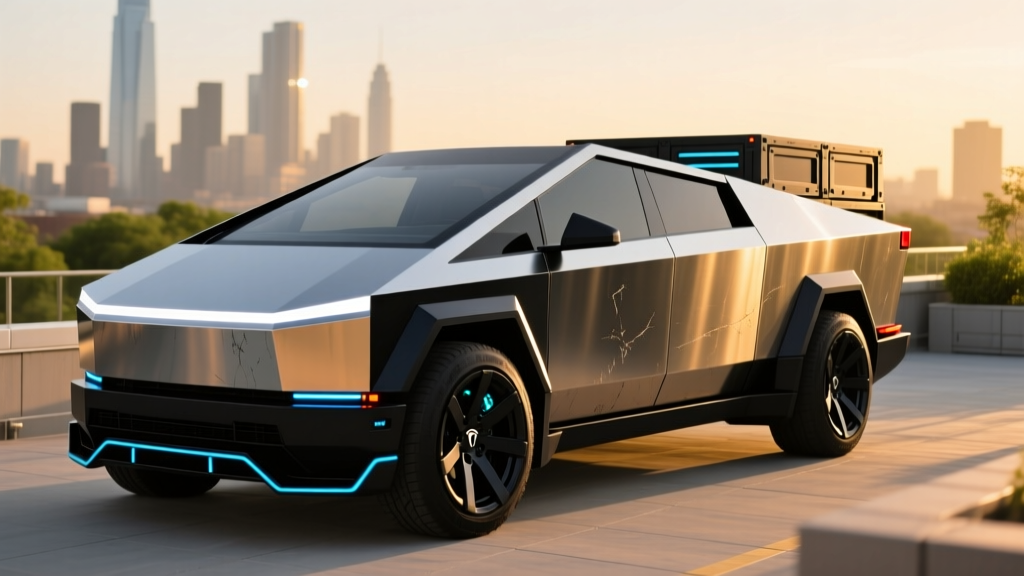
The Tesla Cybertruck has never been a vehicle that blends in, and by 2026, a thriving aftermarket has emerged for owners looking to push the stainless-steel pickup further than the factory intended. Whether you bought the dual-motor AWD, the tri-motor Cyberbeast, or you're waiting on the base RWD, understanding the Cybertruck's baseline engineering is critical before bolting on any mod. This review covers the truck's real-world performance envelope, charging behavior, and the modification categories that actually move the needle for owners.
Cybertruck Specs at a Glance: The Baseline Before You Mod
Before evaluating any aftermarket upgrade, you need to know exactly what Tesla delivers from the factory. Specs vary meaningfully across the three available trims, and each one has different modification headroom.
| Spec | AWD (Dual Motor) | Cyberbeast (Tri-Motor) | RWD (Base) |
|---|---|---|---|
| EPA Range | 340 mi | 320 mi | ~250 mi (est.) |
| Battery (usable) | ~123 kWh | ~123 kWh | ~100 kWh (est.) |
| Chemistry | NMC (4680 cells) | NMC (4680 cells) | LFP (est.) |
| Horsepower | 600 hp | 845 hp | ~350 hp (est.) |
| 0–60 mph | 3.9 sec | 2.6 sec | ~6.5 sec (est.) |
| Drivetrain | Dual-motor AWD | Tri-motor AWD | Single-motor RWD |
| Max DC Fast Charge | 250 kW | 250 kW | ~170 kW (est.) |
| 10–80% DC Time | ~30 min | ~30 min | ~40 min (est.) |
| Level 2 Home Rate | 11.5 kW (~37 mi/hr) | 11.5 kW (~37 mi/hr) | 11.5 kW (~30 mi/hr) |
| MPGe (combined) | 67 MPGe | 59 MPGe | ~75 MPGe (est.) |
| Efficiency | 50 kWh/100 mi | 57 kWh/100 mi | ~40 kWh/100 mi (est.) |
| Towing Capacity | 11,000 lbs | 11,000 lbs | 7,500 lbs (est.) |
| Cargo Bed Volume | 67 cu ft | 67 cu ft | 67 cu ft |
| Frunk Volume | 7 cu ft | 7 cu ft | 7 cu ft |
| Base MSRP | $79,990 | $99,990 | $60,990 (announced) |
| Battery Warranty | 8 yr / 120,000 mi | 8 yr / 120,000 mi | 8 yr / 120,000 mi |
| Powertrain Warranty | 8 yr / 120,000 mi | 8 yr / 120,000 mi | 8 yr / 120,000 mi |
The 4680-format NMC cells in the AWD and Cyberbeast are structurally integrated into the vehicle's exoskeleton, which limits certain suspension and body mods compared to body-on-frame trucks. The RWD trim, expected to use an LFP pack, trades range for lower cost and longer cycle life — a chemistry better suited to daily commuting and frequent 100% charging.
Real-World Range: What the EPA Number Doesn't Tell You
EPA sticker: 340 miles. Real-world highway (70–75 mph, moderate temps): expect 260–290 miles. In freezing weather (below 32°F), highway range drops to roughly 220–250 miles due to cabin heating demands and increased rolling resistance. The Cyberbeast's heavier tri-motor setup and more aggressive tire compound typically yield 240–270 miles highway in fair conditions.
The Cybertruck's angular stainless-steel body creates a drag coefficient around 0.38–0.40 Cd — significantly worse than a Model Y's ~0.23. At highway speeds, aero drag dominates energy consumption, which is why the gap between EPA and real-world highway range is wider here than on most EVs.
For owners planning range-extending mods, the physics are unforgiving: larger tires, lift kits, and bed-mounted accessories all increase drag or rolling resistance. A 2-inch lift with 35-inch all-terrain tires can reduce highway range by 10–15%, effectively dropping a 340-mile truck to 240–260 miles real-world. Tesla's software-locked range extender (a bed-mounted battery pack announced for late 2025) adds approximately 130 miles of EPA range but occupies roughly one-third of the bed and adds significant weight.
Charging Speed: The Curve That Defines Your Road Trips
The Cybertruck uses the NACS connector natively, giving it direct access to Tesla's Supercharger network — currently the most reliable DC fast-charging infrastructure in the U.S. But peak kW numbers only tell part of the story.
| Charging Level | Power (kW) | Miles Added per Hour | Notes |
|---|---|---|---|
| Level 1 (120V) | ~1.4 kW | ~3 mi/hr | Emergency only; impractical for daily use |
| Level 2 (240V, 48A) | 11.5 kW | ~37 mi/hr | Full overnight charge in 10–12 hours |
| DC Fast (Supercharger V3) | Up to 250 kW peak | ~180 mi in 15 min (peak) | 10–80% in ~30 min; tapers sharply above 80% |
| DC Fast (V4 Supercharger) | Up to 350 kW (future) | TBD | Cybertruck hardware currently limited to ~250 kW acceptance |
The 4680 cells support strong sustained charging compared to older 2170-format packs, but the Cybertruck's massive ~123 kWh usable battery means even at 250 kW peak, a 10–80% session takes roughly 30 minutes. Expect the charge curve to hold above 200 kW from approximately 10–40% SoC, then taper progressively. Above 80%, charging slows dramatically — Tesla's battery management system protects the NMC chemistry from lithium plating at high states of charge.
Mod consideration: Aftermarket battery preconditioning tweaks don't exist for the Cybertruck — Tesla's thermal management is software-locked and integrated. If you frequently DC fast-charge in cold weather, always use the built-in navigation to route to a Supercharger; the truck will automatically precondition the pack, which can shave 5–10 minutes off your charge session.
Performance, Drivetrain, and What Mods Can (and Can't) Change
The Cyberbeast's 2.6-second 0–60 time already outperforms most supercars, so acceleration mods are largely irrelevant. The dual-motor AWD's 3.9 seconds is more than adequate for any real-world driving scenario. Performance modifications in the EV space look very different from internal combustion — there are no intakes, exhausts, or turbo upgrades.
What you can modify:
- Suspension: The Cybertruck uses an adaptive air suspension with up to 12 inches of ground clearance in Off-Road mode. Aftermarket lowering links or adjustable drop brackets can reduce ride height for highway efficiency gains (typically 2–4% range improvement), while lift kits enable larger tire fitment for off-road use at the range cost noted above.
- Tires and wheels: The factory 20-inch wheels wear 285/65R20 all-terrain tires. Switching to low-rolling-resistance highway tires (like the Michelin Defender LTX) can recover 5–8% efficiency. Conversely, aggressive mud-terrain tires cost range and add road noise.
- Software tunes: Third-party software maps that alter throttle response or regen profiles exist but risk voiding Tesla's powertrain warranty. Proceed with caution — Tesla can detect non-factory software during service visits.
- Lighting: Aftermarket LED light bars and rock lights are popular and generally warranty-safe since they don't interface with the high-voltage system.
What you can't modify: Motor output, battery capacity, and charge rate are hardware and software-locked. No aftermarket "chip tune" can unlock more kW from the motors or faster DC charging without replacing core components.
Pricing, Trims, and Federal Tax Credit Eligibility
The Cybertruck's pricing has shifted since its 2023 reveal, and tax credit eligibility is a moving target governed by IRS §30D rules. Here's where each trim stands for 2026:
| Trim | Base MSRP | §30D Credit Eligible? | Effective Price (if eligible) |
|---|---|---|---|
| RWD (Base) | $60,990 (announced) | Yes — under $80K truck cap, pending sourcing compliance | ~$53,490 (after $7,500 credit) |
| AWD | $79,990 | Yes — at $80K truck cap, pending sourcing compliance | ~$72,490 (after $7,500 credit) |
| Cyberbeast | $99,990 | No — exceeds $80,000 truck MSRP cap | $99,990 (no credit) |
The §30D credit has strict requirements beyond MSRP caps. Per the IRS clean vehicle credit guidelines, buyer income cannot exceed $150,000 (single) / $300,000 (joint), and the vehicle must meet critical mineral and battery component sourcing thresholds that phase in annually. The Cybertruck's U.S.-assembled status and Tesla's domestic battery cell production at the Texas Gigafactory improve sourcing compliance odds, but buyers should verify current-year eligibility at fueleconomy.gov before purchasing, as rules tighten each year.
The credit can now be transferred to the dealer at point of sale, reducing your purchase price directly rather than waiting for a tax refund. Consult a tax professional to confirm your personal eligibility.
The Most Impactful Cybertruck Mods for Real Owners
Based on owner forums, aftermarket vendor data, and real-world testing, these are the modification categories that deliver tangible value:
1. Paint Protection Film (PPF) and Ceramic Coating
The Cybertruck's raw stainless-steel panels don't need paint protection, but they do show fingerprints, water spots, and can develop surface rust in coastal or salted-road environments. A ceramic coating specifically formulated for bare steel (such as Ceramic Pro's stainless formula) reduces maintenance and prevents staining. Budget: $1,500–$3,000 for full-body professional application.
2. Bed Accessories and Tonneau Integration
The power-operated tonneau cover is standard, but aftermarket bed racks (from brands like Yakima and Rhino-Rack) enable rooftop tent mounting and gear transport. Note that any bed rack increases aerodynamic drag — expect a 5–10% highway range reduction depending on load and profile height.
3. All-Weather Floor Liners and Interior Protection
The Cybertruck's minimalist interior uses vegan leather and hard plastics that are durable but show scuffs. Custom-fit floor liners (WeatherTech, TuxMat) and seat covers protect resale value. Budget: $200–$500.
4. Off-Road Armor and Rock Sliders
For owners who take the Cybertruck off-pavement, aftermarket rock sliders and skid plates protect the flat underbody and the exposed battery enclosure. The structural battery pack sits low, and while Tesla includes basic underbody protection, dedicated aftermarket skid plates offer thicker-gauge aluminum or steel. Budget: $800–$2,500.
5. Auxiliary Lighting
The Cybertruck's light bar is distinctive but not especially bright for off-road or rural driving. Roof-mounted LED bars (Baja Designs, Rigid Industries) wired to the 12V system are popular. These don't impact the high-voltage warranty. Budget: $400–$1,200 installed.
6. Window Tint and Solar-Reflective Film
The massive glass roof and large side windows create significant solar heat gain, especially in southern climates. High-quality ceramic window tint reduces cabin temperature by 10–15°F and can lower HVAC energy consumption by 3–5% in summer. Budget: $500–$900.
Standout Tech and Notable Drawbacks
The Cybertruck carries Tesla's latest tech stack, including Hardware 4.0 for Autopilot and FSD (Supervised). Remember: FSD is an SAE Level 2 driver-assistance system — the driver must remain attentive with hands on the yoke at all times. It is not autonomous driving.
Standout tech features:
- Steer-by-wire with a yoke controller (no mechanical linkage to the wheels)
- 48-volt electrical architecture (reduces wiring weight, enables more powerful accessories)
- Rear-wheel steering for a tighter turning circle (35.4 ft curb-to-curb)
- Adaptive air suspension with automatic height adjustment
- Bioweapon Defense Mode HEPA cabin filtration
- 18.5-inch front touchscreen with full vehicle controls
- Powered frunk and bed vault with lockable storage
Notable drawbacks:
- Yoke steering requires significant adaptation, especially for low-speed maneuvers and parking
- Rear visibility is compromised by the bed wall height and lack of a traditional rear window
- Panel gap consistency has improved but still draws criticism
- Stainless-steel body panels are difficult and expensive to repair after collision damage
- High insurance premiums due to repair costs and performance classification
- Cargo bed is shorter (6 ft) than most full-size pickups
Who Should Buy the Cybertruck (and Who Shouldn't)
Choose the Cybertruck AWD if: You need genuine towing capability (11,000 lbs), want a distinctive daily driver with strong Supercharger access for road trips, and value the tech-forward cabin. Best for tech enthusiasts, light-duty truck users, and those with home Level 2 charging.
Choose the Cyberbeast if: Performance is your priority and the $99,990 price (no tax credit) fits your budget. This is a luxury performance truck, not a workhorse.
Wait for the RWD if: You want the lowest entry price (~$53,490 after credit) and primarily commute under 100 miles daily. The LFP battery suits frequent full charges and offers long cycle life.
Look elsewhere if: You need a long bed (8 ft), prioritize rear-seat comfort for adults on long trips, live in a charging desert, or want a conventional steering wheel. The Ford F-150 Lightning offers a more traditional truck experience with competitive range, while the Rivian R1T provides superior off-road capability in a smaller footprint.
Pros and Cons: The Honest Summary
- Class-leading Supercharger network access for road-trip charging
- 11,000-lb towing capacity with integrated trailer brake controller
- Stainless-steel exoskeleton eliminates paint maintenance
- 48V architecture enables powerful aftermarket accessories
- Strong real-world fast-charging speeds (250 kW peak, sustained curve)
- Rear-wheel steering makes parking easier than dimensions suggest
- Over-the-air updates continue adding features post-purchase
- Real-world highway range significantly below EPA (260–290 mi vs. 340 mi)
- Cold-weather range loss is pronounced due to aero drag and pack size
- Cyberbeast excluded from §30D tax credit due to MSRP cap
- Yoke steering and steer-by-wire have a steep learning curve
- Body repair costs are high — limited body shop expertise with stainless steel
- High insurance premiums across all trims
- Bed is shorter than most full-size competitors (67 cu ft vs. ~72+ cu ft)
Frequently Asked Questions
What is the real-world range of the Tesla Cybertruck?
The AWD's EPA rating is 340 miles, but real-world highway driving at 70–75 mph typically yields 260–290 miles. In freezing temperatures, expect 220–250 miles. The Cyberbeast delivers roughly 240–270 miles highway in fair conditions. The announced RWD trim targets ~250 miles EPA.
How fast does the Cybertruck charge at home and on DC fast chargers?
At home on a Level 2 charger (240V, 48A), the Cybertruck charges at 11.5 kW, adding approximately 37 miles of range per hour — a full charge takes 10–12 hours. On a Tesla Supercharger V3, it peaks at 250 kW and charges from 10–80% in about 30 minutes. Above 80%, the charge rate tapers significantly to protect the NMC battery chemistry.
How much does the Cybertruck cost after the federal tax credit?
The AWD trim at $79,990 may qualify for the full $7,500 §30D credit if you meet income limits ($150K single / $300K joint) and the vehicle meets current-year battery sourcing requirements, bringing the effective price to approximately $72,490. The Cyberbeast at $99,990 exceeds the $80,000 truck MSRP cap and does not qualify. The announced RWD at $60,990 should qualify, reducing to ~$53,490. Always verify current eligibility at fueleconomy.gov and consult a tax professional.
Is the Cybertruck worth buying vs. the F-150 Lightning or Rivian R1T?
It depends on your priorities. The Cybertruck offers the best fast-charging infrastructure access (Superchargers), the most distinctive design, and strong towing capacity. The F-150 Lightning provides a more conventional truck experience with a larger bed and easier serviceability. The Rivian R1T excels off-road with a quad-motor option and a more refined interior but uses CCS charging (with NACS adapter required). If Supercharger access and tech-forward design matter most, the Cybertruck wins. If you need a traditional work truck or premium off-roader, look at the Lightning or R1T respectively.
What are the biggest pros and cons of owning a Cybertruck?
Top pros: Supercharger network access, 11,000-lb towing, stainless-steel durability, 48V accessory support, and continuous OTA improvements. Top cons: real-world range falls well short of EPA estimates, cold-weather efficiency drops significantly, body repairs are expensive and hard to source, yoke steering requires adaptation, and insurance premiums are high.
Does the Cybertruck qualify for the federal EV tax credit?
The AWD ($79,990) and RWD ($60,990) trims fall within the $80,000 MSRP cap for trucks under IRS §30D rules and may qualify for up to $7,500, pending buyer income limits and battery-sourcing compliance. The Cyberbeast ($99,990) exceeds the cap and is ineligible. Sourcing requirements tighten annually — check the IRS clean vehicle credit page for the latest rules before purchasing.
Will modifying my Cybertruck void the warranty?
It depends on the mod. Suspension, lighting, and cosmetic accessories generally don't affect the 8-year/120,000-mile battery and powertrain warranty. However, any modification that interfaces with the high-voltage system, alters motor controllers, or changes Tesla's software can void warranty coverage on affected components. Always document your factory baseline before modifying and consult Tesla service if unsure.
Can I tow with the Cybertruck, and how does it affect range?
Yes — the AWD and Cyberbeast are rated for 11,000 lbs of towing. However, towing a 7,000+ lb trailer at highway speeds can reduce range by 40–50%, dropping effective range to roughly 140–170 miles. Plan charging stops accordingly and use the truck's built-in trailer routing in navigation, which factors in elevation and charge station locations.