Why Cybertruck Owners Are Turning to the Aftermarket
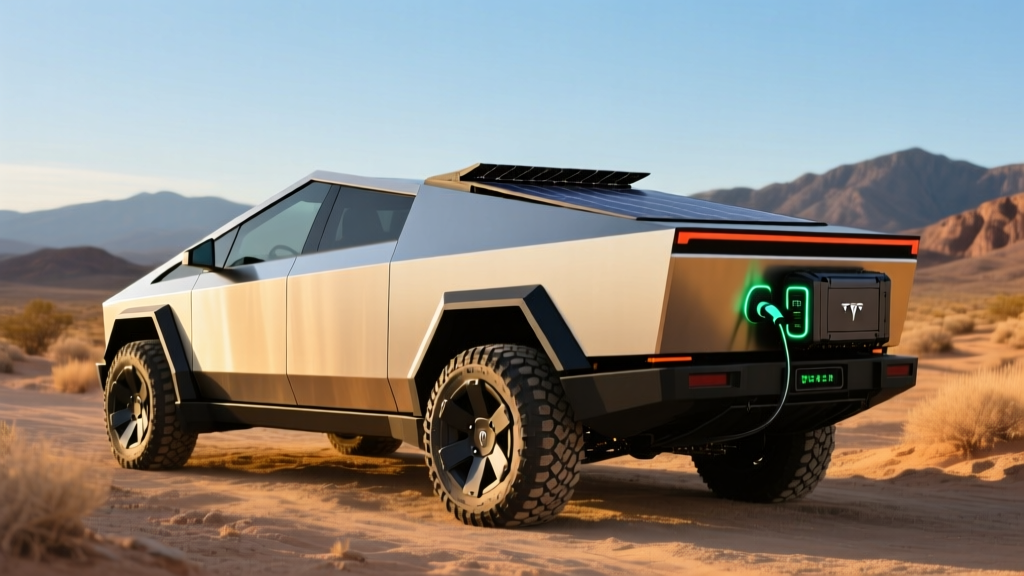
The Tesla Cybertruck is unlike anything else on the road: a stainless-steel exoskeleton, 48-volt architecture, steer-by-wire steering, and a polarizing angular silhouette. But for all its engineering ambition, the production Cybertruck leaves plenty of room for personalization. Whether you need more cargo utility, better off-road capability, paint protection, or faster home charging, the aftermarket has responded with a growing catalog of Tesla Cybertruck modifications tailored to the platform's unique constraints.
Before exploring the most popular upgrades, it is essential to understand the Cybertruck's baseline specifications. Every modification interacts with the truck's weight, aerodynamics, electrical system, and warranty — so knowing your starting point matters.
| Specification | Dual Motor AWD | Cyberbeast (Tri-Motor) |
|---|---|---|
| EPA Range | 340 miles | 320 miles |
| Battery (usable, est.) | ~123 kWh, NMC | ~123 kWh, NMC |
| Max DC Fast Charge | 250 kW (peak) | 250 kW (peak) |
| 10–80% DC Charge Time | ~28 min | ~28 min |
| Level 2 Home Charge Rate | 11.5 kW (~37 mi/hr) | 11.5 kW (~37 mi/hr) |
| 0–60 mph | 3.9 sec | 2.6 sec |
| Horsepower | 600 hp | 845 hp |
| Drivetrain | Dual Motor AWD | Tri-Motor AWD |
| MPGe (combined) | 79 MPGe | 76 MPGe |
| Efficiency | 48 kWh/100 mi | 50 kWh/100 mi |
| Towing Capacity | 11,000 lbs | 11,000 lbs |
| Bed Length / Volume | 6 ft / ~67 cu ft | 6 ft / ~67 cu ft |
| Battery/Powertrain Warranty | 8 yr / 120,000 mi | 8 yr / 120,000 mi |
| Base MSRP | $79,990 | $99,990 |
Sources: fueleconomy.gov, Tesla Cybertruck specs.
The EPA rates the Dual Motor Cybertruck at 340 miles and the Cyberbeast at 320 miles. In real-world highway driving at 70–75 mph, expect approximately 260–290 miles on a full charge. Cold weather (below 32°F) can reduce range by 20–30%, bringing effective range down to roughly 210–250 miles. Any modification that increases weight or aerodynamic drag — such as bed racks, roof tents, or larger off-road tires — will reduce these numbers further by 5–15%.
Exterior and Body Modifications
The Cybertruck's cold-rolled stainless-steel body panels are unlike any conventional truck. They resist dents but show fingerprints, smudges, and fine scratches readily. This has driven a robust market for wraps, coatings, and protective films.
PPF and Vinyl Wraps
Paint Protection Film (PPF) is the single most popular Cybertruck modification. A full-body PPF installation typically costs $4,000–$7,000 and protects the stainless steel from water spots, etching, and light scratches. Brands like XPEL, SunTek, and STEK offer pre-cut kits designed for the Cybertruck's angular geometry. Vinyl wraps ($3,000–$5,500) let owners change the truck's color entirely — matte black, satin chrome, and color-shift films are top sellers. One caveat: wrapping the Cybertruck requires experienced installers because the panel gaps and sharp creases demand precision cutting. Poor installations can trap moisture against the steel.
Bed Racks and Overland Systems
The six-foot bed with its motorized tonneau cover presents unique challenges. Several companies — including BFD Off-Road, Teraflex, and Cybertruck-specific startups — now offer bed rack systems that integrate with the tonneau's track rails. These racks typically support 300–500 lbs dynamic load and allow mounting of roof-top tents, bike racks, or recovery gear. Expect to pay $1,200–$3,500 for a quality rack system. The critical consideration: any roof-mounted cargo increases the truck's already tall frontal area, measurably reducing highway range by 8–12%.
Lighting Upgrades
While the Cybertruck's LED light bar is distinctive, many off-road-oriented owners add auxiliary lighting. The 48-volt electrical system means that conventional 12V aftermarket light bars require a DC-DC step-down converter. Companies like Baja Designs and Rigid Industries now offer 48V-native light kits specifically wired for the Cybertruck, eliminating the need for a separate relay harness. Expect $600–$1,800 for a complete auxiliary lighting kit.
Wheels, Tires, and Suspension Modifications
The stock Cybertruck ships with 20-inch wheels wrapped in 35-inch all-terrain tires (Goodyear Territory RT on most trims). This is already an aggressive setup, but the aftermarket has pushed further.
Aftermarket Wheels
Several wheel manufacturers now offer Cybertruck-specific fitments accounting for the truck's high curb weight (~6,700–6,840 lbs) and instant torque. Forged aluminum wheels from HRE, Vossen, and TSW are available in 20- and 22-inch diameters with the correct 8×200 mm bolt pattern. Lighter forged wheels can reduce unsprung mass by 5–8 lbs per corner, yielding marginal improvements in ride quality and efficiency (roughly 1–3% range gain). Prices range from $1,800 to $4,500 per wheel.
Off-Road Tires and Lift Kits
Owners seeking more aggressive off-road capability have moved to 37-inch mud-terrain tires from Toyo, Nitto, and BFGoodrich. This typically requires a 1.5–2.0 inch suspension lift to prevent rubbing at full articulation. The Cybertruck's adaptive air suspension already provides adjustable ride height (up to 16 inches of ground clearance in Extract mode), so many owners opt for tire upgrades alone. Switching to heavier mud-terrain tires adds roughly 10–15 lbs per corner and increases rolling resistance, costing approximately 8–12% in range. Expect $2,000–$3,200 for a set of five 37-inch M/T tires.
Suspension Upgrades
The Cybertruck's air suspension is proprietary and software-controlled, limiting traditional lift-kit options. However, aftermarket companies have developed adjustable drop links and revised control arms that alter the truck's static ride height without interfering with the air-spring system. These kits ($800–$2,000) are popular among owners who want a more aggressive stance without sacrificing the adjustable ride-height functionality.
Interior and Technology Upgrades
The Cybertruck's minimalist interior — dominated by an 18.5-inch front touchscreen and a 9.4-inch rear screen — leaves fewer traditional modification points than a conventional truck. Still, owners have found ways to improve comfort and utility.
Screen Protectors and Console Organizers
Tempered-glass screen protectors ($40–$120) are nearly universal among new Cybertruck owners, protecting the large touchscreen from fingerprints and scratches. Center-console organizers, cup-holder inserts, and under-seat storage trays from brands like Jowua, Abstract Ocean, and RPM Tesla fill gaps in the Cybertruck's otherwise sparse storage layout. These accessories typically cost $20–$150 each.
Sound Deadening and Audio Upgrades
The stainless-steel body panels can transmit road and wind noise more than stamped steel or aluminum. Aftermarket sound-deadening kits (Dynamat, Kilmat) applied to the doors, floor, and rear bulkhead can reduce cabin noise by 3–6 dB at highway speeds. Full-vehicle treatment costs $800–$1,500 installed. The stock 15-speaker audio system is capable, but some audiophiles have upgraded the subwoofer enclosure and added external amplifiers for more low-frequency impact ($600–$2,000).
Charging and Electrical Modifications
Charging speed is a top concern for any EV owner, and Cybertruck modifications in this area focus on optimizing home charging infrastructure and protecting the charge port.
| Charging Level | Power (kW) | Miles of Range Added per Hour | Typical Use Case |
|---|---|---|---|
| Level 1 (120V) | ~1.4 kW | ~3–4 mi/hr | Emergency / trickle |
| Level 2 (240V, 48A) | 11.5 kW | ~37 mi/hr | Home overnight charging |
| DC Fast Charge (V3/V4 Supercharger) | Up to 250 kW peak | ~140 mi in 15 min | Road trips |
Home Charger Upgrades
The Cybertruck's 123 kWh battery is one of the largest in any consumer EV. On a standard 11.5 kW Level 2 home charger, a full 0–100% charge takes roughly 10–11 hours. Most owners install a Tesla Wall Connector ($420 for the unit) on a 60-amp circuit, which delivers the full 11.5 kW. Professional installation typically runs $800–$2,500 depending on panel proximity and local permitting. If your home has a 200-amp electrical panel with limited spare capacity, a panel upgrade to 400 amps may be necessary — adding $2,000–$5,000 to the project. Always consult a licensed electrician for final specifications.
Charge Port Protection
The Cybertruck's charge port is located on the driver-side rear quarter panel. Aftermarket charge-port wraps, covers, and illuminated rings ($50–$200) protect the area from scratches caused by charging cables and add visual customization. Some owners have installed magnetic charge-port doors that auto-open when the Tesla plug is detected, though these require careful integration with the truck's CAN bus system.
Pricing, Tax Credits, and Total Cost of Modifications
The Cybertruck's price places it firmly in the luxury truck segment. Here is how the pricing breaks down and how the federal tax credit factors in.
| Trim | Base MSRP | §30D Credit Eligible? | Effective Price (if eligible) |
|---|---|---|---|
| Dual Motor AWD | $79,990 | No — exceeds $80,000 truck MSRP cap | $79,990 |
| Cyberbeast (Tri-Motor) | $99,990 | No — exceeds $80,000 truck MSRP cap | $99,990 |
Important: Under current IRS §30D rules, the federal EV tax credit of up to $7,500 applies to trucks, vans, and SUVs with an MSRP at or below $80,000. The Cybertruck Dual Motor at $79,990 sits at the absolute limit, but any added options, destination fees, or package upgrades that push the MSRP above $80,000 will disqualify it. The Cyberbeast at $99,990 is categorically ineligible. Additionally, buyer income caps apply ($150,000 single / $300,000 joint AGI), and the vehicle must meet critical-mineral and battery-component sourcing requirements. Always verify current eligibility at irs.gov and consult a tax professional before purchasing.
Typical Modification Budget Ranges
- Light (protection + accessories): $1,500–$4,000 — PPF, screen protector, console organizers, charge-port cover
- Mid (appearance + utility): $5,000–$12,000 — full vinyl wrap, bed rack, auxiliary lighting, all-weather mats
- Heavy (off-road + performance): $12,000–$25,000+ — aftermarket wheels, 37-inch tires, lift kit, sound deadening, light bar
Pros of Modifying the Cybertruck
- PPF and wraps protect the fingerprint-prone stainless steel body
- Bed racks unlock genuine overlanding and cargo utility
- 48V-native aftermarket accessories are expanding rapidly
- Forged wheels can reduce unsprung weight and marginally improve efficiency
- Sound deadening measurably reduces cabin noise at highway speed
- Strong aftermarket community with Cybertruck-specific fitment guides
Cons and Risks
- Many modifications reduce EPA range by 5–15%
- 48V electrical system limits compatibility with conventional 12V accessories
- Stainless-steel body requires specialized installers for wraps and PPF
- Suspension modifications may interfere with adaptive air-suspension software
- Aftermarket electrical work can void portions of the 8-year/120,000-mile battery warranty
- No federal tax credit available on most Cybertruck configurations due to MSRP cap
Who Should Modify a Cybertruck — and Who Shouldn't
Best candidates for modifications: Overlanders and off-road enthusiasts who need bed racks, auxiliary lighting, and aggressive tires; owners in harsh climates who want PPF to protect against road salt and debris; and commuters who want sound deadening and interior organizers for daily usability.
Think twice if: You prioritize maximum range above all else. Every pound of rack, every inch of tire, and every aerodynamic appendage costs electrons. If you chose the Cybertruck primarily for its 340-mile EPA range, modifications will erode that advantage. Similarly, lessees should avoid permanent modifications — drill-in rack mounts, suspension changes, and hard-wired electrical upgrades will need to be reversed at lease-end.
Warranty caution: Tesla's 8-year/120,000-mile battery and drive-unit warranty is comprehensive, but modifications that alter the high-voltage system, suspension geometry, or thermal management can give Tesla grounds to deny a warranty claim. Stick to bolt-on, reversible modifications whenever possible, and document every installation with receipts and photos.
Frequently Asked Questions
What is the real-world range of the Tesla Cybertruck after modifications?
The stock Dual Motor Cybertruck delivers roughly 260–290 miles in real-world highway driving. Adding a bed rack, roof tent, and 37-inch tires can reduce that by 10–15%, bringing effective range to approximately 220–260 miles. Cold weather compounds these losses further.
How fast does the Cybertruck charge at home and on the road?
On a Level 2 home charger (11.5 kW), the Cybertruck gains about 37 miles of range per hour, with a full charge taking roughly 10–11 hours. On a V3 or V4 Tesla Supercharger, it peaks at 250 kW and charges from 10–80% in approximately 28 minutes. Note that peak charge rate is not sustained — the charging curve tapers significantly above 60% state of charge, which is typical for large NMC batteries.
Does the Tesla Cybertruck qualify for the federal EV tax credit?
It depends. Under IRS §30D rules, trucks must have an MSRP at or below $80,000 to qualify for the up-to-$7,500 credit. The base Dual Motor at $79,990 is technically at the cap, but any added options or destination charges that push MSRP above $80,000 disqualify it. The Cyberbeast at $99,990 does not qualify. Buyer income limits and battery-sourcing requirements also apply. Check irs.gov for current rules.
Is the Cybertruck worth buying vs. the Ford F-150 Lightning or Rivian R1T?
It depends on your priorities. The F-150 Lightning offers a more conventional truck experience, a lower starting price (~$55,000), and better tax-credit eligibility, but less range and slower performance. The Rivian R1T excels off-road with its quad-motor option and has a more refined interior, starting around $75,000. The Cybertruck wins on raw acceleration (2.6 sec 0–60 for the Cyberbeast), stainless-steel durability, and the Tesla Supercharger network. If you value polarizing design and tech-forward features like steer-by-wire, it is compelling. If you need a work-first truck with broad aftermarket support and tax-credit savings, the Lightning or R1T may be smarter.
Can I install a wrap or PPF on the stainless-steel body myself?
Technically yes, but it is strongly discouraged. The Cybertruck's sharp creases, tight panel gaps, and cold-rolled stainless surface require specialized cutting and application techniques. DIY kits often result in bubbling, edge-lifting, or trapped moisture. Budget for a professional installation from a shop with documented Cybertruck experience.
Will modifications void my Tesla warranty?
Potentially. Tesla's warranty covers defects in materials and workmanship, but the company can deny claims if it determines a modification caused or contributed to a failure. Bolt-on accessories (racks, wraps, mats) are generally safe. Modifications that tap into the 48V or high-voltage system, alter suspension geometry, or change thermal management carry real warranty risk. Always keep modifications reversible and document everything.
What is the best first modification for a new Cybertruck owner?
Full-body PPF or a high-quality vinyl wrap. The stainless-steel body shows water spots, fingerprints, and micro-scratchess quickly, and professional PPF preserves the truck's appearance and resale value. Pair it with a tempered-glass screen protector and a quality Level 2 home charger for a practical, high-impact starter setup.